
Interviewers and AI: Transforming Hiring Success

Fast-paced hiring environments in tech startups often leave HR teams balancing speed with accuracy. Interviews are far more than casual conversations. They demand a structured approach that targets skills and organizational fit while filtering out bias. Scientific interview methods quickly disprove myths like relying on gut feelings or only one interview being enough. This guide illuminates how professional interviewers, advanced AI tools, and modern evaluation techniques are changing candidate assessments for good.
Table of Contents
- What Interviewers Are and Common Myths
- Types of Interviewers in Modern Hiring
- How AI Interviewers Work and Key Tools
- Legal Frameworks Governing AI Interviewing
- Roles, Responsibilities, and Global Best Practices
- Risks, Challenges, and Mistakes to Avoid
Key Takeaways
| Point | Details |
|---|---|
| Understanding Interviewing | Effective interviewing is a structured process that goes beyond casual conversations to assess a candidate’s fit and capabilities. |
| Role of AI | AI technologies enhance candidate evaluation by automating processes and providing objective insights, but they require careful management to mitigate risks. |
| Interviewer Types | Various interviewers, including corporate recruiters and panel interviewers, contribute unique perspectives, making the hiring process more comprehensive. |
| Legal Considerations | Organizations must navigate complex legal frameworks governing AI interviewing to protect candidate rights and ensure ethical standards. |
What Interviewers Are and Common Myths
An interviewer is a professional responsible for evaluating job candidates through structured conversations that assess skills, experience, and potential organizational fit. Unlike casual conversations, interviews are systematic assessments designed to extract critical information about a candidate’s professional capabilities and alignment with role requirements.
In reality, interviewing is a nuanced process involving multiple dimensions beyond simple question-and-answer exchanges. Scientific interview methodologies reveal several common misconceptions that undermine effective candidate evaluation:
- Myth 1: Interviews are just casual conversations
- Myth 2: First impressions are always reliable indicators of candidate quality
- Myth 3: Gut feelings accurately predict job performance
- Myth 4: One interview is sufficient to make hiring decisions
- Myth 5: Personal charm equals professional competence
Professional interviewers recognize that effective candidate assessment requires a balanced approach combining structured questioning, active listening, and objective evaluation. Successful interviews involve:
- Preparing standardized evaluation criteria
- Using behavioral and situational questioning techniques
- Minimizing personal biases
- Creating a comfortable yet professional environment
- Systematically documenting candidate responses
Effective interviewing strikes a delicate balance between gathering objective information and creating a positive candidate experience.
Interviewer Types vary across different professional contexts:
- Corporate Recruiters: Screen candidates for organizational roles
- Panel Interviewers: Multiple professionals evaluate candidates simultaneously
- Technical Interviewers: Assess specialized skills in specific domains
- HR Specialists: Evaluate broader organizational fit and cultural alignment
Pro tip: Develop a consistent, structured interview approach that balances objective assessment with candidate engagement to make more informed hiring decisions.
Types of Interviewers in Modern Hiring
Modern hiring processes involve diverse interviewer types, each playing a critical role in selecting the right candidates for organizational roles. Interview formats have evolved to accommodate different assessment strategies and organizational needs, creating a more comprehensive candidate evaluation approach.
The primary types of interviewers in contemporary hiring landscapes include:
- Corporate Recruiters: Responsible for initial candidate screening
- Technical Specialists: Evaluate specific job-related skills and competencies
- Hiring Managers: Assess candidate fit within specific departmental contexts
- HR Professionals: Evaluate broader organizational alignment and cultural fit
- Panel Interview Teams: Conduct multi-perspective candidate assessments
Each interviewer type brings unique perspectives and evaluation criteria to the hiring process. Corporate recruiters typically focus on initial qualification matching, while technical specialists dive deep into specific skill assessments. Hiring managers evaluate potential team dynamics and role-specific performance capabilities.
Interview Formats reflect the complexity of modern talent acquisition:
- Phone screening interviews
- Video conference interviews
- One-on-one in-person interviews
- Group panel interviews
- Sequential multiple-interviewer assessments
Modern interviewing requires a strategic blend of human insight and structured evaluation techniques.
Successful interviewers understand that each interaction represents more than a simple question-and-answer exchange. They recognize the nuanced process of identifying talent involves understanding both technical capabilities and interpersonal dynamics.
Emerging Interviewer Roles:
- AI-Assisted Interviewers: Leverage technological tools for enhanced candidate assessment
- Remote Interview Specialists: Expert in conducting virtual evaluations
- Diversity and Inclusion Interviewers: Focus on unbiased, equitable candidate selection
Pro tip: Develop a comprehensive interview approach that balances technological insights with human intuition to create a holistic candidate evaluation strategy.
How AI Interviewers Work and Key Tools
Artificial Intelligence has revolutionized the interview process, transforming how organizations identify and evaluate top talent. AI-driven interview technologies automate screening processes, generating standardized questions and providing objective candidate assessments.
The core technologies powering AI interviewing include:
- Natural Language Processing: Analyzes candidate responses
- Machine Learning Algorithms: Detect communication patterns
- Speech Recognition: Evaluate verbal communication skills
- Sentiment Analysis: Assess emotional intelligence
- Facial Recognition: Interpret non-verbal cues
AI interviewing tools operate through sophisticated multi-step processes that go beyond traditional human-led interviews. These systems can simultaneously evaluate multiple candidate dimensions, including technical competence, communication skills, and cultural alignment.

Here’s a comparison of traditional human interviewers versus AI interviewers in modern hiring environments:
| Aspect | Traditional Interviewers | AI Interviewers |
|---|---|---|
| Decision Process | Human judgment, subjective | Algorithmic, objective |
| Bias Risk | High, without training | Reduced, but possible |
| Scalability | Limited, manual | High, automated |
| Candidate Experience | Personalized, interactive | Consistent, data-driven |
| Legal Compliance | Requires manual checks | Built-in compliance tools |
Key AI Interviewing Functionalities:
- Automated resume screening
- Intelligent question generation
- Real-time response evaluation
- Bias reduction mechanisms
- Comprehensive candidate profiling
AI interviewing technologies provide unprecedented insights while maintaining candidate privacy and evaluation objectivity.
Technical Components of AI Interview Systems:
- Conversational AI: Simulates human-like interactions
- Predictive Analytics: Forecast candidate performance potential
- Data Integration Engines: Combine multiple evaluation metrics
- Adaptive Questioning Algorithms: Customize interview flow
Pro tip: Integrate AI interview tools gradually, ensuring human oversight and maintaining a balanced assessment approach.
Legal Frameworks Governing AI Interviewing
The legal landscape surrounding AI interviewing is complex and rapidly evolving, with multiple regulatory considerations emerging worldwide. Global AI governance frameworks are primarily focused on protecting candidate rights, ensuring transparency, and maintaining ethical standards in technological hiring processes.
Key Legal Considerations for AI Interviewing Include:
- Data Protection Laws: GDPR, CCPA compliance requirements
- Anti-Discrimination Regulations: Preventing algorithmic bias
- Consent and Transparency: Informing candidates about AI assessment methods
- Privacy Protection: Securing candidate personal information
- Algorithmic Accountability: Ensuring fair evaluation mechanisms
The regulatory environment demands comprehensive approaches that balance technological innovation with fundamental human rights. Organizations must navigate intricate legal requirements that vary across different jurisdictions, ensuring their AI interviewing tools meet stringent ethical and legal standards.
Primary Legal Compliance Domains:
- Algorithmic fairness assessment
- Candidate consent protocols
- Data protection mechanisms
- Transparency reporting
- Bias detection and mitigation
Effective AI interviewing governance requires proactive legal strategy and continuous technological adaptation.
Emerging Regulatory Focus Areas:
- Algorithmic Auditing: Regular system bias checks
- Explainable AI: Demonstrating decision-making processes
- International Standards: Developing consistent global guidelines
- Worker Rights Protection: Ensuring technological neutrality
Pro tip: Develop comprehensive documentation tracking your AI interviewing system’s compliance mechanisms to demonstrate ongoing legal and ethical commitment.
Roles, Responsibilities, and Global Best Practices
Interviewing professionals play a critical role in talent acquisition, with evolving responsibilities that demand sophisticated skills and strategic approaches. Best practices in interviewing highlight the importance of creating inclusive, professional, and structured candidate evaluation processes.
Key Roles in Modern Interview Processes:
- HR Professionals: Design comprehensive recruitment strategies
- Hiring Managers: Assess technical and cultural fit
- Interview Coordinators: Manage logistical and administrative aspects
- Diversity and Inclusion Specialists: Ensure equitable candidate evaluation
- Legal Compliance Officers: Validate interview protocols
Successful interviewing requires a multidimensional approach that balances technical assessment with human-centered evaluation. Professionals must continuously adapt to technological changes, evolving workplace dynamics, and emerging candidate expectations.
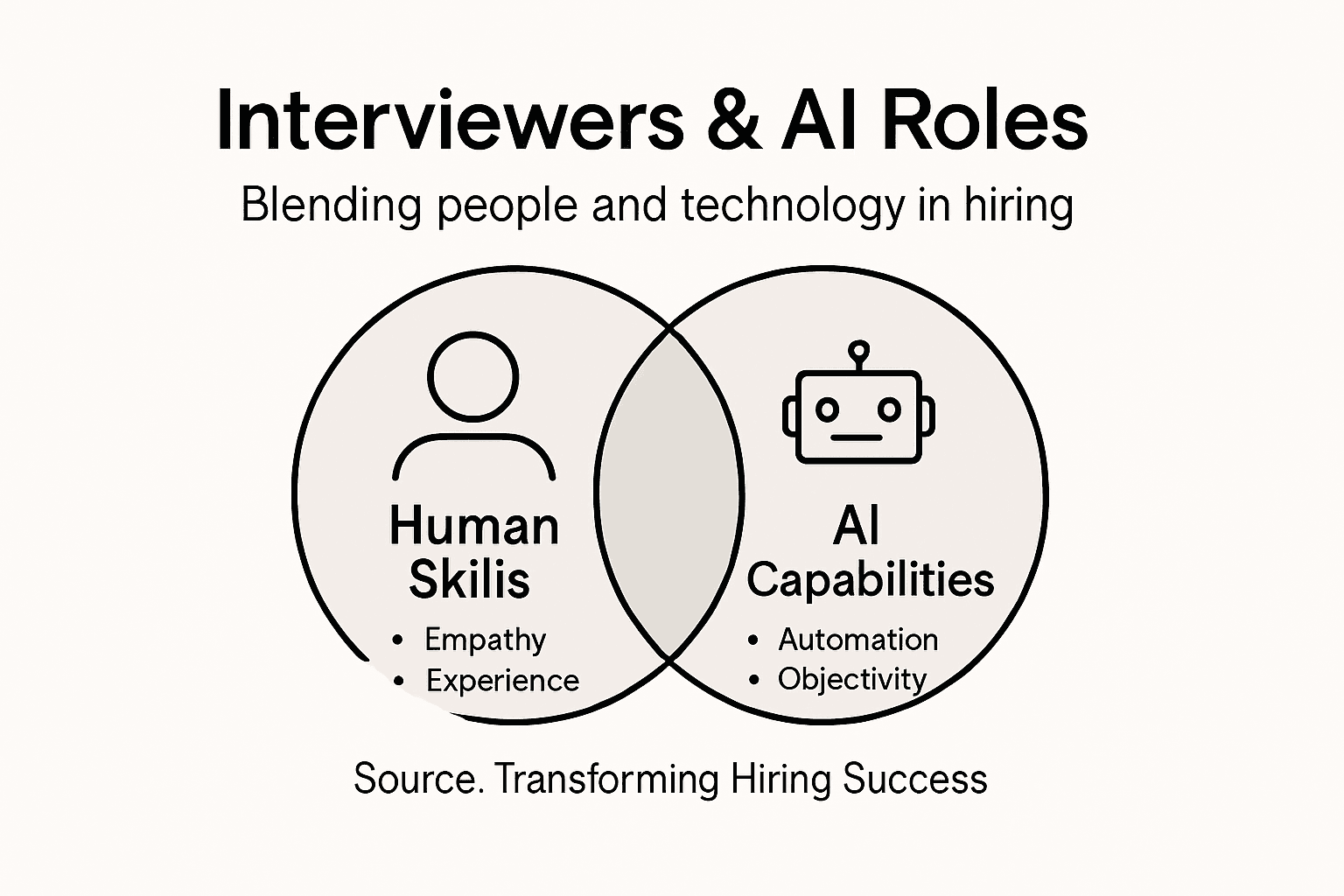
Global Best Practice Domains:
Below is an overview of global best practices for ethical and effective interviewing:
| Best Practice Domain | Purpose | Impact on Outcomes |
|---|---|---|
| Standardized Assessments | Reduce subjective bias | Fairer candidate evaluation |
| Continuous Training | Enhance interviewer skills | Improves interview reliability |
| Technology Integration | Boost efficiency and insights | Streamlined and smarter hiring |
| Inclusive Environment | Promote diversity and equity | Broader talent pool |
| Documentation & Compliance | Meet legal obligations | Mitigates regulatory risks |
- Standardized evaluation frameworks
- Consistent interview documentation
- Comprehensive candidate experience management
- Continuous skills development
- Technology integration strategies
Effective interviewing transcends traditional assessment, focusing on holistic candidate potential and organizational alignment.
Emerging Interviewer Responsibilities:
- Technology Proficiency: Master AI and digital interviewing tools
- Cultural Intelligence: Understand diverse candidate backgrounds
- Ethical Decision Making: Implement unbiased evaluation techniques
- Continuous Learning: Stay updated on industry trends
Pro tip: Develop a structured professional development plan that emphasizes adaptability, technological literacy, and inclusive interviewing practices.
Risks, Challenges, and Mistakes to Avoid
Navigating the complex landscape of AI-driven interviews requires a nuanced understanding of potential pitfalls and strategic risk mitigation. AI integration risks present significant challenges that demand proactive management and careful consideration.
Primary Interview AI Risks:
- Algorithmic Bias: Potential discrimination in candidate evaluation
- Privacy Breaches: Unauthorized data collection and storage
- Transparency Limitations: Obscured decision-making processes
- Over-Reliance on Technology: Diminishing human judgment
- Technical Inconsistencies: Unreliable assessment mechanisms
Organizations must develop comprehensive strategies to address these potential vulnerabilities. Understanding the nuanced risks associated with AI interviewing technologies enables more responsible and effective implementation of innovative recruitment tools.
Critical Mistakes to Avoid:
- Neglecting human oversight
- Ignoring potential algorithmic biases
- Failing to establish clear ethical guidelines
- Overlooking data privacy regulations
- Implementing AI without proper validation
Responsible AI integration requires continuous monitoring, ethical consideration, and adaptive strategies.
Emerging Risk Mitigation Strategies:
- Regular Algorithmic Audits: Identifying and addressing systemic biases
- Comprehensive Training: Educating personnel on AI limitations
- Transparent Decision Protocols: Documenting assessment processes
- Continuous Improvement Mechanisms: Updating AI systems
Pro tip: Implement a multi-layered risk assessment approach that combines technological validation with human expertise to create robust, ethical AI interviewing systems.
Revolutionize Your Hiring with AI Interview Assistance
The article highlights the challenges organizations face with interviewer bias, lack of standardized assessments, and the complex balancing act between human judgment and AI technology. If you want to overcome common pitfalls like algorithmic bias and inconsistent evaluation, adopting an AI-driven interviewing solution is key. Solutions that leverage natural language processing and real-time feedback can transform your hiring process into an objective, efficient, and engaging experience
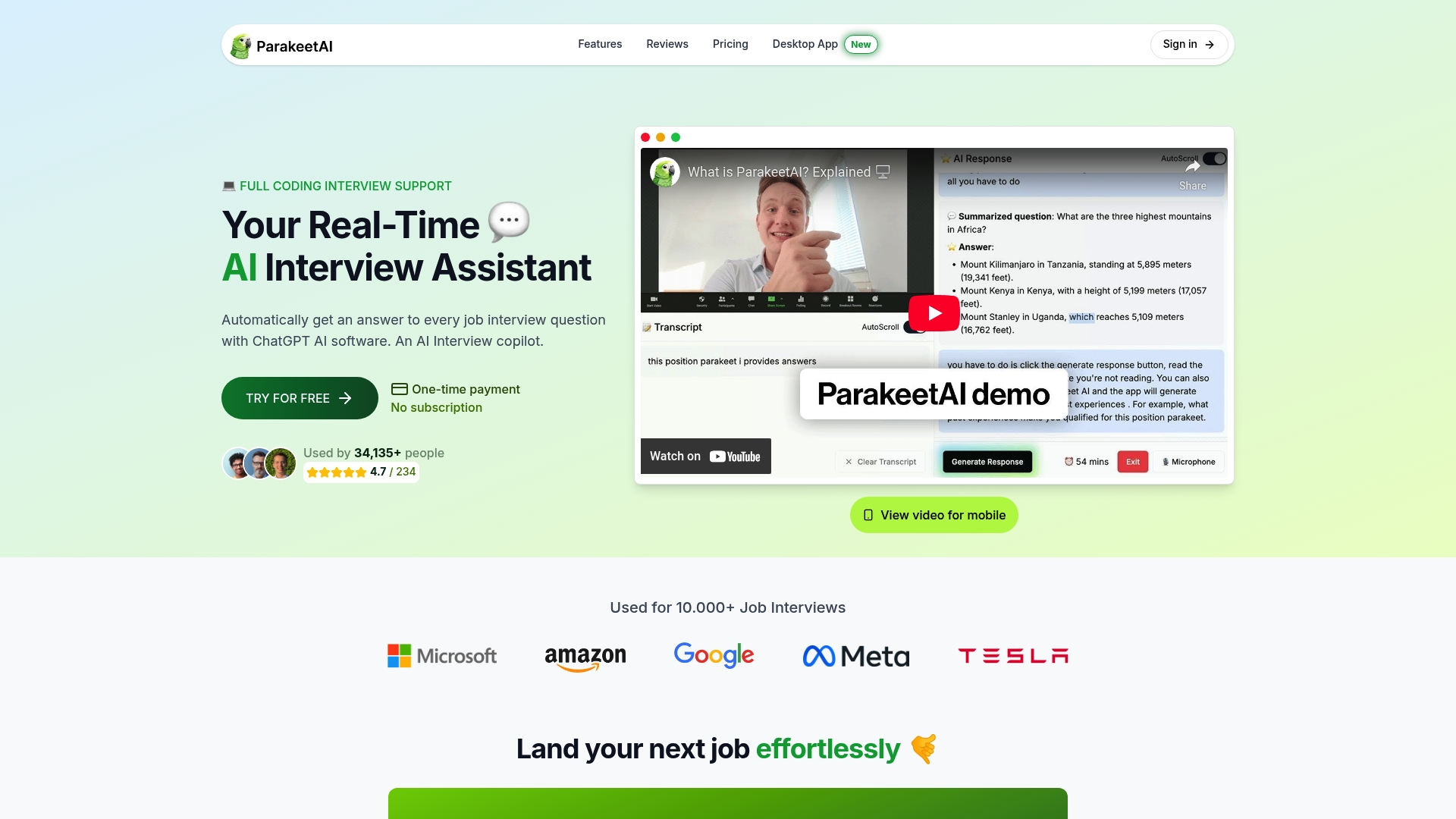
Empower your team with a real-time AI job interview assistant that listens carefully and provides instant, AI-powered answers to your toughest questions. Visit Parakeet AI to experience how automated assistant technology complements your interviewers’ expertise while maintaining fairness and compliance. Don’t miss the opportunity to enhance your candidate evaluations today. Explore our landing page and start transforming your interviews now.
Frequently Asked Questions
What is the role of an interviewer in the hiring process?
An interviewer evaluates job candidates through structured conversations to assess their skills, experience, and fit for the organization. They utilize various techniques, including standardized questions and behavioral assessments, to gather critical information about the candidate.
How do AI interviewers enhance the recruitment process?
AI interviewers automate and standardize screening, generate questions, and provide objective assessments. They utilize technologies such as natural language processing and machine learning to evaluate candidates more efficiently and consistently than traditional methods.
What are some common myths about interviewing?
Common myths include the belief that interviews are just casual conversations, that first impressions are always accurate, and that personal charm indicates professional competence. Effective interviewing requires a structured approach and a balanced assessment of both skills and cultural fit.
What legal considerations should organizations be aware of when using AI in interviews?
Organizations must comply with data protection laws, ensure anti-discrimination practices, obtain candidate consent, and maintain transparency about how AI assessments are conducted. Additionally, they must implement mechanisms for algorithmic accountability to prevent bias in candidate evaluations.