
Master job interview questions and answers PDF with AI

Most job seekers believe traditional interview prep is enough, but data shows otherwise. Relying solely on static study materials and self-rehearsal leaves critical gaps in feedback and realistic practice. In 2026, AI-powered interview applications can significantly improve interview performance, offering dynamic, personalized coaching that traditional methods simply cannot match. This article reveals how combining curated question PDFs with AI-driven tools transforms your preparation, helping you master both technical knowledge and communication skills for your next interview.
Table of Contents
- The Evolving Landscape Of Job Interview Questions And AI In 2026
- How To Use Job Interview Questions And Answers PDFs Effectively With AI Tools
- Comparison Of Traditional Vs AI-Powered Interview Preparation Methods
- Top Interview Questions And Answers PDFs To Enhance Your 2026 Job Preparation
- Enhance Your Interview Readiness With ParakeetAI
- Frequently Asked Questions
Key takeaways
| Point | Details |
|---|---|
| AI enhances performance | AI-powered tools provide real-time feedback that improves both answer quality and delivery skills |
| Intent beats memorization | Understanding the reasoning behind questions creates more authentic, adaptable responses |
| Role-specific preparation wins | Tailored question banks aligned to your target position yield better results than generic practice |
| Vocal feedback matters | Practicing with prosody analysis sharpens communication confidence and presentation impact |
The evolving landscape of job interview questions and AI in 2026
Interview expectations have fundamentally shifted. Companies no longer seek candidates who simply recite memorized answers. The document outlines the changing landscape of tech hiring for 2026 with increased demand for AI-related skills, requiring professionals to demonstrate practical problem-solving abilities and system thinking.
Tech roles now prioritize several core competencies that go beyond coding syntax. You need to articulate how you would design scalable systems, explain trade-offs between different architectural approaches, and demonstrate awareness of maintainability concerns. Interviewers probe your ability to communicate complex technical concepts clearly, assess your collaboration style, and evaluate how you handle ambiguity in real-world scenarios.
The questions themselves have evolved dramatically:
- AI and machine learning integration questions appear across most technical roles
- System design scenarios now include performance optimization and reliability considerations
- Behavioral questions dig deeper into how you’ve handled specific technical challenges
- Companies ask about your approach to debugging production issues and incident response
Understanding system design interview fundamentals has become non-negotiable for mid-level and senior positions. You must explain not just what you would build, but why specific choices make sense for given constraints. This requires genuine comprehension rather than pattern matching from memorized solutions.
The best candidates in 2026 demonstrate adaptability and learning agility, showing they can apply foundational knowledge to novel situations rather than regurgitating rehearsed responses.
Common mistakes still plague many candidates. Focusing exclusively on technical correctness while neglecting communication clarity costs opportunities. Failing to ask clarifying questions before diving into solutions signals poor judgment. Ignoring the business context behind technical decisions reveals a limited perspective that hiring managers notice immediately.
How to use job interview questions and answers PDFs effectively with AI tools
Combining structured question banks with intelligent practice platforms creates a preparation system far superior to either approach alone. Start by selecting PDFs that match your specific role and experience level. A senior backend engineer needs different material than a junior data analyst, and generic question collections waste your limited preparation time.
Follow this systematic approach to maximize your preparation efficiency:
- Download role-specific PDFs covering both technical and behavioral domains relevant to your target positions
- Review questions in batches of 10-15, noting which topics feel unfamiliar or challenging
- Practice answering these questions aloud using an AI platform that records and analyzes your responses
- Review the feedback on both content accuracy and delivery quality, identifying patterns in your weaknesses
- Repeat the cycle with refined answers, focusing on areas where feedback indicated room for improvement
- Gradually increase difficulty by tackling more complex scenarios and combining multiple concepts
AI platforms transform this process by addressing what traditional interview prep tools lack feedback on vocal delivery and presentation weaknesses. You receive specific insights about pacing, clarity, confidence markers in your voice, and whether your explanations follow logical progressions. This vocal coaching element proves especially valuable for remote interviews where your voice carries the entire interaction.

Pro Tip: Record yourself answering the same question three times over three days. The evolution in your delivery and the reduction in filler words will surprise you, and this repetition builds muscle memory for high-pressure situations.
Integrating company-specific insights elevates your preparation further. Many comprehensive PDFs include notes about particular organizations’ interview styles, common follow-up questions, and cultural values they assess. Cross-reference these insights with your AI practice sessions to simulate realistic scenarios you will actually face.
The iterative nature of AI-assisted practice accelerates improvement. Each session builds on previous feedback, creating a personalized learning path that adapts to your unique strengths and gaps. This targeted approach delivers better results in less time compared to unfocused repetition of random questions. Understanding techniques for preparing for video interviews and general strategies for preparing for interviews complements your PDF and AI practice routine.
Comparison of traditional vs AI-powered interview preparation methods
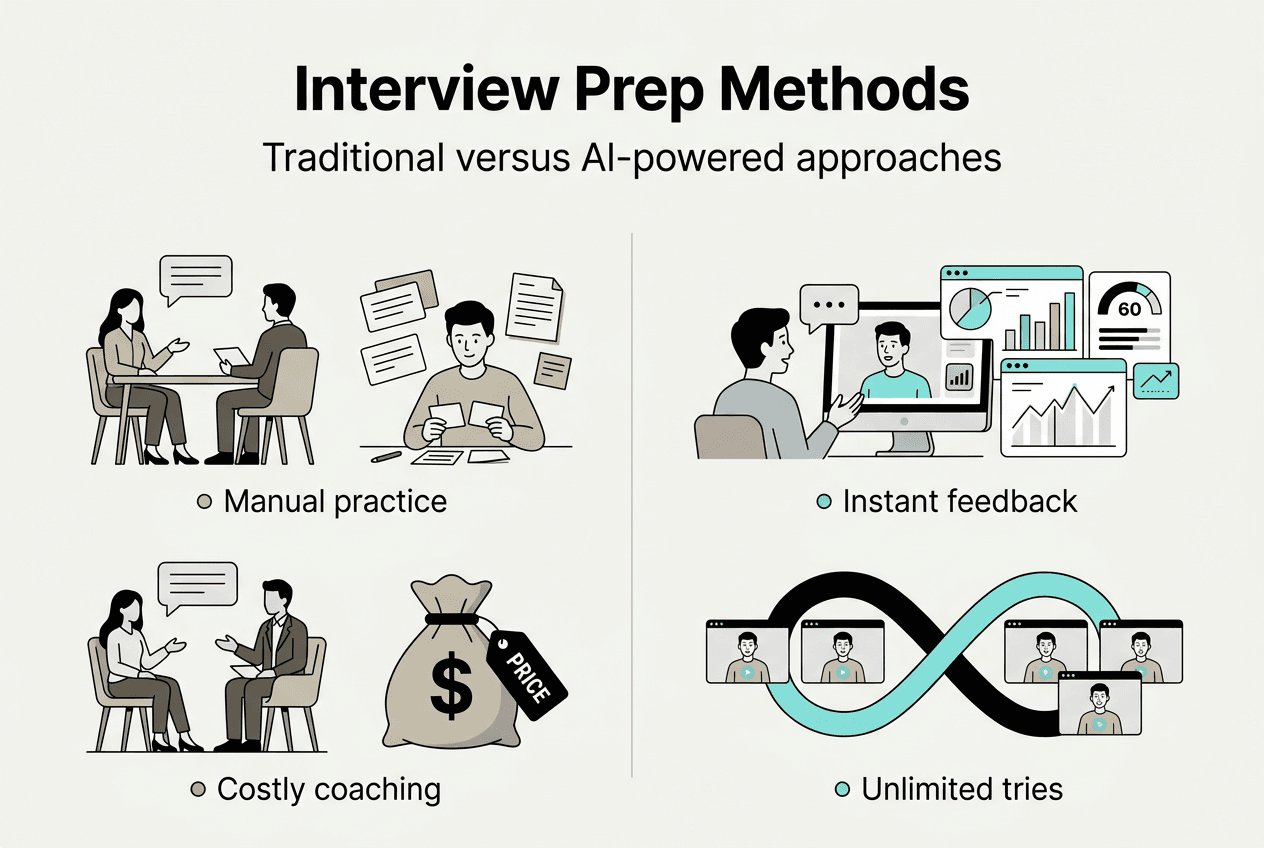
Traditional interview preparation relies heavily on self-study, reading answer guides, and arranging mock interviews with friends or mentors. You spend hours reviewing questions, writing out answers, and hoping your practice partner provides useful feedback. This approach works to some degree but suffers from significant limitations in scalability, consistency, and depth of insight.
AI-powered methods fundamentally change the preparation equation. These systems offer unlimited practice opportunities without scheduling constraints, deliver consistent evaluation criteria across all sessions, and provide granular feedback that even experienced interviewers might miss. The data speaks clearly: AI-powered interview applications showed a 34% improvement in user performance after practice sessions, demonstrating measurable impact on interview outcomes.
| Method | Strengths | Limitations | Best Use Case |
|---|---|---|---|
| Traditional self-study | Low cost, flexible timing, builds foundational knowledge | No feedback loop, difficult to assess delivery quality, easy to develop bad habits | Initial knowledge acquisition and concept review |
| Mock interviews with peers | Human interaction, relationship building, some feedback | Inconsistent quality, scheduling challenges, limited availability, potential bias | Final preparation stage for realistic pressure testing |
| AI-powered platforms | Scalable practice, detailed analytics, vocal feedback, personalized learning paths | Requires technology comfort, subscription costs, lacks human nuance | Core preparation method for iterative improvement |
| Professional coaching | Expert insights, industry-specific guidance, accountability | Expensive, limited sessions, scheduling constraints | Targeted help for specific weaknesses or executive roles |
The cost dynamics favor AI solutions for most candidates. Professional coaching sessions range from $100 to $300 per hour, limiting how much practice you can afford. AI platforms typically charge $20 to $50 monthly for unlimited practice, making them accessible for extended preparation periods. You get exponentially more repetitions for your investment.
Empathic Voice Interfaces represent a breakthrough in preparation technology. These systems analyze not just what you say but how you say it, evaluating prosody, tone, pacing, and confidence markers. This feedback helps you project authority and enthusiasm, qualities that significantly influence interviewer perceptions even when your technical answers are solid.
Pro Tip: Use AI tools for volume and iteration, then schedule one or two human mock interviews near the end of your preparation to test how well your skills transfer to real interpersonal dynamics.
Integrating PDFs with AI practice creates a comprehensive system. The PDFs provide structured content and domain coverage, while AI delivers the feedback mechanism that drives actual improvement. This combination addresses both knowledge gaps and execution weaknesses, preparing you holistically for interview success. Learning about avoiding interview pitfalls further refines your approach.
Top interview questions and answers PDFs to enhance your 2026 job preparation
Several authoritative resources stand out for their comprehensive coverage and quality of explanations. These PDFs span different experience levels and specializations, giving you options to match your specific preparation needs. Selecting the right materials saves time and focuses your effort on relevant content.
The GitHub repository offers a curated collection of high-quality AI-related interview questions and answers, covering machine learning fundamentals, deep learning architectures, natural language processing, and computer vision. This resource proves invaluable for data science and AI engineering roles, with clear explanations and example code snippets that reinforce concepts.
For software engineering positions, Cracking the Coding Interview book provides comprehensive programming questions and solutions that remain highly relevant in 2026. While the core algorithms and data structures stay constant, the book’s problem-solving frameworks apply to modern system design questions and coding challenges you will encounter.
| Resource | Focus Area | Experience Level | Access |
|---|---|---|---|
| AI Interview Questions GitHub Repo | Machine learning, deep learning, NLP, computer vision | Intermediate to advanced | Free, open source |
| Cracking the Coding Interview | Algorithms, data structures, coding problems | Entry to senior level | Purchase or library |
| 2026 Software Professional Question Bank | System design, AI integration, modern tech stacks | Mid to senior level | Scribd subscription |
| Behavioral Interview Guide PDFs | Leadership, conflict resolution, teamwork scenarios | All levels | Various free and paid sources |
Different PDFs serve distinct purposes in your preparation strategy:
- Foundational resources build core knowledge in algorithms, data structures, and system design principles
- Role-specific collections target particular positions like frontend developer, DevOps engineer, or product manager
- Behavioral question banks help you structure compelling stories about past experiences using frameworks like STAR
- Company-specific guides reveal patterns in how particular organizations conduct interviews and what they value
Tailoring your PDF selection to your career stage matters significantly. Fresh graduates benefit from collections emphasizing fundamentals and common entry-level scenarios. Experienced professionals need materials covering architecture decisions, team leadership, and complex trade-off discussions. Mismatched resources waste preparation time on irrelevant content.
Combine your PDF study with practice on technical interview prep platforms to reinforce learning through application. Reading answers provides knowledge, but articulating them under simulated pressure builds the competence interviewers actually evaluate. This dual approach of study and practice creates the preparation depth that translates to interview success.
Enhance your interview readiness with ParakeetAI
You have learned how AI transforms interview preparation by providing dynamic feedback and unlimited practice opportunities. Now take the next step by experiencing these benefits firsthand. The ParakeetAI platform delivers AI-powered interview simulations tailored to your target roles, combining the question bank insights from this article with real-time vocal coaching.
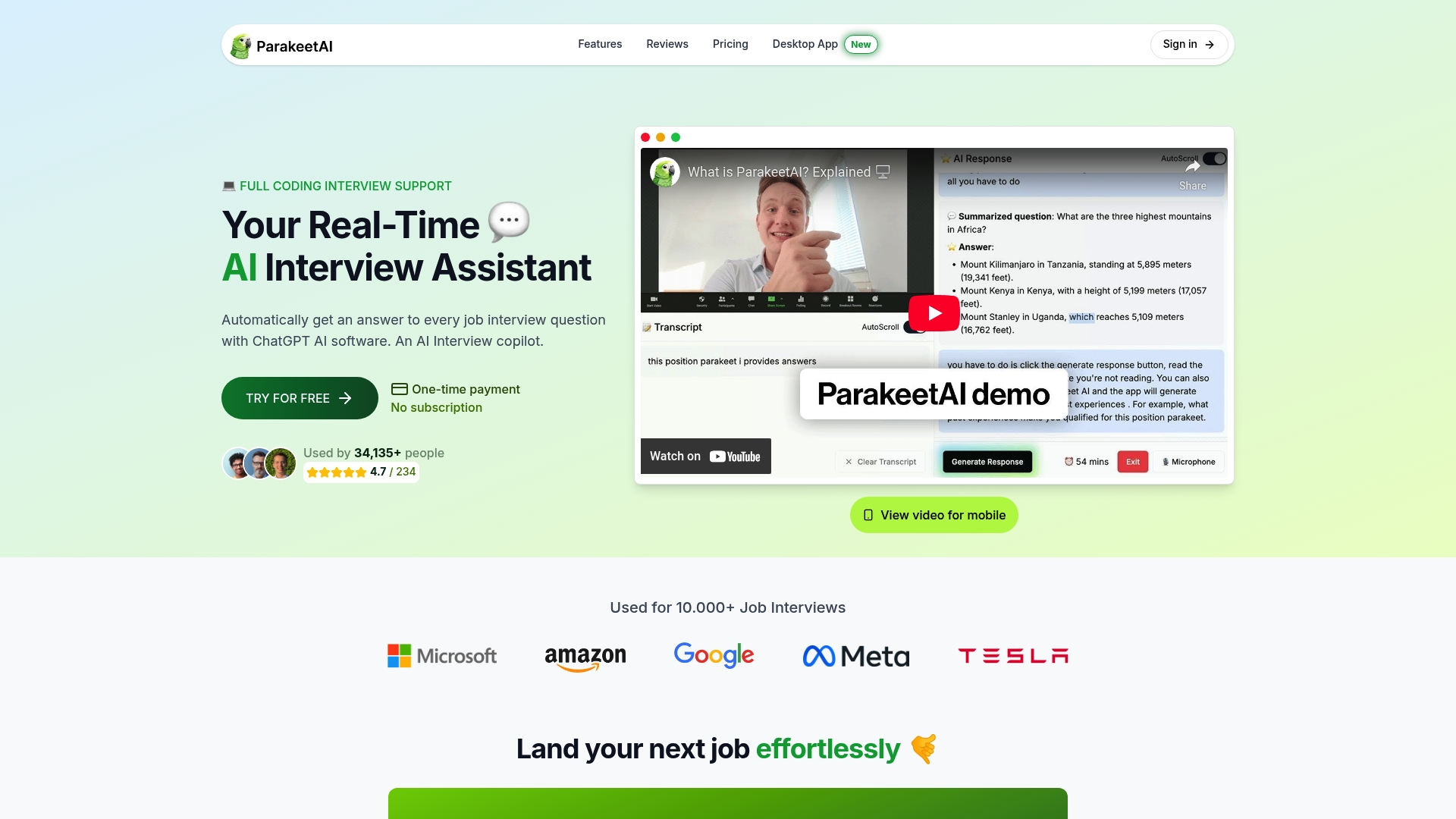
ParakeetAI integrates role-specific question databases with advanced speech analysis, giving you detailed feedback on both content quality and delivery effectiveness. Whether you are preparing for technical coding rounds or behavioral leadership discussions, the platform adapts to your needs and tracks your improvement over time. You will build genuine confidence by practicing realistic scenarios and receiving actionable insights after each session. Explore proven interview preparation strategies and start your preparation journey today with tools designed specifically for job seekers facing 2026’s competitive interview landscape.
Frequently asked questions
What are the benefits of using AI-assisted interview preparation tools?
AI-assisted tools provide measurable performance improvements through personalized feedback on both answer content and vocal delivery. Studies show users experience significant gains in confidence and communication clarity after practicing with AI systems. These platforms offer unlimited practice sessions without scheduling constraints, making preparation more accessible and scalable than traditional mock interviews. The detailed analytics help you identify specific weaknesses and track progress over time, creating a data-driven improvement cycle. Learn more about effective interview preparation tips to complement your AI practice.
How can I choose the best job interview questions and answers PDF for my role?
Prioritize PDFs explicitly designed for your industry, role, and experience level rather than generic collections. Look for recently updated materials that reflect 2026 hiring trends, especially regarding AI skills and modern system design patterns. The best resources include both technical questions and behavioral scenarios, giving you comprehensive preparation coverage. Verify that explanations go beyond simple answers to explain the reasoning and trade-offs behind different approaches. Combining quality PDFs with dynamic practice on platforms focused on choosing interview prep materials maximizes your preparation effectiveness.
What common interview mistakes should I avoid when preparing with PDFs and AI tools?
Avoid treating PDFs as scripts to memorize word-for-word, which creates robotic responses that interviewers immediately recognize. Neglecting to practice your vocal delivery and communication style leaves a critical gap that content knowledge alone cannot fill. Many candidates ignore company-specific research, missing opportunities to tailor their examples and demonstrate genuine interest. Failing to act on feedback from AI tools wastes the primary advantage these platforms provide. Address persistent errors early by reviewing session analytics and deliberately practicing improved versions. Understanding common interview pitfalls helps you avoid these mistakes systematically.
How does AI feedback improve my interview communication skills?
AI systems analyze vocal characteristics like pacing, tone variation, filler word frequency, and confidence markers that human listeners perceive but rarely articulate explicitly. You receive specific metrics showing where you rush through explanations, where you hesitate uncertainly, and where your energy drops. This prosody feedback helps you modulate your delivery for maximum impact and credibility. Over multiple practice sessions, you develop better habits in structuring explanations logically and maintaining engaging vocal dynamics. The result is communication that sounds more polished and professional without losing authenticity.
Can I use interview question PDFs effectively without AI tools?
You can certainly study PDFs independently and gain valuable knowledge about common interview topics and answer frameworks. However, without external feedback mechanisms, you cannot assess whether your vocal delivery, pacing, and explanation clarity meet interviewer expectations. Self-study also makes it difficult to identify unconscious habits like excessive filler words or unclear logical progressions. While PDFs alone provide better preparation than no preparation, combining them with AI practice or human mock interviews delivers substantially better results. The investment in feedback tools typically pays for itself through faster improvement and better interview outcomes.
How often should I practice with AI interview tools for optimal results?
Consistent practice over several weeks yields better results than cramming intensive sessions right before interviews. Aim for three to five practice sessions weekly, each covering different question types or skill areas. This spacing allows time for feedback integration and skill consolidation between sessions. Track your progress metrics to identify when you have reached competency in specific areas, then shift focus to remaining weaknesses. Most candidates see significant improvement within two to three weeks of regular AI-assisted practice. Adjust frequency based on your timeline and the complexity of roles you are targeting.