
7 Key Steps to Succeed in Your Screening Interview

Nearly every american hiring process begins with a screening interview, yet many candidates underestimate its impact. For job seekers worldwide using AI tools, this first step offers a unique chance to showcase both your professionalism and technical savvy. With companies filtering out up to 70 percent of applicants at this stage, understanding how to combine strategic preparation with real-time feedback can set you apart and lead to stronger interview outcomes.
Table of Contents
- Understand The Screening Interview Process
- Research The Company And Role Thoroughly
- Prepare Targeted Responses Using Ai Tools
- Practice Common Screening Interview Questions
- Leverage Real-Time Ai Feedback During Interviews
- Refine Your Communication Skills With Ai Insights
- Follow Up And Analyze Your Performance Afterward
Quick Summary
| Takeaway | Explanation |
|---|---|
| 1. Prepare for the Screening Interview | Understand it as your first interaction to assess qualifications and fit for the role. |
| 2. Conduct In-Depth Company Research | Explore the company’s performance, culture, and job requirements to strengthen your candidacy. |
| 3. Utilize AI Tools for Tailored Responses | Leverage AI to customize and refine answers, ensuring alignment with job expectations. |
| 4. Practice Common Interview Questions | Use the STAR method to structure responses and focus on clear, concise communication. |
| 5. Analyze Your Performance Post-Interview | Follow up with a thank you email and review your performance to identify areas for improvement. |
1. Understand the Screening Interview Process
A screening interview represents your first critical interaction with a potential employer, serving as an initial filter to evaluate your basic qualifications and professional fit. This initial conversation helps recruiters quickly determine whether you merit a more comprehensive interview process.
Typically conducted by human resources professionals or hiring managers, screening interviews are designed to assess fundamental aspects of your candidacy. These brief conversations usually last between 15 to 30 minutes and focus on verifying your resume details, understanding your career objectives, and gauging your preliminary suitability for the role.
During a screening interview, employers will examine several key elements about you. They want to confirm your professional background, validate your experience matches job requirements, and assess your communication skills. This process helps companies efficiently narrow down large candidate pools, ensuring job applicant screening meets organizational standards.
Expect questions that explore your resume, career trajectory, salary expectations, and immediate availability. Recruiters are also evaluating your enthusiasm, professionalism, and potential cultural alignment with their organization. Your responses should be concise, authentic, and directly address the interviewer’s underlying objectives.
Successful candidates understand that screening interviews are not just about answering questions correctly but demonstrating genuine interest and professional preparedness. Approach this initial interaction as an opportunity to make a strong first impression and set the stage for subsequent interview rounds.
Pro tip: Prepare a brief, compelling professional summary that highlights your key qualifications and aligns with the specific job description, enabling you to respond quickly and confidently during screening interviews.
2. Research the Company and Role Thoroughly
Thorough research is your strategic advantage in any screening interview, transforming you from a generic candidate into a well informed potential team member. Understanding a company goes far beyond scanning its website it requires deep strategic preparation.
Comprehensive research involves multiple dimensions. You need to investigate the company’s recent business performance, strategic initiatives, leadership team, and organizational culture. How to research a company before an interview involves systematic information gathering from multiple credible sources.
Job analysis plays a crucial role in understanding the specific requirements of your target position. Analyzing the job description meticulously helps you identify key skills, responsibilities, and competencies employers seek. This knowledge allows you to align your professional narrative precisely with their expectations, demonstrating that you are not just a potential candidate but an ideal match.
Start by examining the company’s official website, recent press releases, annual reports, and social media channels. LinkedIn can provide insights into the organization’s leadership and employee perspectives. Industry publications and news articles offer additional context about the company’s market position and recent developments.
Pay special attention to the company’s mission, values, and recent achievements. Understanding these elements helps you craft responses that resonate with their organizational culture. Companies appreciate candidates who demonstrate genuine interest and alignment with their strategic goals.
Research also helps you prepare intelligent questions for your interviewer. Thoughtful inquiries about recent company initiatives or industry challenges showcase your proactive approach and deep engagement.
Pro tip: Create a structured research document with key company insights, recent achievements, and potential discussion points at least 48 hours before your screening interview to ensure comprehensive preparation.
3. Prepare Targeted Responses Using AI Tools
AI tools have revolutionized interview preparation, offering job seekers unprecedented opportunities to craft strategic and personalized responses. These intelligent platforms can transform your interview readiness from generic to exceptional by providing tailored guidance and practice.
Modern AI technologies enable candidates to analyze job descriptions deeply and generate precise, contextually relevant interview responses. AI tools for remote interviews can simulate potential questions, help you identify key skills employers seek, and refine your communication approach.
The strategic use of AI involves more than simple answer generation. These tools can help you break down complex job descriptions, highlight transferable skills, and create narrative frameworks that showcase your professional strengths. By understanding how to leverage AI effectively, you can develop responses that are both authentic and precisely aligned with employer expectations.
When using AI tools, focus on customization and personalization. Do not simply copy generated responses verbatim. Instead, use AI suggestions as a foundation for crafting your unique professional narrative. The goal is to sound natural, confident, and genuinely reflective of your experiences.
Practice with AI tools multiple times, reviewing and refining your responses. Pay attention to sentence structure, professional tone, and how well your answers demonstrate your specific qualifications. Many AI platforms offer iterative feedback that can help you continuously improve your interview communication strategy.
Remember that while AI is a powerful preparation tool, it cannot replace genuine human connection. Use these technologies to enhance your confidence and clarity, but always maintain your authentic professional voice.
Pro tip: Select an AI interview preparation tool that allows multiple iterations and provides nuanced feedback, enabling you to practice and refine your responses systematically before your actual screening interview.
4. Practice Common Screening Interview Questions
Screening interviews demand strategic preparation through systematic practice of anticipated questions. Mastering common interview questions transforms your potential uncertainty into confident communication.
Employers typically structure screening interviews around three primary question categories: background verification, professional motivation, and role specific competencies. Interview screening questions often explore your professional trajectory, skills alignment, and immediate career objectives.
The STAR method emerges as a powerful framework for constructing compelling responses. This approach helps you structure answers by detailing the Situation, explaining the Task required, describing the Action you took, and highlighting the Result achieved. Using STAR ensures your responses are structured, relevant, and demonstrate measurable professional impact.
Practice is critical. Record yourself answering questions to assess your tone, clarity, and body language. Focus on creating concise responses that communicate your qualifications efficiently. Most screening interviews last 15 to 30 minutes, so economy of language matters significantly.
Common screening questions typically include professional background inquiries, salary expectations, current job status, and reasons for seeking a new position. Prepare thoughtful yet succinct answers that highlight your unique professional value without appearing rehearsed or overly scripted.
Remember that screening interviews evaluate not just your qualifications but your communication skills and professional demeanor. Your responses should demonstrate enthusiasm, clarity, and alignment with the prospective role and organization.
Pro tip: Create a digital practice journal with your best STAR method responses, reviewing and refining them weekly to maintain sharp interview readiness and adaptability.
5. Leverage Real-Time AI Feedback During Interviews
Real-time AI feedback represents a transformative approach to interview preparation, offering candidates unprecedented insights into their communication performance. These intelligent systems provide immediate, data-driven analysis of your interview presentation.
Real-time job interview insights demonstrate how AI technologies can evaluate multiple dimensions of your communication beyond traditional self assessment. Modern AI tools analyze verbal and nonverbal elements including speech patterns, tone, facial expressions, and response structure.
The power of real-time AI feedback lies in its ability to provide objective, granular analysis of your interview performance. These systems can detect subtle communication nuances such as speaking pace, emotional resonance, and clarity of expression that human observers might miss. By receiving immediate insights, you can make micro adjustments to your communication strategy in real time.
Successful candidates treat AI feedback as a personalized coaching tool. These systems can highlight areas of strength and potential improvement, helping you develop a more refined professional presentation. Pay special attention to recommendations about body language, vocal tone, and response clarity.
To maximize AI feedback benefits, practice multiple mock interviews using different scenarios. This approach allows you to understand your communication patterns across various professional contexts. Treat each AI generated insight as an opportunity for strategic self improvement.
Remember that while AI provides valuable insights, the ultimate goal is to sound natural and authentic. Use technological feedback as a refinement tool, not a script to mechanically follow. Your genuine professional personality should always shine through.
Pro tip: Record your AI assisted practice interviews and create a personal feedback compilation, tracking your communication skill improvements over time.
6. Refine Your Communication Skills with AI Insights
AI technologies have revolutionized communication skill development by offering precise, personalized feedback mechanisms. These intelligent systems provide unparalleled opportunities for candidates to enhance their verbal and nonverbal communication strategies.
AI for interview coaching represents a transformative approach to professional communication skill refinement. Advanced algorithms analyze multiple dimensions of your communication including speech clarity, emotional tone, response structure, and contextual appropriateness.
Modern AI communication training focuses on developing nuanced communication capabilities beyond simple language proficiency. These systems can detect subtle communication patterns such as speaking pace, word choice precision, and emotional resonance that traditional training methods often overlook.
To effectively leverage AI insights, approach communication skill development as an iterative process. Use AI tools to record multiple practice sessions, carefully analyzing feedback across different scenarios. Pay special attention to recommendations about vocal modulation, response concision, and professional language selection.
Successful communication skill refinement requires a balanced approach. While AI provides data driven insights, remember that authenticity remains paramount. Use technological recommendations as guidance to enhance your natural communication style rather than replacing your unique professional voice.
The goal of AI communication skill development is not to create robotic responses but to help you communicate more effectively and confidently. Each piece of feedback represents an opportunity to understand your communication strengths and areas for potential improvement.
Pro tip: Create a weekly communication skill improvement log that tracks AI generated insights, documenting your progress and strategically addressing identified communication development areas.
7. Follow Up and Analyze Your Performance Afterward
The moments following a screening interview are critical for professional growth and potential career advancement. Thoughtful post interview reflection transforms an initial interaction into a strategic opportunity for continuous improvement.
Post interview analysis enables candidates to gain deeper insights into their communication effectiveness and professional presentation. By systematically reviewing your performance, you can identify strengths and opportunities for future refinement.
Immediate follow up begins with a concise thank you email sent within 24 hours of your screening interview. This correspondence should express genuine appreciation, briefly reference specific conversation highlights, and reinforce your enthusiasm for the potential role. Personalization is key demonstrating that you were actively engaged during the interview.
Your performance analysis should encompass multiple dimensions. Review your verbal responses, assessing clarity, relevance, and professional tone. Examine nonverbal communication including body language, eye contact, and overall confidence. Consider the specific questions asked and evaluate how effectively you articulated your professional narrative.
Utilize both human and technological feedback sources. Request informal feedback from the interviewer if possible. Leverage AI tools that can provide objective insights into your communication patterns. Compare your performance against your initial preparation and identify specific areas for future development.
Remember that every screening interview represents a learning opportunity. Approach post interview analysis with curiosity and a growth mindset. Each interaction provides valuable data to help you refine your professional communication strategy.
Pro tip: Create a standardized post interview reflection template that captures key performance metrics, enabling you to track your communication skill progression across multiple interview experiences.
Below is a comprehensive table summarizing key strategies and considerations for effectively preparing for and succeeding in screening interviews as discussed in the article.
| Aspect | Key Points | Benefits & Outcomes |
|---|---|---|
| Screening Interviews | Initial phase to evaluate qualifications, resume details, and career objectives. | Provides an opportunity to make a strong first impression. |
| Research Preparation | Investigate company performance, mission, values, and job requirements extensively. | Aligns your candidacy with the position and organization goals. |
| AI Tools for Preparation | Utilize AI technologies to practice and tailor responses effectively. | Enhances confidence and clarity in communication. |
| Practicing Interview Skills | Use frameworks like STAR and record responses for refinement. | Builds structured and compelling professional narrative. |
| Real-Time AI Feedback | Analyze communication strategy during interviews dynamically. | Improves verbal/nonverbal aspects through immediate insights. |
| Post-Interview Reflection | Review and analyze performance post-interaction; send a follow-up note. | Facilitates continuous improvement in interview readiness. |
Take Control of Your Screening Interview Success Today
Facing a screening interview can feel overwhelming when you want to make a strong first impression but struggle with sharp, targeted responses and real-time communication confidence. This article highlights key challenges like preparing authentic answers, mastering communication skills with AI insights, and leveraging feedback to refine your presentation. Your goal is clear: develop genuine, concise responses and demonstrate your professional fit efficiently during those critical 15 to 30 minutes.
That is where Parakeet AI becomes your essential partner. Our real-time AI job interview assistant listens carefully to your interview and instantly provides tailored answers to every question, helping you practice personalized, context-aware responses with immediate feedback. Imagine transforming each practice session into a strategic preparation step with tools that refine your verbal skills just as described in AI tools for remote interviews and boost your confidence by simulating real scenarios.
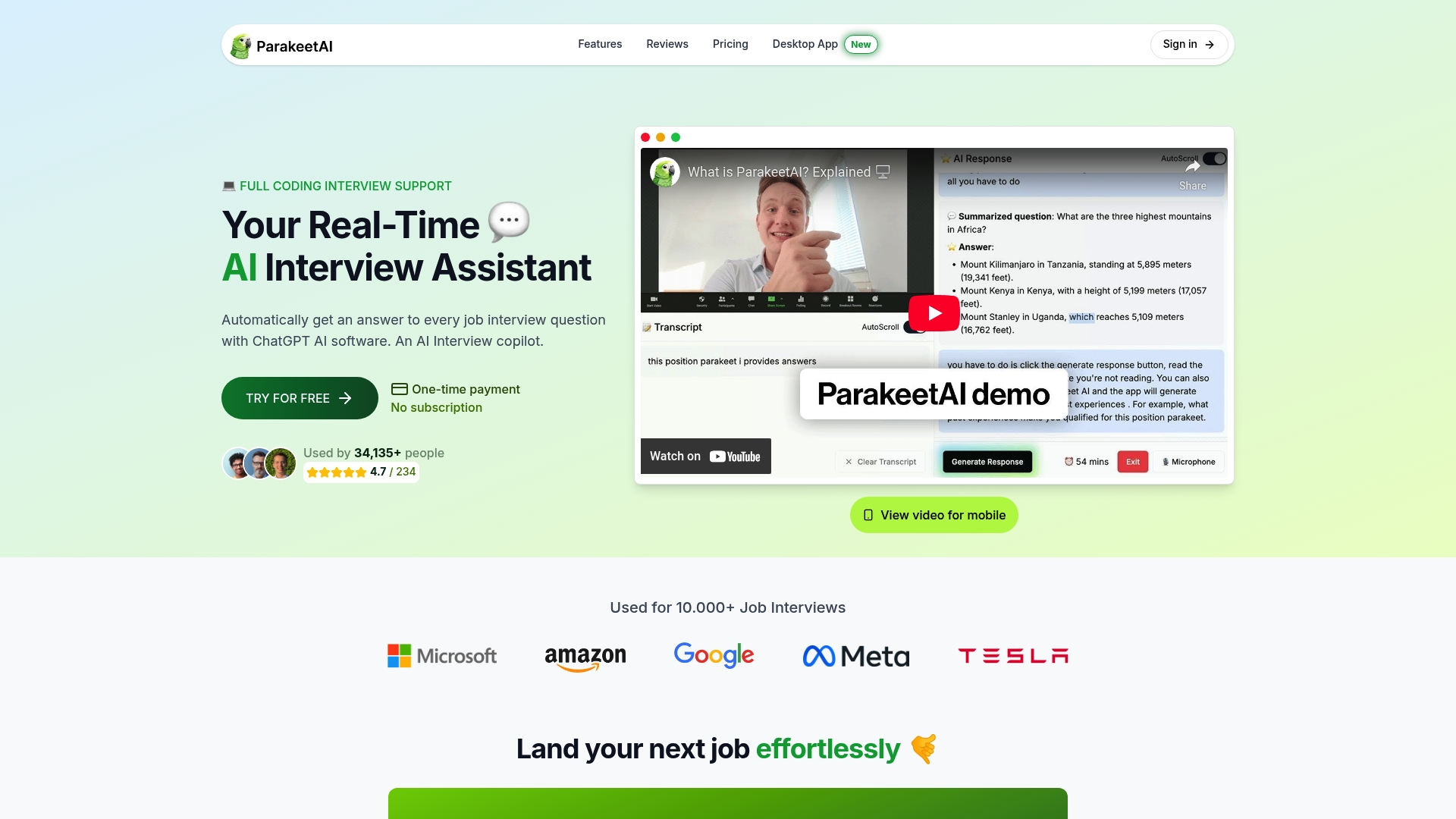
Elevate your screening interview readiness with Parakeet AI and embrace powerful, data-driven coaching that matches the most effective methods presented here. Do not wait until the stress starts on interview day — take action now at https://parakeet-ai.com and start turning every question into an opportunity to impress and advance your career.
Frequently Asked Questions
What is a screening interview, and why is it important?
A screening interview is the first interaction you have with a potential employer, typically lasting 15 to 30 minutes. It serves as a filter to assess your basic qualifications and fit for the role, making it crucial for advancing to more detailed interviews.
How can I effectively research the company before my screening interview?
To effectively research the company, examine its official website, recent press releases, and social media channels. Gather key insights about its mission, culture, and recent achievements to tailor your responses and show genuine interest.
What common questions should I prepare for in a screening interview?
Prepare for questions that verify your professional background, salary expectations, and motivations for seeking a new position. Familiarize yourself with the STAR method to structure your responses clearly and effectively.
How can I leverage AI tools to prepare for my screening interview?
Leverage AI tools to analyze job descriptions and generate tailored responses. Use these tools for practice interviews to refine your communication style and prepare for common questions with feedback on your performance.
What should I do after my screening interview?
Follow up with a thank-you email within 24 hours, expressing appreciation and reinforcing your interest in the role. Additionally, analyze your performance by reviewing your responses and seeking feedback to improve for future interviews.
How can I improve my communication skills for the screening interview?
To improve your communication skills, use AI insights to identify areas for development and practice consistently. Keep a log of your progress and focus on vocal modulation, clarity, and body language, aiming for noticeable improvement over time.