
Candidate Interview Pathway: A Guide for Hiring Managers

TL;DR:A candidate interview pathway is a structured sequence of stages from application to hiring that influences candidate quality and perception. Using structured interviews, with standardized questions and scoring, improves accuracy and reduces bias in evaluating candidates. Optimizing communication, limiting interview rounds, and tracking metrics help reduce dropout and enhance the overall hiring process.
A candidate interview pathway is defined as the structured sequence of steps that moves a job applicant from initial application through to a final hiring decision. Most HR professionals recognize this under the broader term “structured hiring process,” but the pathway framing matters because it forces you to think about each stage as a deliberate design choice, not a default routine. Getting this sequence right directly determines the quality of your hires, the speed of your decisions, and how candidates perceive your organization. This guide breaks down every stage, explains what structured interviewing adds to the process, and gives you concrete ways to fix the friction points that cost you top candidates.
What is a candidate interview pathway and what stages does it include?
The typical candidate interview pathway runs 3–6 weeks from application to offer and follows a seven-step sequence: resume screen, recruiter phone call, online assessment, screening interview, interview loop, candidate review or debrief, and salary negotiation. Each stage has a distinct purpose, and collapsing or skipping stages creates gaps in your evaluation data.
Here is what each stage accomplishes:
- Resume screen: Filters applicants against minimum qualifications. This stage eliminates the largest volume of candidates before any human interaction occurs.
- Recruiter phone call: Confirms basic fit on compensation, location, and role expectations. It also sets the candidate’s first impression of your organization.
- Online assessment: Tests specific skills or cognitive ability before investing panel time. Technical roles often use coding challenges; sales roles may use scenario-based exercises.
- Screening interview: A 30–45 minute conversation with a recruiter or hiring manager to assess communication, motivation, and cultural alignment.
- Interview loop: The most resource-intensive stage. Candidates meet multiple team members, each evaluating different competencies.
- Candidate review or debrief: The hiring team compares notes and scores before moving to an offer. This stage is where structured documentation pays off most.
- Salary negotiation: The final stage before an offer is accepted or declined.
Initial screening eliminates 90–95% of applicants before they ever speak to a recruiter. That figure shows why the resume screen must be calibrated carefully. Screening too aggressively cuts strong candidates; screening too loosely wastes recruiter time downstream.
Pro Tip: Map each stage to a specific evaluation question. “Does this candidate meet the technical bar?” belongs in the assessment stage, not the debrief. Mixing evaluation objectives across stages creates redundancy and confusion.
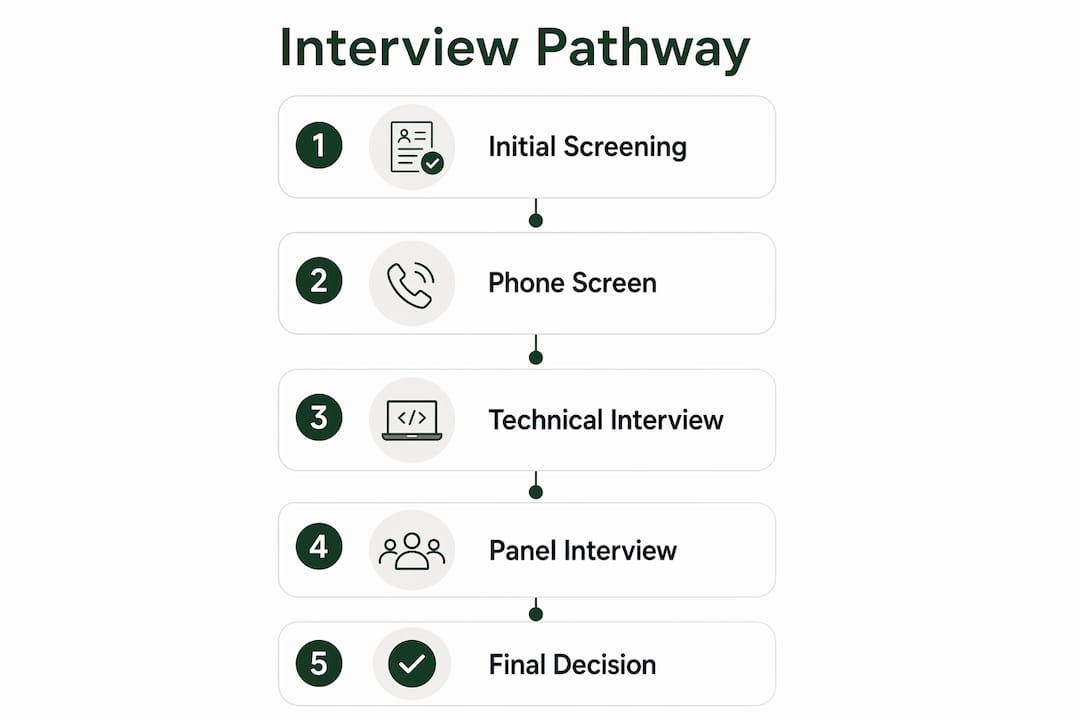
Phone screening is used by 91% of companies as an early filter before panel or technical evaluations. That near-universal adoption reflects how much value a short call delivers relative to its cost.

How does structured interviewing improve the candidate interview pathway?
Structured interviewing is defined as a method where every candidate answers the same vetted questions, responses are scored against a standardized rubric, and interviewers receive calibration training before the process begins. The contrast with unstructured interviews is significant. Unstructured interviews rely on interviewer instinct, which introduces bias and produces scores that are difficult to compare across candidates.
Structured interviews predict job performance better than unstructured ones because uniform questions isolate candidate signal from interviewer mood or personal affinity. That predictive advantage is the core argument for building structure into every stage of your interview pathway steps.
The key elements of a structured approach include:
- Competency mapping: Define the 4–6 competencies the role requires before writing a single question. Every question should trace back to a competency.
- Behavioral and situational questions: Behavioral questions ask candidates to describe past actions (“Tell me about a time when…”). Situational questions present a hypothetical scenario. Both formats produce more comparable data than open-ended conversation.
- Scoring rubrics: Build rubrics before the interview, with written examples of what a weak, average, and strong answer looks like for each question. This prevents post-hoc rationalization.
- Interviewer calibration: Run a 30-minute calibration session before the loop begins. Interviewers who have never discussed scoring standards will apply different benchmarks.
Best practice assigns each panel member ownership of 1–2 competencies rather than overlapping coverage across the full panel. Focused ownership produces deeper questioning and more reliable scores than having every interviewer assess everything.
Structured interviewing reduces subjective bias by anchoring assessment to consistent criteria rather than gut feel. For HR professionals managing legal risk, that consistency also creates a defensible record if a hiring decision is ever challenged.
Pro Tip: Assign each interviewer a written brief before the loop that lists their two competencies, the questions they will ask, and the rubric anchors. Interviewers who walk in prepared ask sharper follow-up questions and score more consistently.
What are common challenges and pitfalls in managing the candidate interview pathway?
Even well-designed interview pathways break down at predictable points. Recognizing these failure modes lets you fix them before they cost you candidates or compromise your evaluation data.
- Excessive friction drives dropout. Candidates who encounter unnecessary friction during the interview process are 3.2 times more likely to withdraw from the process. Friction includes unclear scheduling instructions, redundant application forms, and long gaps between stages with no communication.
- Signal loss at handoffs. The transition from recruiter to hiring manager is the most common point where evaluation context disappears. When a hiring manager walks into a screening interview without reading the recruiter’s notes, candidates repeat themselves. Repeated questions signal disorganization and frustrate strong candidates who have other options.
- Bloated interview loops. Adding rounds to a process feels like thoroughness, but it is usually a symptom of unclear competency ownership. Each additional round extends time-to-hire and increases the chance that a top candidate accepts another offer first.
- Interviewer fatigue. Interviewers who conduct five or six interviews in a single day score candidates less accurately by the end of the day. Fatigue compresses scores toward the middle and reduces the quality of written feedback.
- Inconsistent documentation. When interviewers submit feedback in different formats or at different levels of detail, the debrief becomes a negotiation rather than a data review. Standardized scorecards prevent this.
Pro Tip: Set a 48-hour feedback submission deadline after every interview. Feedback submitted more than two days after an interview loses accuracy as memory fades. Build this deadline into your scheduling confirmation emails so interviewers see it before the interview, not after.
The effective candidate interview process depends on structured notes and consistent handoff documentation. Without that infrastructure, each stage starts from scratch instead of building on prior evaluation.
How can HR professionals optimize the candidate interview pathway?
The most effective optimization starts with designing the pathway from the candidate’s perspective, not the recruiter’s calendar. Candidates experience the process as a sequence of information gaps and waiting periods. Filling those gaps proactively reduces dropout and improves offer acceptance rates.
Practical steps for improving your interview stages include:
- Communicate proactively at every transition. Send a confirmation email after each stage that explains what comes next, who the candidate will meet, and what the evaluation will cover. Candidates who understand the process feel more confident and engage more authentically.
- Limit rounds to 4–6. Capping interview loops at 4–6 rounds cuts time-to-hire by approximately 8 days compared to processes with excess rounds. Fewer rounds also reduce interviewer fatigue and force clearer competency ownership.
- Use technology to preserve signal. Interview notes linked directly to candidate profiles prevent context loss at handoffs. Platforms that connect recruiter notes to hiring manager views before the next stage eliminate the “starting from scratch” problem. Tools like AI-assisted interview prep also help candidates arrive better prepared, which improves the quality of data you collect.
- Track process metrics. Measure time-to-feedback, interview-to-offer conversion rates, and candidate Net Promoter Score (NPS) after each stage. These metrics reveal where your pathway loses candidates or slows down.
- Train interviewers on structured methods. Interviewer training is not a one-time event. Run calibration sessions at the start of each major hiring cycle and debrief after offers are accepted or declined to identify scoring drift.
Treating the interview pathway as a design challenge that centers the candidate’s experience improves employer brand perception and increases offer acceptance rates. The best candidates evaluate your process as a signal of how you operate as an organization.
For candidates entering this process, tools like ApplyGenius help reduce friction on the application side by producing stronger resumes, which means the candidates who reach your recruiter call are better prepared from the start.
Pro Tip: Run a candidate NPS survey immediately after each stage, not just at the end of the process. Stage-level NPS pinpoints exactly where experience breaks down, rather than giving you an aggregate score that is hard to act on.
Key Takeaways
A well-designed candidate interview pathway combines structured stages, consistent evaluation criteria, and proactive communication to produce better hires faster and with less candidate dropout.
| Point | Details |
|---|---|
| Seven-stage standard process | The full pathway runs 3–6 weeks and covers resume screen through salary negotiation. |
| Structured interviews improve accuracy | Consistent questions and scoring rubrics predict job performance better than unstructured conversations. |
| Friction multiplies dropout risk | Candidates facing excessive friction are 3.2 times more likely to withdraw before an offer. |
| Limit rounds to 4–6 | Capping interview loops cuts time-to-hire by approximately 8 days and reduces interviewer fatigue. |
| Measure stage-level metrics | Track time-to-feedback and candidate NPS per stage to identify and fix specific breakdown points. |
The hiring funnel is the wrong mental model
Most HR teams still think about the candidate interview process as a funnel: wide at the top, narrow at the bottom, with the goal of eliminating candidates efficiently. I think that framing is backwards, and it shows up in the data. When candidates feel like subjects being filtered rather than professionals being evaluated, they disengage or withdraw.
The shift I advocate is from funnel thinking to journey mapping. A journey has two participants. The candidate is evaluating your organization at every stage just as actively as you are evaluating them. The best candidates, the ones with options, make decisions based on how your process treats them. A disorganized handoff, a repeated question, or a week of silence after a final round sends a clear message about your culture.
The candidate journey framework treats hiring as a shared evaluation. That framing changes how you design every touchpoint. You stop asking “how do we screen faster?” and start asking “what does the candidate need to know at this stage to engage fully?” Those are very different questions with very different answers.
The practical implication is that your interview process best practices should include explicit ownership of the candidate experience at each stage, not just evaluation quality. Someone on your team should be accountable for the 48 hours between stages, not just the 45 minutes inside the interview room.
— Jure
How Parakeet-ai supports a stronger interview pathway
Parakeet-ai is built for the moments inside the interview room where evaluation quality is made or lost. The platform listens to live interviews and provides real-time, AI-generated responses to every question, giving candidates the support they need to perform at their best.
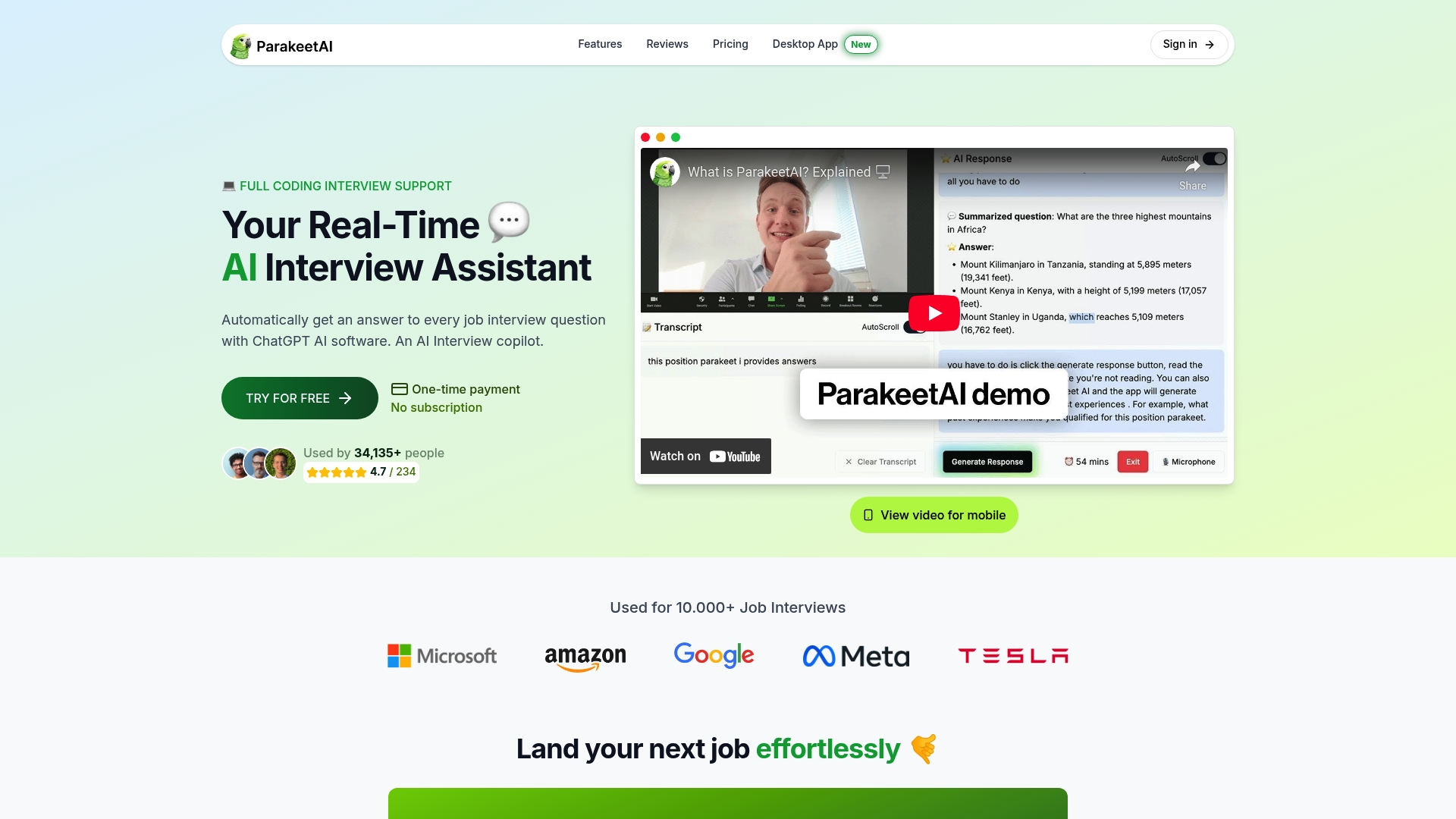
For HR professionals and hiring managers, that means the candidates you evaluate are showing you their actual capabilities rather than their ability to recall answers under pressure. Better candidate performance produces better evaluation data, which makes your scoring rubrics and debrief conversations more meaningful. Visit Parakeet-ai to see how the platform fits into your existing interview pathway and improves the quality of every hiring decision you make.
FAQ
What is a candidate interview pathway?
A candidate interview pathway is the defined sequence of stages a job applicant moves through from initial application to final hiring decision. The standard pathway includes seven steps: resume screen, recruiter call, online assessment, screening interview, interview loop, candidate review, and salary negotiation.
How long does a typical candidate interview process take?
The typical candidate interview process takes 3–6 weeks from application to offer, depending on the number of rounds and the speed of internal decision-making between stages.
What makes a structured interview more effective?
Structured interviews ask every candidate the same vetted questions and score answers against a standardized rubric, which isolates candidate signal from interviewer bias and produces more comparable, defensible hiring decisions.
How many interview rounds should a hiring process include?
Interview loops should be limited to 4–6 rounds. Processes with more rounds increase time-to-hire by approximately 8 days and raise the risk of interviewer fatigue and candidate dropout.
How do you reduce candidate dropout during the interview pathway?
Proactive communication at every stage transition, clear timelines, and limiting unnecessary friction are the most direct ways to reduce dropout. Candidates who face excessive friction are 3.2 times more likely to withdraw before an offer is made.