
Digital Interview Ethics Explained for Job Seekers and HR

TL;DR:Digital interview ethics focus on fairness, privacy, transparency, and respect in virtual hiring. Using undisclosed AI during interviews is considered fraud, while ethical use involves transparency and human oversight. Employers must comply with regulations like the EU AI Act, disclose AI use, and ensure fair, human-reviewed assessments.
Digital interview ethics are the guiding principles that govern fairness, privacy, transparency, and respect in virtual hiring processes. As video platforms and AI screening tools become standard in recruitment, both candidates and HR professionals face new obligations that go beyond showing up on time and dressing professionally. Regulatory frameworks like the EU AI Act now set hard legal limits on what technology can do inside a hiring conversation. Understanding how to explain digital interview ethics means knowing where those lines fall, and why they exist.
What are the main ethical challenges in digital interviews today?
The biggest ethical challenge in digital interviews is AI overreach. Many hiring platforms have marketed tools that analyze facial expressions, vocal tone, and body language to score candidates on traits like confidence or honesty. The EU AI Act prohibits AI systems that infer emotions in hiring contexts, banning this type of assessment outright since february 2025. That ban cannot be overridden by candidate consent or a company’s claim of legitimate business interest.
Bias is the second major risk. Facial and voice analysis systems disproportionately affect candidates with disabilities, non-native accents, or speech differences. These tools were often trained on narrow datasets, so they penalize anyone who falls outside a narrow norm. That is not a technical glitch. It is a structural fairness failure that violates anti-discrimination law in most jurisdictions.
Privacy risks compound the bias problem. Digital interviews generate audio, video, and behavioral data. Without clear consent processes and data retention limits, that information can be stored indefinitely or shared with third parties. GDPR and the EU AI Act both require strong legal compliance and human oversight when biometric data is processed.
The interpersonal dimension also suffers. Research shows that AI-assisted follow-up questions can disrupt rapport because AI lacks human nonverbal communication and causes divided attention in interviewers. Candidates notice when the person across the screen is reading from a prompt rather than listening. That erodes trust on both sides.
Key ethical challenges at a glance:
- Emotion inference bans: AI tools that score facial or vocal cues are illegal in EU hiring contexts as of february 2025.
- Algorithmic bias: Systems trained on limited data penalize candidates with accents, disabilities, or atypical speech patterns.
- Data privacy gaps: Biometric data collected without explicit consent or clear retention policies creates legal exposure.
- Broken rapport: AI-generated questions and divided interviewer attention damage the human connection that fair assessment requires.
- Lack of transparency: Candidates often do not know which tools are active, what data is collected, or how scores are used.
How can job seekers uphold ethics during digital interviews?
Candidates carry ethical responsibilities too, and the clearest one involves AI assistance. Undisclosed real-time AI use during a live interview is fraud. Using an AI tool to feed you answers in real time without telling the employer misrepresents your actual ability. If discovered, it can result in immediate disqualification or rescission of a job offer.
AI use for preparation is a different matter entirely. Practicing answers with an AI tool, researching the company, or generating mock questions is standard and ethical. The line falls at the live interview itself. Once the session starts, your responses need to be your own.
Here is how to handle the gray areas step by step:
- Ask about AI policies before take-home tasks. When a recruiter sends a coding test or written assignment, ask recruiters to clarify whether AI tools are permitted. A 30-second question prevents disqualification later.
- Disclose AI use when policies allow it. If the employer permits AI assistance on an assessment, say so in your submission. Transparency builds credibility.
- Keep your camera centered and your background neutral. A clear, distraction-free frame signals professionalism and keeps the interviewer focused on you.
- Respond authentically, not performatively. Etiquette expert Diane Gottsman advises candidates to act as if a human is always evaluating them, even when AI is involved. Authentic answers create better connection and support fair assessment.
- Follow up within 7 to 10 days when no timeline is given. Send both an email and a written thank-you note. Limit follow-ups to avoid appearing unprofessional.
Pro Tip: Before any take-home assignment, send one short email asking whether AI tools are permitted. Framing it as a clarifying question rather than a confession signals professionalism and protects you from ambiguity.
Honesty in representing your skills is not just an ethical obligation. It is a practical one. Employers who discover undisclosed AI use during hiring rarely give second chances, and the reputational damage extends beyond a single application.
What responsibilities do HR professionals have in ethical digital interviews?
HR professionals hold the most power in this dynamic, and that power comes with specific obligations. Selecting compliant tools is the starting point. Any AI system used in hiring must meet the requirements of the EU AI Act and applicable privacy law. Tools that infer personality from voice or facial data lack scientific validity and create direct legal liability.

Transparency is non-negotiable. Employers must explicitly disclose AI usage in interviews and explain how candidate data is handled. That disclosure needs to happen before the interview, not buried in a terms-of-service document. Candidates have a right to know what is being measured and why.
Human oversight must be meaningful, not cosmetic. Automated scoring systems that produce hiring decisions without a human reviewing the output violate the spirit and often the letter of fair hiring law. A human reviewer needs to examine AI-generated assessments before any decision is made.
HR responsibilities in ethical digital interviews include:
- Tool compliance audits: Verify that every AI platform used in hiring meets EU AI Act and GDPR requirements before deployment.
- Bias testing: Run regular audits on AI tools to check for disparate impact across gender, race, disability status, and accent.
- Accessibility safeguards: Provide alternative interview formats for candidates who cannot participate in standard video formats due to disability.
- Data minimization: Collect only the data needed for the hiring decision and set clear retention and deletion timelines.
- Interviewer training: Teach interviewers to maintain eye contact, active listening, and genuine engagement even when AI tools are active in the session.
Pro Tip: Build a one-page AI disclosure document that candidates receive before every interview. Include what tools are active, what data is collected, how long it is stored, and who reviews it. This single document reduces legal risk and builds candidate trust simultaneously.
The role of AI for interview fairness depends entirely on how it is deployed. AI that surfaces structured questions consistently can reduce interviewer bias. AI that scores emotional responses without human review amplifies it. The difference is design and oversight.
Comparing ethical guidelines and best practices for virtual interviews
Ethical guidelines for virtual interviews converge on four principles: transparency, fairness, privacy, and respect. Where they diverge is in how strictly each is enforced and by whom.
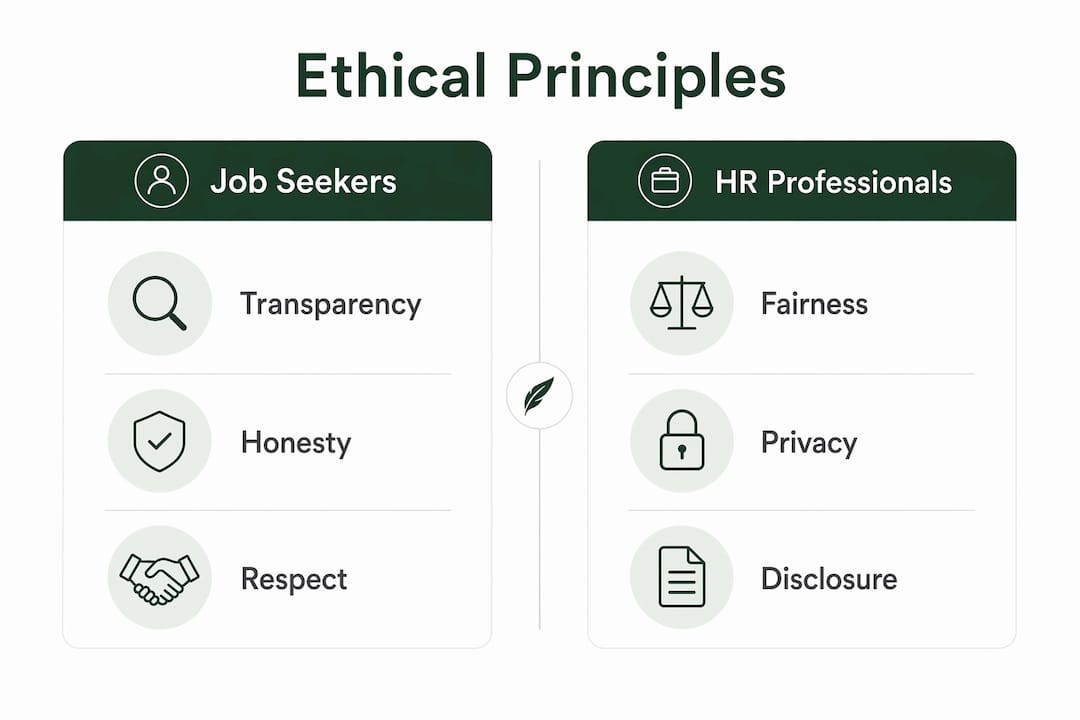
The EU AI Act sets the hardest legal floor. It bans emotion inference in hiring, requires human oversight of automated decisions, and mandates disclosure. GDPR adds data minimization and consent requirements for any biometric processing. Together, these frameworks define the minimum standard for any organization operating in or hiring from the EU.
Industry guidance from researchers and practitioners adds texture. Ethical AI-assisted interviewing requires clear disclosure of AI roles, privacy protections, and mechanisms to maintain interviewee respect and trust. That language is broader than the law and harder to audit, but it captures what the law alone cannot: the human experience of being evaluated by a machine.
The gap between regulation and practice remains wide. Many companies deploy AI screening tools without disclosing their use to candidates. Others run automated video assessments that technically comply with consent requirements but bury the disclosure in onboarding paperwork. Compliance on paper is not the same as ethical practice in reality.
A practical framework for ethical digital interviews:
- Before the interview: Disclose all AI tools in writing, obtain explicit consent for data collection, and confirm accessibility accommodations.
- During the interview: Ensure a human interviewer is present and engaged, avoid AI tools that score emotional or biometric signals, and maintain consistent question sets across candidates.
- After the interview: Have a human review all AI-generated assessments before making decisions, delete candidate data on schedule, and provide feedback when requested.
- Ongoing: Audit AI tools for bias quarterly, update disclosure documents when tools change, and train interviewers annually on ethical virtual interview conduct.
For a deeper look at how these principles apply in practice, the AI interview technology explained resource covers how human-centric design shapes better candidate experiences.
Key Takeaways
Ethical digital interviews require transparency, human oversight, and regulatory compliance from both employers and candidates.
| Point | Details |
|---|---|
| EU AI Act sets hard limits | Emotion inference tools in hiring have been banned since february 2025 and cannot be overridden by consent. |
| Undisclosed AI use is fraud | Candidates who use real-time AI assistance without disclosure risk disqualification and offer rescission. |
| HR must disclose and audit | Employers must inform candidates about AI tools before interviews and audit those tools for bias regularly. |
| Human oversight is required | Automated AI scores must be reviewed by a human before any hiring decision is made. |
| Authenticity protects both sides | Candidates who respond honestly and HR teams who design fair processes both reduce legal and reputational risk. |
The part of digital interview ethics that nobody talks about enough
Most conversations about virtual interview ethics focus on what is prohibited. The EU AI Act bans emotion scoring. GDPR restricts biometric data. Undisclosed AI use is fraud. Those rules matter, and they are worth knowing. But the harder problem is the gray zone that regulations cannot fully reach.
I have watched organizations tick every compliance box and still run interviews that feel dehumanizing. The disclosure is there. The consent form is signed. The human reviewer technically exists. But the interviewer is reading from an AI-generated script, the candidate knows their facial expressions are being logged, and the whole conversation feels like a transaction rather than a conversation. That is an ethical failure that no law will fix.
The fix is cultural, not regulatory. HR teams need to treat candidates as people whose experience of the process matters, not just as data points to be scored. Candidates need to show up as themselves, not as optimized versions of what they think an algorithm wants to see. Both sides benefit when the process feels human.
AI tools like Parakeet-ai can support preparation and help candidates think through their answers before a live session. That is the right use of the technology. The wrong use is deploying AI to replace human judgment at the moment of decision. The balance between innovation and integrity in hiring is not a technical problem. It is a values problem. And values do not update automatically.
The ethical frameworks will keep evolving as the technology does. The organizations and candidates who get this right are the ones who treat the frameworks as a floor, not a ceiling.
— Jure
Parakeet-ai and ethical interview preparation
Preparing for a digital interview raises real questions about where AI assistance is appropriate and where it crosses a line. Parakeet-ai is built for the ethical side of that line. It listens to your interview in real time and provides suggested answers, giving you a preparation and in-session support tool that is transparent by design.
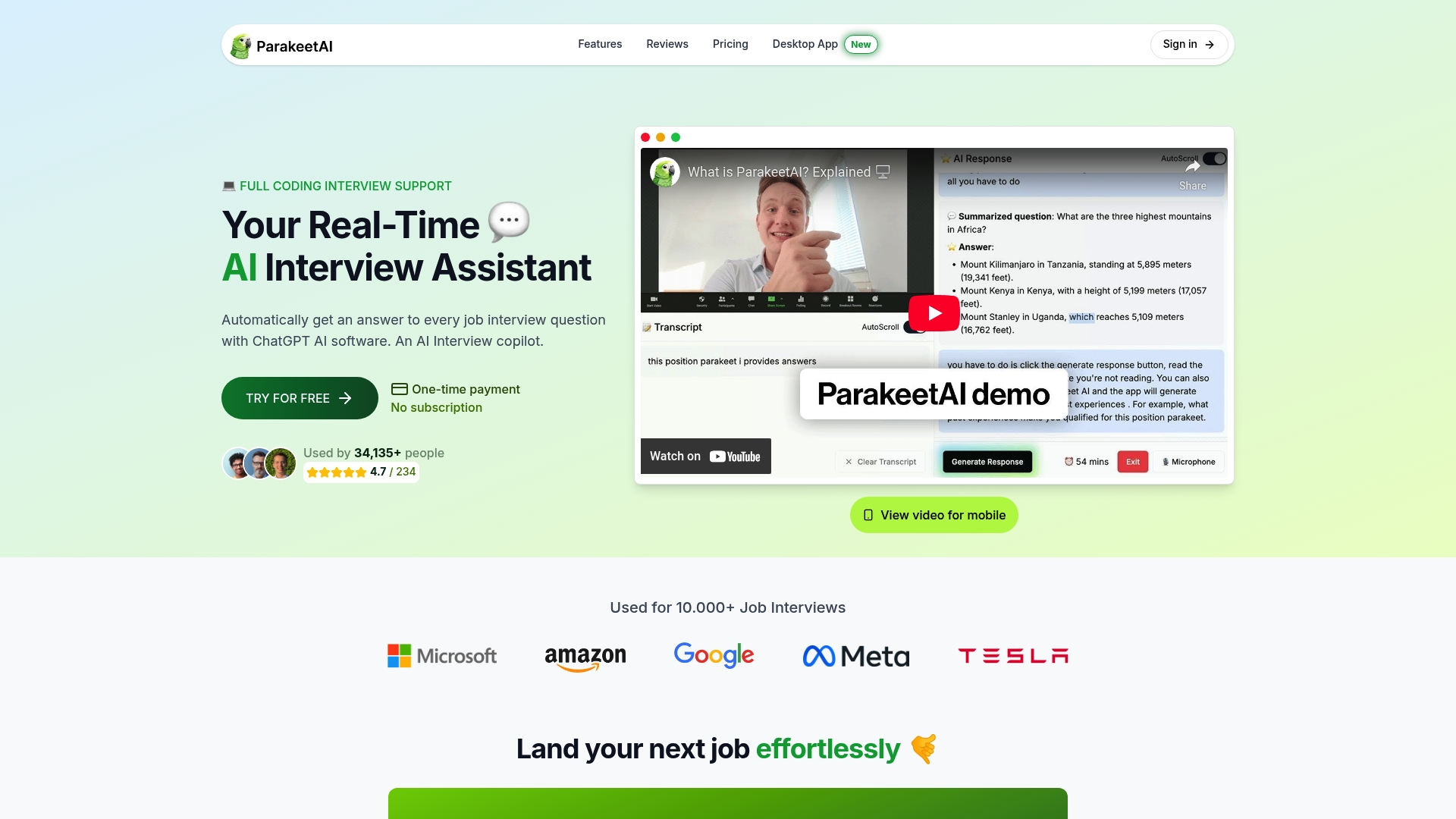
HR professionals looking for compliant, human-centric interview technology will find that Parakeet-ai prioritizes candidate respect and clear disclosure. Job seekers who want to walk into a virtual interview with genuine confidence, not a hidden script, can use Parakeet-ai to practice and prepare without misrepresenting their abilities. Visit Parakeet-ai to see how ethical AI interview support works in practice.
FAQ
What does digital interview ethics mean?
Digital interview ethics refers to the principles of fairness, privacy, transparency, and respect that govern how virtual hiring processes are conducted. These principles apply to both the technology used and the behavior of candidates and interviewers.
Is using AI during a live interview ethical?
Undisclosed real-time AI use during a live interview is considered fraud because it misrepresents a candidate’s actual ability. AI use for preparation before the interview is standard and ethical.
What does the EU AI Act say about digital interviews?
The EU AI Act bans AI systems that infer emotions from facial expressions or vocal tone in hiring contexts, with that prohibition in effect since february 2025. The ban applies regardless of candidate consent.
How should HR professionals disclose AI use to candidates?
Employers must inform candidates in writing before the interview about which AI tools are active, what data is collected, and how long it is stored. Burying disclosure in terms-of-service documents does not meet the transparency standard.
How long should a candidate wait before following up after an interview?
Candidates should wait 7 to 10 days before following up when no timeline has been given, and send both an email and a written thank-you note.