
Recruiter Interview Questions: The 2026 Hiring Guide

TL;DR:Recruiter interview questions fall into behavioral, technical, and situational categories to assess different recruiting competencies. Candidates should provide quantified answers, demonstrate sourcing methodology, and show strategic thinking during the interview. Preparation involves practicing scenario responses, asking thoughtful questions, and using tools like AI assistants for improvement.
Recruiter interview questions fall into three categories: behavioral, technical, and situational, each designed to reveal a different layer of recruiting competence. Hiring managers use these categories to assess whether a candidate can source talent, manage stakeholders, and deliver quantifiable recruiting outcomes like improved time-to-fill and offer acceptance rates. A recruiter’s interview is itself a live demonstration of their recruiting abilities. Agency roles demand proof of sales instincts and billing results. In-house roles test process design, stakeholder alignment, and pipeline thinking.
1. Behavioral recruiter interview questions that reveal real experience
Behavioral questions are the backbone of any structured recruiter assessment. They ask candidates to describe specific past situations, which makes it harder to give rehearsed, generic answers. The STAR method (Situation, Task, Action, Result) is the standard framework for both asking and evaluating these responses.

The most revealing behavioral questions target sourcing success, pipeline management, and how candidates handle friction with hiring managers. Handling disagreements with hiring managers is evaluated for conflict resolution, self-awareness, and professional maturity. Interviewers are not looking for a perfect record. They want to see that a candidate learned from data and preserved the working relationship.
Common behavioral questions include:
- “Tell me about a time you filled a hard-to-source role. What was your sourcing strategy?”
- “Describe a recruiting mistake you made. What did you do to fix it, and what changed in your process afterward?”
- “Walk me through a time you disagreed with a hiring manager’s candidate assessment. How did you handle it?”
- “Give me an example of how you maintained a talent pipeline for a role that wasn’t actively open.”
- “Tell me about a time you had to fill a critical role under a tight deadline with limited resources.”
Pro Tip: When evaluating STAR answers, listen for the Result step. Candidates who skip it or give vague outcomes like “it went well” have not yet learned to measure their own impact. Push for numbers.
Strong behavioral answers include metrics: percentage improvement in time-to-fill, offer acceptance rates, or pipeline conversion rates. Candidates who answer only in narrative terms without data are signaling a gap in data-driven recruiting maturity.
2. Technical interview questions for recruiters that test sourcing depth
Technical questions separate recruiters who know the vocabulary from those who can execute. These questions test whether a candidate can build a Boolean search string from scratch, manage an ATS pipeline, and explain their sourcing methodology for hard-to-reach candidates.
Recruiters must show proficiency beyond tools, explaining sourcing methods like Boolean strings and nurture campaigns to build pipelines. Interviewers expect systematic approaches, not just familiarity with platform names. A candidate who says “I use LinkedIn” without explaining their targeting logic has not demonstrated sourcing expertise.
Key technical questions to use in your interviews:
- “Write a Boolean search string for a senior data engineer with Spark and Kubernetes experience.”
- “How do you measure source effectiveness across job boards, referrals, and direct outreach?”
- “Walk me through how you set up and manage a candidate pipeline in your ATS.”
- “How do you track quality of hire, and what metrics do you report to leadership?”
- “Describe how you build a nurture campaign for passive candidates in a niche technical field.”
Pro Tip: Ask candidates to actually write a Boolean string during the interview, not just describe one. This single exercise reveals more about sourcing skill than five behavioral questions combined.
Demonstrating methodology in creating Boolean search strings and managing nurture campaigns proves advanced sourcing expertise. Candidates who can explain their CRM segmentation logic and tie it to pipeline conversion rates are operating at a senior level. Those who cannot are likely relying on inbound volume rather than proactive sourcing.
3. Situational questions that test judgment under pressure
Situational questions present hypothetical scenarios and ask candidates how they would respond. Unlike behavioral questions, they test forward-looking judgment rather than past experience. This matters because every recruiting environment is different, and you need to know how a candidate thinks, not just what they have done.
Standard recruiter assessments include mock sourcing exercises and hypothetical scenarios to test data-driven influence and stakeholder management. Effective candidates demonstrate techniques like calibration meetings to align hiring expectations before a search begins. This is a skill that separates reactive recruiters from those who shape the process.
Situational questions worth asking:
- “A hiring manager insists on a candidate profile that does not exist in the market at the offered salary. How do you handle that conversation?”
- “A finalist candidate receives a counter-offer from their current employer the day before your offer goes out. What do you do?”
- “You are three weeks into a search and have zero qualified applicants. What is your next move?”
- “A hiring manager keeps rejecting candidates without giving specific feedback. How do you get the calibration you need?”
Situational questions evaluate communication style during high-pressure negotiation scenarios such as counter-offers. Answers should reveal proactive engagement with candidate motivations to reduce attrition risks. A candidate who says “I would just send another offer” has not thought through the relationship dynamics at play.
For senior roles, consider adding a mock sourcing exercise. Give candidates a real job description and 15 minutes to outline a sourcing strategy. This tests their thinking process, not just their talking points. You can find more frameworks for scenario-based interview questions that work well in recruiting contexts.
4. Questions recruiters should ask interviewers to show strategic thinking
The questions a recruiter asks during their own interview reveal as much as their answers. Recruiters are assessed on their ability to ask thoughtful questions about team challenges, collaboration, and success metrics. This reflects a candidate’s strategic mindset and understanding of recruiting team dynamics.
Asking the right questions signals that a candidate thinks like a partner, not just an order-taker. It also gives the candidate real information to evaluate whether the role is a good fit. The best questions to ask employers during a recruiter interview fall into four categories: process, metrics, relationships, and growth.
Strong questions for agency environments:
- “What does a successful first 90 days look like for this role, and how is that measured?”
- “What are the biggest sourcing challenges the team faces right now?”
- “How does the recruiting team collaborate with hiring managers on role calibration?”
Strong questions for in-house environments:
- “What metrics does the team currently track, and which ones drive the most decisions?”
- “How much autonomy does the recruiter have to push back on job requirements that are unrealistic for the market?”
- “What does the relationship between recruiting and HR business partners look like here?”
Hiring managers test a recruiter’s ability to diplomatically push back, using data to align expectations early in the hiring process. A candidate who asks about pushback autonomy is signaling that they already think this way. That is a strong indicator of strategic maturity.
5. How to prepare for a recruiter interview: what most candidates miss
Most candidates prepare for recruiter interviews by reviewing their resume and rehearsing a few stories. That is not enough. The preparation gap is almost always in quantification and scenario readiness.
Candidates mistakenly believe recruiter interviews only test sourcing speed. Employers focus more on delivery quality and pipeline maintenance. This means candidates need to arrive with specific numbers: average time-to-fill by role type, offer acceptance rates, pipeline conversion percentages, and quality-of-hire scores if available.
Scenario readiness means practicing answers to hypothetical situations before the interview, not improvising them live. Use the STAR method for behavioral preparation and build a library of three to five strong stories that can flex across multiple question types. One story about a difficult search can answer questions about sourcing strategy, stakeholder management, and resilience.
Interviewers look for self-awareness and learning in answers about mistakes or disagreements rather than a perfect record. Candidates who frame every past challenge as someone else’s fault will not pass a senior-level screen. The ability to say “here is what I would do differently” is a signal of professional maturity that hiring managers actively look for.
Key Takeaways
The most effective recruiter interview process combines behavioral, technical, and situational questions to evaluate sourcing skill, stakeholder management, and data-driven impact across every stage of the hiring cycle.
| Point | Details |
|---|---|
| Use all three question types | Behavioral, technical, and situational questions each reveal a different recruiting competency. |
| Require quantified answers | Candidates should cite metrics like time-to-fill and offer acceptance rates, not just narratives. |
| Test sourcing methodology directly | Ask candidates to write a Boolean string or outline a sourcing plan during the interview. |
| Evaluate the questions candidates ask | Thoughtful questions about team challenges and success metrics signal strategic maturity. |
| Prioritize quality of hire over speed | Interviewers now focus on sustained pipeline management and long-term hiring outcomes. |
What I’ve learned about recruiter interviews that most guides won’t tell you
The conventional advice is to prepare your STAR stories and know your metrics. That is correct, but it misses the deeper dynamic at play in a recruiter interview.
A recruiter interview is the only interview where the candidate is being evaluated on the same skills they use every day. The hiring manager is watching how you handle ambiguity, how you push back diplomatically, and whether you ask questions that reveal genuine curiosity about the role. Most candidates treat it like any other interview. The best candidates treat it like a client meeting.
The shift I have seen in 2026 is that quality of hire now outweighs speed as the primary success measure. Hiring managers are tired of fast fills that turn over in six months. They want recruiters who can articulate a pipeline philosophy, not just a sourcing tactic. If you walk into a recruiter interview talking only about time-to-fill, you are answering the wrong question.
The candidates who stand out are the ones who bring a point of view. They say things like “I’ve found that calibration meetings in week one reduce misaligned rejections by the third round.” That kind of specificity, grounded in real experience, is what separates a good recruiter from a great one.
— Jure
Parakeet-ai and smarter recruiter interview preparation
Preparing for a recruiter interview means practicing answers in real time, not just reading through question lists. Parakeet-ai is a real-time AI interview assistant that listens to your interview and automatically provides answers to every question using AI.
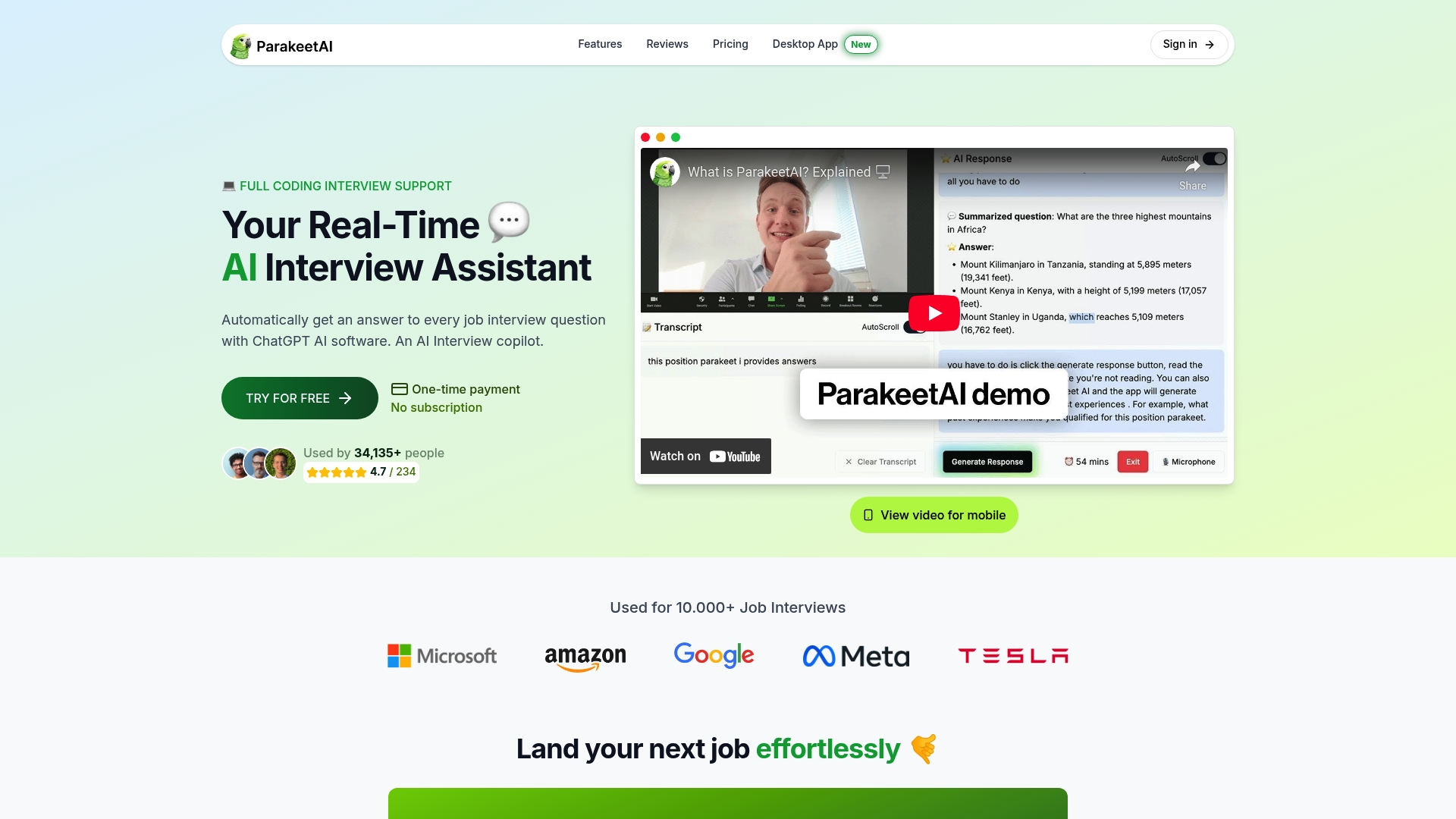
For hiring managers, Parakeet-ai supports the evaluation side of the process by helping structure question sets and track candidate responses across behavioral, technical, and situational categories. For recruiter candidates, it provides live guidance during practice sessions so you arrive with sharper, more specific answers. Visit Parakeet-ai to see how it fits into your recruiting workflow and interview preparation process.
FAQ
What are the main types of recruiter interview questions?
Recruiter interview questions fall into three categories: behavioral, technical, and situational. Each category tests a distinct recruiting competency, from past experience and sourcing skill to judgment under pressure.
How should recruiters answer behavioral questions?
Use the STAR method (Situation, Task, Action, Result) and always include a quantified result. Answers without metrics signal a gap in data-driven recruiting maturity.
What technical skills do recruiter interviews typically test?
Interviewers test Boolean search string construction, ATS pipeline management, source effectiveness tracking, and the ability to build nurture campaigns for passive candidates.
What questions should a recruiter ask during their own interview?
Ask about team recruiting challenges, success metrics for the first 90 days, and how much autonomy the role has to push back on unrealistic job requirements. These questions reflect strategic thinking and genuine preparation.
How is a recruiter interview different from other job interviews?
A recruiter interview evaluates the candidate on the same skills they use professionally every day. Hiring managers watch for how candidates handle ambiguity, push back diplomatically, and demonstrate pipeline thinking beyond simple sourcing speed.