
Best Codewars.com Alternatives for Skill Building in 2026

TL;DR:LeetCode is the top platform for algorithm interview preparation, offering a large question bank and contests. Exercism provides mentor-led feedback focused on writing idiomatic, production-quality code in many languages. Using multiple platforms aligned with specific goals accelerates skill development and improves interview success.
If you need a straight answer before diving into comparisons: LeetCode is the go-to for algorithm interview prep, Exercism wins for mentor-led idiomatic practice, CodinGame leads for gamified puzzle work, Codeforces and CodeChef dominate timed contest training, and HackerRank covers employer-facing assessments. Here is the shortlist by goal:
- Interview algorithm prep: LeetCode — thousands of interview-style questions, contest events, and employer partnerships built around technical hiring
- Mentor-led idiomatic practice: Exercism — one-on-one mentor feedback focused on production-quality, language-specific style
- Gamified and puzzle practice: CodinGame — multiplayer challenges, leaderboards, and bot programming
- Timed contest training: Codeforces or CodeChef — regular rated contests with a competitive community
- Employer assessment readiness: HackerRank — enterprise screening tools, AI mock interviews, and certifications
Table of Contents
- What are the best Codewars.com alternatives right now?
- Platform profiles: what each alternative actually offers
- How do you pick the right platform for your goal?
- When should you keep using Codewars instead of switching?
- What does the research say about algorithm vs. project vs. mentor-led practice?
- Key Takeaways
- The case for using multiple platforms at once
- Parakeet-ai gives your platform practice a real interview layer
- Useful sources and further reading
- The real reason most platform-switching fails
What are the best Codewars.com alternatives right now?
The table below covers the platforms that consistently appear in community recommendations and SERP results. Columns reflect the axes that actually matter when choosing: what you get free, which languages are supported, whether the focus is puzzles versus projects versus algorithms, and whether there is any human feedback in the loop.
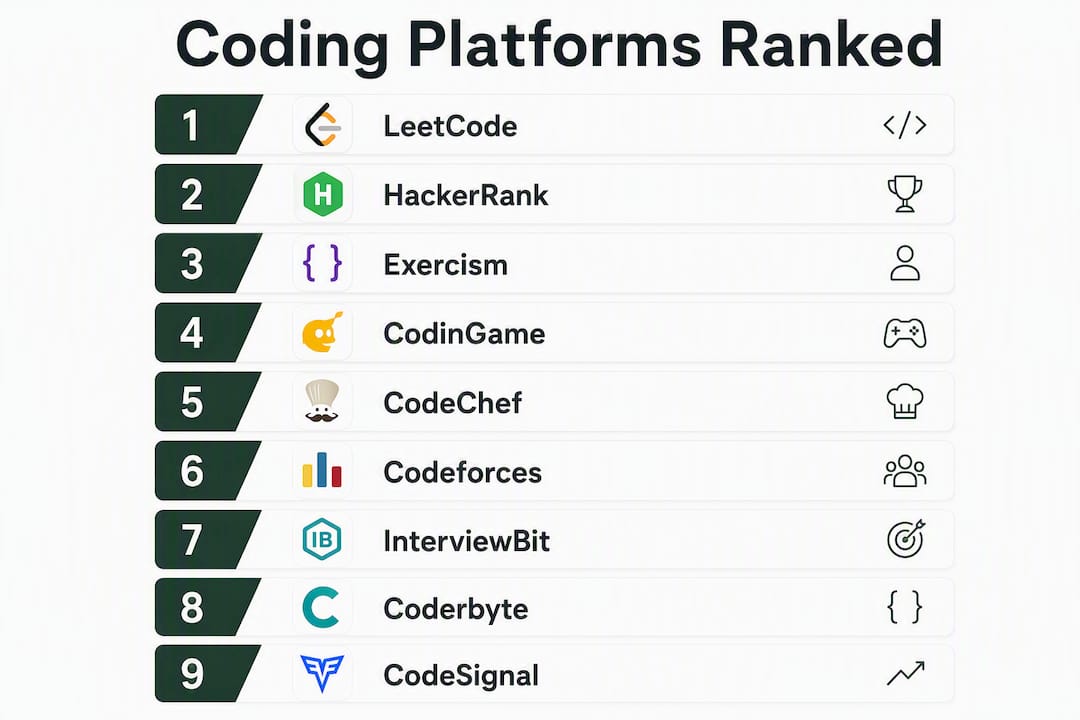
| Platform | Best For | Pricing | Languages | Focus | Mentorship / Community | Interview Prep | Contest Support |
|---|---|---|---|---|---|---|---|
| LeetCode | Algorithm interview prep | Free + Premium ($35/mo) | 20+ | Algorithms, data structures | Large community, discussion forums | Strong — question bank, mock interviews | Weekly + biweekly contests |
| HackerRank | Employer assessments + certifications | Free + Enterprise (custom) | 40+ | Algorithms, SQL, ML | Millions of developers | AI mock interviews, certifications | Domain-specific contests |
| Exercism | Mentor-led idiomatic code | Free (mentor track) + Insiders | 70+ | Idiomatic style, language fluency | One-on-one mentors | Limited — style-focused, not interview-specific | None |
| CodinGame | Gamified and puzzle practice | Free + CodinGame for Work (paid) | 50+ | Puzzles, optimization, bots | Leaderboards, multiplayer | Moderate — CodinGame for Work has assessments | Clash of Code, bot contests |
| CodeChef | Competitive programming | Free + Laddus/premium (paid) | 50+ | Algorithms, competitive | Active contest community | Moderate | Long, short, and cook-off contests |
| Codeforces | Rated competitive contests | Free | 40+ | Algorithms, math, competitive | Very active rated community | Moderate | Div. 1–4 rated rounds, educational rounds |
| InterviewBit | Structured interview tracks | Free + Scaler (paid) | 10+ | Algorithms, system design | Peer discussion | Strong — curated tracks, mock interviews | Limited |
| Coderbyte | Beginners + interview prep | Free + Premium ($35/mo) | 10+ | Algorithms, tutorials | Community solutions | Strong — guided walkthroughs | Limited |
| CodeSignal | Standardized skill assessments | Free + Enterprise (custom) | 10+ | Algorithms, assessments | Limited community | Strong — industry coding score | Limited |
| HackerEarth | Hackathons + hiring | Free + Enterprise (custom) | 40+ | Algorithms, hackathons | Hackathon community | Moderate | Hackathons, hiring contests |
| Topcoder | High-level competitive + paid challenges | Free | 10+ | Algorithms, design, data science | Competitive community | Moderate | SRM, marathon matches |
Quick differentiators:
- LeetCode is the closest thing to an industry benchmark for interview readiness, with a question bank and contest cadence that no other platform matches at scale
- Exercism is the only platform on this list where a real human reviews your code style, not just whether it passes tests
- CodinGame is the pick when you want to stay engaged through play rather than grind
- Codeforces has the most active rated contest ecosystem for competitive programmers
- HackerRank bridges practice and hiring better than any other free-tier platform
Platform profiles: what each alternative actually offers
LeetCode
LeetCode markets itself as the industry-standard platform for algorithm interview practice, and that reputation is largely earned. The free tier gives access to a large portion of the question bank, discussion forums, and two weekly contests. Premium ($35/month) unlocks company-tagged questions, premium mock interviews, and editorial solutions. The question bank spans easy, medium, and hard problems organized by topic and company, making systematic drilling straightforward.
Pros: Largest interview-focused question bank; frequent contests; strong employer partnerships. Cons: Premium is expensive for casual learners; the UI can feel cluttered; no human feedback on code style.
When to pick it: You have a technical interview in the next 4–12 weeks and need to drill algorithms fast.
HackerRank
HackerRank serves two audiences at once: developers practicing skills and employers screening candidates. The free tier covers a wide range of domains including algorithms, SQL, regex, and machine learning. Its AI-assisted mock interview feature and skill certifications make it one of the few platforms where completing challenges has a direct, verifiable signal for recruiters.
Pros: Certifications recognized by employers; AI mock interviews; 40+ languages. Cons: Enterprise features require a paid plan; community discussion is thinner than LeetCode’s; some problem sets feel dated.
When to pick it: You want a credential alongside practice, or your target employer uses HackerRank for screening.
Exercism
Exercism takes a fundamentally different approach. Rather than checking whether your code produces the correct output, its mentors review whether your code is idiomatic for the language you are learning. With support for 70+ languages and a volunteer mentor network, it is the strongest option for developers who want to write code that looks like it belongs in a real codebase, not just code that passes a test suite. The mentor track is free; the Insiders subscription adds extras but the core value is available without paying.
Pros: Real human mentor feedback; 70+ languages; production-quality style focus. Cons: No contest support; mentor response times vary; not optimized for interview-speed drilling.
When to pick it: You are learning a new language and want to write it the way experienced practitioners do, not just functionally.
CodinGame
CodinGame turns coding practice into something closer to a game. Clash of Code, bot programming, and optimization challenges give it a distinct feel from every other platform on this list. The leaderboard and multiplayer formats keep engagement high, which matters if you find traditional problem grinding demotivating. CodinGame for Work adds employer assessment tools, but the free tier is where most individual learners spend their time.

Pros: Genuinely fun; multiplayer and bot challenges; strong engagement mechanics. Cons: Less useful for structured interview prep; problem variety is narrower than LeetCode; employer features require a paid plan.
When to pick it: You want to stay sharp between interview cycles without the grind, or you are learning optimization and AI-style challenges.
CodeChef
CodeChef runs long contests, short contests, and cook-off formats on a regular schedule, making it one of the best platforms for building contest stamina. The free tier covers practice problems and contest participation. Paid tiers add courses, AI mentor features, and advanced tutorials. The community is large and the problem sets are community-driven, which keeps content fresh.
Pros: Regular contest calendar; 50+ languages; community-driven problems. Cons: UI is less polished than LeetCode; editorial quality varies; paid courses are an upsell.
When to pick it: You are preparing for competitive programming events like ACM ICPC or want to build a rated contest history.
Codeforces
Codeforces runs one of the most active rated contest ecosystems available, with Div. 1 through Div. 4 rounds and educational rounds that target different skill levels. Everything is free. The community is large, opinionated, and fast-moving. Problems lean heavily toward mathematics and algorithmic efficiency, which is a different evaluation axis than maintainability or idiomatic style.
Pros: Entirely free; most active contest community; strong rating system. Cons: No mentorship; UI is dated; not optimized for job interview prep specifically.
When to pick it: Competitive programming is your primary goal and you want a rated history that reflects real contest performance.
InterviewBit
InterviewBit organizes its content around interview readiness with curated tracks that cover algorithms, system design, and behavioral prep. The free tier is generous. The paid Scaler program extends into a full bootcamp. Mock interviews and a structured study path make it a strong complement to LeetCode for candidates who want more hand-holding through the prep process.
Pros: Structured tracks; system design coverage; mock interviews. Cons: Language variety is limited; community is smaller than LeetCode’s; Scaler upsell is prominent.

When to pick it: You want a guided curriculum for interview prep rather than an open problem bank.
Coderbyte
Coderbyte sits between a tutorial site and a challenge platform. The guided walkthroughs make it more accessible for beginners than LeetCode, and the challenge library covers common interview patterns. Premium ($35/month) adds video solutions and company-specific challenges. It is not the deepest platform, but for someone just starting interview prep it reduces the initial friction considerably.
Pros: Beginner-friendly; tutorial-style walkthroughs; company-specific challenges on premium. Cons: Smaller problem bank than LeetCode; community is limited; premium is required for the best content.
When to pick it: You are new to coding interviews and want guided practice before moving to harder platforms.
CodeSignal
CodeSignal is best known for its Industry Coding Score, a standardized assessment that some employers use as a screening signal. The practice environment is clean and the problem quality is high. It is less of a daily-practice platform and more of a benchmark tool, which makes it useful for candidates who want a portable, employer-recognized score.
Pros: Standardized score recognized by employers; clean interface; strong assessment quality. Cons: Limited community; not built for daily grinding; contest support is minimal.
When to pick it: You want a credential or benchmark score to share with employers alongside your resume.
Other platforms worth knowing
Several platforms serve narrower or more specialized use cases:
- HackerEarth: Strong for hackathon participation and employer-run hiring contests; free tier covers most individual needs.
- Topcoder: High-level algorithmic and design contests with paid challenge opportunities; best for experienced competitive programmers.
- Codility, CodeSubmit, DevSkiller, DevSkiller TalentScore, Canditech, CodeScreen, Showcode, DoSelect, Vervoe, Filtered, Fairlane, Showtech, LuGo-Test, AdaptiLab, Andela, RemoteInterview.io, Tests4Geeks, Geektastic, CoderPad: These are primarily employer-facing tools used for candidate screening, take-home tests, and live interview environments. Individual learners encounter them during hiring processes rather than choosing them for self-directed practice.
- Codecademy, Treehouse: Course-based platforms with guided exercises; better for structured learning than open-ended challenge practice.
- LintCode: Algorithm-focused question bank similar to LeetCode, with a strong library of interview-style problems.
- Unstop: Regional contest and event platform popular in South Asia.
- Skillspace.ai: AI-assisted assessment and practice with automated feedback.
- Azure Quantum, Kata Containers, Mirantis Container Runtime: Specialized infrastructure and quantum computing tools; relevant for niche technical roles, not general coding practice.
- pgrammer, Codela, DojoCode, GigaMe, Codeaid: Community-curated practice resources referenced in roundups; useful as supplementary problem sources.
How do you pick the right platform for your goal?
The honest answer is that most people pick the wrong platform because they optimize for “most popular” rather than “matches my actual goal.” Here is a short diagnostic to cut through that.
Ask yourself these questions first:
- Do you have a technical interview scheduled in the next 8 weeks? If yes, go straight to LeetCode or InterviewBit.
- Are you learning a new programming language and want to write it well, not just correctly? Exercism is the answer.
- Do you find grinding problems demotivating? CodinGame keeps you engaged through competition and play.
- Is competitive programming your primary goal (ACM ICPC, rated rankings)? Codeforces or CodeChef.
- Do you need a verifiable credential or employer-recognized score? HackerRank certifications or CodeSignal’s Industry Coding Score.
- Are you a complete beginner who needs guided walkthroughs before open challenges? Coderbyte or Codecademy first, then migrate to LeetCode.
- Does your target employer use a specific platform for screening? Practice on that platform specifically.
- Do you want project-based practice that mirrors real developer workflows? Look at platforms that simulate full development environments rather than isolated function problems.
Red flags when evaluating a paid plan:
- The free tier has almost no real content — it is a demo, not a platform
- Problem sets have not been updated in over a year (check contest calendars and community forums)
- No community discussion or editorial solutions, which means you cannot learn from others’ approaches
- Mentor feedback is automated only — no human in the loop for style or architecture questions
- The platform’s “interview prep” section is just a rebranded problem list with no company tagging or difficulty calibration
After you choose:
- Sign up for the free tier and complete 5–10 problems before committing to a paid plan.
- Schedule a weekly practice block rather than practicing ad hoc — consistency matters more than volume.
When should you keep using Codewars instead of switching?
Codewars has genuine strengths that most alternatives do not replicate well. Its kata system supports an unusually wide range of languages, including several that LeetCode and HackerRank barely cover. The community solution comparisons after each kata are one of the best ways to see multiple idiomatic approaches to the same problem in a single view. For short, focused practice sessions of 20–30 minutes, Codewars is hard to beat.
Reasons to stay on Codewars:
- You are practicing in a niche language that other platforms do not support well
- You want quick kata-style sessions without committing to a full problem set
- You value seeing community solutions immediately after solving, which accelerates pattern recognition
- You are not preparing for a specific interview and just want to stay sharp
If you do switch, here is a practical migration checklist:
- Export or screenshot your solved problem list and note the difficulty level and topic tags for each
- Map those tags to the equivalent categories on your new platform (e.g., Codewars “arrays” maps to LeetCode’s “Array” tag)
- Recreate your difficulty baseline: solve 5 problems at your current Codewars level on the new platform to calibrate
- Keep a simple log (a spreadsheet works) tracking problems solved, time spent, and topics covered
- Run both platforms in parallel for 3 weeks before fully committing to the switch — this reduces the friction of starting over
Pro Tip: When migrating platforms, do not restart from the easiest problems. Solve 5 problems at your current difficulty level first to confirm the calibration, then continue at that level. Restarting from scratch wastes weeks and creates false confidence.
What does the research say about algorithm vs. project vs. mentor-led practice?
There is a practical spectrum between gamified puzzle sites and project-based or mentor-led platforms, and choosing the right point on that spectrum should be driven by your immediate goal rather than platform popularity.
Algorithm-focused platforms (LeetCode, Codeforces, CodeChef) train you to solve problems under time and memory constraints. Competitive programming platforms apply those constraints as the primary evaluation axis, which is a different skill than writing maintainable, idiomatic code. For interview efficiency, this style of practice is the most direct path — LeetCode’s question bank and contest structure are what industry practitioners treat as the benchmark for interview readiness.
Mentor-led platforms (Exercism) accelerate writing idiomatic code by focusing on feedback loops and code reviews rather than automated correctness checks alone. The difference in outcome is real: a developer who has had their code reviewed by an experienced mentor writes differently than one who has only seen whether tests pass. For roles that require contributing to an existing codebase, that stylistic fluency matters.
Project-based platforms teach transferable skills that pure function-based kata do not. Environment setup, toolchain usage, and working within a realistic developer workflow are skills that show up in hiring outcomes for roles requiring codebase contributions. Community-driven kata platforms and mentor-led platforms differ in feedback loop quality: community solutions can show many approaches quickly, while mentorship provides targeted stylistic and architectural guidance.
Study plan templates by goal:
- Interview prep (4–6 weeks): 5 LeetCode problems per day by topic (arrays, trees, graphs, DP) + 1 weekly contest + review coding interview prep resources for mock interview frameworks
- Idiomatic language mastery (4–6 weeks): 3 Exercism exercises per week + request mentor review on each + read mentor feedback before moving on
- Competitive programming (6 weeks): 2 Codeforces rounds per week + post-contest editorial review + 1 CodeChef long contest per month
- Hybrid (ongoing): Algorithm drills 3 days per week + one Exercism exercise with mentor review per week + one small project every 6 weeks to apply what you have learned
The hybrid approach is the most durable. Pure algorithm grinding without any project or mentor exposure produces developers who can pass screens but struggle in the actual role.
Key Takeaways
The single most important decision is matching your platform to your immediate goal: LeetCode for interview algorithms, Exercism for idiomatic code, CodinGame for engagement, and Codeforces or CodeChef for rated contests.
| Point | Details |
|---|---|
| Interview prep: use LeetCode | Its question bank and contest cadence are the closest thing to an industry benchmark for technical interview readiness. |
| Idiomatic code: use Exercism | Real mentor feedback on code style accelerates language fluency faster than automated test-passing alone. |
| Gamified practice: use CodinGame | Multiplayer and bot challenges keep engagement high when traditional grinding loses momentum. |
| Contest training: use Codeforces or CodeChef | Both run regular rated contests; Codeforces is entirely free and has the most active competitive community. |
| Parakeet-ai for interview simulation | Parakeet-ai adds a real-time AI interview layer on top of platform practice, answering questions live during mock and real interviews. |
The case for using multiple platforms at once
The hunt for a single “best” platform is mostly a distraction. No one platform covers algorithm speed, idiomatic style, contest stamina, and employer assessment readiness simultaneously. The developers who improve fastest tend to run a deliberate combination: algorithm drills on LeetCode or Codeforces for interview efficiency, Exercism for language depth and style, and occasional project work to keep skills grounded in real workflows.
The practical hybrid looks like this: three days per week on algorithm problems, one Exercism exercise with a mentor review request, and one small project every six weeks. That rhythm covers the three axes that actually matter in hiring: can you solve problems under pressure, can you write code others want to maintain, and can you work in a real codebase.
The signal to switch focus is simple. If you are passing screens but struggling in the actual role, add more project and mentor-led practice. If you are not getting past screens at all, add more algorithm drilling and mock interviews. Progress monitoring does not require a complex system — tracking which problem types you get wrong consistently is enough to know where to redirect effort.
Parakeet-ai gives your platform practice a real interview layer
Drilling on LeetCode, Exercism, or CodinGame builds the skills. The gap most candidates hit is translating that practice into actual interview performance under pressure, with a real interviewer watching. That is the specific problem Parakeet-ai solves.
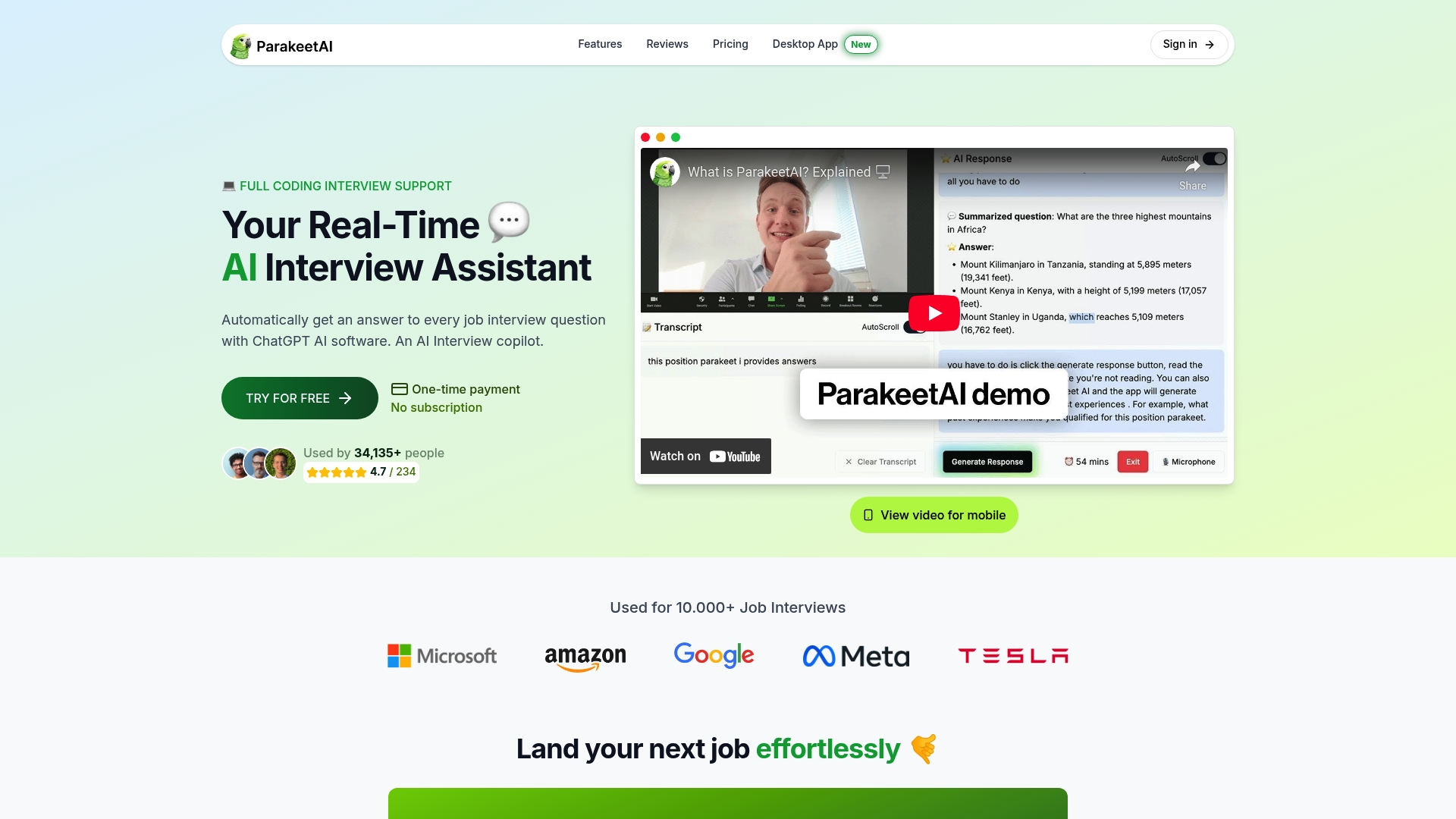
Parakeet-ai is a real-time AI interview assistant that listens during your interview and automatically surfaces answers to questions as they are asked. It works alongside any platform you are already using: you build the skills on LeetCode or Exercism, and Parakeet-ai gives you a safety net when those skills need to show up live. No more blanking on a problem you have solved a dozen times in practice. You can start with Parakeet-ai today and add a real-time interview layer to the platform practice you are already doing.
Useful sources and further reading
The sources below are the primary references used in this article. Check official platform pages for current pricing, as tiers change frequently.
- LeetCode — verify current Premium pricing, contest schedule, and company-tagged question availability
- HackerRank — check certification offerings, enterprise screening features, and AI mock interview availability
- Exercism — confirm mentor track availability, language list, and Insiders pricing
- CodinGame — review current contest formats and CodinGame for Work pricing
- CodeChef — check contest calendar, course offerings, and premium tier details
- Codeforces — review current contest divisions and rating system
- Codewars — reference for kata system, language support, and community solution features
- Best Free Coding Websites and Resources (2026) — Scrimba — useful for verifying which platforms offer genuine free-tier value
- Alternatives to Codewars — Slashdot — community-sourced alternative rankings and reviews
- Stack Overflow: Codewars and HackerRank alternatives with complexity checking — practitioner discussion on platforms that evaluate time and space complexity
- Parakeet-ai: How to prepare for a coding interview — step-by-step prep plans and platform suggestions for interview candidates
The real reason most platform-switching fails
Most developers who switch from Codewars to LeetCode, or from LeetCode to Exercism, quit within two weeks. Not because the platform is wrong for them, but because they restart from scratch and immediately feel like beginners again. The calibration problem is real: every platform has its own difficulty scale, and what feels like medium on Codewars might register as easy or hard elsewhere.
The fix is not motivational. It is structural. Carry your problem-type map with you when you switch. Know which topics you are strong on and which you avoid. Start at your actual level, not the platform’s default onboarding level. And run two platforms in parallel for at least three weeks before abandoning the first one, because the discomfort of a new environment is not the same as the platform being wrong for your goal.
The deeper issue is that most coding practice advice treats platforms as interchangeable. They are not. LeetCode and Exercism are solving different problems for different people. Using LeetCode to learn idiomatic Python is like using a stopwatch to learn to cook. The tool is not wrong; you are just using it for the wrong job. Match the tool to the goal, run the hybrid approach for six weeks, and the platform question mostly answers itself.