
How digital interview assistants transform job prep
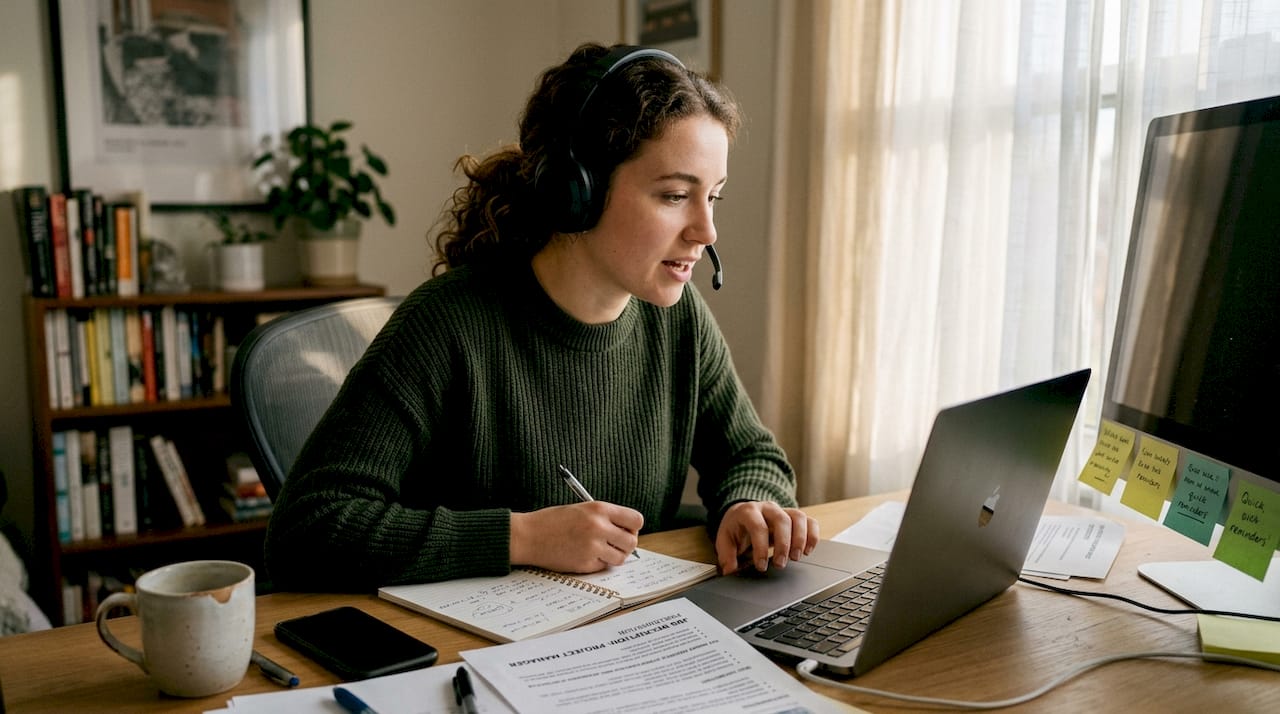
TL;DR:Digital interview assistants use AI to simulate interviews, analyze responses, and provide real-time coaching.Studies show AI-assisted prep increases interview success rates and job retention compared to traditional methods.To choose the best tool, focus on realistic simulations, specific feedback, and customization options.
Most job seekers believe interview success comes down to one thing: how hard you personally prepare. Memorize enough answers, rehearse enough times, and you’ll land the offer. That belief is only partly true. The candidates pulling ahead in competitive hiring markets are using AI-powered interview tools that go far beyond flashcards and mirror practice. Digital interview assistants are reshaping how people get ready for, and perform in, job interviews. This guide breaks down exactly what these tools are, how they work, and how you can use them to gain a real edge.
Table of Contents
- What are digital interview assistants?
- How digital interview assistants work: Key features and functions
- How digital interview assistants can boost your job search outcomes
- Choosing and using digital interview assistants: Practical tips
- Our take: Why human intuition still matters with digital assistants
- Take your interview prep further with ParakeetAI
- Frequently asked questions
Key Takeaways
| Point | Details |
|---|---|
| AI transforms interview prep | Digital assistants help you practice, get feedback, and perform better in real interviews. |
| Proven impact on outcomes | Evidence shows higher pass rates and job offers for candidates using digital tools. |
| Best results by combining AI and human touch | Blend automated coaching with peer or mentor input for optimal preparation. |
| Choose tools with practical features | Look for feedback quality, customization, and user-friendly workflows when selecting. |
What are digital interview assistants?
Now that we’ve challenged what most believe about interview readiness, let’s define these tools properly. Digital interview assistants are AI-powered tools that help job seekers prepare for and perform better in interviews. They’re not just chatbots that spit out sample answers. They’re layered systems that listen, analyze, and coach in real time.
These tools typically offer a core set of features:
- Mock interview simulations that replicate real interview conditions
- Real-time answer coaching that prompts better structure and delivery
- Voice and tone analysis to flag filler words, pacing, and confidence signals
- Role-specific question banks tailored to industries and job levels
- Instant feedback reports that highlight strengths and gaps
The technology behind them is a mix of natural language processing (NLP), machine learning, and voice pattern recognition. NLP helps the system understand what you’re saying and whether your answer actually addresses the question. Machine learning lets the tool improve its feedback the more you use it. Voice pattern recognition catches things like speaking too fast or sounding uncertain.
You can access these tools in several ways. Most are web apps you open in a browser, but many also have mobile versions so you can practice on the go. Some are built directly into job board platforms, so you can prep for a specific role right after you apply.
Who benefits? Honestly, everyone. A recent graduate practicing for their first corporate role gets just as much value as a senior manager preparing for a C-suite interview. The AI interview prep guide approach scales to your experience level, your industry, and your specific target role.
Pro Tip: When you first set up a digital interview assistant, input as much context as possible: your resume, the job description, and the company name. The more specific you are, the more relevant the questions and feedback will be.
How digital interview assistants work: Key features and functions
Having defined digital interview assistants, it’s important to see exactly how they support your interview prep. The process is more structured than most people expect, and that structure is what makes them so effective.
Here’s a typical workflow when using one of these tools:
- Register and set up your profile. You enter your job target, experience level, and upload your resume.
- Choose a simulation type. Pick behavioral, technical, or situational interview formats depending on your needs.
- Run the mock interview. The assistant asks questions, listens to your responses, and tracks your delivery in real time.
- Review your feedback. After each session, you get a detailed breakdown of your answer quality, structure, tone, and areas to improve.
- Iterate. Repeat sessions with different question sets until your scores and confidence improve.
The mock interview workflow is designed to mirror real conditions as closely as possible. Digital interview assistants provide mock simulations, real-time coaching, and feedback on delivery and answers, which means you’re not just practicing in a vacuum.

Here’s a quick look at the most common features and what they actually do for you:
| Feature | What it does | Benefit to you |
|---|---|---|
| Mock simulations | Replicates real interview Q&A | Reduces anxiety through repetition |
| Answer structure prompts | Guides STAR or other frameworks | Keeps answers focused and complete |
| Tone and language analysis | Flags filler words, pace, clarity | Improves how you come across |
| Tailored coaching | Adjusts to your job target | More relevant practice |
| Session history | Tracks progress over time | Shows measurable improvement |
Imagine you’re preparing for a product manager role at a tech company. You set up the assistant with the job description, and it generates questions specific to product roadmaps, stakeholder management, and data-driven decisions. After your answer, it tells you that your response lacked a clear outcome metric and that you spoke too quickly in the first 30 seconds. That’s the kind of targeted, honest feedback that’s hard to get from a friend or family member.
Pro Tip: Use the conducting mock interviews approach of recording yourself during sessions. Watching your own playback alongside the AI feedback accelerates improvement faster than reading feedback alone.
How digital interview assistants can boost your job search outcomes
Once you understand how these assistants work, the next logical question is: do they actually improve your job outcomes? Let’s dig into the evidence.
The numbers are striking. AI-led interviews yield 20 percentage points higher pass rates to human rounds, higher offer and start rates, and 17% more job retention compared to traditional screening methods. That’s not a marginal improvement. That’s a fundamental shift in how well-prepared candidates perform.
Candidates who use AI-assisted prep are significantly more likely to receive job offers and stay in those roles longer, compared to those who rely on traditional preparation alone.
The research also shows that hybrid preparation, combining AI tools with human resume review, pushes callback rates to around 21.5%, compared to 12 to 16% for candidates using either method alone. That gap is the difference between getting an interview and getting ignored.
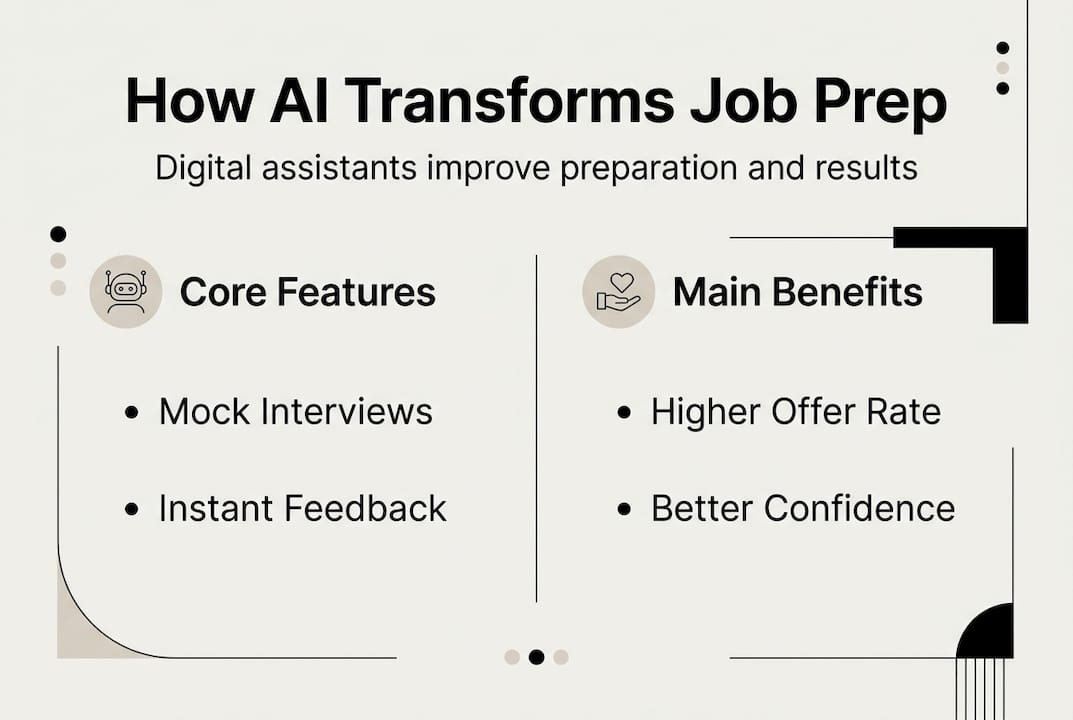
Here’s how employers and candidates each experience the impact:
| Perspective | Key benefit | Outcome |
|---|---|---|
| Candidate | Better answer quality and confidence | Higher pass rates and offer rates |
| Employer | More consistent, prepared applicants | Reduced screening time and cost |
| Both | Improved job fit and communication | Higher retention after hire |
What’s driving these results? A few things stand out from AI-driven mock interviews explained research:
- Candidates practice more frequently when feedback is instant and available 24/7
- Objective feedback removes the blind spots that friends and mentors often miss
- Repeated exposure to tough questions reduces anxiety, which directly improves live performance
- Structured answer coaching helps candidates communicate value more clearly to hiring managers
These mock interview tips aren’t just theory. They reflect what happens when candidates stop guessing and start getting precise, data-backed guidance on exactly where they need to improve.
Choosing and using digital interview assistants: Practical tips
With the evidence in place, it’s time to get practical: how do you select the best assistant and maximize its value?
Start with a clear checklist when evaluating tools:
- Accuracy of simulations. Does the tool generate questions that actually match your target role and industry?
- Quality of feedback. Is the feedback specific and actionable, or just generic scores?
- Customization options. Can you input your resume, job description, and company details?
- Cost and access. Is there a free tier to test before committing?
- Platform compatibility. Does it work on your device and in your preferred format (web, mobile, video)?
Digital assistants combine AI-driven simulations with real-time coaching and tailored feedback, but not all tools deliver equally on every dimension. Test at least two before settling on one.
Common pitfalls to avoid:
- Over-relying on automation. If you only practice with AI, you may struggle with the unpredictability of a real human interviewer.
- Skipping the feedback review. Many users run sessions but don’t read the detailed feedback. That’s where the real learning happens.
- Neglecting soft skills. AI can coach your words, but it can’t fully replicate the emotional nuance of a live conversation.
- Practicing only easy questions. Push yourself with step-by-step mock interviews that include curveball and stress-test questions.
Best practices that actually move the needle:
- Practice at least three to four times per week in the two weeks before an interview
- Review AI feedback immediately after each session while the experience is fresh
- Blend AI prep with at least one or two sessions with a peer or mentor for human perspective
- Use adaptive interview preparation strategies that adjust based on your weakest areas
Pro Tip: Simulate real conditions. Close your door, dress as you would for the actual interview, and use the same device you’ll use on interview day. Muscle memory matters more than most people realize.
Our take: Why human intuition still matters with digital assistants
Here’s our candid perspective shaped by watching real candidates succeed with, and sometimes despite, digital interview assistants. AI offers something genuinely powerful: scale, objectivity, and precision that no human coach can match at 2 a.m. the night before a big interview. But there’s a limit to what pattern recognition can teach you.
The candidates who consistently outperform others aren’t the ones who use AI the most. They’re the ones who use AI to handle the mechanical work, freeing up mental energy for the human moments that actually win offers. The pause before answering a hard question. The genuine curiosity about the interviewer’s own career path. The ability to read the room and adjust your energy.
Understanding what is AI mock interview technology really means understanding its role: it’s a training tool, not a replacement for presence. The job seekers who treat it that way, using AI to sharpen their skills and then showing up fully human in the room, are the ones landing offers in even the most competitive markets. Don’t outsource your personality to an algorithm. Let the algorithm handle the prep so your personality can do the closing.
Take your interview prep further with ParakeetAI
Ready to put these ideas to work? Everything covered in this guide, from real-time coaching to answer structuring, comes together in one place with ParakeetAI. The ParakeetAI digital assistant listens to your interview as it happens and automatically provides AI-generated answers to every question, in real time. No more blanking on tough questions or losing your train of thought under pressure.
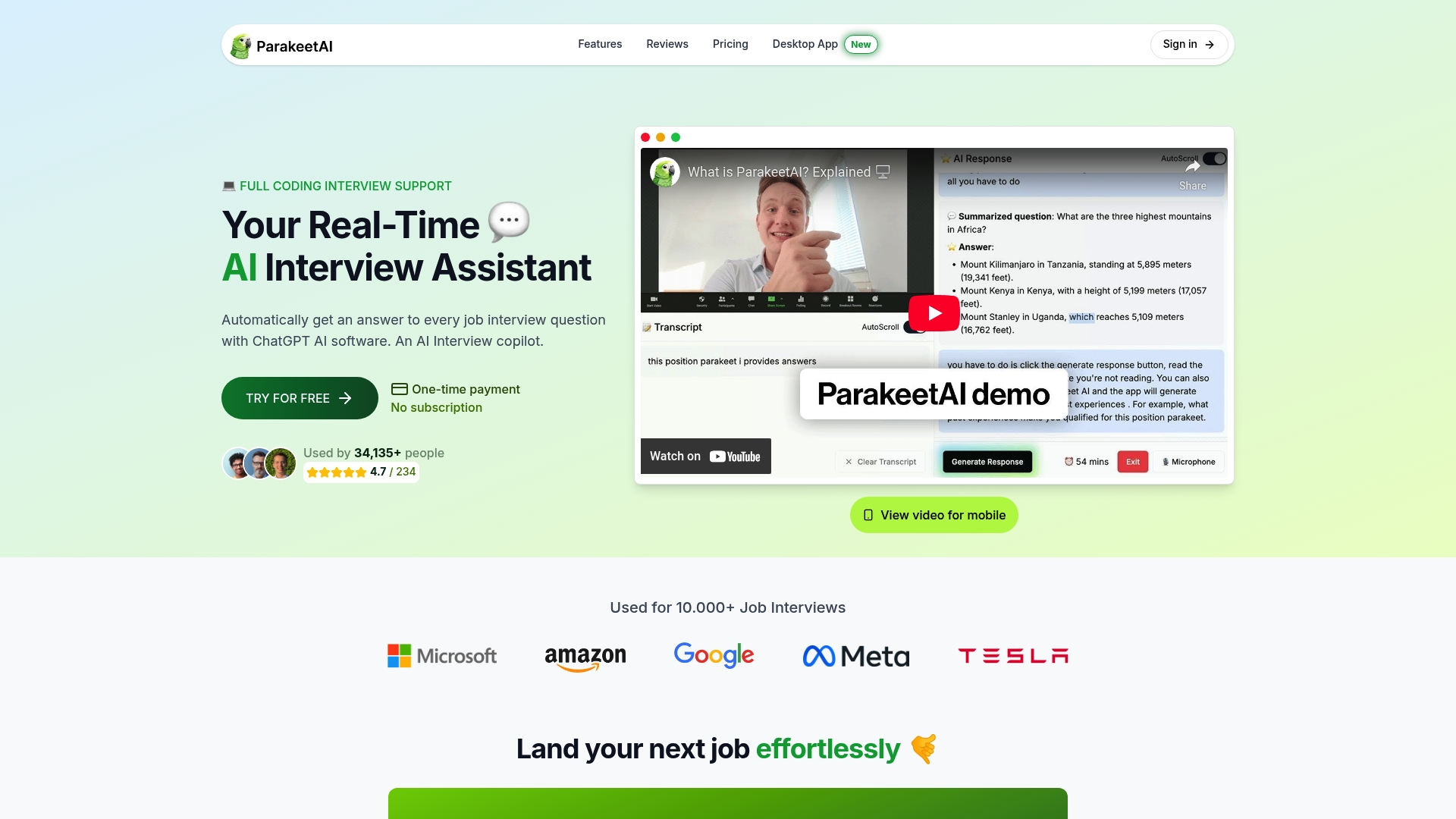
You can also explore a full library of mock interview tools and resources to build your prep strategy from the ground up. Whether you have two weeks or two days before your next interview, ParakeetAI gives you the edge that pure personal effort alone can’t provide. Try it and see the difference for yourself.
Frequently asked questions
What exactly does a digital interview assistant do?
A digital interview assistant uses AI to simulate interviews, deliver instant feedback, and help you refine your answers. These tools help job seekers prepare more effectively and perform better when it counts.
Do digital interview assistants actually help people get jobs?
Yes. AI-led interviews yield 20pp higher pass rates to human rounds, along with better offer rates and 17% stronger job retention compared to traditional prep methods.
Is using a digital interview assistant better than practicing with a friend?
Digital assistants provide AI-driven simulations with objective, data-backed feedback that friends simply can’t replicate. Combining both approaches consistently produces the best results.
What should I look for when choosing a digital interview assistant?
Prioritize tools that offer realistic simulations, specific feedback, and customization to your target role. Mock simulations, real-time coaching and delivery feedback are the three non-negotiable features to evaluate first.