
Fancy Name for Janitor: Resume-Friendly Job Titles
You've spent years keeping buildings clean, stocked, and ready for the people who use them. Then you open your resume, see Janitor under your latest job, and wonder whether a different title would help employers recognize everything you do.
That's a reasonable question, especially if your work includes floor-care equipment, security checks, supply management, or minor repairs. A hiring manager reading Custodian may expect building care, while someone reading Facilities Maintenance Technician will look for hands-on repair skills. The right title helps explain your experience. The wrong one creates expectations you can't support.
If you're looking for a fancy name for janitor, start with accuracy rather than prestige. There's nothing unprofessional about janitor, and changing the wording alone won't strengthen a vague resume.
Practical rule: Keep your official employment title recognizable, then add a clear functional description if it helps explain your responsibilities.
For example, Janitor (Custodial and Building Support) can communicate broader duties without pretending you held a different position. Choose your wording around the employer, the work you performed, and your actual level of responsibility. These alternatives give you useful options without turning cleaning experience into a management claim.
1. Custodian
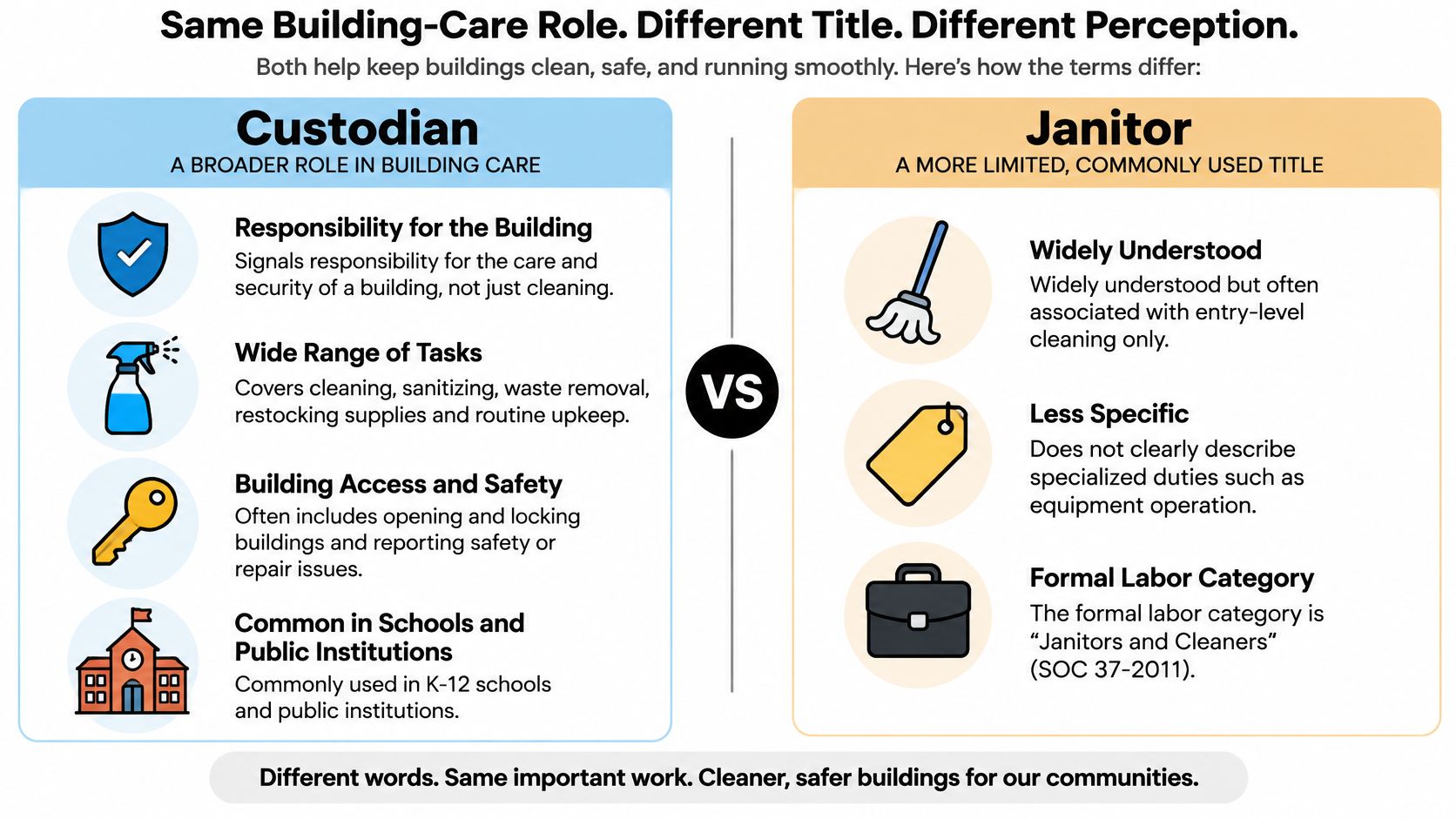
Custodian is the strongest general-purpose alternative when your work involves caring for a building rather than cleaning isolated spaces. It fits applications to schools, universities, government buildings, and offices where employers need dependable cleaning alongside routine upkeep.
The distinction is one of emphasis. Dictionary.com's janitor entry connects janitorial work with building care, while custodian can suggest broader responsibility for an institutional building and its security. Neither title automatically means supervisor.
For a school application, describe classroom cleaning, restroom sanitation, supply replenishment, and securing assigned areas. If you operated an autoscrubber or burnisher, name it rather than writing only that you used cleaning equipment.
Back Up the Title With Building-Care Duties
A useful resume bullet might read:
- Building readiness: Cleaned classrooms and shared areas, replenished restroom supplies, operated floor-care equipment, and reported maintenance concerns before building opening.
Use Head Custodian only if you held that role or directed other workers. Being trusted to work independently isn't the same as assigning shifts, inspecting colleagues' work, or managing supplies for a team.
Keep your official title in employment history when it differs from your target role. You can use Custodian in your professional summary and explain the connection through your bullets. If you need help tailoring that wording, ParakeetAI's Resume Maker lets you build and tailor a resume with AI and check its ATS score.
2. Custodial Engineer
Custodial Engineer needs more justification than Custodian. It can fit a building-services position that combines cleaning with equipment monitoring, mechanical checks, and authorized building-systems work. It's a poor choice if your experience stops at routine cleaning and reporting faults.
The technical overlap is real. O*NET's janitors and cleaners occupational profile includes routine maintenance, boiler or furnace tending, and monitoring building security and safety alongside heavy cleaning. That scope explains why some custodial jobs involve more than sanitation, but it doesn't make every cleaner an engineer.
Consider a commercial building employee who cleans common areas, records boiler readings, checks equipment for visible problems, and escalates faults. The resume should distinguish monitoring equipment from repairing equipment.
Checking a mechanical room and reporting an alarm doesn't establish that you're qualified to diagnose or repair the system.
Show Your Technical Boundaries
Spell out what you handled directly:
- System checks: Recorded operating readings and reported abnormal conditions under established procedures.
- Equipment records: Maintained inspection logs and documented service requests.
- Authorized maintenance: Completed only the adjustments or repairs covered by your training and assignment.
An employer may interpret engineer as a signal of technical qualifications. Check the posting's credential requirements and applicable local licensing rules before adopting it as a descriptive title.
If Custodial Engineer was your official title, retain it and explain its scope. If it wasn't, Custodian with Building Systems Support may communicate your experience more clearly and with less risk of inflation.
3. Building Service Worker
A tenant reports a spill, a meeting room needs resetting, and a restroom needs supplies. Building Service Worker suits that mix of cleaning and responsive site support better than a title that implies either cleaning alone or specialized repair work.
It's a useful fit for commercial properties, corporate campuses, and institutional buildings. Healthcare employers may also use building-service language, although patient-area sanitation needs a more specific description of training and procedures.
The Bureau of Labor Statistics occupational profile places this broader cleaning workforce across building-service businesses, educational institutions, healthcare, and government. The practical point for applicants is that the building type matters as much as the title.

Describe the Service, Not Just the Cleaning
For a corporate-office application, a strong example would be: Responded to occupant service requests, cleaned shared spaces, prepared meeting rooms, and reported damaged fixtures to maintenance.
Support that statement with details about your work:
- Occupant support: Explain how you received, prioritized, and completed requests.
- Safe working methods: Name relevant chemical-handling procedures and equipment.
- Building operations: Include room setup, supply distribution, or minor adjustments you performed.
The trade-off is breadth. Building Service Worker can sound vague unless the bullets make your responsibilities concrete.
Don't use the title to imply you maintained mechanical systems when you only submitted repair requests. Employers still value accurate reporting and dependable follow-through, particularly when occupants need a prompt response.
4. Environmental Services Technician
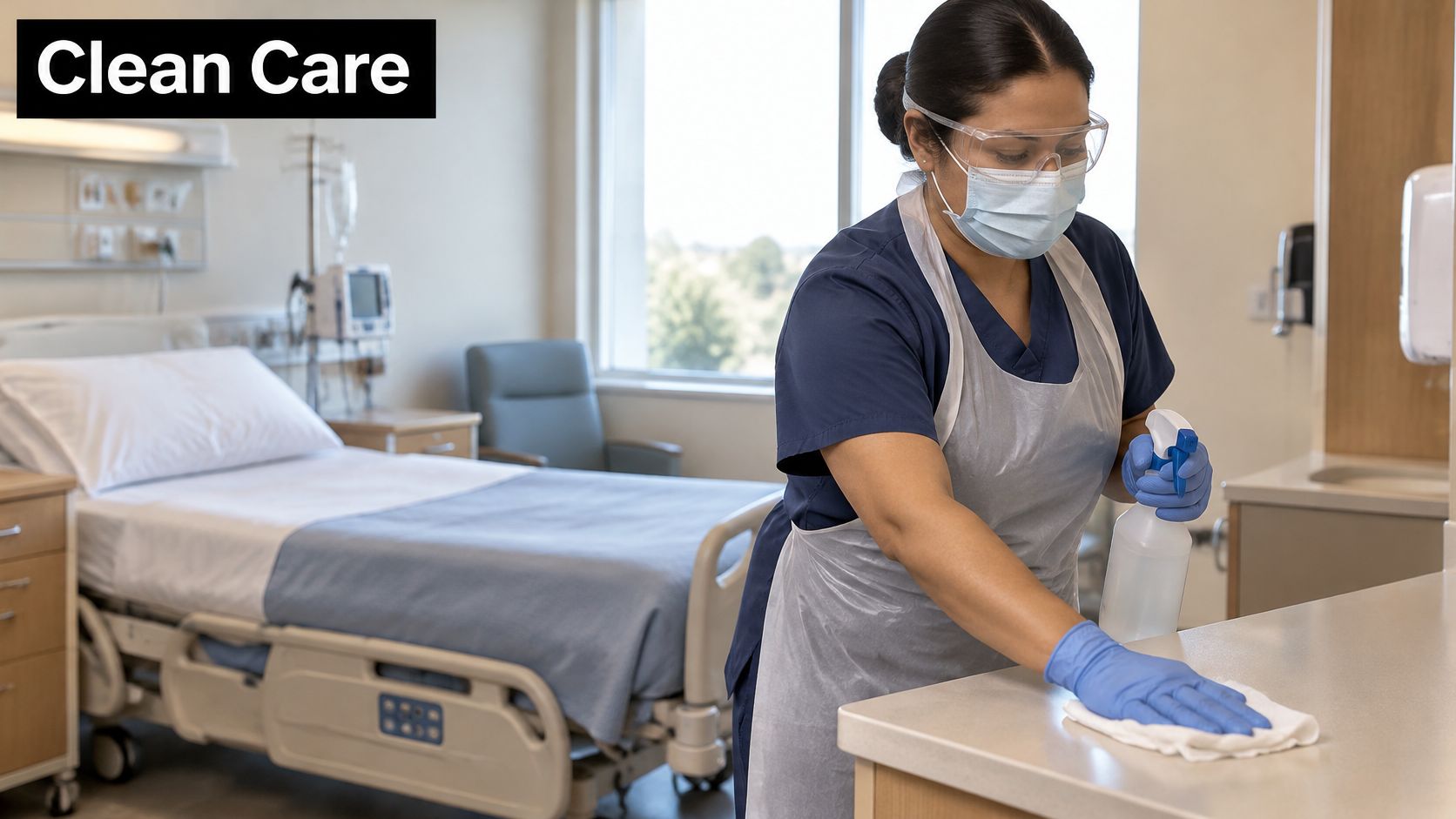
Environmental Services Technician, often shortened to EVS Technician, is the most relevant option when you're applying for healthcare cleaning work. Its emphasis is infection prevention through cleaning and disinfection, not environmental conservation or general building maintenance.
Hospitals and healthcare facilities use environmental-services language for work involving patient rooms, clinical spaces, common areas, and controlled waste procedures. The Association for the Health Care Environment (AHE) supports professionals in this field through education and standards, but mentioning the organization doesn't establish that you hold one of its credentials.
For a hospital application, describe your actual exposure to patient-area cleaning. Don't suggest you cleaned operating rooms or handled biohazardous waste unless those were assigned, trained responsibilities.
Make Healthcare Experience Specific
A credible resume entry might describe cleaning and disinfecting patient-room surfaces, following isolation precautions, replenishing supplies, and documenting completed work under hospital procedures.
- Infection-prevention knowledge: Use terms such as terminal cleaning only when you understand and have performed the procedure.
- Training: List completed hospital-specific instruction and certificates by their actual names.
- Chemical use: Explain your experience following dilution instructions, required contact times, and PPE procedures.
This title signals specialized expectations, so it isn't just a more impressive substitute for office cleaner. An employer may ask how you prevent cross-contamination or handle a room under isolation precautions.
If you're moving into healthcare from another setting, emphasize transferable cleaning skills and completed training. Present yourself as ready to learn clinical procedures, not as someone who already has experience you haven't gained.
5. Facilities Attendant
Facilities Attendant works best when you help keep a space usable throughout the day. Think of a recreation center, college building, community hall, or public facility where cleaning sits alongside room setup, visitor assistance, and opening or closing duties.
The title's advantage is flexibility. Its weakness is that employers can attach very different responsibilities to it, so you need to read the posting rather than assume attendant means cleaner.
Say you prepare a community hall for bookings. You arrange furniture according to the approved layout, check restrooms, clean between activities, report damage, and secure assigned entrances after closing. Those details make Facilities Attendant credible without implying you manage the entire property.
Separate Space Oversight From Staff Supervision
Watching over a facility doesn't automatically mean supervising employees. Use precise language for the responsibility you held:
- Space readiness: Prepared rooms, checked supplies, and restored areas after activities.
- Visitor support: Answered routine questions and referred booking or safety issues to the responsible employee.
- Closing procedures: Checked assigned doors, reported hazards, and completed closing records.
Title caution: Being responsible for a room or shift isn't the same as having authority over staffing, budgets, or building operations.
Include event setup and security checks when they're relevant, but don't let them crowd out the cleaning work the employer needs. If the vacancy mainly involves restrooms, floors, and waste collection, those tasks should remain prominent.
For someone moving from cleaning into broader public-building support, this can be a sensible target title. Keep the previous employer's title intact and show the transferable duties underneath it.
6. Sanitation Technician
In food production or another hygiene-sensitive workplace, Sanitation Technician tells the employer to look for controlled cleaning procedures, chemical knowledge, and reliable documentation. It's more specific than a polished synonym for janitor.
The title can suit food-processing facilities, food-service operations, manufacturing environments, and some healthcare or commercial settings. However, sanitation work in a production plant may involve equipment cleaning and shutdown procedures that have little in common with cleaning an office.
For example, a food-production applicant might describe cleaning accessible equipment surfaces under an approved sanitation procedure, recording completed work, and reporting residues or damaged components. Don't claim responsibility for validating a sanitation program if you only completed assigned cleaning tasks.
Show Procedural Discipline
Your resume should make the process visible:
- Chemical handling: Identify experience with approved products, dilution systems, labels, and protective equipment.
- Sanitation records: Describe logs, sign-offs, and reporting procedures you completed.
- Inspection readiness: Explain how you checked your assigned area and corrected missed cleaning before handover.
Learn the basics of HACCP, or Hazard Analysis and Critical Control Points, when targeting food-related roles. Familiarity with the terminology isn't the same as holding a certification or designing a food-safety program.
The main trade-off is specialization. A general commercial cleaner can bring useful skills, but the title may lead an interviewer to ask detailed questions about production equipment, chemical use, and contamination prevention.
Use Sanitation Technician when your duties support that expectation. Otherwise, describe your sanitation experience beneath your actual cleaning title and apply for the training opportunity.
7. Housekeeping Associate
A hotel hiring manager needs to know whether you can prepare a room for the next guest, notice missing items, and leave a consistent finish. Housekeeping Associate puts that service expectation ahead of general building upkeep.
It fits hotels and hospitality settings, and housekeeping roles also appear in hospitals, university residences, and other occupied facilities. The setting changes the procedures: preparing a guest room isn't interchangeable with cleaning a patient room.
For a hotel application, name the work directly. Bed making, bathroom cleaning, linen replacement, amenity replenishment, and reporting maintenance defects tell the employer more than a broad claim about maintaining high standards.

Connect Cleaning to Guest Readiness
A useful example is: Prepared guest rooms for occupancy, replaced linens and amenities, checked presentation, and reported maintenance concerns before release.
Emphasize accuracy, pace, and attention to detail, but don't invent room counts or guest-satisfaction results. If you have documented performance figures, use only those you can explain and substantiate.
- Guest or resident service: Include appropriate responses to requests and respect for privacy.
- Room presentation: Describe final checks for supplies, cleanliness, and visible defects.
- Team coordination: Explain how you communicated room status or maintenance needs.
The trade-off is positioning. Housekeeping Associate may undersell someone whose strongest experience is exterior upkeep, mechanical checks, or building repairs.
Choose it when room readiness and occupant experience are central to the vacancy. Don't replace a technical maintenance title with housekeeping language merely because it sounds more customer-friendly.
8. Facilities Maintenance Technician
Facilities Maintenance Technician is a different occupational direction, not an automatic promotion in wording. Use it when your work includes routine repairs, preventive maintenance, and building-systems support alongside any cleaning responsibilities.
Corporate properties, industrial facilities, and institutions may need this combination. Plumbing repairs, carpentry, HVAC support, and authorized electrical work require a clearer account of skills than a general statement that you maintained the building.
The Bureau of Labor Statistics distinguishes related general maintenance and repair work under SOC 49-9071. That distinction matters when you're deciding whether your experience belongs under a cleaning title or a repair-focused one.
For a mixed maintenance role, review the technical expectations carefully before choosing your wording.
Prove the Repairs You Can Perform
Build your application around completed tasks rather than a list of systems you've worked near:
- Repair experience: Identify the fixtures, components, or building materials you repaired.
- Preventive maintenance: Describe inspections, scheduled servicing, and work-order records.
- Technical development: List relevant trade-program credentials and completed equipment training.
A candidate who repaired door hardware, addressed minor plumbing faults, and documented preventive checks has a stronger basis for this title than someone who reported those problems.
Keep a concise repair portfolio with the fault, your authorized action, and the outcome. Never imply that basic maintenance experience qualifies you for licensed work.
Also resist upgrading the title to Facilities Manager. The Bureau of Labor Statistics facilities-management profile describes responsibilities involving staff supervision, operational oversight, maintenance coordination, and safety compliance, not only hands-on upkeep.
How the Main Janitor Alternatives Compare
| Item | Typical Setting | Scope of Duties | Technical Level | Best Used When |
|---|---|---|---|---|
| Custodian | Schools, universities, government buildings, offices | Cleaning, sanitation, waste removal, restocking, routine upkeep, and sometimes building security | General custodial skills; may include equipment use and safety procedures | Applying to schools or public employers, or emphasizing responsibility for a building |
| Custodial Engineer | Large offices, apartment complexes, institutions | Cleaning plus routine monitoring of mechanical and building systems | Moderate to high; may require equipment training or licensing | The role combines custodial work with building systems oversight |
| Building Service Worker | Offices, hospitals, commercial campuses | Cleaning, minor repairs, event setup, and occupant support | General facilities skills, with some repair and equipment knowledge | Highlighting a broad, service-oriented role with varied duties |
| Environmental Services Technician | Hospitals and healthcare facilities | Disinfection, infection prevention, and safe waste handling | Specialized; requires sanitation protocols, biohazard training, and protective equipment | Applying for healthcare cleaning roles focused on patient and staff safety |
| Facilities Attendant | Schools, colleges, recreation centers, public buildings | Cleaning, shared-space supervision, basic setup, and sometimes access control | General facilities skills; requirements vary by employer | Applying to public facilities roles involving oversight or event support |
| Sanitation Technician | Food service, manufacturing, healthcare, commercial settings | Regulatory cleaning, chemical handling, sanitation records, and inspections | Specialized; requires chemical safety and compliance knowledge | Working in a regulated setting where hygiene standards and documentation matter |
| Housekeeping Associate | Hotels, hospitals, universities, corporate campuses | Guest-room and common-area cleaning, linen handling, and service tasks | General housekeeping skills; emphasizes detail and service standards | Applying to hospitality or healthcare roles centered on rooms and guest or resident experience |
| Facilities Maintenance Technician | Corporate, industrial, and institutional facilities | Preventive maintenance, repairs, work orders, building systems support, and sometimes cleaning | High; often requires skills in HVAC, plumbing, electrical basics, or carpentry | The role includes technical repairs and ongoing building maintenance |
Choosing the Right Title for Your Next Application
The best fancy name for janitor is the one a hiring manager can understand and your experience can support. Start with the employer's language, then test it against your duties rather than choosing the most impressive-sounding option.
For schools and public bodies, Custodian is usually the clearest starting point. For hospitals, look closely at Environmental Services Technician and its clinical cleaning requirements. For hotels, Housekeeping Associate better reflects guest-room preparation and service expectations.
Match the Employer, Scope, and Evidence
Use the same reasoning for broader roles:
- General building support: Choose Building Service Worker when cleaning comes with occupant requests, room setup, and site assistance.
- Public-space readiness: Consider Facilities Attendant when your work includes opening, closing, visitor support, and activity setup.
- Controlled sanitation: Use Sanitation Technician when documented hygiene procedures and chemical handling are central.
- Technical upkeep: Target Facilities Maintenance Technician when you can demonstrate repairs and preventive maintenance.
Keep the distinction between your target title and your employment history clear. You can headline your resume with the role you're pursuing while retaining your official past title and adding a truthful functional clarification.
Then tailor the bullets with the title. If the posting emphasizes floor care, name your equipment and methods; if it emphasizes building readiness, describe inspections, supplies, and opening procedures. If you can't explain a claimed duty in an interview, remove or rewrite it.
Choose the title and supporting evidence together. A stronger label can't compensate for vague or inflated responsibilities.
Apply the same discipline when you improve your professional profile headline. Keep your resume and professional profile consistent enough that employers can understand your work without reconciling conflicting descriptions.
Before your next application, select the most relevant title from the posting, preserve your actual employment history, and rewrite the strongest supporting bullets. That gives the employer a clear account of what you can do and gives you concrete examples to discuss at interview.
ParakeetAI offers resume-building tools, AI mock interviews, and a live interview assistant that suggests answers based on your resume, documents, and instructions. Visit ParakeetAI to tailor your application and practice explaining the cleaning, building-support, or maintenance experience behind your chosen title.