
General Questions to Ask in an Interview: 2026 Guide

TL;DR:Asking thoughtful questions about success metrics and team dynamics helps candidates stand out.Research-backed questions reveal genuine interest and provide insights into company culture and growth.
Asking the right general questions to ask in an interview is the single most effective way to stand out from other candidates. Harvard research confirms that asking thoughtful questions significantly increases your likability with interviewers. Experts recommend preparing 5–7 questions before any interview. The best questions do two things at once: they show genuine interest in the role, and they give you the real information you need to decide if the job is worth taking.
1. What are the top general questions to ask about the role?

The most valuable question you can ask about any role is what success looks like at 30, 60, and 90 days. This question defines expectations immediately and tells you whether the company has a clear onboarding plan. Interviewers who struggle to answer it reveal something important: the role may be poorly defined.
Strong role-focused questions include:
- “What does success look like in the first 30, 60, and 90 days?”
- “What are the biggest challenges someone in this role typically faces in the first six months?”
- “How is performance measured, and how often are reviews conducted?”
- “What does a typical day or week look like in this position?”
- “What are the most critical priorities for this role right now?”
These questions show a results-oriented mindset. They signal that you are thinking about contribution, not just compensation. Interviewers consistently respond well to candidates who ask about outcomes rather than perks.
Pro Tip: Ask the 30/60/90-day question early in the role discussion, not at the end. It reframes the entire conversation around your potential impact.
2. Which questions reveal team dynamics and working style?
The final phase of most interviews is your chance to interview your interviewer about the team and culture. Questions about team dynamics reveal truths that no job description ever includes. How a team handles conflict, communicates, and collaborates tells you far more than the official company values page.
Ask these questions to uncover what working there actually feels like:
- “How does the team typically handle disagreements or conflicting priorities?”
- “How would you describe the management style of the person I’d report to?”
- “How does the team communicate day to day? Slack, email, in-person meetings?”
- “What does collaboration look like between this team and other departments?”
- “What do you personally enjoy most about working here?”
The last question is underused and powerful. It shifts the dynamic and often produces the most honest answers of the entire interview. When a hiring manager pauses before answering, that pause tells you something.
Pro Tip: Ask about conflict resolution specifically. Vague answers like “we just talk it out” often signal a team that avoids hard conversations.
3. What questions uncover company culture and growth opportunities?
Career growth questions are not just about ambition. They tell you whether the company invests in its people or simply consumes them. Ask directly about career progression paths tied to the specific role you are applying for.
Useful questions for this category include:
- “What does career progression typically look like for someone in this role?”
- “Does the company offer mentorship programs, professional development budgets, or continuing education support?”
- “How has the company changed or grown in the last two to three years?”
- “What is the company’s approach to remote or hybrid work?”
- “Can you describe the work-life balance expectations for this team?”
Companies that cannot answer the growth question clearly often have high turnover in that role. If the interviewer says “we promote from within” but cannot name a single example, treat that as a red flag. Specificity in their answers signals a healthy culture. Vagueness signals the opposite.
4. How to ask about next steps and follow-up effectively
Always ask about the hiring timeline before you leave any interview. Asking about next steps is not just polite. It gives you a concrete timeline for follow-up and prevents you from waiting in silence for two weeks wondering what happened.
The most effective follow-up technique uses a simple template: “You mentioned X. How does that affect Y?” This format signals active listening and creates genuine dialogue. It shows you were paying attention, not just waiting for your turn to speak.
A practical sequence for closing an interview:
- Ask your prepared role and culture questions during the natural Q&A window.
- Use the follow-up template to deepen one or two answers the interviewer gave.
- Ask directly: “What are the next steps in your process, and what is your expected timeline?”
- Confirm the best way to follow up and with whom.
Avoid asking about salary, benefits, or paid time off in a first interview. Premature compensation questions create a negative impression before you have established your value. Save those conversations for the offer stage.
Pro Tip: Write down the interviewer’s exact words during the conversation. Your follow-up email can reference specific things they said, which makes it far more memorable than a generic thank-you note.
5. Common mistakes to avoid when preparing your questions
The most common mistake candidates make is asking questions that are easily answered by reading the company website or job description. Employers notice immediately when a candidate has not done basic research. It signals low effort and low interest.
Avoid these specific pitfalls:
- Asking “What does your company do?” after the interviewer already explained it.
- Leading with salary, PTO, or benefits questions in an early-stage interview.
- Asking vague questions like “What’s the culture like?” without any specificity.
- Firing all your questions at once instead of weaving them into the conversation naturally.
- Asking questions with yes/no answers that kill the dialogue.
The best candidates treat question-asking as a conversation skill, not a checklist. Blending your questions naturally into the flow of the interview makes you seem engaged rather than rehearsed. You can find more patterns to watch for in this guide on top interview mistakes that derail otherwise strong candidates.
Thoughtful, well-timed questions separate you from candidates who give technically correct answers but leave no lasting impression. Interviewers remember the people who made them think.
6. How to structure your answers when the interviewer asks you questions
Asking great questions is only half the equation. When the interviewer turns the table, your answers need structure. Behavioral questions are best answered using the STAR method: Situation, Task, Action, Result. The key is to spend roughly 60% of your answer on the Action component, since that is what interviewers are actually evaluating.
Measurable outcomes and specific examples build interviewer confidence far more than general claims. “I improved team efficiency” is forgettable. “I reduced report turnaround from five days to two by automating the data pull” is not. Specificity is what makes an answer stick.
Preparing 6–8 adaptable STAR stories before any interview gives you a flexible bank of responses. You can reshape the same story to answer questions about leadership, conflict, failure, or success depending on how the question is framed. This preparation also frees up mental bandwidth so you can focus on asking good questions rather than scrambling to remember examples.
For tech roles specifically, check out this breakdown of best answers to interview questions that emphasizes measurable outcomes. For teams hiring across borders, understanding how remote team structures shape management style can also inform the questions you ask about collaboration.
Key Takeaways
The most effective interview strategy combines thoughtful, research-based questions with structured, specific answers that demonstrate clear thinking and measurable results.
| Point | Details |
|---|---|
| Prepare 5–7 questions | Harvard-backed research shows this number increases candidate likability with interviewers. |
| Ask about 30/60/90-day success | This question defines role expectations and reveals whether the company has a clear onboarding plan. |
| Use the follow-up template | “You mentioned X. How does that affect Y?” signals active listening and builds rapport. |
| Avoid Googleable questions | Questions answered by the job description or website signal low preparation and low interest. |
| Save compensation questions | Ask about salary and benefits only at the offer stage to avoid negative first impressions. |
Why the questions you ask matter more than you think
Most candidates treat the Q&A portion of an interview as a formality. They ask one or two generic questions, nod politely, and leave. That is a missed opportunity every single time.
The questions you ask reveal your thinking more clearly than most of your answers do. When you ask “What does success look like at 90 days?” you are showing that you think in outcomes. When you ask “How does the team handle disagreements?” you are showing that you understand organizations are made of people, not org charts. These signals register with interviewers even when they cannot articulate why they liked a candidate.
The follow-up question is the most underrated tool in any interview. I have watched candidates turn a flat, transactional interview into a genuine conversation simply by saying “You mentioned the team is going through a transition. What does that mean for someone coming in right now?” That one question changed the energy in the room. The interviewer leaned forward. The conversation became real.
The mistake most job seekers make is over-preparing answers and under-preparing questions. You can find a strong list of employer-focused questions to build from, but the best questions always come from listening carefully to what the interviewer says and following the thread. Preparation gives you the foundation. Curiosity gives you the edge.
— Jure
Parakeet-ai: Real-time support for your next interview
Preparing strong questions is one part of interview readiness. Knowing how to answer every question the interviewer throws at you is the other.
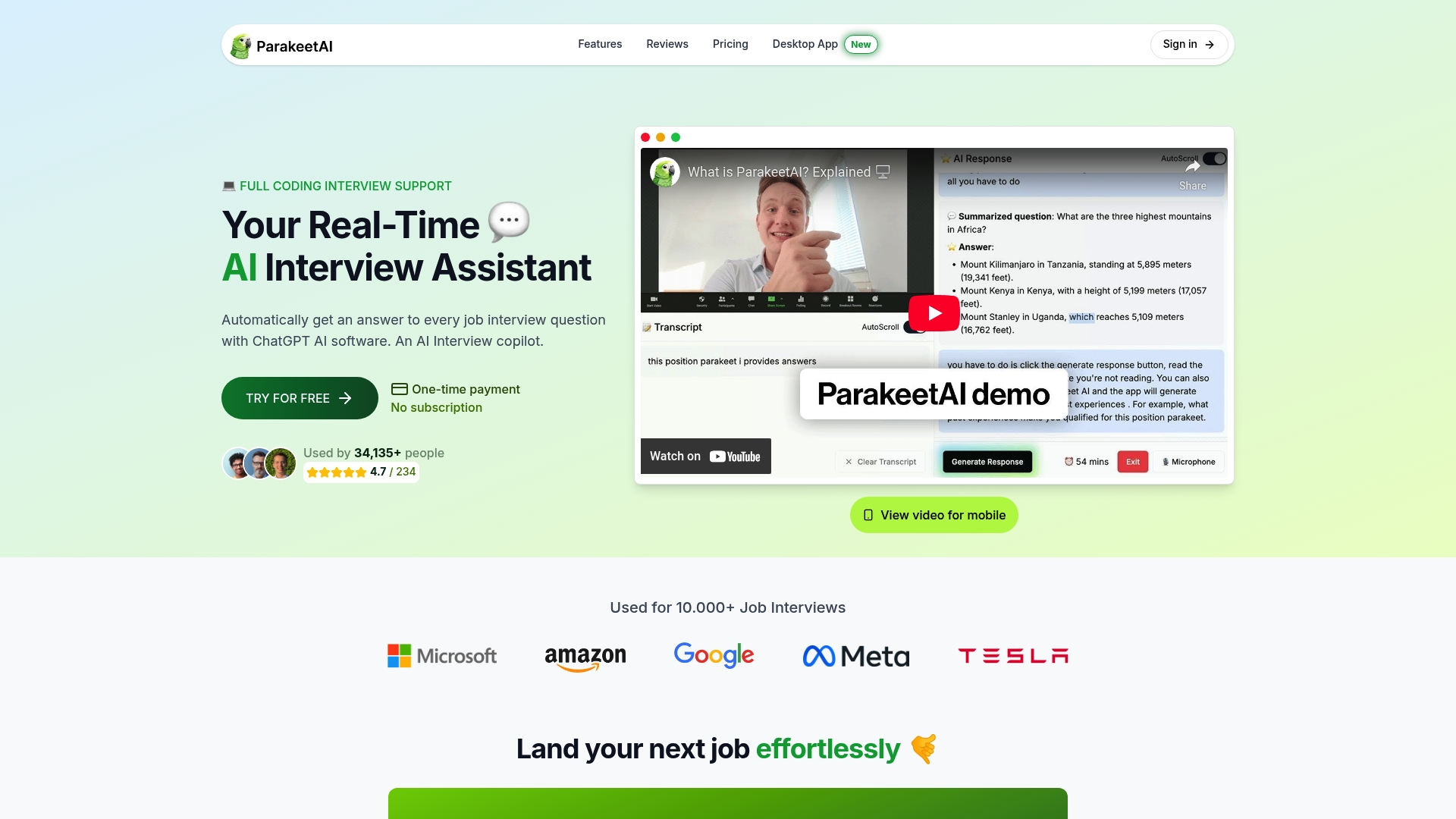
Parakeet-ai is a real-time AI interview assistant that listens to your interview and automatically generates answers to every question as it happens. You get structured, specific responses in the moment, so you never lose your train of thought under pressure. Whether you are working on your STAR-method answers, practicing role-specific questions, or building confidence before a high-stakes interview, Parakeet-ai gives you the support to perform at your best when it counts.
FAQ
How many questions should you ask in an interview?
Prepare 5–7 thoughtful questions before any interview. Research shows this number increases your likability and signals genuine engagement with the role.
What is the best question to ask about a new role?
Ask what success looks like at 30, 60, and 90 days. This question defines expectations clearly and reveals whether the company has a structured onboarding plan.
When should you ask about salary in an interview?
Save salary and benefits questions for the offer stage. Asking about compensation in a first interview creates a negative impression before you have demonstrated your value.
What makes a follow-up question effective?
The most effective follow-up format is “You mentioned X. How does that affect Y?” This shows active listening and turns a standard Q&A into a real conversation.
What questions should you avoid asking an interviewer?
Avoid questions already answered in the job description or on the company website. These signal a lack of preparation and leave a poor impression with hiring managers.