
What Is AI-Based Culture Fit? A Guide for HR Teams

TL;DR:AI-based culture fit assessments use structured algorithms to measure how well candidates’ values and behaviors match company culture. They offer consistent, auditable evaluation but require careful calibration to prevent biased results and must be complemented by human judgment. These tools help identify both cultural alignment and potential gaps, supporting fairer and more effective hiring processes.
AI-based culture fit assessment is the process of using artificial intelligence tools to measure how well a candidate’s values, behaviors, and work style align with an organization’s culture. This method moves beyond gut instinct by applying structured rubrics, behavioral data, and scoring algorithms to a question that traditional interviews consistently get wrong. What is AI-based culture fit, exactly, and why does it matter now? Because culture fit relates to identity, not just skill, and human interviewers routinely mistake conversational fluency for genuine values alignment. AI-driven evaluation offers a more auditable, consistent alternative.
What is AI-based culture fit and how does it work?
AI-based culture fit assessment uses machine learning and structured scoring to evaluate whether a candidate’s values, communication style, and behavioral patterns match a company’s defined culture. The industry term for this practice is “cultural compatibility assessment,” and it sits within the broader category of AI-powered talent analytics. Both terms appear throughout HR literature, so knowing both helps you speak the language of vendors, legal teams, and executives.

The assessment process starts with defining what your culture actually is. Most frameworks use established models like the Big Five personality model, the Organizational Culture Assessment Instrument (OCAI), and Situational Judgment Tests (SJTs) to build a profile of your existing team’s values and work style. Candidates then complete structured exercises scored against that profile. The AI compares responses to predefined behavioral rubrics rather than leaving interpretation to individual recruiters.
This matters because traditional interviews measure how well someone interviews, not how well they fit. A candidate who is articulate and confident scores high in a conversational interview regardless of whether their values match. AI-based evaluation shifts the measurement to behavioral evidence and response consistency across standardized prompts.
How AI scores candidates against cultural values
AI standardizes evaluation by delivering the same values-based questions to every candidate and scoring responses against the same rubric. This produces consistent scores and a documented audit trail, which matters both for fairness and for legal defensibility.
The scoring typically covers four dimensions:
- Values alignment: Does the candidate prioritize what the organization prioritizes, such as transparency, speed, or collaboration?
- Work style compatibility: Does the candidate prefer autonomous work or structured team environments?
- Communication patterns: Does the candidate’s language reflect the organization’s norms around directness, formality, or feedback?
- Behavioral consistency: Do the candidate’s answers across multiple prompts tell a coherent story?
Pro Tip: Define your cultural values in writing before selecting any AI assessment tool. If your rubric is vague, the AI scores against a vague standard, and the results will reflect that.
What are the benefits and limitations of AI culture assessments?
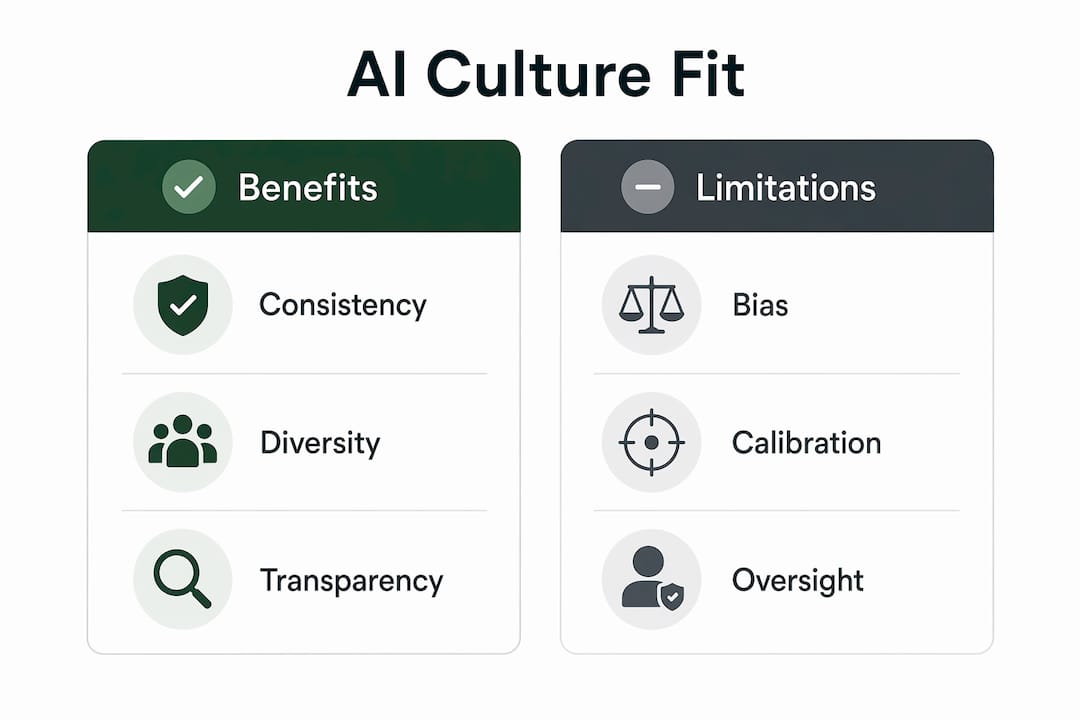
AI-based culture assessment delivers real advantages, but it also carries risks that HR professionals need to understand before deploying it at scale.
Key benefits
The core benefit is consistency. Every candidate faces the same questions, scored by the same criteria. This removes the affinity bias that occurs when a recruiter unconsciously favors candidates who remind them of themselves. AI also processes large candidate pools faster than human reviewers, which reduces time-to-hire without sacrificing evaluation depth. The audit trail AI generates also supports compliance documentation, which is increasingly important as regulators scrutinize hiring algorithms.
A diversity-supportive culture moderates AI transformation success. Organizations that embed fairness and transparency into their AI tools from the start see better outcomes than those that treat AI as a neutral plug-and-play solution.
The bias problem you cannot ignore
The most important limitation is this: poorly calibrated AI tools reproduce hiring biases at 85%, compared to 9% in structured human assessments. That figure is not a reason to abandon AI. It is a reason to calibrate carefully and audit continuously.
AI does not eliminate bias. It shifts bias to auditable systemic patterns that humans can examine and correct. That is actually an improvement over the invisible, undocumentable bias in unstructured interviews. But it requires ongoing human management, not a one-time setup.
Additional limitations include:
- Lack of nuance: AI cannot detect sarcasm, cultural context, or the kind of self-awareness that shows up in a real conversation.
- Legal exposure: Regulators in the U.S. and EU are actively examining AI hiring tools for discriminatory impact. Audit trails help, but they do not guarantee compliance.
- Employee perception: 63% of employees believe AI makes the workplace less human, and 57% expect a reduction in human skills. That perception affects how candidates experience your hiring process.
Human oversight is not optional. AI results should inform recruiter judgment, not replace it. The best implementations treat AI scores as one data point in a multi-layered decision, not as a final verdict.
What is the difference between culture fit and culture add?
Culture fit and culture add are complementary concepts, and confusing them leads to homogeneous teams that stagnate.
Culture fit measures values alignment and behavioral compatibility. A candidate who scores high on culture fit shares the organization’s core commitments, whether that means a bias toward action, a commitment to transparency, or a preference for data-driven decisions. Culture fit is what AI assesses well because it maps to structured, scorable criteria.
Culture add measures what a candidate brings that the team currently lacks. A strong culture-add hire shares core values but introduces different perspectives, experiences, or problem-solving approaches. AI can assess both, but the methods differ. Culture fit maps to rubric scoring. Culture add requires identifying gaps in your current team profile and then scoring candidates against those gaps rather than against the existing norm.
Here is a practical framework for using both in your hiring process:
- Define your core values explicitly. These are non-negotiable and form the culture fit rubric.
- Map your current team’s profile. Use OCAI or a similar model to identify what perspectives and styles are already represented.
- Identify gaps. Where is your team weak in diversity of thought, background, or approach?
- Score culture fit with AI. Use structured rubrics to assess values alignment across all candidates.
- Assess culture add with human interviews. Explore what each candidate brings that your team does not already have.
Recruiters should use AI to structure culture fit and human interviews to explore culture add. That division of labor plays to the strengths of each method.
How to integrate AI culture assessments into your hiring workflow
Effective integration requires more than buying a tool and running it. It requires a structured approach that combines AI output with human judgment, transparency with candidates, and ongoing monitoring.
Experts recommend a 90-day framework involving cross-functional alignment across data, legal, and operations teams before deploying AI culture tools at scale. That timeline exists because the legal, ethical, and technical groundwork takes real time to do correctly.
Pro Tip: Before launching any AI culture assessment, run a pilot with a small candidate cohort and compare AI scores to eventual 90-day performance reviews. That feedback loop reveals calibration errors before they affect large hiring decisions.
The following practices define effective implementation:
- Build a written cultural values rubric. Every scored dimension needs a clear definition and behavioral examples.
- Audit your training data. If the AI learned from historical hiring decisions, those decisions may contain bias. Clean the data before you train the model.
- Communicate with candidates. Tell applicants that AI tools are part of your process and explain what they assess. Transparency builds trust and reduces legal risk.
- Maintain a human review layer. No AI score should trigger a rejection without a recruiter reviewing the full candidate profile.
- Monitor outcomes by demographic group. If your AI tool produces systematically different scores for candidates of a particular gender, race, or age group, that is a calibration problem requiring immediate correction.
AI-driven culture fit metrics can also diagnose workplace health beyond hiring. Drops in communication and collaboration scores among existing employees can signal cultural decay before it becomes a retention crisis. The same tools that assess candidates can monitor team health over time.
Candidates preparing for AI-assisted hiring processes can benefit from tools like AI interview preparation platforms that help them understand how structured assessments work and how to present their values clearly. Understanding the format reduces anxiety and produces more authentic responses.
For HR teams navigating the legal dimensions of AI hiring tools, the ethics of AI in interviews is a practical resource covering compliance frameworks and documentation requirements.
Key Takeaways
AI-based culture fit assessment improves hiring consistency and reduces visible bias, but only when calibrated carefully, audited continuously, and paired with human judgment.
| Point | Details |
|---|---|
| Define culture before assessing it | Build a written values rubric before selecting or configuring any AI tool. |
| Bias shifts, it does not disappear | Poorly calibrated AI reproduces bias at 85%; ongoing audits are non-negotiable. |
| Culture fit and culture add are different | Use AI to score values alignment and human interviews to explore what candidates add. |
| Human oversight is required | AI scores should inform recruiter decisions, not replace them. |
| Monitor beyond hiring | AI culture metrics can detect team health issues before they become retention problems. |
Where AI culture assessment is heading, and what HR teams should watch
I have spent years watching HR teams adopt new evaluation tools with enthusiasm and then quietly abandon them when the results did not match expectations. AI culture assessment is different from previous waves of HR technology, but not for the reasons most vendors claim.
The real shift is auditability. For the first time, you can examine exactly why a candidate scored the way they did. That is genuinely new. Unstructured interviews have always been black boxes. AI opens the box, which means you can fix what is wrong inside it.
What concerns me is the speed of adoption relative to the depth of understanding. Teams are deploying AI culture tools without defining what their culture actually is. The AI then scores candidates against an implicit, unexamined standard, which is exactly the problem it was supposed to solve. The technology is only as good as the cultural clarity behind it.
The other blind spot I see consistently is the culture add question. AI is good at measuring fit against a defined norm. It is not good at measuring what is missing from that norm. If you use AI exclusively, you will hire people who look like your current team in values and style. That produces short-term cohesion and long-term stagnation. The teams that get this right use AI for the fit question and reserve human judgment for the add question.
My honest recommendation: treat AI culture assessment as a diagnostic tool, not a decision engine. Use it to surface information, then apply human judgment to interpret it. The recruiters who do that consistently will outperform those who outsource the decision to the algorithm.
— Jure
Parakeet-ai and AI-powered hiring support
AI-based culture fit assessment changes what recruiters need from candidates, and it changes what candidates need to succeed in the process.
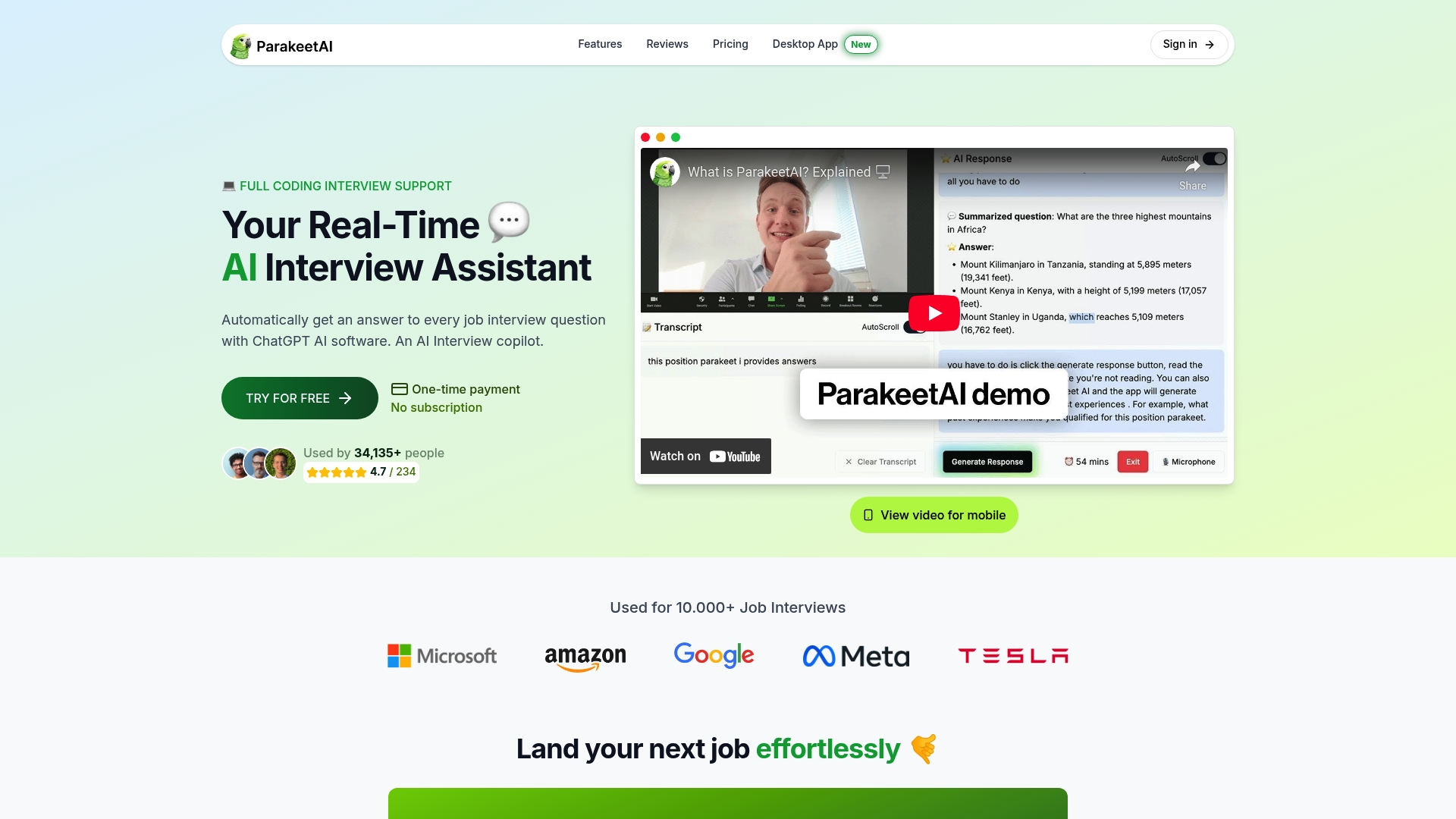
Parakeet-ai is a real-time AI interview assistant that listens to your interview and automatically provides answers to every question using AI. For HR teams building AI-assisted hiring workflows, understanding how candidates experience structured assessments is as important as understanding how the tools score them. Parakeet-ai helps candidates present their values and behavioral evidence clearly, which produces more accurate culture fit data for your team. Visit Parakeet-ai to see how real-time AI support changes the interview experience from both sides of the table.
FAQ
What is AI-based culture fit in simple terms?
AI-based culture fit assessment uses algorithms and structured rubrics to measure how well a candidate’s values, behaviors, and work style match an organization’s culture. It replaces subjective interviewer impressions with scored, auditable data.
Can AI eliminate bias in culture fit assessments?
AI does not eliminate bias. It shifts bias to visible, auditable systemic patterns that human reviewers can identify and correct, which is an improvement over the invisible bias in unstructured interviews.
What is the difference between culture fit and culture add?
Culture fit measures alignment with existing values and norms. Culture add measures what new perspectives or strengths a candidate brings that the team currently lacks. Both matter for balanced hiring.
How do I know if an AI culture assessment tool is calibrated correctly?
Run a pilot cohort, then compare AI scores to 90-day performance reviews. If high-scoring candidates underperform or low-scoring candidates excel, the rubric needs recalibration.
Are AI culture assessments legal?
AI hiring tools face active regulatory scrutiny in the U.S. and EU. Maintaining audit trails, communicating transparently with candidates, and monitoring outcomes by demographic group are the core legal risk management practices for AI culture assessments.