
The Role of AI-Powered Reference Checks in Hiring

TL;DR:AI-powered reference checks automate outreach, improve speed with over 89% completion rates, and enhance fraud detection using NIST standards. They also measure candidate AI fluency through behavioral questions, converting data into predictive insights. Human judgment remains essential as AI serves as an assistive tool rather than a final decision-maker.
AI-powered reference checks are defined as automated systems that collect, analyze, and verify candidate reference data using machine learning and natural language processing. The role of AI-powered reference checks in modern hiring goes far beyond replacing phone calls. These platforms achieve completion rates exceeding 89% with mobile-first surveys and automated reminders, compared to the inconsistent results of manual outreach. Identity verification aligned with NIST IAL2 standards adds a layer of security that traditional reference calls never provided. The result is a process that delivers faster decisions, cleaner data, and measurable fraud prevention at every stage of the hiring funnel.
How does AI automate and standardize reference checks?
Automation is the foundation of every AI reference checking platform. Instead of a recruiter manually emailing three references and waiting days for replies, the system handles outreach, follow-up, and data collection without human intervention.
The mechanics work like this:
- Automated outreach sends personalized emails and SMS messages to referees the moment a candidate clears a hiring stage.
- Mobile-first survey design makes it easy for referees to respond from any device, which directly drives higher completion rates.
- Adaptive questionnaires adjust questions based on the role, seniority level, or specific candidate data already collected.
- Automated reminders follow up with non-responders on a set schedule, removing the need for recruiter follow-up.
- ATS integration triggers reference requests automatically and pushes completed data back into platforms like Workday, Greenhouse, or Lever.
The time savings are significant. Automated outreach via personalized email and intelligent voice agents can increase response rates to 94%, reducing HR time spent on references by up to 87%. That means a task that once consumed hours of recruiter time now takes roughly 15 seconds per reference request to initiate. The entire reference check completes within 12–26 hours in most cases.
Pro Tip: Set your ATS to trigger reference requests automatically when a candidate reaches the final interview stage. This eliminates the manual handoff and keeps your pipeline moving without recruiter intervention.

The standardization benefit is just as important as speed. Every referee answers the same structured questions, which means you compare candidates on identical data points rather than whatever a recruiter happened to ask during a phone call. That consistency is what makes AI reference data usable for predictive analysis later in the process.
How does AI detect fraud in candidate references?
Candidate fraud involving synthetic or falsified references is increasing across hiring markets, making fraud prevention a core function of modern AI reference platforms, not an optional add-on.
AI systems detect fraud by analyzing digital footprints that human reviewers would never catch. The most common fraud signals include:
- IP address collisions: a candidate and referee submitting responses from the same IP address or device.
- VPN usage: referees masking their location with a virtual private network, which flags potential impersonation.
- Device overlap: multiple survey responses originating from the same hardware fingerprint.
- Suspicious response patterns: answers that are statistically identical across multiple referees, suggesting a single author.
Identity verification aligned with NIST IAL2 standards authenticates each referee before they submit any data. NIST IAL2 is the identity assurance level adopted by federal agencies for high-stakes verification. Applying that standard to reference checks means you know the person submitting feedback is who they claim to be.
Pro Tip: Ask any AI reference platform vendor to explain exactly which fraud signals they monitor and how they weight them. Vendors who cannot answer that question clearly are not worth the risk.
The fraud detection layer does not replace human judgment. It surfaces risk signals that a hiring manager then reviews. This pairing of automated detection with human oversight is the correct model. AI catches patterns at scale. Humans make the final call on what those patterns mean for a specific candidate.
Can AI reference checks measure a candidate’s AI fluency?
AI fluency is defined as a candidate’s ability to work effectively with AI tools, and it is now measurable through structured reference checks. Dr. Heather Myers identifies AI fluency as a critical but undermeasured predictor of employee success in AI-driven workplaces. That gap between its importance and how rarely it gets measured is exactly where AI reference platforms are stepping in.
The process works through behavioral questions embedded in referee surveys. Instead of asking “Was this candidate reliable?”, the system asks managers and peers about specific behaviors:
- How frequently did the candidate adopt new AI tools without being prompted?
- Did the candidate use AI outputs critically, or accept them without verification?
- How did peers perceive the candidate’s comfort level with AI-assisted workflows?
- Did the candidate help others adapt to AI tools, signaling a multiplier effect on team productivity?
These questions generate structured data that integrates directly with enterprise HR systems. Platforms that connect with Workday, SAP, or Salesforce can feed AI fluency scores into a unified candidate profile alongside interview scores and skills assessments. The result is a hiring decision grounded in behavioral patterns and manager perceptions rather than gut instinct.
This shifts the purpose of reference checks from historical validation to predictive risk assessment. You are no longer just confirming that a candidate held the job they listed on their resume. You are collecting forward-looking data about how they will perform in a workplace where AI tools are central to daily work. That is a fundamentally different and more useful output.
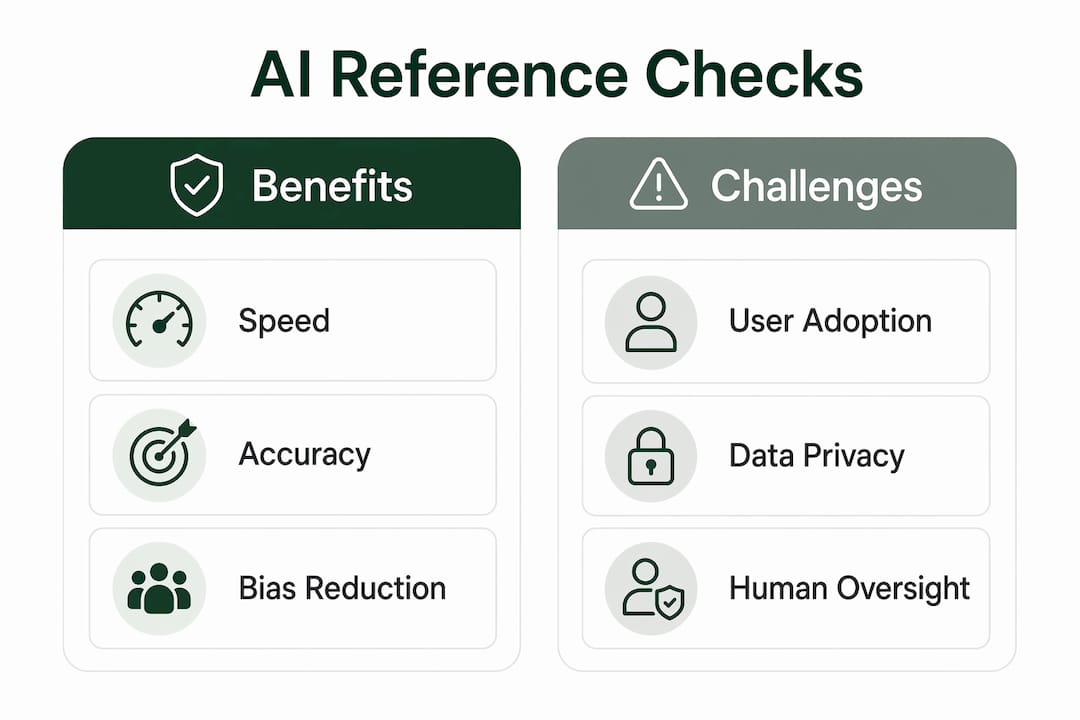
What are the benefits and challenges of AI reference checks?
The benefits of AI reference checks are concrete and measurable. The challenges are real but manageable with the right vendor selection and internal controls.
Benefits worth knowing
AI reference checking platforms reduce bias and errors by standardizing questions and analyzing feedback objectively. Every candidate goes through the same process, which removes the variation that comes from different recruiters asking different questions in different tones. Standardized data also scales. A team running 500 hires per quarter can process reference checks at the same quality level as a team running 50.
The candidate experience improves too. Referees complete mobile-optimized surveys in minutes rather than scheduling a 20-minute phone call. Candidates get faster decisions. Hiring managers get cleaner data. The role of automation in recruitment at this stage removes friction for everyone involved.
For HR teams evaluating software options, reviewing a comparison of leading HR platforms can help identify which tools integrate reference checking with broader hiring workflows.
Challenges that require attention
- Algorithm transparency: Proprietary AI algorithms are often opaque. Lack of transparency in vendor algorithms poses real risks for HR managers who cannot audit how scores are calculated. Always ask vendors for validation studies and third-party audits before signing a contract.
- Data privacy and consent: Referees must consent to data collection and understand how their responses will be used. GDPR and state-level privacy laws in the US apply to reference data. Build consent workflows into your process from day one.
- Over-reliance on AI outputs: AI scores are inputs, not verdicts. Combining AI outputs with human judgment controls privacy and data-scoring transparency, ensuring ethical deployment in hiring. A high fraud risk score warrants a conversation, not an automatic rejection.
- Integration complexity: Connecting AI reference platforms with existing ATS systems requires IT involvement. Budget time for this during implementation.
Pro Tip: Before deploying any AI reference platform, run a parallel test. Process 20 candidates through both your existing manual method and the AI system. Compare the data quality, completion rates, and time spent. The numbers will make the business case for you.
The role of AI in human resources is expanding fast, and reference checking is one of the clearest use cases because the ROI is measurable from day one.
Key Takeaways
AI-powered reference checks deliver faster completions, stronger fraud detection, and predictive hiring data that manual processes cannot match at scale.
| Point | Details |
|---|---|
| Completion rates and speed | AI platforms achieve 89%+ completion rates with turnaround times of 12–26 hours. |
| Fraud detection | NIST IAL2 identity verification and IP collision analysis catch falsified references before they influence decisions. |
| AI fluency measurement | Behavioral referee questions now assess how well candidates work with AI tools, predicting future performance. |
| Bias reduction | Standardized questionnaires remove recruiter variation and produce consistent, comparable candidate data. |
| Human oversight required | AI outputs are inputs for human judgment, not final verdicts. Vendor transparency and consent workflows are non-negotiable. |
Why I think most HR teams are still underusing this technology
The efficiency gains from AI reference checking are well documented. What I find more interesting is how few hiring teams are using the predictive layer. Most organizations that adopt these platforms use them to replace phone calls. That is a reasonable starting point, but it misses the bigger opportunity.
The shift from historical validation to forward-looking risk assessment is where the real value sits. When you start collecting structured data on AI fluency, adaptability, and peer-rated behaviors, you are building a dataset that improves every future hiring decision in that role. The first 50 hires teach you what the best performers looked like in their reference data. The next 50 hires benefit from that pattern.
The ethical considerations are real and should not be minimized. Candidates deserve to know how reference data is scored and how it influences decisions. Transparency with candidates and referees is not just a legal requirement in many jurisdictions. It is the practice that builds trust in the process over time.
My practical advice: start with one role type, run the AI reference process for three months, and compare 90-day performance data for those hires against your historical baseline. The correlation between structured reference scores and early performance will tell you exactly how much weight to give the AI outputs going forward.
— Jure
How Parakeet-ai fits into your AI-powered hiring process
Reference checks are one piece of a larger hiring picture. Parakeet-ai operates at the interview stage, giving hiring teams real-time AI support during candidate conversations.
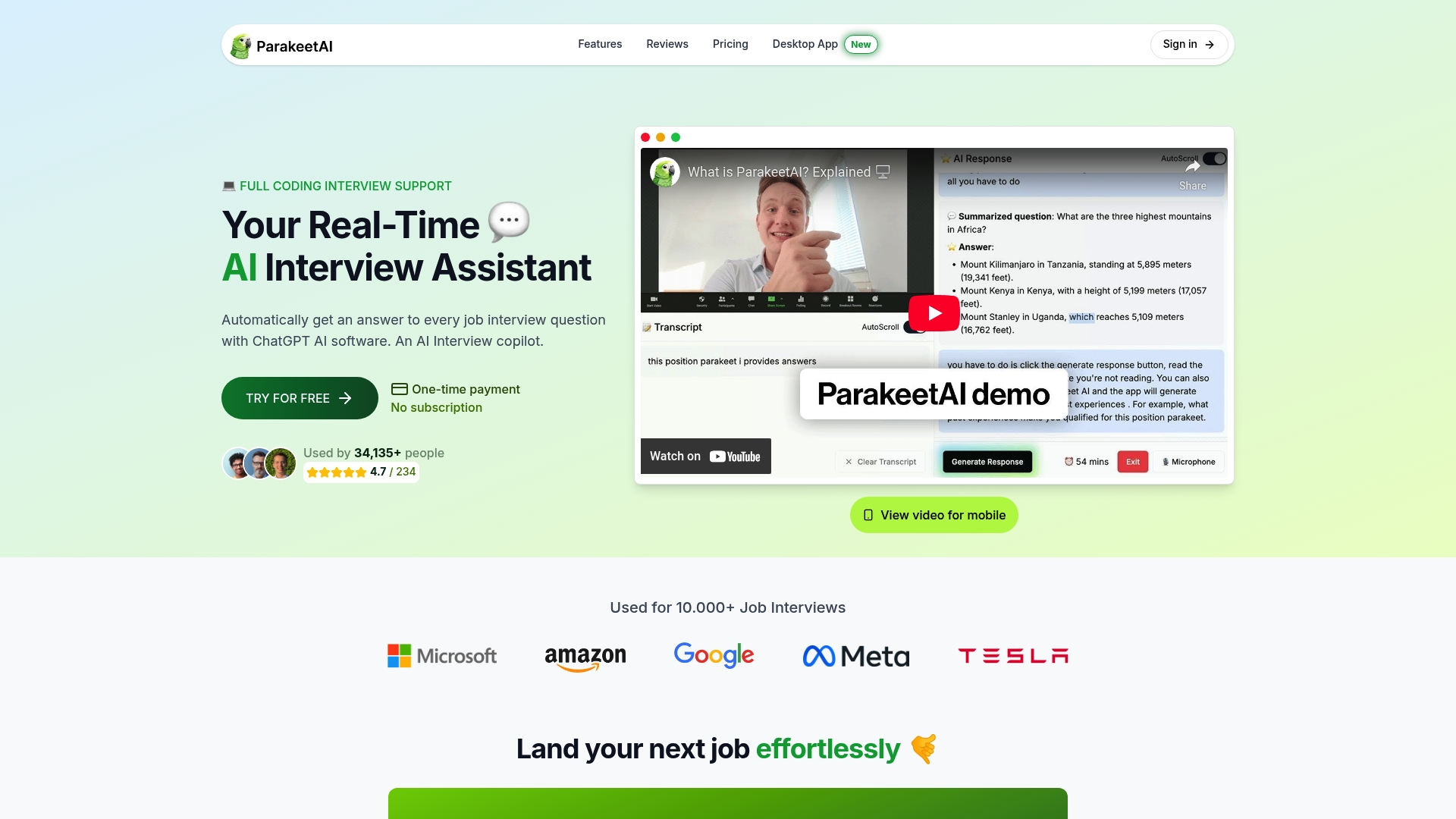
Parakeet-ai listens to interviews as they happen and automatically surfaces answers and insights for every question asked. That means the same candidate who passes an AI-driven reference check also goes through a structured, AI-supported interview. The data from both stages feeds a more complete picture of candidate fit. For HR teams building a fully AI-supported hiring process, combining reference verification with interview intelligence removes the gaps that manual methods leave behind. Visit Parakeet-ai to see how the platform works and how it fits your current hiring stack.
FAQ
What is the completion rate for AI reference checks?
AI reference checking platforms achieve completion rates exceeding 89% using mobile-first surveys and automated reminders. Most checks complete within 12–26 hours.
How does AI detect fake references?
AI systems flag fraud by analyzing IP address collisions, VPN usage, device overlaps, and statistically identical response patterns. Identity verification aligned with NIST IAL2 standards confirms each referee’s identity before data collection begins.
What is AI fluency and why does it matter in reference checks?
AI fluency measures how effectively a candidate works with AI tools on the job. Behavioral questions in AI reference surveys capture manager and peer perceptions of this skill, turning reference checks into a predictor of future performance.
How much time does AI save HR teams on reference checks?
Automated reference checking reduces HR time spent on references by up to 87%, with individual reference requests taking roughly 15 seconds to initiate. Full checks complete within 48 hours in most deployments.
Should HR teams rely entirely on AI for reference decisions?
No. AI outputs are inputs for human judgment, not final verdicts. Practitioners advise pairing AI verification with human oversight to manage data-scoring transparency and ensure ethical hiring decisions.