
What is AI in human resources? A 2026 guide for better hiring

AI transforms recruitment in ways that surprise many HR leaders. Research shows AI-assisted interviews improve hiring accuracy by nearly 20% while cutting recruiter time in half. Yet a persistent myth suggests AI will replace human recruiters entirely. The reality is far more nuanced and empowering. AI augments your team’s capabilities, automating repetitive screening tasks while freeing recruiters to focus on relationship building and strategic decisions. This guide clarifies what AI truly does in HR, explores its measurable benefits with data-backed evidence, addresses ethical challenges like algorithmic bias, and provides actionable strategies for integrating AI responsibly into your recruitment process.
Table of Contents
- Understanding AI In Human Resources: What It Is And How It Works
- Measurable Benefits Of AI In Recruitment With Data-Backed Evidence
- Navigating Challenges And Ethical Considerations Of AI In HR
- Practical Strategies For Integrating AI Into Your Recruitment Process
- Explore Parakeet AI Solutions For Smarter Hiring
- Frequently Asked Questions
Key takeaways
| Point | Details |
|---|---|
| AI improves hiring accuracy | AI-assisted interviews boost accuracy by 20% and reduce time to hire significantly |
| Enhanced candidate experience | AI chatbots and personalized guidance help candidates navigate applications effectively |
| Human oversight remains essential | AI automates tasks but cannot replace recruiter judgment in nuanced hiring decisions |
| Bias requires active management | Algorithmic bias poses serious risks that demand continuous auditing and fairness testing |
Understanding AI in human resources: What it is and how it works
AI in human resources refers to intelligent systems that learn from data to automate and enhance hiring workflows. These technologies include machine learning algorithms that identify patterns in candidate profiles, natural language processing that interprets resumes and interview responses, and generative AI that creates personalized communication. Together, they transform how HR teams source, screen, and engage talent.
The role of AI in human resources spans multiple recruitment stages. Resume screening tools parse thousands of applications in minutes, ranking candidates based on skills and experience alignment. AI-powered chatbots answer candidate questions instantly, providing 24/7 support throughout the application journey. Interview assistants analyze spoken responses in real time, evaluating communication skills and technical knowledge. Assessment platforms measure cognitive abilities and job fit through adaptive testing.
These applications deliver tangible efficiency gains. AI automates repetitive tasks and enhances efficiency by handling initial screening, scheduling coordination, and routine candidate communication. Recruiters reclaim hours previously spent on administrative work, redirecting energy toward high-value activities like candidate relationship management and hiring strategy development. The technology processes information at scale impossible for human teams alone.
Consider typical AI workflows in practice:
- Resume parsing extracts key qualifications and matches them against job requirements automatically
- Chatbots guide candidates through multi-step applications and answer frequently asked questions
- Video interview platforms assess verbal and non-verbal communication patterns
- Predictive analytics forecast candidate success based on historical hiring data
Pro Tip: Start with one AI tool focused on your biggest recruitment bottleneck rather than implementing multiple systems simultaneously. Master resume screening automation before adding interview intelligence or chatbot capabilities.
The technology continues evolving rapidly. Generative AI now drafts job descriptions, creates personalized outreach messages, and even suggests interview questions tailored to specific roles. Machine learning models improve continuously as they process more hiring data, becoming more accurate at predicting candidate fit over time. Natural language processing advances enable deeper understanding of nuanced candidate responses beyond simple keyword matching.
Measurable benefits of AI in recruitment with data-backed evidence
Quantitative research demonstrates AI’s substantial impact on hiring outcomes. A comprehensive study found AI-assisted interviews improved hiring accuracy by nearly 20% compared to traditional screening methods. This improvement translates directly to better employee performance and reduced turnover costs. The same research revealed recruiters needed 44% fewer human interviews to identify qualified finalists, dramatically reducing time investment per hire.
Interview quality improvements prove equally impressive. Candidates and hiring managers rated AI interviews markedly sharper than human first-round interviews in conversational depth and question relevance. AI systems asked more probing questions about technical skills and problem-solving approaches. They maintained consistent evaluation standards across all candidates, eliminating the fatigue and bias that creep into back-to-back human interviews.

AI excels at identifying genuine talent beyond polished resumes. The technology detects resume inflation by cross-referencing claimed skills against actual knowledge demonstrated in assessments and interviews. It surfaces candidates with non-traditional backgrounds who possess the right capabilities but might be overlooked in conventional screening. Research showed AI assessment surfaces genuine talent beyond reshuffling existing candidates, with 40% of AI-selected finalists reporting new job offers, validating the system’s ability to spot high-potential individuals.
| Metric | AI Impact | Business Value |
|---|---|---|
| Hiring accuracy | 20% improvement | Better employee performance and retention |
| Recruiter interviews needed | 44% reduction | Significant time savings per hire |
| Interview quality rating | 30% higher scores | More effective candidate evaluation |
| New talent identification | 40% placement rate | Access to overlooked qualified candidates |
These gains compound across hiring volume. Organizations filling hundreds of positions annually save thousands of recruiter hours while improving workforce quality. The AI faster hiring benefits extend beyond speed to encompass better matches between candidates and roles.
Consider practical applications:
- High-volume hiring for customer service roles uses AI screening to process 10,000+ applications weekly
- Technical recruitment leverages AI coding assessments to evaluate programming skills objectively
- Executive search combines AI candidate sourcing with human relationship management
- Seasonal hiring scales efficiently with AI chatbots handling candidate questions during peak periods
Pro Tip: Track your current time to hire and quality of hire metrics before implementing AI tools. Establish baseline measurements to quantify improvement and demonstrate ROI to stakeholders.
The data reveals AI’s greatest strength lies in augmentation rather than replacement. Technology handles volume and consistency while humans provide judgment and empathy. This partnership produces better outcomes than either approach alone.
Navigating challenges and ethical considerations of AI in HR
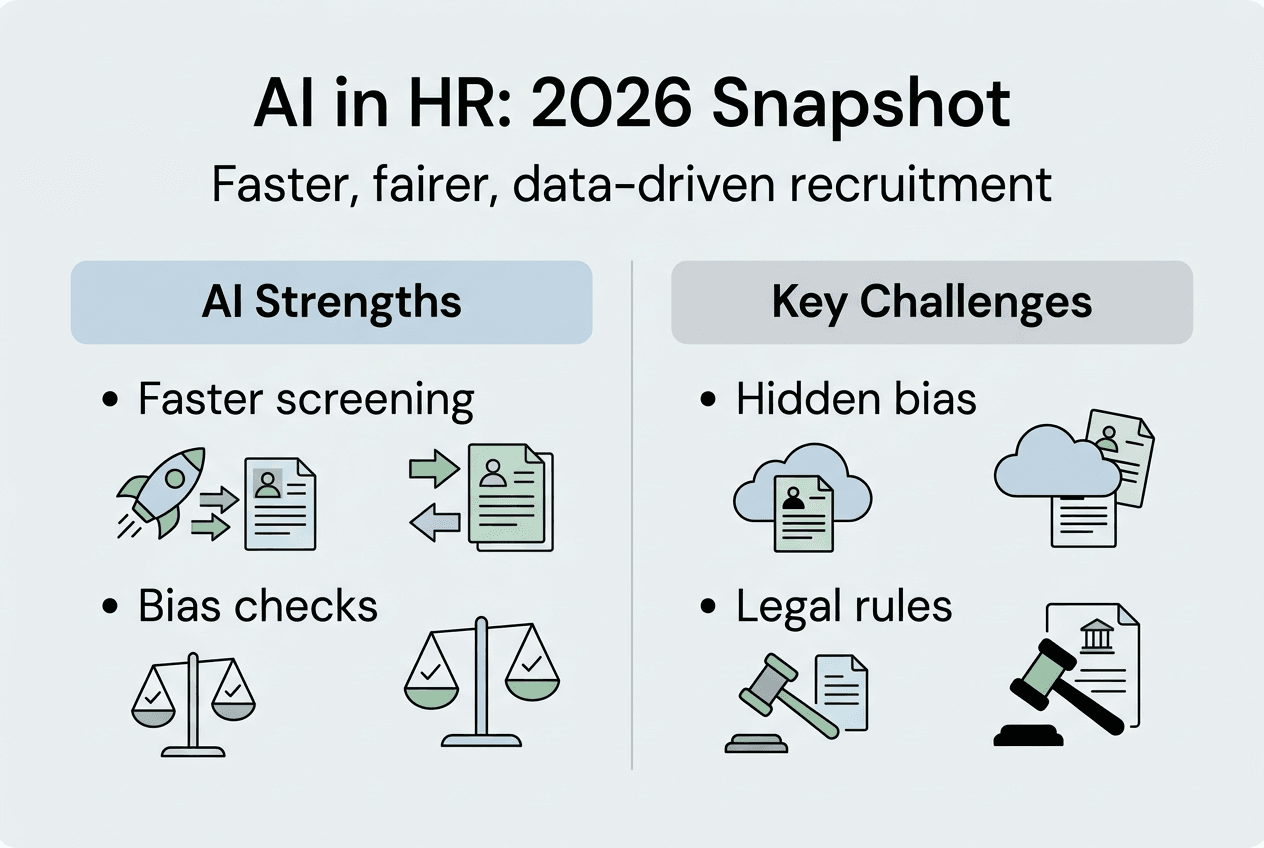
Algorithmic bias represents the most serious challenge facing AI recruitment. Studies demonstrate AI systems have shown systematic discrimination against Black candidates when trained on historical hiring data reflecting past discrimination. The technology perpetuates existing inequities unless actively designed and audited for fairness. Gender bias, age discrimination, and socioeconomic prejudice can all embed themselves in AI models through biased training data or flawed algorithm design.
Bias manifests in subtle ways that evade casual observation. Resume screening tools may downweight candidates from certain universities or neighborhoods. Interview analysis systems might penalize communication styles associated with particular cultural backgrounds. Assessment platforms can favor test-taking approaches more common among privileged populations. These issues require continuous monitoring and correction.
AI struggles with nuanced skill evaluation that experienced recruiters handle intuitively. The technology excels at pattern matching but falters when assessing creativity, leadership potential, or cultural fit requiring human judgment. Expert-level positions demanding deep domain knowledge often need human evaluation to distinguish truly exceptional candidates from merely competent ones. Over-reliance on AI scoring can eliminate unconventional talents who would thrive in your organization.
Candidate experience suffers when AI implementation feels impersonal or unfair. Applicants rejected by algorithms without explanation grow frustrated and share negative reviews. Excessive automation removes the human connection that attracts top talent. Candidates want to interact with real people who understand their unique value beyond what appears on a resume. The role of AI assistants in hiring must balance efficiency with authentic engagement.
Key ethical considerations include:
- Transparency about AI use in hiring decisions and how algorithms evaluate candidates
- Regular bias audits testing for discriminatory patterns across protected characteristics
- Human review of AI recommendations before making final hiring decisions
- Candidate appeal processes allowing humans to reconsider AI rejections
- Data privacy protections ensuring candidate information security
As one fairness researcher noted:
AI hiring systems require the same rigorous testing and oversight we apply to medical devices or financial algorithms. The stakes for candidates’ livelihoods demand nothing less than continuous vigilance against discriminatory outcomes.
Pro Tip: Establish a diverse AI oversight committee including HR leaders, legal counsel, and employee representatives to review your recruitment technology quarterly for bias and fairness issues.
Legal compliance adds complexity as regulations evolve. New York City now requires bias audits for automated employment decision tools. The European Union’s AI Act imposes strict requirements on high-risk AI systems including hiring tools. Organizations must stay current with changing laws while implementing responsible practices that exceed minimum compliance standards.
Practical strategies for integrating AI into your recruitment process
Successful AI adoption begins with careful tool evaluation aligned to your specific hiring challenges. Identify your biggest recruitment bottleneck, whether that’s resume screening volume, interview scheduling complexity, or candidate communication gaps. Research AI solutions designed for that particular pain point. Request demos showing how the technology handles realistic scenarios from your hiring process. Ask vendors about their bias testing methodology and fairness safeguards.
Evaluate these critical factors when selecting AI recruitment tools:
- Accuracy metrics and validation studies demonstrating hiring outcome improvements
- Bias testing results across protected characteristics like race, gender, and age
- Integration capabilities with your existing applicant tracking system and HR software
- Transparency in how algorithms make decisions and score candidates
- Vendor support for implementation, training, and ongoing optimization
- Data security and privacy compliance with relevant regulations
Implement AI gradually through pilot programs testing technology with a subset of roles before full deployment. Start with high-volume positions where efficiency gains prove most valuable. Monitor results closely, comparing AI-assisted hiring outcomes against your traditional process. Gather feedback from recruiters and candidates about their experience with the new tools. Adjust configurations and workflows based on what you learn.
Recruiter training proves essential for effective AI adoption. Your team needs to understand what AI can and cannot do well. AI augments recruiters by automating repetitive tasks, letting them focus on candidate relationships and strategic hiring decisions. Train recruiters to interpret AI recommendations critically rather than accepting them blindly. Teach them to recognize when human judgment should override algorithmic suggestions.
Balance automation with human touchpoints throughout the candidate journey. Use AI for initial resume screening but have recruiters personally contact promising candidates. Let chatbots handle routine questions while ensuring humans respond to complex concerns. Employ AI interview assistants to gather data but reserve final hiring decisions for human judgment. This hybrid approach delivers efficiency without sacrificing the personal connection that attracts top talent.
Leverage AI to enhance rather than replace candidate guidance. Using AI job interview assistants helps candidates prepare more effectively by practicing common questions and receiving feedback. AI-powered career sites personalize job recommendations based on skills and interests. Chatbots guide applicants through multi-step processes, reducing drop-off rates. These applications improve candidate experience while gathering valuable data.
Monitor your AI systems continuously for bias and performance degradation. Establish regular auditing schedules testing for discriminatory patterns across demographics. Track hiring outcomes by candidate source, ensuring AI doesn’t systematically disadvantage particular groups. Review rejected candidate profiles periodically to catch qualified individuals the algorithm missed. The AI assistants role in interviews requires ongoing oversight to maintain fairness and effectiveness.
Pro Tip: Create feedback loops where recruiters can flag AI recommendations that seem off-target. Use these examples to retrain and improve your models over time, building systems that learn from human expertise.
Document your AI governance policies clearly. Define who makes final hiring decisions and how AI recommendations factor into those choices. Establish escalation procedures when recruiters disagree with algorithmic assessments. Create candidate appeal processes allowing human review of AI rejections. Transparency in your AI use builds trust with both internal teams and external candidates.
Explore Parakeet AI solutions for smarter hiring
Integrating AI responsibly into your recruitment process requires technology designed with both efficiency and fairness in mind. Parakeet AI offers real-time interview assistance that empowers candidates while providing recruiters with deeper insights into skills and capabilities. The platform listens during interviews and automatically surfaces relevant information, helping both parties have more productive conversations.
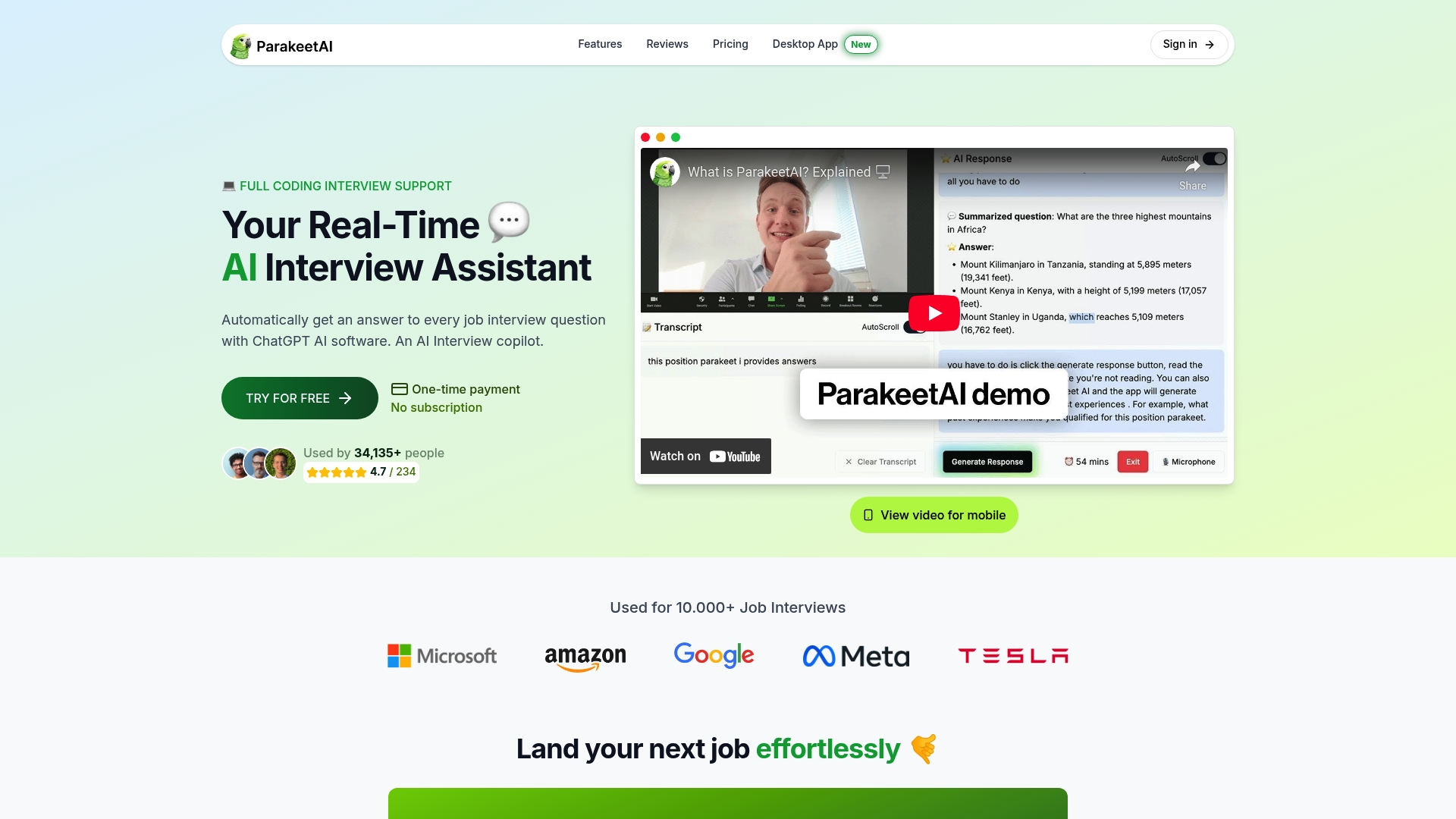
Parakeet AI augments your hiring team rather than replacing human judgment. The technology handles information gathering and analysis while your recruiters focus on relationship building and cultural fit assessment. This partnership approach delivers the efficiency gains discussed throughout this guide without sacrificing the personal touch that attracts exceptional talent. The platform integrates seamlessly with existing HR systems, making adoption straightforward for teams ready to enhance their recruitment capabilities.
Frequently asked questions
What is AI in human resources and how is it used?
AI in human resources encompasses machine learning, natural language processing, and generative AI technologies that automate and enhance hiring workflows. Common applications include resume screening that ranks candidates by qualification fit, chatbots providing 24/7 candidate support, interview assistants analyzing responses in real time, and assessment platforms measuring skills objectively. These tools process large volumes of applications quickly while maintaining consistent evaluation standards.
Does AI replace human recruiters?
AI automates repetitive administrative tasks like resume parsing and interview scheduling but does not replace recruiters. Human judgment remains essential for evaluating cultural fit, assessing leadership potential, building candidate relationships, and making final hiring decisions. The technology works best when augmenting recruiter capabilities rather than operating independently. Organizations achieve optimal results by combining AI efficiency with human empathy and strategic thinking.
How can AI improve candidate experience during hiring?
AI-powered chatbots provide instant answers to candidate questions about application status, role requirements, and company culture at any time of day. The technology personalizes job recommendations based on skills and career interests, helping candidates discover relevant opportunities they might otherwise miss. AI assistants enhancing candidate experience guide applicants through complex processes, reducing confusion and drop-off rates while making hiring feel more supportive and organized.
What are the ethical concerns with AI in hiring?
Algorithmic bias poses the most serious ethical challenge, as AI systems systematically discriminate against Black candidates when trained on biased historical data. Gender discrimination, age bias, and socioeconomic prejudice can also embed themselves in AI models. HR leaders must implement continuous bias auditing, ensure transparency in algorithmic decisions, maintain human oversight of AI recommendations, and establish candidate appeal processes. Responsible AI use requires active management rather than passive deployment.