
Unlock the role of AI in corporate hiring for 2026

Many HR professionals worry that AI will replace human judgment in hiring decisions. The truth is far more nuanced and encouraging. AI serves as a powerful assistant that enhances recruitment workflows while keeping humans firmly in control of final decisions. This article explores evidence-based benefits, real challenges, and practical strategies for integrating AI into corporate hiring processes effectively.
Table of Contents
- How AI Transforms Recruitment Workflows
- Benefits And Measurable Impact Of AI In Corporate Hiring
- Challenges And Limitations Of AI Hiring Systems
- Best Practices For Effective AI Integration In Hiring
- Explore Innovative AI Hiring Solutions With Parakeet AI
- Frequently Asked Questions
Key takeaways
| Point | Details |
|---|---|
| AI accelerates hiring timelines | AI-powered resume screening can reduce time-to-hire by up to 30% and improve the quality of hires. |
| Automation saves recruiter time | AI automates interview scheduling and drastically reduces administrative overhead. |
| Human oversight remains critical | AI tools require continuous monitoring to prevent bias and maintain fairness in hiring decisions. |
| Candidate experience improves | AI-powered communication keeps candidates informed and engaged throughout the recruitment journey. |
How AI transforms recruitment workflows
AI reshapes how recruitment teams operate by automating repetitive tasks and surfacing better candidates faster. AI-powered resume screening can reduce time-to-hire by up to 30% and improve the quality of hires by identifying candidates whose skills align more precisely with job requirements. Instead of manually reviewing hundreds of applications, recruiters can focus on evaluating top-tier candidates who pass intelligent filters.
AI automates interview scheduling and drastically reduces administrative overhead. Coordinating calendars across multiple stakeholders often consumes hours each week. AI scheduling assistants handle this coordination seamlessly, freeing recruiters to concentrate on strategic activities like employer branding and candidate relationship building.
Candidate communication becomes more consistent and timely with AI support. Automated status updates, personalized follow-ups, and instant responses to common questions keep candidates engaged. This responsiveness matters particularly in competitive talent markets where top candidates often evaluate multiple offers simultaneously.
Pro Tip: Start with one specific pain point in your recruitment workflow, like resume screening or scheduling, rather than attempting to implement AI across all processes at once. This focused approach allows your team to learn effectively and measure impact before scaling.
Key AI applications transforming recruitment include:
- Intelligent resume parsing that extracts skills, experience, and qualifications automatically
- Predictive analytics identifying candidates most likely to succeed in specific roles
- Chatbots handling initial candidate inquiries and basic screening questions
- Video interview analysis assessing communication skills and cultural fit indicators
- Automated reference checking streamlining background verification processes
For high-volume hiring scenarios, AI becomes particularly valuable. Retail, customer service, and seasonal staffing initiatives often require processing thousands of applications quickly. AI resume screening helps teams identify qualified candidates at scale while maintaining consistency in evaluation criteria. The technology also supports automated job interviews that assess basic qualifications before human recruiters invest time in deeper conversations.
Benefits and measurable impact of AI in corporate hiring
Research demonstrates concrete improvements when organizations implement AI thoughtfully in recruitment. Candidates passing AI interviews had a 20-point higher success rate in final human interviews compared to candidates screened through traditional methods alone. This suggests AI effectively identifies candidates whose skills and experience genuinely match role requirements.

AI interviews also reduce recruiter effort by approximately 92% per candidate while maintaining or improving hiring quality. The technology handles initial screening conversations, skill assessments, and basic compatibility checks. Recruiters then engage with a smaller pool of pre-qualified candidates, making each human interaction more valuable and strategic.
Skill gap identification represents another significant AI benefit. Automated assessments detect discrepancies between candidate claims and actual capabilities early in the process. This prevents wasted time on candidates who appear strong on paper but lack essential competencies. You spend less time on mismatched candidates and more time cultivating relationships with genuinely qualified prospects.
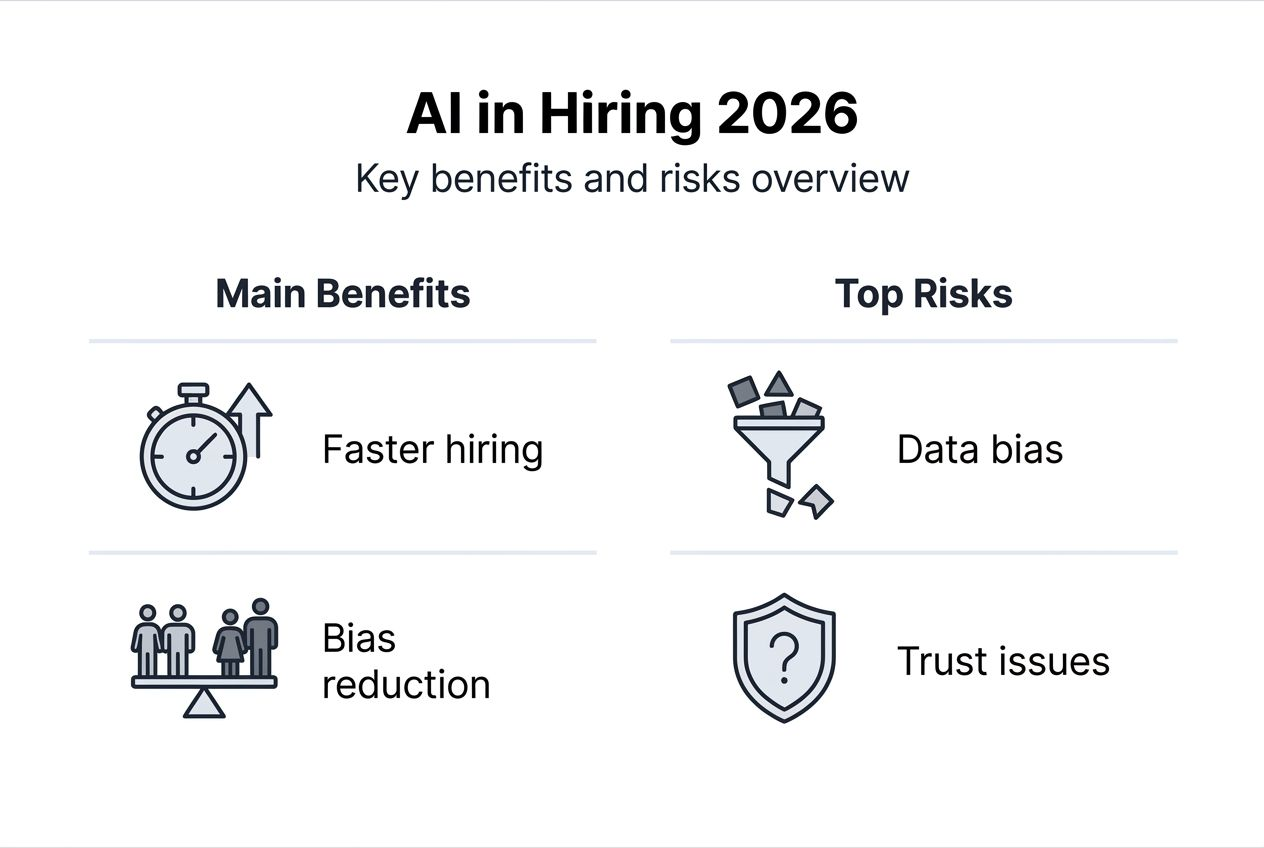
Pro Tip: Track specific metrics like time-to-fill, quality of hire scores, and candidate satisfaction ratings before and after implementing AI tools. Quantifiable improvements strengthen your business case for continued AI investment and help identify areas needing refinement.
| Metric | Without AI | With AI | Improvement |
|---|---|---|---|
| Time-to-hire | 45 days | 32 days | 29% faster |
| Recruiter hours per hire | 28 hours | 12 hours | 57% reduction |
| Candidate satisfaction | 3.2/5 | 4.1/5 | 28% increase |
| Interview-to-offer ratio | 8:1 | 5:1 | 38% efficiency gain |
Candidate satisfaction improves when AI handles communication consistently. Timely updates, clear next steps, and responsive interactions create positive experiences even for candidates who ultimately don’t receive offers. This matters for employer brand reputation and future talent pipeline development.
Business growth correlates with AI adoption in staffing contexts. Staffing firms using AI tools are twice as likely to have grown revenue compared to firms relying solely on traditional methods. This suggests AI adoption contributes to competitive advantage in tight talent markets. The time savings allow recruiting teams to handle higher volumes, pursue more strategic partnerships, and deliver better service to hiring managers.
AI interview scoring provides additional objectivity by evaluating responses against consistent criteria. Human interviewers naturally bring subjective perspectives that can introduce inconsistency. AI scoring complements human judgment by highlighting objective strengths and development areas in candidate responses.
Challenges and limitations of AI hiring systems
AI hiring tools carry significant risks when implemented without proper safeguards. Bias in AI algorithms can perpetuate inequalities and reduce candidate trust if the systems learn from historically biased hiring data. An AI trained on past hiring decisions may replicate patterns that disadvantaged certain demographic groups, even when those patterns conflict with merit-based selection.
Training data quality fundamentally determines AI performance. If your historical hiring data contains biases, incomplete information, or inconsistent criteria, the AI will amplify these flaws. Many organizations discover their legacy data isn’t clean enough to support reliable AI decision-making without substantial preprocessing and bias auditing.
Context blindness represents another critical limitation. AI systems excel at pattern matching but struggle with nuanced situations requiring judgment. A career gap might indicate personal challenges, further education, or entrepreneurial ventures. AI often cannot distinguish these contexts without explicit programming, potentially screening out strong candidates for superficial reasons.
Key AI hiring limitations include:
- Inability to assess cultural fit or soft skills with the same depth as experienced human interviewers
- Difficulty interpreting unconventional career paths or non-traditional backgrounds
- Limited capacity to evaluate potential and learning agility versus demonstrated past performance
- Transparency challenges explaining why specific candidates were recommended or rejected
- Regulatory compliance complexities around AI decision-making in employment contexts
Candidate trust issues emerge when organizations use AI without transparent communication. Job seekers reasonably question whether automated systems evaluate them fairly. Without clear explanations of how AI supports decisions, candidates may perceive the process as impersonal or biased.
Implementation failure rates remain high. 42% of companies abandoned most AI projects in 2025 due to challenges like poor data quality, inadequate change management, and misaligned expectations. Success requires more than purchasing software. You need clean data, clear processes, trained users, and realistic objectives.
AI assistants in hiring face particular scrutiny around fairness and accountability. When AI influences hiring decisions, organizations must ensure systems operate transparently and allow for human override. Legal and ethical responsibilities for hiring outcomes remain with the organization, regardless of AI involvement.
Best practices for effective AI integration in hiring
Successful AI implementation starts with identifying specific problems worth solving. Don’t adopt AI because competitors use it or because the technology seems innovative. Instead, pinpoint concrete workflow bottlenecks like excessive time spent screening resumes, scheduling conflicts delaying interviews, or inconsistent candidate evaluation criteria. AI works best when addressing well-defined challenges with measurable success criteria.
Maintain human judgment as the final decision authority. AI should recommend, score, and prioritize candidates, but humans must make ultimate hiring choices. This approach preserves accountability, allows for contextual considerations AI might miss, and maintains the human connection essential for candidate experience and employer branding.
Regular bias auditing protects against algorithmic discrimination. Transparent implementation and inclusive design are key to successful AI adoption in HR. Review AI recommendations across demographic groups quarterly to identify patterns suggesting bias. If certain groups consistently score lower or advance less frequently, investigate whether AI criteria inadvertently disadvantage them.
Pro Tip: Establish a cross-functional AI governance team including HR, legal, IT, and diversity & inclusion representatives. This group should review AI performance regularly, address bias concerns, and ensure implementation aligns with organizational values and compliance requirements.
Transparent candidate communication builds trust in AI-enhanced processes. Inform applicants when AI assists in screening or evaluation. Explain how the technology works, what factors it considers, and how human recruiters remain involved. This transparency demonstrates respect for candidates and reduces concerns about fairness.
Effective AI integration practices:
- Pilot AI tools with a single use case before expanding to multiple recruitment functions
- Collect baseline metrics on current performance to measure AI impact accurately
- Train recruiting teams thoroughly on AI capabilities, limitations, and proper usage
- Document AI decision criteria and maintain audit trails for compliance purposes
- Solicit candidate feedback on AI-enhanced experiences and adjust based on insights
- Integrate AI across the full recruitment lifecycle from sourcing through onboarding for maximum value
| Approach | AI as replacement | AI as assistant |
|---|---|---|
| Decision authority | AI makes final hiring choices | Humans make final decisions with AI input |
| Transparency | Limited candidate visibility into process | Clear communication about AI role |
| Bias management | Reactive fixes after problems emerge | Proactive auditing and continuous monitoring |
| Implementation scope | Deploy across all functions simultaneously | Start focused, expand based on results |
| Success metric | Reduced headcount in recruiting | Improved hiring quality and efficiency |
Integrate AI throughout your recruitment lifecycle for compounding benefits. Sourcing tools identify passive candidates, screening AI qualifies applicants, scheduling assistants coordinate interviews, and assessment platforms evaluate skills. When these tools share data and work together, you create a seamless experience for candidates and recruiting teams alike.
AI’s role in faster hiring becomes most apparent when multiple AI applications work in concert. A candidate identified through AI sourcing, screened via automated resume review, scheduled through intelligent coordination, and assessed with AI interview support moves through your pipeline far more quickly than traditional processes allow. Speed matters in competitive talent markets where top candidates often accept offers within days of interviewing.
Explore innovative AI hiring solutions with Parakeet AI
Implementing AI effectively requires tools designed with HR professionals in mind. Parakeet AI offers solutions that reduce administrative burden while keeping humans central to hiring decisions. Our platform provides real-time interview assistance, intelligent candidate screening, and transparent scoring that helps you identify top talent faster without sacrificing quality or fairness.
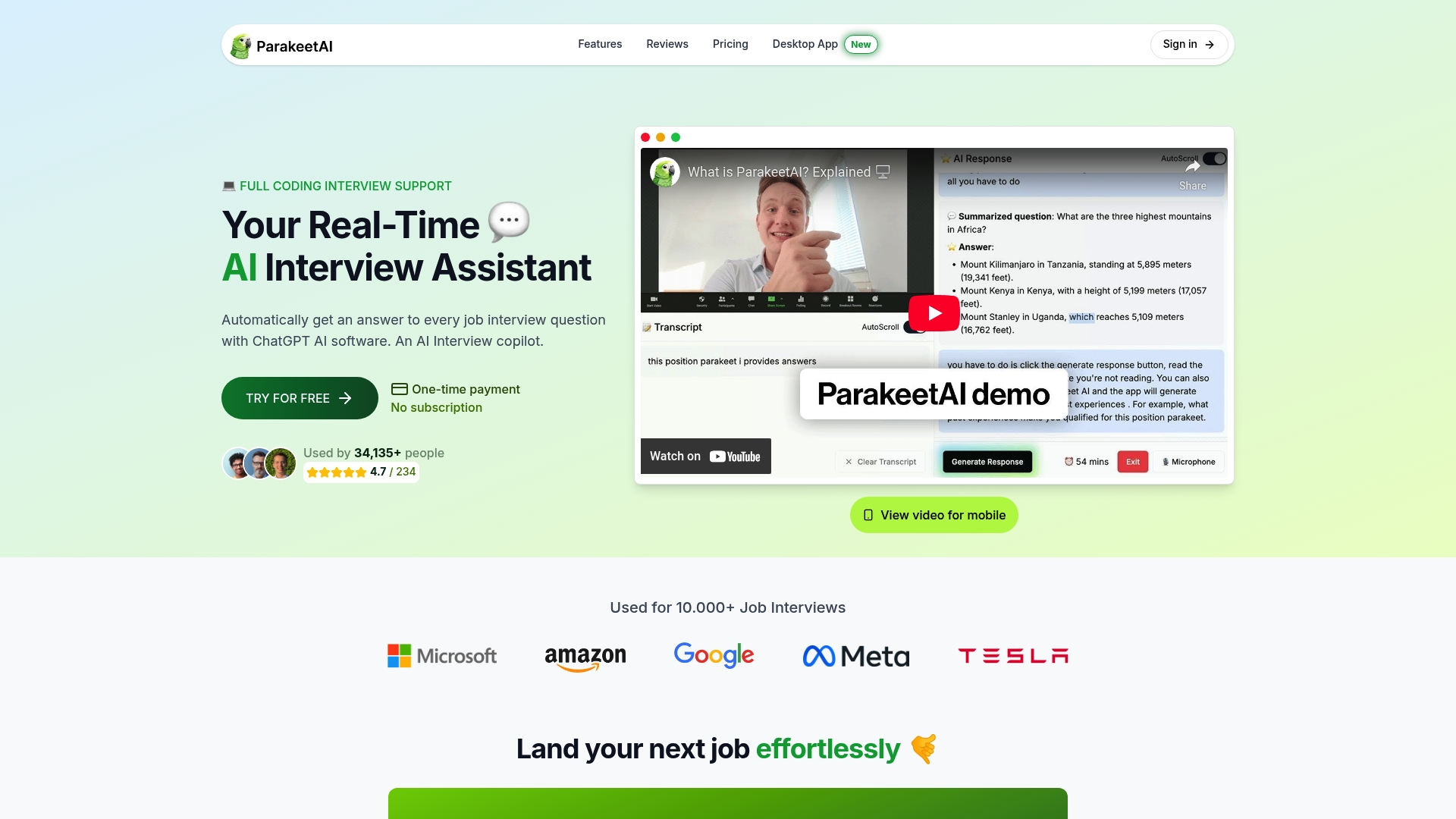
The system supports human oversight at every stage, ensuring your team maintains control while benefiting from AI efficiency gains. Whether you’re managing high-volume hiring or seeking specialized talent, Parakeet AI helps optimize your recruitment process with ethical, transparent AI designed for modern HR challenges.
Frequently asked questions
What is the role of AI in corporate hiring?
AI serves as an assistant that automates repetitive recruitment tasks like resume screening, interview scheduling, and candidate communication. It helps recruiters work more efficiently by handling high-volume activities and surfacing qualified candidates faster. Human judgment remains essential for final hiring decisions and relationship building.
How does AI improve hiring quality?
AI evaluates candidates against consistent criteria, reducing subjective bias that can affect human screening. It identifies skill matches more accurately by analyzing larger data sets than humans can process manually. Research shows candidates passing AI screening perform better in subsequent human interviews, indicating improved candidate quality.
Can AI replace human recruiters?
No, AI complements rather than replaces human recruiters. The technology excels at data processing, pattern recognition, and administrative automation but cannot replicate human judgment, emotional intelligence, or relationship-building capabilities. Successful hiring requires combining AI efficiency with human insight and empathy.
What are the main risks of using AI in hiring?
Bias amplification from historical hiring data represents the primary risk, potentially discriminating against qualified candidates. Other concerns include context blindness, candidate trust issues, regulatory compliance challenges, and implementation failures due to poor data quality. Proper governance, bias auditing, and transparent communication mitigate these risks.
How should companies start implementing AI in recruitment?
Begin by identifying a specific workflow problem like resume screening bottlenecks or scheduling inefficiencies. Pilot AI tools addressing that single challenge, measure results against baseline metrics, and gather user feedback. Once you demonstrate value and learn best practices, gradually expand AI usage to other recruitment functions while maintaining human oversight.