
Interview Best Practices: Boost Tech Job Success

Landing a high-impact role in Silicon Valley or London often means facing unique interview challenges that test more than just technical skills. Tech job interviews assess candidates through coding assessments and multi-stage screenings, requiring clear communication and real-time problem solving. Using a strategic approach tailored for technical interviews can help you showcase your expertise while building the confidence needed to excel, especially with support from modern AI-driven tools.
Table of Contents
- Interview Best Practices Explained For Tech Roles
- Popular Interview Formats And Key Differences
- Mastering Preparation With AI-Powered Tools
- Success Factors In Tech And Professional Interviews
- Risks, Common Mistakes, And Ways To Avoid Errors
Key Takeaways
| Point | Details |
|---|---|
| Understand Interview Formats | Familiarize yourself with various technical interview styles, such as coding challenges and system design interviews, to effectively demonstrate your skills. |
| Effective Communication | Practice articulating your thought process clearly during problem-solving to showcase both technical and interpersonal skills. |
| Utilize AI Tools for Preparation | Take advantage of AI-powered platforms that offer customized practice challenges and feedback to enhance your interview readiness. |
| Research and Adapt | Thoroughly research the company’s technologies and role requirements to tailor your interview responses and demonstrate fit. |
Interview best practices explained for tech roles
Tech interviews demand a strategic approach that goes beyond traditional job interview techniques. Unlike standard interviews, technical roles require candidates to demonstrate problem-solving skills, technical knowledge, and the ability to communicate complex concepts clearly. Understanding how to navigate these unique challenges is critical for success.
The interview process typically involves multiple stages designed to assess both technical competence and cultural fit. Technical interviews often include coding assessments that evaluate a candidate’s programming skills, algorithmic thinking, and real-world problem-solving capabilities. These assessments might include live coding challenges, take-home projects, or whiteboard problem-solving sessions where candidates must articulate their thought processes while developing solutions.
Preparing effectively means going beyond memorizing programming languages or frameworks. Successful candidates focus on demonstrating their analytical thinking, adaptability, and capacity to learn. This involves practicing coding problems, understanding fundamental computer science concepts, and developing strong communication skills that allow you to explain technical solutions clearly. Research the specific technologies and methodologies used by the company, review the job description meticulously, and prepare targeted examples that showcase your expertise.
Pro tip: Practice explaining technical concepts as if you were teaching them to a non-technical person, which demonstrates your communication skills and depth of understanding during interviews.
Popular interview formats and key differences
Tech job interviews have evolved far beyond traditional question-and-answer formats. Companies now utilize multiple interview styles to comprehensively assess a candidate’s technical skills, problem-solving abilities, and cultural compatibility. Technical interviews employ diverse assessment formats designed to evaluate candidates from multiple perspectives.
The most common interview formats in tech include coding challenges, system design interviews, behavioral assessments, and technical screenings. Coding challenges typically involve live programming tasks where candidates solve algorithmic problems, demonstrating their coding proficiency and logical thinking. System design interviews require candidates to architect complex software solutions, testing their ability to think strategically about scalable technology infrastructure. Behavioral interviews focus on understanding a candidate’s teamwork, communication skills, and how they handle workplace challenges.
Each interview format serves a specific purpose in the evaluation process. Technical screenings often come first, using online assessments or phone interviews to quickly gauge basic skill levels. More in-depth interviews like pair programming sessions allow hiring managers to observe real-time problem-solving and collaboration skills. Some companies also incorporate unique formats like hackathons or take-home projects to assess practical abilities beyond traditional interview constraints.
Here’s a comparison of common technical interview formats and what they evaluate:
| Interview Format | Primary Focus | Skills Evaluated |
|---|---|---|
| Coding Challenge | Algorithmic problem-solving | Coding proficiency, logic, speed |
| System Design | Solution architecture | Scalability, tech strategy, design |
| Behavioral Assessment | Workplace scenarios | Communication, teamwork, attitude |
| Pair Programming | Collaborative coding | Real-time problem solving, cooperation |
| Take-Home Project | Practical implementation | Code quality, creativity, completeness |
Pro tip: Research the specific interview formats used by your target company and practice simulating those exact interview styles to maximize your preparation effectiveness.
Mastering preparation with AI-powered tools
The landscape of interview preparation has been dramatically transformed by artificial intelligence, offering tech job seekers unprecedented opportunities to refine their skills and build confidence. Advanced AI platforms revolutionize interview training by providing realistic, personalized preparation experiences that simulate actual technical interview environments.
AI-powered tools now offer comprehensive preparation strategies that go far beyond traditional study methods. These intelligent platforms can generate customized coding challenges, provide real-time feedback on problem-solving approaches, and even analyze communication skills during mock interviews. They use sophisticated algorithms to identify individual skill gaps, recommend targeted practice areas, and create adaptive learning paths that evolve with the candidate’s progress. Some advanced tools can now simulate interviews from specific tech companies, helping candidates understand unique interviewing styles and expectations.
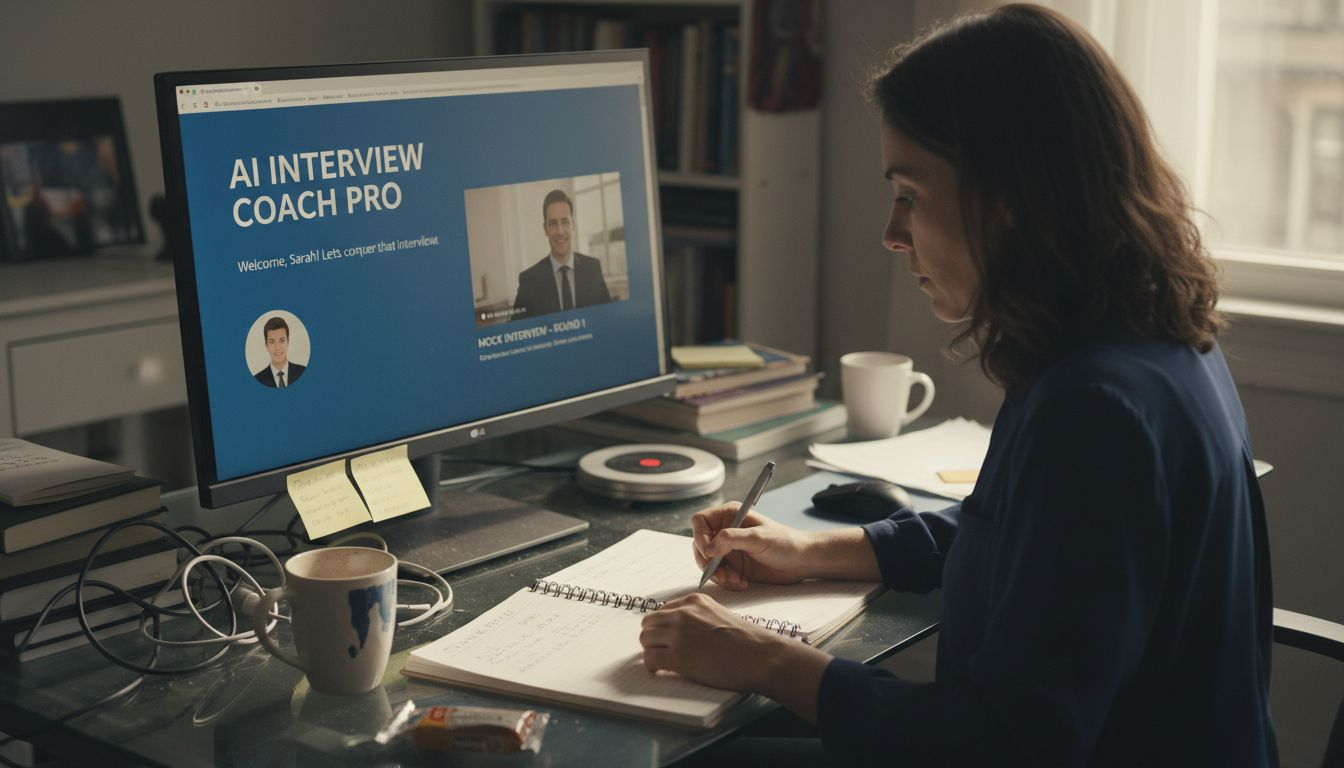
The most effective AI interview preparation tools combine multiple learning modalities to create holistic training experiences. They typically integrate coding practice, system design challenges, behavioral interview simulations, and detailed performance analytics. Machine learning algorithms can track a candidate’s performance across multiple dimensions, offering insights into technical proficiency, communication effectiveness, and areas requiring improvement. These tools provide a level of personalized coaching that was previously unavailable, giving job seekers a significant competitive advantage in the challenging tech job market.
Pro tip: Select AI preparation tools that offer diverse interview simulation formats and provide detailed, actionable feedback to maximize your learning potential.
Success factors in tech and professional interviews
Tech interviews demand a comprehensive approach that goes far beyond traditional assessment methods. Successful interviews balance technical skills and interpersonal qualities to identify candidates who can truly excel in complex technological environments. The most effective evaluations recognize that technical prowess alone does not guarantee workplace success.
Critical success factors include demonstrating strong problem-solving skills, clear communication, and the ability to think strategically under pressure. Employers look for candidates who can articulate complex technical concepts in understandable language, collaborate effectively with team members, and adapt quickly to changing technological landscapes. This means showcasing not just coding abilities, but also critical thinking, emotional intelligence, and a genuine passion for continuous learning and innovation.
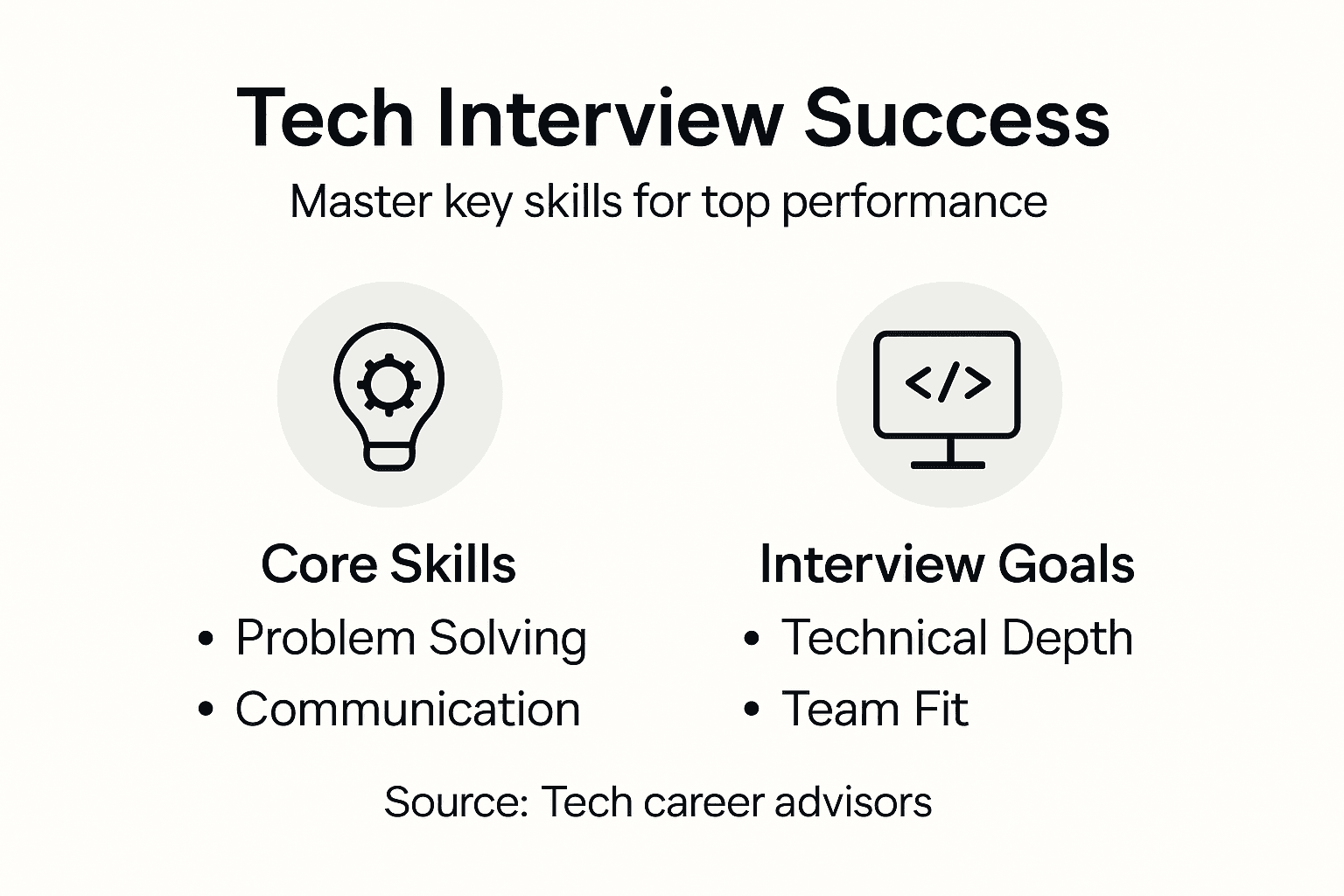
Professional interviews in technology sectors typically assess candidates across multiple dimensions. Technical competence is evaluated through coding challenges, system design discussions, and algorithmic problem-solving tasks. Simultaneously, behavioral interviews probe deeper into a candidate’s potential cultural fit, leadership capabilities, and approach to workplace challenges. The most successful candidates demonstrate a holistic skill set that combines technical expertise with strong interpersonal capabilities, showing they can contribute meaningfully to complex technological ecosystems.
Pro tip: Prepare comprehensive stories that demonstrate both your technical skills and your ability to collaborate, communicate, and solve real-world problems effectively.
Risks, common mistakes, and ways to avoid errors
Tech interviews present numerous potential pitfalls that can derail even the most qualified candidates. Common interview risks significantly impact candidate performance and understanding these challenges is crucial for successful navigation. Awareness of potential mistakes allows candidates to proactively develop strategies to mitigate them and present themselves effectively.
One of the most frequent mistakes candidates make involves poor communication during technical problem-solving. This includes failing to articulate their thought process, jumping to solutions without explaining reasoning, or becoming overly defensive when challenged. Candidates often struggle with managing interview anxiety, which can lead to rushed answers, incomplete explanations, or blank moments that undermine their technical competence. Additionally, many job seekers make the critical error of not thoroughly researching the company’s technological stack, culture, and specific role requirements before the interview.
Preparing to avoid these risks requires a multifaceted approach. Candidates should practice explaining technical concepts clearly, develop strategies for managing interview stress, and create a comprehensive preparation routine that includes mock interviews, technical practice, and self-reflection. This means not just rehearsing coding challenges, but also developing the ability to communicate complex ideas effectively, demonstrate problem-solving methodology, and show adaptability when confronted with unexpected technical scenarios. Understanding potential interview dynamics and practicing calm, systematic approaches can transform potential risks into opportunities to showcase true professional capabilities.
Below is a summary of common risks in tech interviews and ways to overcome them:
| Common Risk | Impact on Performance | How to Overcome |
|---|---|---|
| Poor communication | Confuses evaluators, lowers scores | Practice clear, step-by-step explanations |
| Interview anxiety | Rushed, incomplete answers | Use mock interviews to build confidence |
| Lack of company research | Appears unprepared, weak fit | Study job description and company tech stack |
| Defensive attitude to feedback | Hinders collaboration perception | Stay open, accept criticism constructively |
| Incomplete problem understanding | Leads to incorrect solutions | Ask clarifying questions before solving |
Pro tip: Record yourself during mock interviews to identify communication patterns, technical explanation gaps, and areas where you can improve your interview performance.
Take Your Tech Interview Preparation to the Next Level with Real-Time AI Support
Mastering tech interviews is about clear communication, strategic problem-solving, and handling pressure with confidence. The challenges discussed in “Interview Best Practices: Boost Tech Job Success” such as explaining your thought process clearly, managing interview anxiety, and adapting to unique interview formats can feel overwhelming. That is where an intelligent assistant makes a difference. Imagine having a tool that listens to your live interview and provides instant, precise answers to every question, helping you stay calm and focused while demonstrating your expertise.
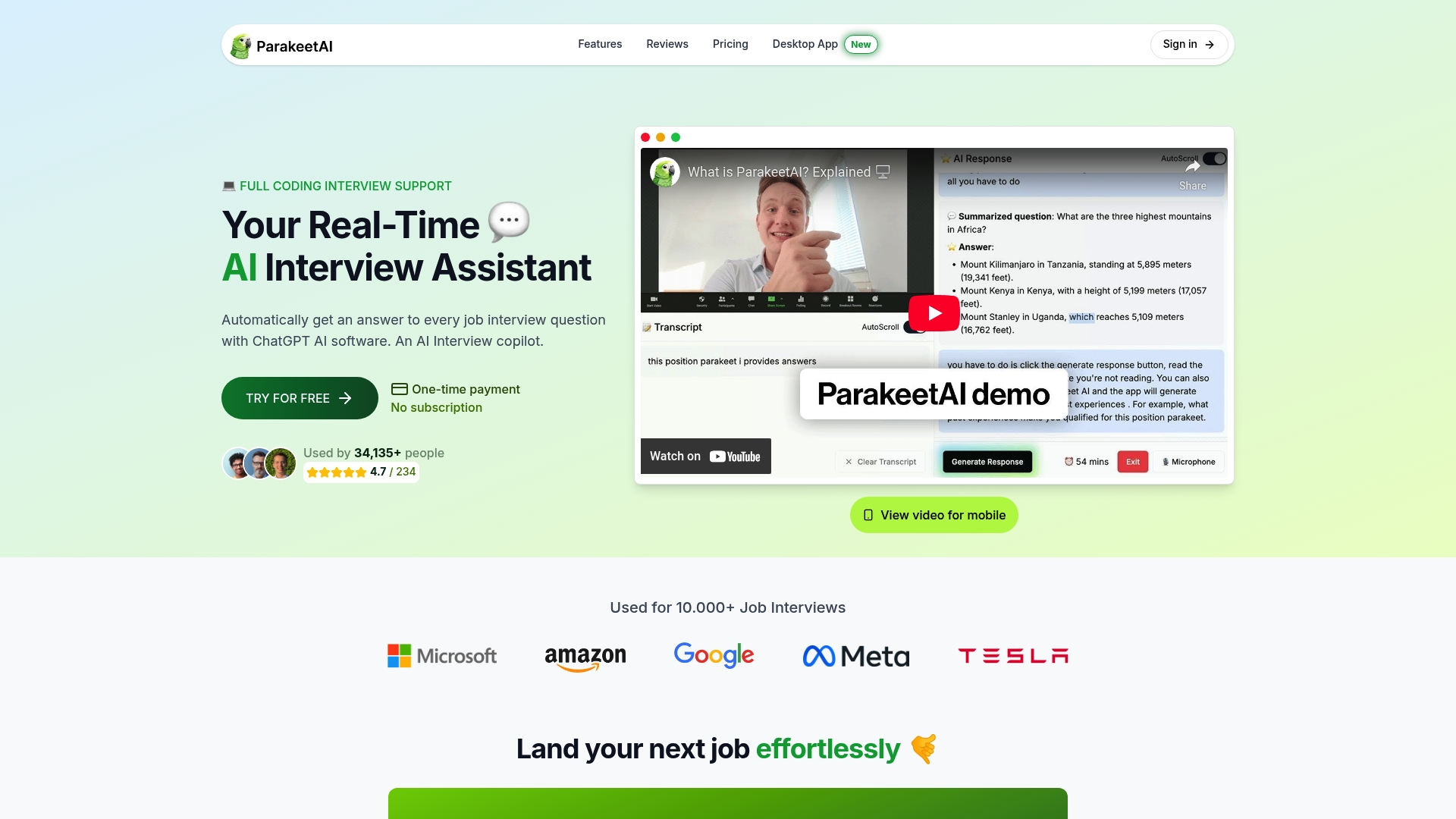
Boost your preparation with Parakeet AI, a real-time AI job interview assistant designed to solve those exact pain points. It helps you practice coding challenges, simulate system design discussions, and improve your communication by offering tailored feedback during mock interviews. Get the advantage of personalized coaching that adapts as you grow so you can confidently navigate technical and behavioral rounds. Don’t wait for the next interview to test your skills. Start now with Parakeet AI to transform nervous moments into success stories and see why innovative candidates rely on this solution. Visit our website and empower your interview journey today.
Frequently Asked Questions
What should I focus on when preparing for a tech interview?
Successful candidates should focus on demonstrating analytical thinking, adapting to new technologies, and honing communication skills to explain technical concepts clearly. Additionally, practicing coding problems and understanding fundamental computer science concepts is essential.
What are the different formats of tech interviews?
Common formats include coding challenges, system design interviews, behavioral assessments, and pair programming. Each format serves to evaluate different skills, such as coding proficiency, solution architecture, and teamwork.
How can AI tools help me prepare for tech interviews?
AI-powered tools can provide personalized coding challenges, real-time feedback, and simulate specific tech company interviews. These platforms offer adaptive learning pathways that help candidates focus on targeted practice areas based on their progress.
What are common mistakes to avoid during tech interviews?
Common mistakes include poor communication of thought processes, not adequately researching the company and role, and allowing interview anxiety to affect performance. Candidates should practice clear explanations and develop strategies to manage stress.
Recommended
- Benefits of Mock Interviews: Building Tech Career Confidence
- How to Avoid Common Interview Pitfalls for Tech Jobs
- 7 Good Interview Questions to Ask Hiring Manager
- How to Close an Interview With Confidence and Get Results
- Rôle de la vidéo dans le recrutement moderne
- Get Hired: Best SEO Jobs in Cape Town Right Now - LSA SEO Agency