
Interview Recording Technology: Empowering Job Seekers

Nearly half of American job seekers feel anxious during interviews, especially when facing new technologies or unexpected questions. In competitive tech and creative fields, mastering digital interview recording and AI-driven support can be a game-changer. This guide reveals how modern interview recording technology and AI real-time tools help candidates worldwide sharpen their professional responses, ease nerves, and confidently manage complicated interview scenarios.
Table of Contents
- Defining Interview Recording Technology
- Variations in Interview Recording Solutions
- How AI Real-Time Assistance Functions
- Legal Consent and Data Protection Worldwide
- Risks, Ethical Challenges, and Best Practices
Key Takeaways
| Point | Details |
|---|---|
| Interview Recording Technology Transformation | Advanced digital systems have revolutionized interview processes by enabling precise audio and video capture, enhancing data analysis and accessibility. |
| Variations in Solutions | Different types of interview recording solutions exist, including live, asynchronous, audio-only, and AI-enhanced platforms, each offering distinct advantages suited to various contexts. |
| AI Real-Time Assistance | AI technologies enhance interview preparation by providing immediate context-aware support, helping candidates improve their communication effectiveness. |
| Legal and Ethical Considerations | Understanding global data protection regulations and ethical challenges is essential for responsible use of interview recording technologies, emphasizing consent and security. |
Defining Interview Recording Technology
Interview recording technology represents an innovative digital approach to capturing professional interactions through advanced audio and video capture systems. By leveraging intelligent speech recognition and machine learning algorithms, this technology transforms traditional interview processes into data-rich, analyzable experiences.
At its core, interview recording technology involves digital capture mechanisms that record audio or video conversations with precision. These systems go beyond simple recording, integrating sophisticated speech recognition capabilities that can process human voice signals and convert them into accurate, searchable text transcripts. The technology has emerged as a critical tool across multiple domains, including academic research, human resources, journalism, and professional skills development.
The key components of interview recording technology typically include:
- High-quality digital audio and video capture
- Advanced speech-to-text conversion algorithms
- Intelligent noise reduction and voice isolation features
- Secure data storage and privacy protection mechanisms
- Metadata tagging and transcript analysis tools
Modern interview recording systems prioritize not just capturing conversations, but transforming them into actionable insights. Responsible data management practices ensure that participant privacy remains paramount, with robust consent protocols and secure storage solutions protecting sensitive information throughout the recording and transcription process.
Pro tip: When using interview recording technology, always obtain explicit consent from participants and clearly communicate how their recorded data will be used and protected.
Variations in Interview Recording Solutions
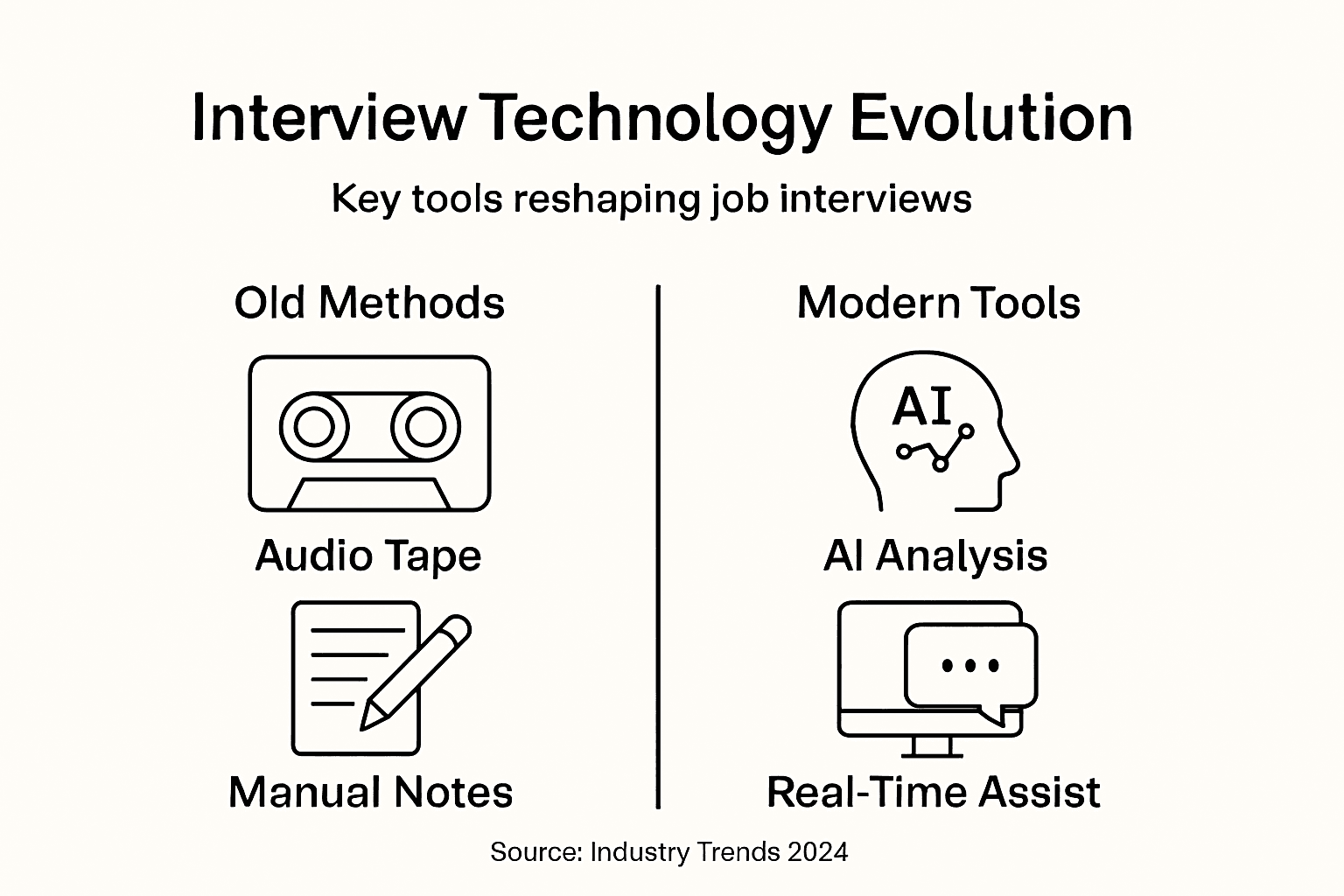
Interview recording solutions have evolved dramatically, transforming from simple audio tape methods to sophisticated digital platforms that offer comprehensive capabilities for capturing professional interactions. These technologies now span a wide spectrum of approaches, each designed to meet specific organizational and individual needs across different professional contexts.
Asynchronous video interview technologies represent a significant innovation, allowing candidates to record responses independently and providing flexibility in interview processes. These solutions enable job seekers to present themselves strategically, with options to review and re-record responses, potentially reducing interview anxiety and improving overall performance.
Modern interview recording solutions typically include several key variations:
- Live video interview platforms
- Asynchronous video interview systems
- Audio-only recording technologies
- Hybrid recording solutions combining multiple capture methods
- AI-enhanced interview analysis platforms
Digital interview recording systems offer substantial advantages beyond traditional methods, including automated form completion, secure data storage, and advanced analytics capabilities. These technologies provide organizations with robust tools for capturing, reviewing, and analyzing interview interactions with unprecedented precision and efficiency.
Here’s a comparison of major interview recording solution types and their core advantages:
| Solution Type | Typical Use Case | Flexibility Level | Analysis Capabilities |
|---|---|---|---|
| Live Video Platform | Real-time interviews | Moderate, fixed schedule | Basic transcription, limited |
| Asynchronous Video System | Self-paced job applications | High, anytime access | Advanced review tools |
| Audio-only Recording | Phone interviews, research | Moderate, easy setup | Limited, transcription only |
| Hybrid System | Multimodal professional panels | Very high, multi-context | Integrated analytics suite |
| AI-Enhanced Platform | Skill assessment, HR screening | Very high, adaptive | Deep contextual analysis |
Pro tip: Research and test multiple interview recording platforms to find the solution that best matches your specific professional communication and assessment needs.
How AI Real-Time Assistance Functions
Artificial Intelligence has revolutionized interview preparation by introducing dynamic, responsive support systems that adapt instantaneously to conversational contexts. These sophisticated technologies go beyond traditional static preparation methods, offering job seekers immediate, intelligent guidance during critical professional interactions.

AI real-time assistance technologies fundamentally transform interview experiences by leveraging advanced natural language processing and machine learning algorithms. These intelligent systems continuously analyze conversation dynamics, providing instantaneous contextual recommendations that help candidates navigate complex communication scenarios with enhanced confidence and strategic precision.
The core functional components of AI real-time assistance include:
- Advanced speech recognition technology
- Natural language processing engines
- Contextual response suggestion mechanisms
- Real-time conversational analysis tools
- Adaptive learning algorithms
AI interview tools utilize sophisticated techniques like speech transcription and dialogue context analysis to help candidates craft nuanced, relevant responses. By listening to both interviewer and interviewee, these intelligent systems provide strategic communication support, effectively reducing interview anxiety and improving overall communication effectiveness.
Pro tip: Practice using AI interview assistance tools in mock interview scenarios to familiarize yourself with their real-time response generation capabilities and optimize your interaction strategies.
Legal Consent and Data Protection Worldwide
Navigating the complex landscape of data protection in interview recording technologies requires a sophisticated understanding of global legal frameworks. Organizations and individuals must carefully address privacy considerations to ensure ethical and legally compliant data management practices across different jurisdictional boundaries.
Global data protection legislation establishes comprehensive guidelines for managing personal information during professional interactions. These regulations universally emphasize core principles that prioritize individual privacy, including:
- Transparent data collection practices
- Explicit consent requirements
- Clear communication about data usage
- Individual rights to access and delete personal information
- Robust security and confidentiality measures
Legal consent standards mandate that interview recording consent must be freely given, specific, and unambiguous. This means participants must receive comprehensive information about how their data will be used, with the ability to withdraw consent at any time without negative consequences. Organizations must demonstrate that consent was obtained proactively and transparently, distinguishing it from standard contractual agreements.
Pro tip: Always request written consent with clear, plain language explanations of how interview recordings will be used, stored, and potentially shared.
This table summarizes international interview recording consent standards for quick reference:
| Regulatory Principle | Global Best Practice | Risk of Non-Compliance |
|---|---|---|
| Explicit Consent | Written, plain language consent | Legal sanctions, penalties |
| Data Access Rights | Participant info access allowed | Loss of trust, complaints |
| Storage Security | Encrypted, secure storage | Data breaches, exposure |
| Withdrawal of Consent | Easy opt-out procedures | Reputation damage |
Risks, Ethical Challenges, and Best Practices
Interview recording technologies present complex ethical landscapes that demand careful navigation, balancing technological innovation with fundamental human rights and professional integrity. As digital transformation accelerates, understanding potential risks becomes crucial for responsible implementation.
Ethical risks in digital interviews encompass multiple critical dimensions, including privacy breaches, data misrepresentation, and potential participant discomfort. These challenges require proactive strategies to protect individual rights and maintain professional standards, particularly in technology-mediated communication environments.
Key ethical challenges and potential mitigation strategies include:
- Protecting participant confidentiality
- Preventing algorithmic bias
- Ensuring transparent data usage
- Maintaining rigorous consent protocols
- Implementing robust data security measures
AI-driven interview technologies introduce nuanced ethical considerations that demand comprehensive governance frameworks. These systems must prioritize accountability, fairness, and inclusivity while leveraging technological capabilities to create more equitable professional interactions. Continuous monitoring and multidisciplinary oversight are essential to mitigate potential discriminatory practices and ensure responsible technological implementation.
Pro tip: Develop a comprehensive ethical checklist that addresses consent, privacy, and data protection before implementing any interview recording technology.
Unlock Your Interview Potential with Real-Time AI Assistance
Navigating the complexities of interview recording technology and managing anxiety during professional interactions can feel overwhelming. The article highlights key challenges like leveraging AI for real-time guidance, ensuring privacy, and transforming recorded conversations into actionable insights. If you want to overcome interview stress and respond confidently to every question, embracing intelligent AI support is essential.
Parakeet AI offers a groundbreaking solution that listens to your job interview in real time and provides instant, tailored answers using advanced AI algorithms. This means no more second-guessing or awkward pauses. You get contextual suggestions that match your unique situation, helping you make the best impression while staying true to your voice.
Ready to boost your interview success with cutting-edge technology?
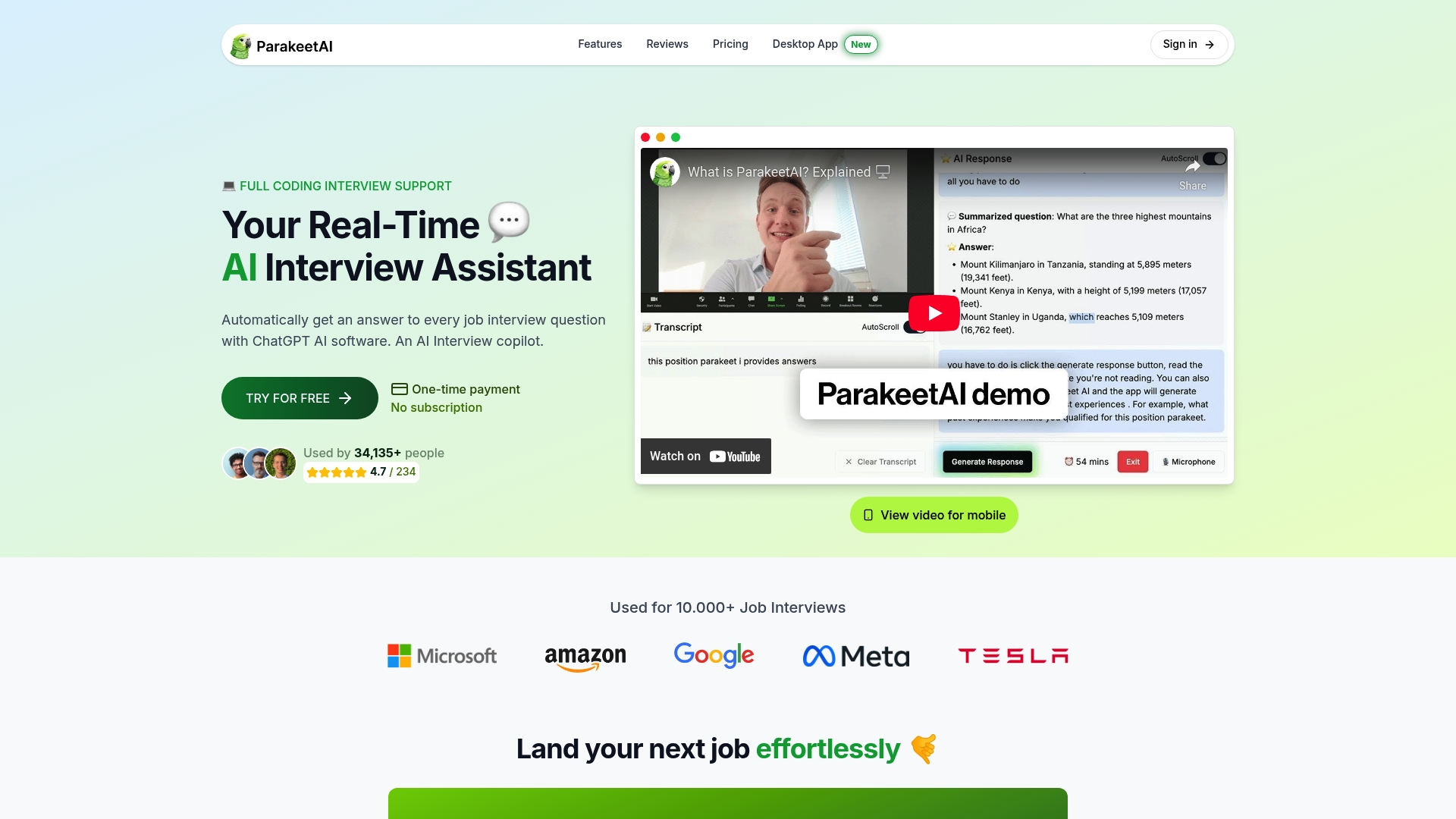
Experience how Parakeet AI can transform your preparation by combining the power of AI-enhanced interview tools with ethical and secure data handling practices discussed in the article. Visit our homepage now and start practicing with the future of interview technology. Don’t wait to gain the confidence that thousands of job seekers trust every day.
Frequently Asked Questions
What is interview recording technology?
Interview recording technology refers to digital systems that capture audio and video conversations during professional interactions, utilizing advanced speech recognition and machine learning to create searchable transcripts and analyze data.
How can interview recording technology benefit job seekers?
Interview recording technology can benefit job seekers by allowing them to record and review interview responses at their own pace, reducing anxiety and providing an opportunity for strategic presentation of their skills.
What types of interview recording solutions are available?
There are various types of interview recording solutions, including live video platforms, asynchronous video systems, audio-only recording technologies, hybrid systems, and AI-enhanced platforms, each offering unique features and capabilities.
What should I consider when using interview recording technology?
When using interview recording technology, it’s crucial to obtain explicit consent from participants, communicate how their recordings will be used, and ensure privacy and data protection practices are followed.