
Supervisor Interview Questions: Boosting Hiring Results

Hiring for supervisor roles can feel challenging when standard interview questions miss the mark. Leadership competencies like emotional intelligence, adaptability, integrity, and communication are critical for effective team management, yet often overlooked by generic prompts. Structured supervisor interview questions help uncover these core traits so hiring managers and HR professionals can make confident decisions. Learn what sets supervisor roles apart and how AI tools and targeted interviews reduce bias and improve outcomes.
Table of Contents
- Defining Supervisor Interview Questions And Role
- Major Types Of Supervisor Interview Questions
- Core Leadership Traits And Assessment Goals
- Legal, Ethical, And Compliance Considerations
- Common Mistakes And Ai-Assisted Interviewing
Key Takeaways
| Point | Details |
|---|---|
| Importance of Targeted Questions | Supervisor interviews should focus on leadership competencies rather than just technical skills and individual achievements. |
| Distinct Role of Supervisors | Supervisors must possess unique abilities to lead teams, make key decisions, and take accountability for team outcomes. |
| Avoiding Generic Questions | Standard interview questions often fail to reveal critical leadership qualities; tailored queries are essential for effective assessment. |
| Legal and Ethical Compliance | Ensure interview questions adhere to employment laws and ethical practices to maintain a fair recruitment process. |
Defining Supervisor Interview Questions and Role
Supervisor interview questions are structured inquiries designed to assess whether candidates possess the skills, judgment, and behavioral traits needed to lead teams effectively. These questions go beyond basic job knowledge—they probe decision-making ability, conflict resolution style, and team management approach.
Understanding what makes a supervisor different from individual contributors is foundational. Supervisors own outcomes they don’t directly control. They guide people instead of completing tasks themselves. This shift requires completely different capabilities.
What Sets Supervisor Roles Apart
Supervisory positions demand a unique skill set compared to non-management roles. The responsibilities change dramatically.
- Team leadership: Managing people’s performance, development, and engagement rather than personal task completion
- Decision-making authority: Making choices that affect multiple people and business outcomes
- Accountability: Owning results produced by the team, not just individual contributions
- Communication: Translating company strategy into team priorities and gathering upward feedback
- Performance management: Evaluating, coaching, and sometimes disciplining direct reports
Many strong individual contributors struggle when promoted to supervisor because they haven’t developed these leadership competencies. That’s why your interview questions must specifically target supervisory capabilities.
Supervisor interview questions must assess leadership ability, not just technical expertise or past individual achievements in the role.
Why Standard Interview Questions Fall Short
Generic interview questions miss what matters in supervisory positions. “Tell me about a time you overcame a challenge” doesn’t reveal whether someone can motivate a struggling team member or handle a performance issue fairly.
Supervisor roles require evaluating effective interview questions for better results that specifically target leadership competencies. Standard behavioral questions often extract stories about individual accomplishments rather than team leadership experiences.
You need questions that reveal:
- How candidates approach delegating work
- Their response when a team member underperforms
- How they build trust and psychological safety
- Their handling of competing priorities from multiple stakeholders
- Their approach to developing talent
These competencies don’t surface in typical interviews. You must ask deliberately.
The Core Elements of Supervisor Interview Questions
Effective supervisor interview questions share common characteristics. They center on leadership capability rather than technical knowledge.
- They target real supervisory scenarios: Questions address situations supervisors actually face—managing conflict, coaching underperformers, building team morale.
- They reveal decision-making approach: Strong supervisor questions show how candidates think through problems, not just what they decided.
- They assess people-first thinking: Answers should demonstrate genuine concern for developing and supporting team members.
- They uncover emotional intelligence: How candidates recognize emotions in themselves and others shapes their leadership effectiveness.
- They explore accountability: Good questions expose whether candidates deflect blame or own outcomes honestly.
The best supervisor interview questions separate people ready for management from those who aren’t. Your questions essentially predict whether someone will thrive or struggle leading a team.

Pro tip: Record or note candidate responses to the same supervisor questions across multiple interviews—patterns reveal genuine leadership traits versus one-off answers prepared in advance.
Major Types of Supervisor Interview Questions
Supervisor interview questions fall into distinct categories, each designed to reveal different leadership competencies. Using a mix of question types gives you the fullest picture of a candidate’s supervisory readiness.
No single question type tells the complete story. Behavioral questions show past actions. Situational questions reveal how candidates think through challenges. Technical questions assess specific knowledge. The strongest hiring teams use all three.
Behavioral Interview Questions
Behavioral questions ask candidates to describe specific situations they’ve experienced. These reveal actual leadership patterns, not hypothetical responses.
- Past performance indicators: How someone handled conflict before predicts how they’ll handle it as your supervisor
- Real decision-making: Answers show their actual judgment, not what they think you want to hear
- Pattern recognition: Multiple behavioral questions expose consistent traits or concerning habits
- Concrete examples: Candidates must provide specific situations, dates, and outcomes—vague answers get caught
Examples include: “Describe a time when a team member’s performance fell short. How did you address it?” or “Tell me about a decision you made that your team disagreed with. How did you handle the pushback?”
Behavioral questions work because people rarely invent entirely false stories. Their answers reflect real experiences and actual problem-solving approaches.
Behavioral questions reveal how candidates actually lead, not how they think supervisors should behave.
Situational Interview Questions
Situational questions present hypothetical scenarios supervisors face. They assess how candidates think through complex problems in real time.
These questions show:
- Critical thinking: How candidates analyze competing priorities or constraints
- Leadership philosophy: What matters to them when making difficult choices
- Communication approach: Whether they involve others or make unilateral decisions
- Adaptability: How they adjust strategy when initial approaches won’t work
Examples: “Your best performer just told you they’re leaving in two weeks. Your team is already understaffed. What do you do?” or “You discover that two of your direct reports have a personal conflict affecting team productivity. Walk me through your approach.”
Situational questions advantage candidates who think strategically and consider multiple stakeholder perspectives. They disadvantage those who default to commands or avoid difficult conversations.
Technical and Competency-Based Questions
These questions assess whether candidates understand supervisor responsibilities and have mastered specific skills. They’re effective interview questions for better results when paired with behavioral and situational approaches.
They evaluate:
- Knowledge of company processes: Can they articulate how your performance management system works?
- Legal and compliance awareness: Do they understand labor laws, discrimination policies, and documentation requirements?
- Technical supervisor skills: Can they explain their approach to delegation, feedback, or talent development?
- Industry-specific demands: Do they understand supervisor challenges specific to your field?
Examples: “Walk me through how you would conduct a performance review” or “Describe your approach to giving critical feedback to someone more experienced than you.”
These questions prevent hiring supervisors who look good in interviews but lack fundamental knowledge.
Pro tip: Use behavioral questions early in your interview to establish baseline patterns, then ask situational questions to see if candidates adjust their thinking when facing novel challenges they haven’t experienced before.
Here is a comparison of supervisor interview question types and their core assessment focus:
| Question Type | Main Assessment Focus | Reveals Candidate’s | Best For |
|---|---|---|---|
| Behavioral | Real experience | Leadership style | Identifying patterns |
| Situational | Problem-solving | Critical thinking | Seeing adaptability |
| Technical | Role knowledge | Competency level | Ensuring fundamentals |
Core Leadership Traits and Assessment Goals
Your supervisor interview questions should target specific leadership competencies that predict on-the-job success. Without clear assessment goals, you’ll end up with interesting conversations that don’t reveal whether someone can actually lead.
The most reliable approach focuses on measurable traits rather than vague impressions. You need to know what you’re looking for before the interview starts.
Essential Leadership Competencies to Assess
Certain traits consistently distinguish effective supervisors from struggling ones. Your questions must probe these specific areas.
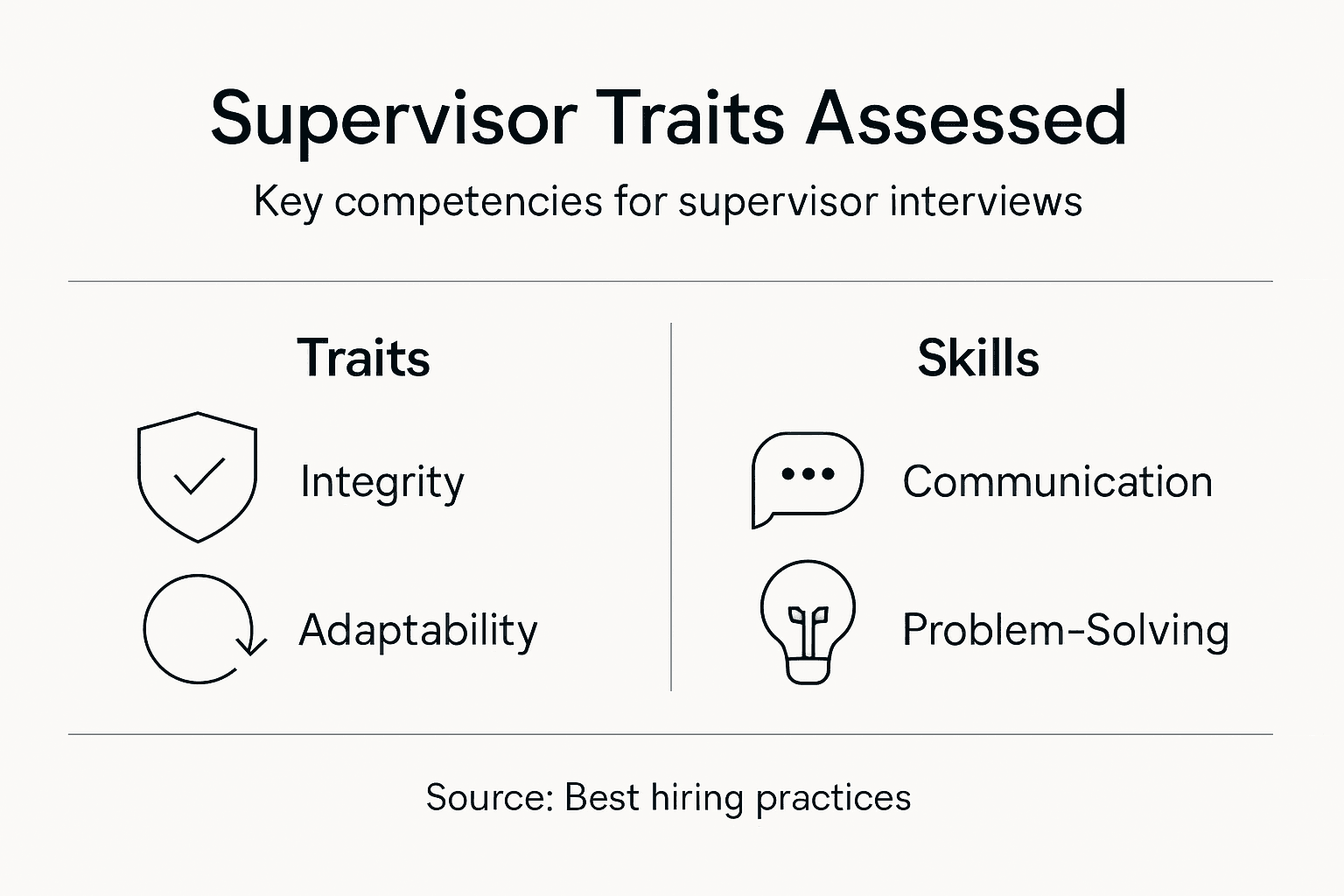
Emotional intelligence shapes how supervisors respond to stress, conflict, and team dynamics. Can candidates recognize emotions in themselves and others? Do they adjust their approach based on what they observe?
Adaptability reveals whether supervisors stay rigid or adjust strategy when circumstances change. Supervisors face unpredictable situations daily. Rigid thinkers create bottlenecks.
Integrity determines whether supervisors make decisions based on what’s right or what’s convenient. This trait directly impacts team trust and your company’s compliance exposure.
Problem-solving ability shows how candidates approach obstacles. Do they jump to solutions or diagnose root causes first? Do they involve their team or work alone?
Communication skills are fundamental. Can supervisors demonstrate leadership skills by explaining decisions clearly, delivering feedback constructively, and listening actively?
These traits aren’t optional—they’re the foundation of supervisory effectiveness.
What Your Assessment Should Reveal
Structured interview assessment aims to answer specific questions about each candidate. Your interview questions should generate answers that illuminate these core areas.
- How do they motivate teams? Do they inspire through vision, incentives, or personal relationships? Which approach fits your culture?
- How do they handle feedback? Can they receive criticism without defensiveness? Do they act on feedback or dismiss it?
- How do they delegate? Do they trust others or micromanage? Can they let go of tasks and focus on leadership?
- How do they manage conflict? Do they address it directly or avoid uncomfortable conversations? Do they seek win-win solutions?
- How do they develop talent? Do they invest in people or just extract performance? Do they create succession plans?
Each question you ask should generate evidence that answers at least one of these core assessment goals.
Your supervisor interview questions succeed when they produce concrete examples that reveal how candidates actually handle the situations they’ll face as your supervisor.
Connecting Questions to Outcomes
The strongest hiring teams link each interview question directly to a measurable outcome. A question about handling underperformance should reveal whether the candidate understands progressive discipline, documentation, and coaching versus termination.
Ask yourself: “If I hire this person and they face this situation, will they handle it the way I need them to?” Your interview questions answer that question.
Pro tip: Create a simple scorecard before each interview that lists your 4-5 core assessment goals, then jot notes during the interview showing specific evidence of strength or weakness in each area—this prevents biased hiring decisions based on personality fit.
Legal, Ethical, and Compliance Considerations
Supervisor interview questions must comply with employment law while maintaining ethical hiring practices. One poorly worded question can expose your company to discrimination claims or regulatory violations. This isn’t theoretical—hiring lawsuits are expensive and preventable.
Your interview process reflects your company’s values. Candidates notice whether you treat them fairly. That reputation matters for future hiring and employer brand.
Discrimination and Equal Employment Opportunity Laws
Employment law strictly limits what you can ask in interviews. Protected classes exist in virtually every jurisdiction—age, race, color, religion, sex, national origin, disability, and increasingly, sexual orientation and gender identity.
You cannot ask questions that directly or indirectly probe these characteristics:
- Age-related questions: “When did you graduate?” reveals age; ask “Do you have experience with X skill?”
- Disability questions: “Do you have any medical conditions?” is illegal; ask “Can you perform the essential functions of this role?”
- Family status: “Do you have children?” is prohibited; ask about availability or flexibility
- National origin: “Where are you originally from?” violates law; ask “Are you authorized to work in the United States?”
- Religion: Never ask about religious beliefs or practices
The safest approach focuses interview questions on job-related qualifications and abilities. Ask what they can do, not who they are.
Interview questions must assess job-related competencies, never protected characteristics. One illegal question can undermine your entire hiring credibility.
Implementing compliance hiring fairness
Compliance means more than avoiding illegal questions. It means conducting fair, consistent interviews for all candidates. If you ask one candidate about leadership challenges, ask all candidates the same question.
Structured interviews with standardized questions reduce bias and improve legal defensibility. When lawsuits occur, documentation of consistent question sets and objective scoring protects your company.
Key compliance practices:
- Use identical questions for all candidates in the same role
- Document scoring criteria before interviews begin
- Record interview notes showing what candidates actually said
- Avoid subjective terms like “culture fit” or “seems motivated”
- Train interviewers on what questions are permissible
- Review job descriptions to ensure interview questions match actual responsibilities
Ethical Considerations in Supervisor Assessment
Beyond legal compliance, ethical hiring respects candidate dignity and transparency. Supervisors set organizational tone—hiring unethical candidates signals that integrity doesn’t matter.
Ethical interview practices include:
- Confidentiality: Keep candidate information private; don’t discuss interviews publicly
- Honesty about the role: Accurately describe supervisor responsibilities, not an idealized version
- Transparency about process: Tell candidates how many rounds they’ll face and timeline expectations
- Respectful questioning: Avoid trick questions or attempts to catch candidates off-guard
- Timely feedback: Communicate decisions promptly, not weeks later
Candidates remember how you treated them. Poor interview experiences become negative Glassdoor reviews and social media posts.
Pro tip: Before finalizing your supervisor interview questions, have legal counsel review them—this prevents costly hiring disputes and ensures compliance with local employment laws where your candidates are located.
Common Mistakes and AI-Assisted Interviewing
Most hiring managers repeat the same interview mistakes year after year without realizing it. Recognizing these patterns is the first step to fixing them. AI-assisted interviewing can help, but only if you avoid common pitfalls in implementation.
The gap between what you think you’re assessing and what you’re actually assessing is wider than you think.
Mistakes That Undermine Interview Effectiveness
Traditional interviews suffer from consistent weaknesses. Understanding these pitfalls helps you design better questions and conversations.
Lack of preparation ruins interviews before they start. You walk in without reviewing resumes, job requirements, or planned questions. This forces you to improvise, leading to inconsistent evaluation and candidates who sense you don’t care.
Closed-ended questions kill dialogue. “Have you managed a team before?” gets a yes or no. You learn nothing about how they actually lead. Open-ended questions like “Describe your experience leading teams” generate stories that reveal actual capability.
Relying on gut feeling instead of structure introduces massive bias. You like someone because they remind you of yourself or went to your university. That person-similarity doesn’t predict job performance.
Talking too much prevents you from hearing candidate responses. You explain the company, ask questions, then immediately fill silences with more talking. Candidates don’t get space to think or speak deeply.
Misinterpreting responses happens when you assume you understand what candidates meant. They say “I’m independent” and you hear “they won’t collaborate.” Clarify before judging.
The following table summarizes common supervisor interview mistakes and recommended best practices:
| Common Mistake | Impact on Hiring | Best Practice |
|---|---|---|
| Lack of preparation | Inconsistent results | Study resumes and plan questions |
| Closed-ended questions | Minimal insight | Use open-ended prompts |
| Relying on gut feeling | Hiring bias | Apply objective scoring |
| Talking too much | Missed candidate input | Prioritize listening |
| Misinterpreting answers | Flawed assessment | Probe and clarify responses |
The best supervisor interview questions go nowhere if you’re not actively listening to the answers and following up with thoughtful probes.
How AI-Assisted Interviewing Improves Outcomes
AI tools can address traditional interview weaknesses—but only when implemented correctly. The technology helps with consistency, objectivity, and data analysis that humans miss.
AI-assisted interviewing improves hiring by:
- Standardizing questions: Every candidate answers identical questions in identical order, eliminating variation
- Tracking objective data: The system records exact responses and tracks patterns you’d miss manually
- Reducing unconscious bias: Structured scoring based on criteria prevents gut-feel hiring
- Analyzing communication patterns: AI detects speaking pace, confidence level, and language choices that reveal leadership style
- Freeing your time: You focus on evaluating answers, not managing logistics
Common Mistakes in AI Implementation
Many organizations adopt AI interviewing then struggle because they skip critical steps. Avoid common interview pitfalls by understanding these frequent errors.
Mistakes include:
- Using generic AI questions instead of customizing for your supervisor role and culture
- Treating AI scores as final verdicts instead of data inputs for human decision-making
- Failing to train interviewers on how to interpret AI results
- Ignoring candidate privacy and data security concerns
- Abandoning human judgment entirely in favor of algorithmic decisions
- Not validating that your AI system actually predicts supervisor success in your organization
AI works best as a tool that enhances human judgment, not replaces it. The strongest hiring teams use AI to gather better data, then apply human expertise to interpret that data.
Pro tip: Pilot your AI interviewing system with current high-performing supervisors first—use their responses as a benchmark to validate that your AI tool actually identifies the qualities you value in leaders.
Elevate Your Supervisor Hiring with AI-Powered Interview Support
Hiring supervisors demands deep insight into leadership traits like emotional intelligence and adaptability as discussed in the article. Yet many employers struggle with inconsistent interviews and risk overlooking vital qualities that predict success. You deserve an interview solution that helps you assess real supervisory capabilities with precision beyond basic questions.
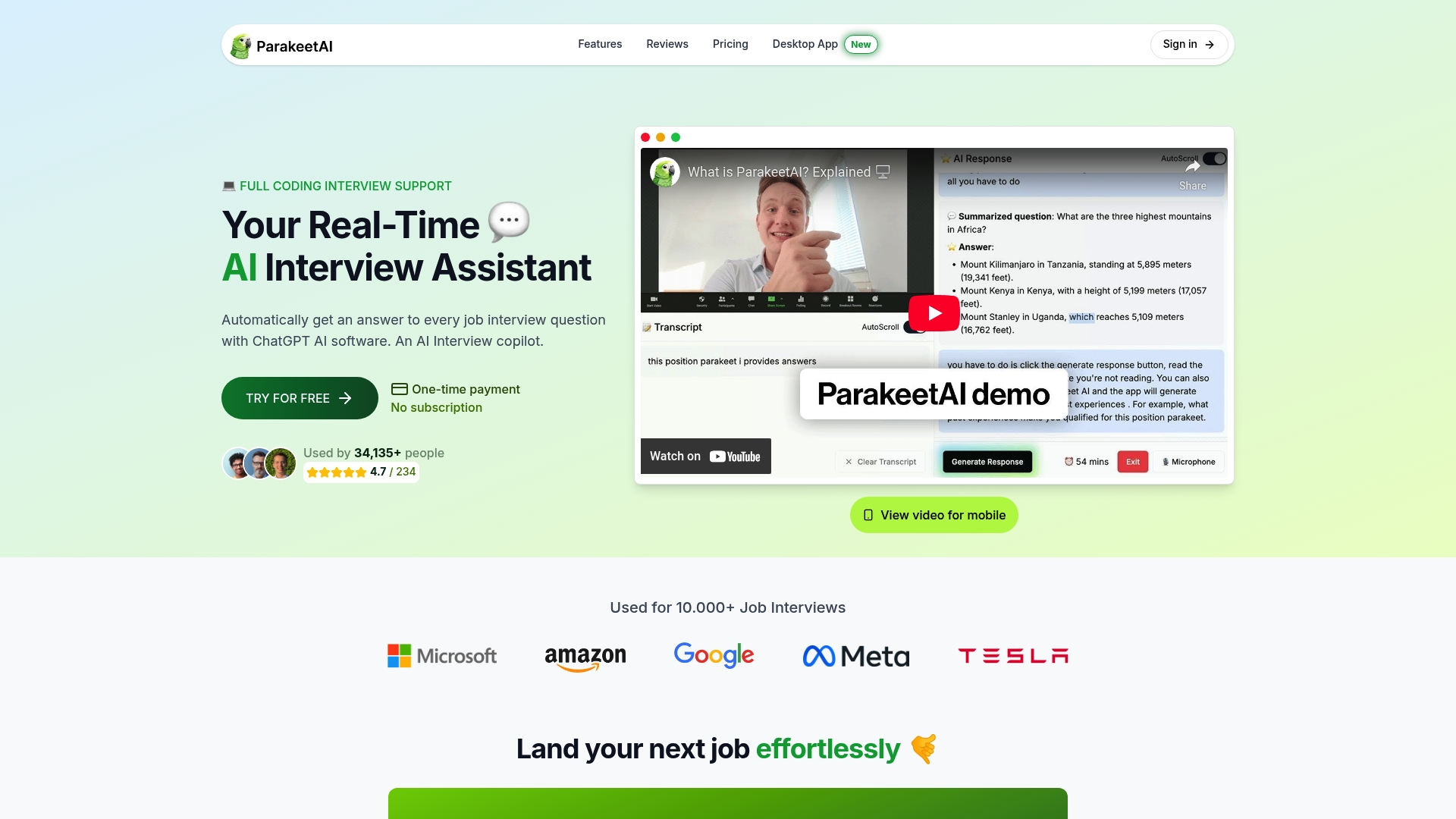
Discover how Parakeet AI acts as your real-time AI job interview assistant listening to every answer and automatically providing meaningful responses designed to uncover true leadership potential. Say goodbye to guesswork and bias by using a tool that guides your interview with targeted questions and objective data. Begin transforming your hiring process today by visiting Parakeet AI interview technology and take the first step toward making every supervisor interview count.
Frequently Asked Questions
What are effective supervisor interview questions?
Effective supervisor interview questions should target leadership capabilities, decision-making approaches, emotional intelligence, accountability, and situations a supervisor may face, such as conflict management or performance evaluation.
How do behavioral interview questions differ from situational questions?
Behavioral interview questions ask candidates to share past experiences, revealing their actual leadership patterns. In contrast, situational questions present hypothetical scenarios to assess a candidate’s critical thinking and problem-solving abilities in a supervisory context.
Why are technical questions important in supervisor interviews?
Technical questions are crucial as they evaluate a candidate’s understanding of supervisor responsibilities and necessary skills. They ensure that the candidate is well-versed in specific processes, compliance, and the essential knowledge required for effective supervision.
How can I ensure compliance during supervisor interviews?
To ensure compliance, ask only job-related questions and avoid those that pertain to protected characteristics. Use standardized questions for all candidates, document scoring criteria, and train interviewers on legal guidelines to prevent potential discrimination claims.