
Best Interview Questions to Ask an Employer in 2026

TL;DR:Asking strategic, specific questions during an interview reveals clarity on roles, company culture, and growth potential.Candidates successful in interviewing focus on role expectations, team dynamics, and long-term development rather than generic inquiries.
The best interview questions to ask an employer are the ones that reveal what the job posting never will: real expectations, actual culture, and whether this company will support your growth or stall it. Harvard research confirms that candidates who ask thoughtful questions are perceived as more competent and likable by hiring managers. That means your questions carry as much weight as your answers. Guides from Coursera, Learnist, and Mirrai Careers all point to the same truth: strategic question selection is a skill, and most candidates waste it by asking too little or too late.
1. Best questions to ask about the role and expectations
Role clarity questions are the highest-return questions you can ask. They expose whether the employer has a clear vision for the position or just a vague job description they copied from three years ago.
Start with these:
- “What does a typical day look like in this role?”
- “What would success look like in the first 90 days?”
- “How is performance measured, and how often?”
- “Why is this position open right now?”
The last question is one most candidates skip, and it is one of the most revealing. If the role is open because the last three people left within a year, that tells you something the job listing will never mention. Questions like “What would success look like in the first 90 days?” also function as a diagnostic tool. A manager with a clear execution plan will answer specifically. A manager who gives a vague non-answer likely has not thought it through, and you will be the one paying for that ambiguity once you start.
The performance measurement question matters because it surfaces whether the company evaluates output or activity. Some organizations reward results. Others reward visibility and hours logged. Knowing which one you are walking into changes everything about how you would experience the role day to day.

Pro Tip: If the interviewer struggles to describe what success looks like in 90 days, follow up with “What are the top three priorities for this role in the first six months?” A good manager should be able to answer that without hesitation.
2. Key questions to uncover team dynamics and culture
Culture questions are where most candidates go wrong. Asking “What’s the culture like here?” gets you a rehearsed answer about ping-pong tables and work-life balance. You need questions that force concrete, specific responses instead.
Try these:
- “How would you describe the team I’d be working with?”
- “How does the team handle disagreements or conflicting priorities?”
- “Can you give me an example of how company values show up in day-to-day decisions?”
- “How does leadership communicate major changes to the team?”
Culture-fit questions should push interviewers to give real examples rather than corporate talking points. When you ask how disagreements are handled, you learn whether the team has a functional conflict resolution process or whether problems just fester. When you ask for an example of values in action, you find out if those values are real or just wall art.
The most honest signal in any culture question is not what the interviewer says. It is how long they pause before answering. A team with genuine psychological safety answers the conflict question quickly and specifically. A team with unresolved dysfunction either deflects or gives an answer so polished it sounds scripted.
These questions also protect you. Toxic work environments rarely announce themselves. They reveal themselves through vague answers, defensive body language, and interviewers who pivot away from specifics. Pay attention to both the content and the delivery.
3. Questions about career growth, onboarding, and development
Long-term fit depends on whether the company invests in you after the offer letter is signed. These questions tell you exactly how much that investment looks like in practice.
Here are the ones worth asking:
- “What does the career progression path look like for someone in this role?”
- “Can you walk me through the onboarding process for new hires?”
- “What professional development opportunities does the company offer?”
- “How often do performance reviews happen, and what do they look like?”
- “Are there examples of people who started in this role and moved into senior positions?”
Asking about career progression and onboarding reveals whether the company has a structured growth path or whether advancement is informal and unpredictable. Companies that invest in employees can usually describe the onboarding process in detail. Companies that churn through people tend to give vague answers like “you’ll figure it out as you go.”
The professional development question is particularly useful for tech roles. Ask whether the company funds certifications, conferences, or courses. If the answer is “we encourage self-directed learning” with no budget attached, that is a clear signal about how much they value your growth versus your output.
Pro Tip: Ask the interviewer directly: “What’s one thing you wish you had known about this company before you joined?” This question bypasses corporate messaging and gets you an honest, personal answer almost every time.
4. Unique and strategic questions that set you apart
Most candidates ask the same five questions. These questions signal that you are thinking about the role at a strategic level, not just trying to get hired.
- “What’s the biggest challenge you see this company facing in the next five years?”
- “How do you see AI impacting this role or the team’s work going forward?”
- “What’s your leadership style, and how does it show up when the team is under pressure?”
- “What does the company need most from the person in this role right now?”
SEEK recommends questions like “How do you see AI impacting this role?” because they demonstrate forward-thinking awareness and show you are already thinking about how to add value beyond the current job description. For candidates exploring AI-adjacent roles, this question also opens a genuine conversation about where the company is headed.
The leadership style question is one of the most underused questions in any interview. Leadership style under pressure is the version that actually affects your daily experience. A manager who is collaborative in calm conditions but authoritarian under stress is a very different manager than one who stays consistent. Asking specifically about pressure scenarios gets you closer to the real answer.
Good questions reveal that you are genuinely evaluating fit, not just seeking any available job. Hiring managers notice the difference, and it shifts the dynamic of the conversation in your favor.
5. How to select and time your questions effectively
Preparation and timing determine whether your questions land well or feel awkward. Here is a practical framework:
- Prepare up to 10 questions before the interview. You will not ask all of them, but having a full list means you can adapt based on what the interviewer already covers.
- Ask 3 to 5 questions per interview. Coursera advises asking no more than five questions to maintain conversation flow and respect the interviewer’s time.
- Match question depth to the interview round. Phone screens call for lighter questions about the role and team. Final rounds are the right time for deeper questions about success metrics, leadership, and company challenges.
- Organize your questions by category. Grouping questions by category such as role, culture, career, and interviewer perspective ensures you cover the ground that matters most without repeating yourself.
- Adapt when the interviewer covers your question first. If they already explained the onboarding process, pivot to a follow-up rather than asking a question they just answered. It shows you were listening.
Matching question depth to interview round increases your effectiveness at every stage. Asking heavy strategic questions in a 20-minute phone screen can feel premature. Asking only surface-level questions in a final round signals you have not done your research. Timing is part of the skill.
You can also find a curated list of questions to ask employers specifically for tech interviews to sharpen your preparation for competitive roles.
Key takeaways
Asking the right questions in an interview is as important as answering them well, and the best questions reveal role clarity, culture, and growth potential before you accept any offer.
| Point | Details |
|---|---|
| Role clarity questions matter most | Ask about 90-day success and performance metrics to expose whether the employer has a real plan. |
| Culture questions need specifics | Ask how disagreements are handled, not just “what’s the culture like,” to get honest answers. |
| Growth questions signal long-term fit | Ask about onboarding, career paths, and development budgets to assess real employer investment. |
| Strategic questions set you apart | Questions about AI impact and leadership under pressure show forward-thinking preparation. |
| Timing and volume affect impact | Prepare up to 10 questions, ask 3 to 5, and match depth to the interview round. |
Why most candidates ask the wrong questions
Most job seekers treat the “Do you have any questions?” moment as a formality. I have reviewed hundreds of interview transcripts through my work with Parakeet-ai, and the pattern is consistent: candidates who ask generic questions get generic jobs. The candidates who ask specific, probing questions walk out with better offers and more accurate expectations.
The biggest mistake I see is candidates asking questions designed to impress rather than questions designed to inform. “What does success look like here?” sounds good, but “What would success look like in my first 90 days specifically?” is the version that actually tells you something. The specificity forces a real answer.
I also see candidates skip the uncomfortable questions entirely. Asking why the role is open, or how the team handles conflict, can feel risky. It is not. Hiring managers respect candidates who ask direct questions. What they do not respect is a candidate who accepts every answer at face value and never pushes for clarity.
The other thing worth saying: your questions are also a negotiation tool. When you ask about career progression before you have an offer, you are signaling that you expect growth. That sets a tone. Companies that cannot answer that question clearly are telling you something important about what the next two years would look like.
Balance matters, too. Three to five well-chosen questions leave a stronger impression than ten scattered ones. Depth beats volume every time.
— Jure
Prepare smarter with Parakeet-ai
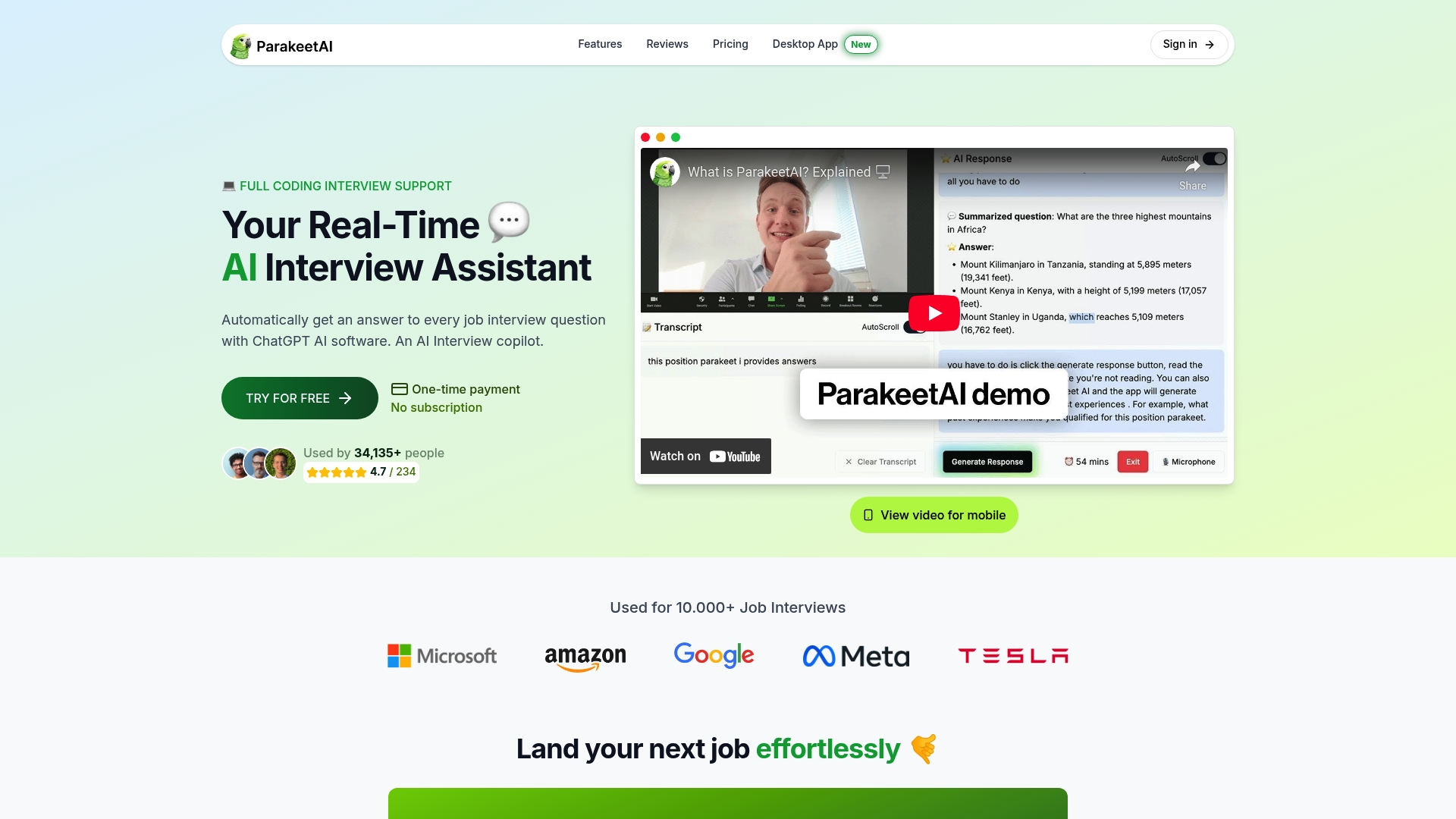
Knowing which questions to ask is only half the preparation. The other half is being ready to answer whatever comes back. Parakeet-ai is a real-time AI interview assistant that listens to your interview and automatically provides answers to every question as it happens. No more blanking on behavioral questions or losing your train of thought under pressure. Whether you are preparing for a phone screen or a final-round panel interview, Parakeet-ai gives you the confidence to perform at your best. Explore interview prep for tech roles or visit Parakeet-ai to see how real-time AI support changes the interview experience entirely.
FAQ
How many questions should you ask in a job interview?
Coursera recommends asking no more than five questions per interview to keep the conversation balanced. Prepare up to 10 in advance so you can adapt based on what the interviewer already covers.
What are the most important questions to ask a potential employer?
Questions about 90-day success metrics, performance measurement, career progression, and how the team handles conflict are the most revealing. They surface real expectations and culture rather than rehearsed answers.
Is it appropriate to ask about salary during an interview?
Salary questions are best saved for later rounds or after an offer is made, unless the interviewer raises compensation first. Asking too early can shift focus away from your qualifications before you have had a chance to demonstrate your value.
Can you ask about workplace accommodations during an interview?
Yes. Employers are required to provide reasonable accommodations during the hiring process under ADA guidelines, and candidates can ask about accommodations without negative impact on their candidacy.
What questions should you avoid asking an employer?
Avoid questions that signal you have not researched the company, such as “What does your company do?” Also avoid questions that focus only on what the company offers you before demonstrating what you bring. A full list of questions to avoid in tech interviews can help you steer clear of common missteps.