
Customer Service Behavioral Interview Questions: 2026 Guide

TL;DR:Behavioral interview questions for customer service focus on past experiences that reveal essential skills like communication and conflict resolution. They predict future performance more accurately than traditional questions, especially when answered using the STAR method to structure responses. Preparation, honesty, and practicing with AI tools can improve success in both in-person and remote interviews.
Customer service behavioral interview questions ask candidates to show, not tell, by describing specific past experiences that reveal real skills. Unlike traditional interview questions, behavioral questions predict future job performance at 55% accuracy, compared to just 10% for conventional methods. That gap matters enormously for roles built on conflict resolution, empathy, and communication under pressure. The STAR method (Situation, Task, Action, Result) is the recognized industry framework for structuring answers to these questions. This guide gives you the exact questions to expect, how to answer them well, and what interviewers are really listening for.

1. What are the top customer service behavioral interview questions?
The most common behavioral questions for customer service roles focus on five core skill areas: communication, conflict resolution, problem-solving, managing expectations, and service recovery. Knowing which questions fall into each category helps you prepare targeted stories instead of generic answers.
Here is a curated list of the questions you are most likely to face, along with the specific trait each one tests:
- “Tell me about a time you dealt with an upset customer.” Tests emotional regulation and conflict resolution. Interviewers want to see that you stayed calm and found a solution.
- “Describe a situation where you had to explain a complex issue to a customer in simple terms.” Tests communication clarity. Strong answers show you adapted your language to the customer’s level.
- “Give me an example of when you went above and beyond for a customer.” Tests initiative and service commitment. Interviewers look for genuine effort, not scripted politeness.
- “Tell me about a time you had to deliver bad news to a customer.” Tests honesty and empathy. The best answers show you were direct, compassionate, and offered alternatives.
- “Describe a moment when you made a mistake with a customer. What did you do?” Tests accountability and learning. Admitting fault while showing growth is a strong signal.
- “Tell me about a time you handled multiple customer requests at once under pressure.” Tests prioritization and composure. Interviewers want evidence you can triage without dropping quality.
- “Give an example of when you turned a negative customer experience into a positive one.” Tests service recovery skills. This is one of the most common scenario interview questions in customer-facing roles.
- “Describe a time when a customer’s request fell outside your authority. How did you handle it?” Tests judgment and escalation skills. Good answers show you knew when to involve a supervisor without leaving the customer stranded.
- “Tell me about a time you disagreed with a company policy but still had to enforce it.” Tests professionalism and integrity. Interviewers want to see you can separate personal opinion from job responsibility.
- “Give me an example of when you proactively identified a problem before a customer complained.” Tests attentiveness and ownership. This question separates reactive from proactive service mindsets.
Pro Tip: Prepare at least two distinct stories for each skill category. Interviewers often ask follow-up questions, and having a second example ready prevents you from recycling the same story twice.
2. How to answer behavioral questions using the STAR method
The STAR method is the standard framework for answering behavioral style interview questions. It stands for Situation, Task, Action, and Result. STAR structures your response so it is concise, relevant, and outcome-focused, which is exactly what interviewers need to evaluate your competency.
Here is how to apply each component:
- Situation: Set the scene briefly. One or two sentences describing the context is enough. Do not spend more than 20% of your answer here.
- Task: Clarify your specific responsibility. What were you personally accountable for at that moment? This is where many candidates go vague, so be direct.
- Action: This is the most important part. Describe exactly what you did, not what your team did. Use “I” statements. Walk the interviewer through your specific steps and decisions.
- Result: Quantify the outcome when possible. “The customer left satisfied” is weak. “The customer upgraded their plan and left a five-star review” is strong. Numbers and specifics make results credible.
Common mistakes to avoid:
- Giving hypothetical answers instead of real past examples. Interviewers hear the difference immediately.
- Describing what your team did instead of your personal role. Interviewers are assessing you, not your department.
- Skipping the result. An answer without an outcome feels unfinished and leaves the interviewer guessing.
- Being too brief. A strong STAR answer runs 90–120 seconds when spoken aloud.
Pro Tip: After you finish your answer, pause and ask: “Does that answer your question, or would you like more detail?” This shows confidence and gives the interviewer a natural opening to ask follow-up questions.
Follow-up questions from interviewers dig into the remaining 25% of your story, probing your exact role, decisions, and the final outcome. Preparing complete stories in advance means you will never be caught off guard by a deeper probe.
3. Behavioral questions for remote customer service interviews
Remote customer service roles carry a distinct set of challenges that interviewers test through targeted scenario interview questions. Remote interviews require candidates to demonstrate virtual communication skills, technology fluency, and the ability to resolve conflict without face-to-face cues.
Expect these types of questions in a remote-focused interview:
- “Tell me about a time you resolved a customer conflict entirely through written communication.” This tests your ability to convey empathy and clarity without tone of voice or body language.
- “Describe a situation where a technology failure affected your ability to serve a customer. What did you do?” This tests problem-solving and composure when tools fail.
- “Give an example of how you maintained strong relationships with teammates you had never met in person.” This tests remote collaboration and communication habits.
- “Tell me about a time you had to manage a difficult customer interaction while working from home with distractions.” This tests focus and professionalism in a non-office environment.
Preparation for remote behavioral interviews goes beyond memorizing answers. Test your audio and video setup before the interview. A lagging connection or poor audio undermines your credibility before you say a word. Practice delivering your STAR answers on camera so your pacing and eye contact feel natural. For more on remote interview preparation, building rapport through a screen takes deliberate effort, including using the interviewer’s name and maintaining direct eye contact with the camera lens.
Effective remote hiring also depends on how interviewers structure their process. Structured approaches to conducting remote interviews help both sides get the most from a virtual format.
4. Question categories and what each one tests
Behavioral question categories include conflict management, problem-solving, communication, adaptability, and customer empathy. Understanding which category a question belongs to helps you pull the right story from your experience bank quickly.
| Category | Example question | Skill being evaluated |
|---|---|---|
| Conflict management | “Tell me about a time you handled an angry customer.” | Emotional control, de-escalation |
| Problem-solving | “Describe a time you found a creative solution to a customer’s issue.” | Resourcefulness, critical thinking |
| Communication | “Give an example of explaining a complex policy clearly.” | Clarity, adaptability of language |
| Adaptability | “Tell me about a time a process changed suddenly. How did you adjust?” | Flexibility, composure under change |
| Customer empathy | “Describe a time you understood a customer’s frustration before they expressed it.” | Active listening, emotional intelligence |
Interviewers rarely ask questions in a predictable order. They use follow-up prompts to test whether your first answer was a rehearsed story or a real experience. A question about conflict management might be followed immediately by “What would you have done differently?” That follow-up reveals whether you can reflect honestly, not just perform well under scripted conditions.
Situational questions (“What would you do if…”) differ from behavioral questions (“Tell me about a time you…”). Behavioral questions carry more weight because past behavior predicts future performance far more reliably than hypothetical responses. When an interviewer asks a situational question, anchor your answer in a real past experience anyway. Say, “I faced something similar. Here is what I actually did.”
Key takeaways
Behavioral interview questions are the most reliable tool for evaluating customer service candidates because they require real evidence, not rehearsed opinions.
| Point | Details |
|---|---|
| Behavioral questions outperform traditional ones | They predict job performance at 55% accuracy versus 10% for conventional interview methods. |
| STAR method structures strong answers | Use Situation, Task, Action, Result to keep answers concise and outcome-focused. |
| Personal role is the critical detail | Always describe what you did specifically, not what your team or company did. |
| Remote roles need targeted preparation | Practice on camera and prepare examples of virtual conflict resolution and tech troubleshooting. |
| Follow-up questions test authenticity | Prepare complete stories so deeper probes reveal competence, not gaps in your narrative. |
What I have learned from watching candidates succeed and fail
The candidates who perform best in customer service behavioral interviews are rarely the ones with the most polished answers. They are the ones with the most honest ones.
Memorizing a list of good behavioral interview questions and scripting perfect responses is a trap. Interviewers who conduct these interviews regularly can detect a rehearsed story within 30 seconds. The pacing is too even. The details are too clean. The emotion is missing. Real experiences have friction, and that friction is what makes an answer believable.
The most powerful thing you can do is demonstrate learning from mistakes. Candidates who openly describe what went wrong, what they did about it, and what they changed afterward are viewed more favorably than those who only share success stories. Interviewers know that customer service is hard. They are not looking for perfection. They are looking for self-awareness and growth.
Nerves are also a bigger factor than most candidates admit. The best way to manage them is not to breathe deeply before the interview. It is to over-prepare your stories so thoroughly that you could tell them in any order, in any format, at any level of detail. Confidence comes from preparation, not from calming techniques.
One more thing: engage the interviewer. After a strong answer, a brief, genuine question like “Is that the kind of example you were looking for?” signals confidence and keeps the conversation collaborative rather than interrogative. That shift changes the entire dynamic of the room.
— Jure
Parakeet-ai: practice behavioral questions with real-time AI support
Preparing for a customer service interview takes more than reading a list of questions. You need to practice delivering answers out loud, under pressure, and in real time.
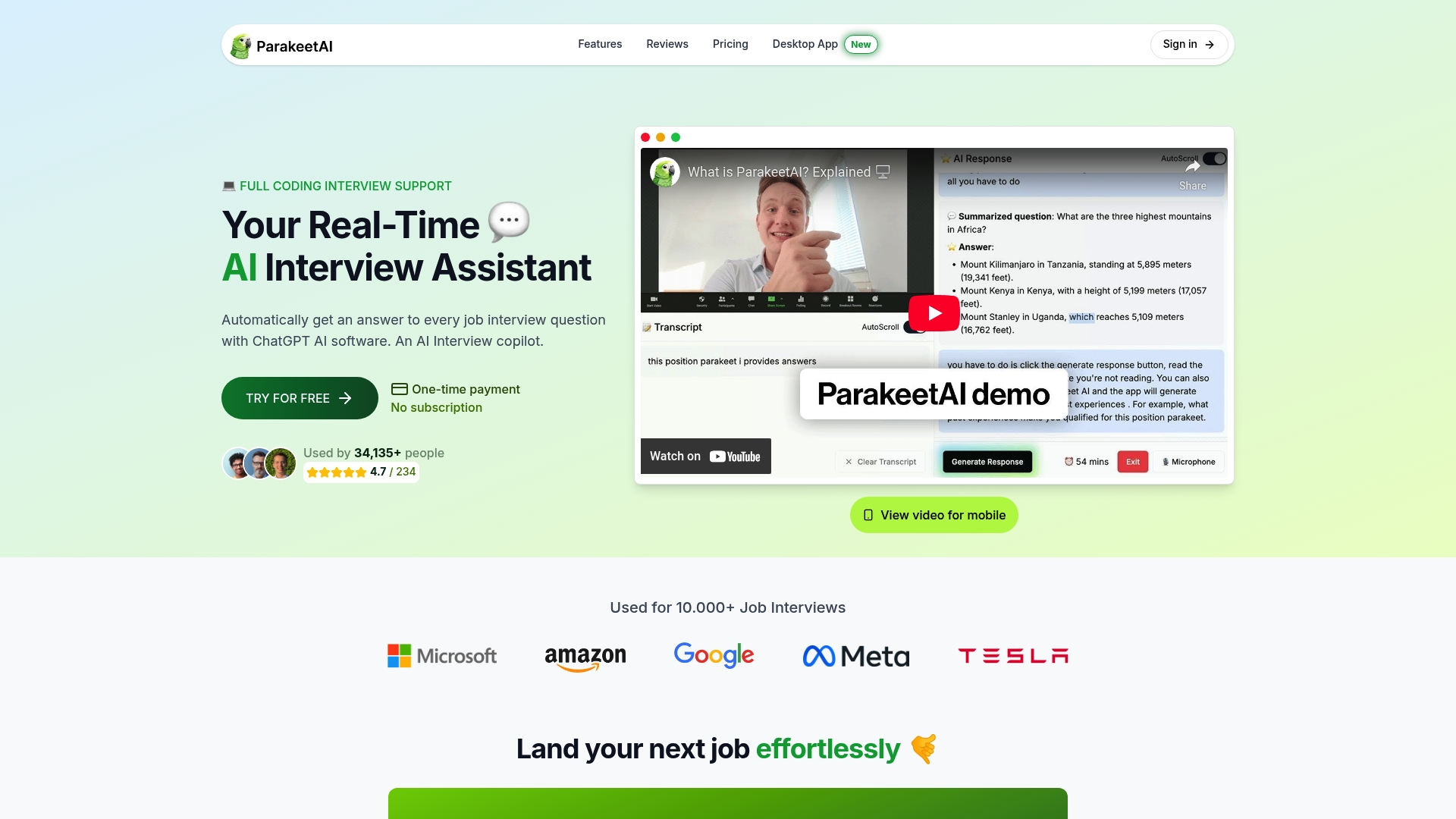
Parakeet-ai is a real-time AI interview assistant that listens to your interview and automatically provides answers to every question as it happens. For job seekers preparing for behavioral interviews, it means you can practice with AI and get instant support on structuring STAR responses, handling unexpected follow-up questions, and staying composed when the conversation shifts. Visit parakeet-ai.com to see how real-time AI assistance can sharpen your interview performance before your next customer service role.
FAQ
What makes behavioral interview questions different from regular ones?
Behavioral questions ask candidates to describe specific past experiences rather than hypothetical responses. This grounds answers in real evidence, which predicts job performance at 55% accuracy compared to 10% for traditional interview methods.
How long should a STAR method answer be?
A well-structured STAR answer runs approximately 90–120 seconds when spoken aloud. Shorter answers often skip the result; longer ones lose the interviewer’s attention.
What are the most common behavioral question categories in customer service interviews?
The five main categories are conflict management, problem-solving, communication, adaptability, and customer empathy. Preparing one strong story for each category covers the majority of typical behavioral interview questions you will face.
How should I handle a follow-up question I did not expect?
Stay with your original story and go deeper. Interviewers use follow-ups to clarify your exact role and the final outcome. If you prepared a complete, honest story, a follow-up question is an opportunity, not a threat.
Do behavioral questions work the same way in remote interviews?
The format is identical, but the content shifts. Remote customer service interviews include virtual communication skills and technology troubleshooting scenarios that in-person interviews rarely cover. Prepare specific examples from any remote or digital work experience you have.