
Second Interview Questions: Top 15 to Prepare For

TL;DR:Second interview questions focus on cultural fit, behavioral evidence, and situational judgment, as the candidate is already qualified. Candidates should prepare 8-12 diverse stories using the STAR method, tailored for different competency areas. Asking insightful questions about success metrics and team dynamics demonstrates serious preparation and interest.
Second interview questions are defined by a single shift in purpose: the hiring team already knows you can do the job. Now they want to know if you are the right person for their team, their culture, and this specific role. Second interviews go deeper than initial screenings, often running 60–90 minutes or longer, with multiple stakeholders involved. About 33% of hiring managers expect to discuss salary at this stage. The questions shift from qualifications to behavioral evidence, situational judgment, and cultural fit. Preparing for 2nd interview questions means building real stories, not rehearsing generic answers.
What types of second interview questions should you expect?
Second interviews test four distinct competency areas. Knowing which category a question falls into helps you prepare the right kind of answer.
Behavioral questions ask about past experiences. They follow a pattern like “Tell me about a time when…” and require concrete examples. Behavioral questions are the strongest predictors of future job performance because they demand evidence, not hypotheticals. Vague answers score poorly. Specific stories with measurable results score highest.
Scenario and situational questions present a hypothetical challenge. “How would you handle a project that suddenly lost half its budget?” These test your problem-solving logic and adaptability in real time. Interviewers listen for structured thinking, not just the right answer.
Technical or case-based questions verify job-specific skills. In a second-stage interview, these go beyond surface-level knowledge. A marketing candidate might be asked to critique a live campaign. An engineer might walk through a system design problem on a whiteboard.
Motivation and culture fit questions reveal whether your values align with the company’s. “What kind of manager brings out your best work?” or “Why do you want to work here specifically?” are not throwaway questions. They tell the interviewer whether you will stay, grow, and contribute to the team’s dynamic.
- Behavioral: requires a real past example with a clear outcome
- Situational: requires logical, structured problem-solving
- Technical: requires demonstrated job-specific knowledge
- Motivation and fit: requires honest self-awareness and company research
Pro Tip: Before your interview, label each story you plan to tell with one of these four categories. If you have gaps, fill them. A well-rounded candidate covers all four.
Top 15 second interview questions and why they matter
These are the questions that consistently appear in advanced interview rounds. Each one has a specific purpose.
1. Tell me about a time you failed
Interviewers ask this to test self-awareness and resilience. They want to see that you can own a mistake, learn from it, and apply that lesson going forward. A candidate who cannot name a real failure signals low self-awareness.

2. Describe a situation where you had to influence someone without authority
This question targets leadership potential and interpersonal skills. It is especially common for roles that require cross-functional collaboration. Your answer should show how you built trust and used logic or data to move someone toward your position.
3. How do you prioritize when everything feels urgent?
This tests time management and judgment under pressure. The best answers include a specific system, such as sorting by impact and deadline, and a real example of that system working.
4. Tell me about a time you disagreed with your manager
This is a culture fit question disguised as a conflict question. Interviewers want to see that you can push back professionally and still execute. Answers that show zero conflict read as dishonest. Answers that show unresolved conflict read as a red flag.
5. What motivates you day to day?
Motivation questions reveal whether the role will actually engage you. Generic answers like “I love a challenge” land flat. Specific answers tied to the actual work, such as “I’m energized by turning messy data into clear decisions,” show genuine fit.
6. Describe a project you led from start to finish
This question tests ownership, planning, and follow-through. Walk through the goal, your specific actions, the obstacles you hit, and the outcome. Numbers make this answer significantly stronger.
7. How do you handle a team member who is not meeting expectations?
This tests management instinct and emotional intelligence. Even if you are not applying for a management role, this question reveals how you handle interpersonal friction. The best answers show a direct, respectful conversation before any escalation.
8. Tell me about a time you had to learn something quickly
Adaptability is a top competency in most roles. This question looks for evidence that you can absorb new information under pressure and apply it without a long runway.
9. What does success look like for you in the first 90 days here?
This question flips the dynamic. It shows you have thought about the role concretely, not just the title. Tie your answer to what you know about the team’s current priorities from your research.
10. How would you handle a project that suddenly changed scope mid-execution?
Situational questions like this one test your ability to adapt plans without losing momentum. Walk through how you would reassess priorities, communicate with stakeholders, and keep the team aligned.
11. Tell me about a time you worked with a difficult colleague
This is a relationship management question. Interviewers want to see empathy, patience, and professionalism. Avoid making the colleague the villain. Focus on what you did to improve the working relationship.
12. Why are you leaving your current role?
This question appears in nearly every second interview. Honest, forward-looking answers work best. “I want to take on more ownership of product decisions” is stronger than “My manager is difficult.”
13. What is your approach to receiving critical feedback?
This tests coachability. The best answers include a real example of feedback you received, how you processed it, and what changed in your behavior as a result.
14. How do you build relationships with new teammates?
Culture fit questions like this one assess whether you will integrate well. Specific habits, such as scheduling one-on-ones in the first two weeks or asking teammates about their biggest current challenge, show genuine intent.
15. Where do you see yourself in three years?
This is a retention and ambition question. Interviewers want to know if this role fits your trajectory. Align your answer with realistic growth paths at the company, not a vague aspiration.
“The second interview is not a harder version of the first. It is a different test entirely. The first interview asks if you can do the job. The second asks if you will do it well, here, with these people, under these conditions. Candidates who treat it as a repeat of round one almost always underperform.”
Pro Tip: For behavioral interview questions, prepare 8–12 distinct stories from your career. Each story should cover a different competency: leadership, conflict, failure, collaboration, and technical problem-solving. Reusing the same story for multiple questions signals a thin experience base.
How to answer second interview questions with confidence
The STAR method (Situation, Task, Action, Result) is the gold standard for behavioral answers. Use it as your internal structure, but do not recite it out loud. Interviewers want a natural story, not a formatted report.
Prepare your stories with measurable outcomes wherever possible. “I reduced onboarding time by three weeks” is more credible than “I improved the onboarding process.” Numbers give interviewers something concrete to remember and repeat to other decision-makers.
Second interviews often involve multiple stakeholders with veto power, including peers, managers, and sometimes senior leadership. Each person evaluates you through a different lens. A peer cares about collaboration. A manager cares about output and reliability. A senior leader cares about judgment and long-term potential. Tailor the emphasis of your answers to the person asking.
- Keep each answer to 90 seconds to 2 minutes. Longer answers lose the room.
- End every behavioral answer with a clear result or lesson learned.
- If you do not know the answer to a technical question, say so and walk through how you would find it.
- On salary questions, research the market rate before the interview. About one third of hiring managers raise compensation in round two, so being unprepared is a real risk.
Back-to-back interviews over several hours require stamina. Pace yourself. Do not rush early answers to conserve energy. Stay consistent in your energy and detail level from the first conversation to the last.
Pro Tip: Record yourself answering three practice questions out loud. Watch the playback. Most candidates discover they trail off at the end of answers or skip the result entirely. Fix those habits before the real interview.
Questions to ask during your second interview
Asking strong questions is not optional. It is part of your evaluation. Candidates should keep 3–5 high-impact questions ready and use them naturally throughout the conversation, not just at the end.
Questions about success metrics, team challenges, and leadership style signal that you have thought seriously about the role. They also give you real information to decide if this job is right for you.
Strong questions to ask include:
- “What does success look like at 90 days in this role?”
- “What is the hardest part of this job that the last person in the role struggled with?”
- “How does the team typically handle disagreements about direction?”
- “What does growth look like for someone in this position?”
- “How would you describe the leadership style of the person I’d report to?”
If your planned questions get answered during the conversation, pivot to unique follow-up questions that dig deeper. “You mentioned the team is going through a restructure. How is that affecting priorities right now?” shows you were listening and thinking, not just waiting for your turn to speak.
| Question type | What it signals to the interviewer |
|---|---|
| Success metrics | You think about outcomes, not just tasks |
| Team dynamics | You care about collaboration and fit |
| Role challenges | You are realistic and want to prepare |
| Leadership style | You know how you work best |
| Growth path | You plan to stay and develop |
Key takeaways
Second interview questions test behavioral evidence, cultural fit, and situational judgment, and candidates who prepare 8–12 concrete stories with measurable results consistently outperform those who rely on generic answers.
| Point | Details |
|---|---|
| Second interviews go deeper | Focus shifts from qualifications to fit, behavior, and real-world judgment. |
| Prepare 8–12 STAR stories | Cover leadership, conflict, failure, collaboration, and technical problem-solving. |
| Salary comes up in round two | About one third of hiring managers discuss compensation at this stage. |
| Multiple stakeholders evaluate you | Tailor your answer emphasis to each interviewer’s role and priorities. |
| Ask 3–5 strong questions | Questions about success metrics and team challenges show serious preparation. |
What I have learned about the leap from first to second interview
The biggest mistake I see candidates make is treating the second interview as a harder version of the first. It is not. The first interview is a filter. The second is a decision. The people in the room have already decided you are qualified. They are now asking whether they want to work with you every day.
That shift changes everything. Your stories need to feel real, not polished. Your questions need to show genuine curiosity, not rehearsed interest. The candidates who perform best in second-stage interviews are the ones who have done enough preparation to relax into the conversation, rather than recite from a script.
The stamina factor is also underestimated. A 3-hour interview with four different people is exhausting. Your last conversation needs to be as sharp as your first. That only happens if you have practiced enough that your answers feel natural, not effortful.
Prepare your stories. Know your numbers. Have your questions ready. Then let the conversation breathe.
— Jure
Parakeet-ai can help you prepare for round two
The second interview is where most candidates lose ground, not because they lack experience, but because they have not practiced answering under real pressure. Parakeet-ai is a real-time AI interview assistant that listens to your interview and automatically surfaces answers to every question as it happens.
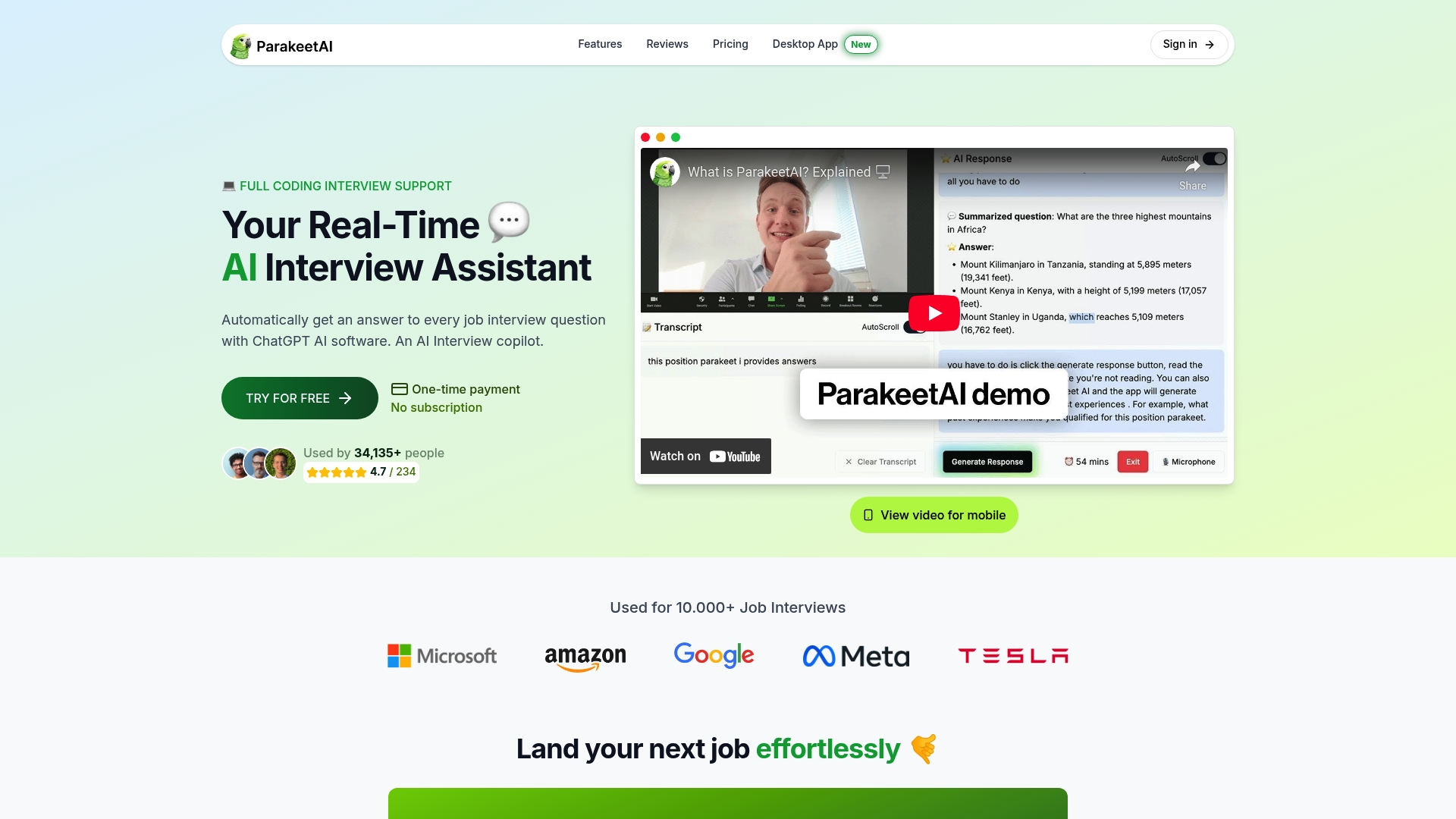
For candidates preparing for advanced interview rounds, Parakeet-ai provides live guidance so you never lose your train of thought mid-answer. Whether you are walking into a panel interview or a half-day assessment, having real-time support changes how you perform. Visit Parakeet-ai to see how it works and get ready for your next round.
FAQ
What is the main difference between first and second interview questions?
First interviews check basic qualifications and fit. Second interviews use behavioral and situational questions to assess how you think, work with others, and handle real challenges.
How long does a second interview typically last?
Second interviews commonly run 60–90 minutes or longer, and some include multiple back-to-back sessions that span half a day.
Should I prepare for salary questions in a second interview?
Yes. About one third of hiring managers bring up compensation in round two, so research your market rate and have a clear number or range ready before you walk in.
How many stories should I prepare for behavioral questions?
Prepare 8–12 distinct STAR stories, each covering a different competency such as leadership, conflict resolution, failure, and collaboration.
What questions should I ask at the end of a second interview?
Ask about success metrics, team dynamics, role challenges, and growth paths. Questions like “What does success look like at 90 days?” show preparation and genuine interest in the role.