
Top 10 Interview Questions: 62% Fail, Boost Success 35%

Mastering interview questions separates successful candidates from those who stumble. 62% of candidates struggle to answer the ‘What are your weaknesses?’ question effectively, losing crucial points. Research shows targeted preparation on the top 10 most common interview questions increases job offer rates by 35%. This article reveals these critical questions with expert-backed answer strategies and AI-powered tips to help you stand out and secure your next role confidently.
Table of Contents
- Selection Criteria: How To Prioritize Interview Questions For Effective Preparation
- List Of Top 10 Job Interview Questions
- Answer Frameworks For Each Top Question
- Comparison Of Top Questions By Frequency And Use-Case
- AI Assistance In Interview Preparation And Performance
- Challenges And Considerations In Answering Difficult Questions
- Situational Recommendations: Best Questions To Prioritize By Use Case
- Summary Comparison Table Of Top 10 Interview Questions
- Enhance Your Interview Success With Parakeet AI Assistance
- FAQ
Key Takeaways
| Point | Details |
|---|---|
| Focused preparation works | Targeted practice on top questions improves offer rates by 35%. |
| STAR method wins | Behavioral questions demand structured Situation-Task-Action-Result answers. |
| AI reduces anxiety | Real-time AI tools boost confidence and answer quality during interviews. |
| Avoid generic pitfalls | Weak answers lack specifics and fail to ask thoughtful closing questions. |
| Tailor by role | Entry-level, managerial, and technical positions require different question priorities. |
Selection Criteria: How to Prioritize Interview Questions for Effective Preparation
Not all interview questions deserve equal prep time. Strategic job seekers focus their energy where it counts most.
Prioritize based on question frequency, complexity, hiring impact, and AI assist compatibility. Questions asked in over 80% of interviews like “Tell me about yourself” need polish because every interviewer will hear your response. Complex questions such as “What are your weaknesses?” demand extra practice since 62% of candidates fumble them.
Hiring impact determines which answers sway final decisions. Behavioral questions that reveal work style and cultural fit carry more weight than simple HR queries. Technical roles add layer-specific questions that test hard skills directly.
Question type shapes your approach. Behavioral questions need storytelling with concrete examples. Technical questions require demonstrating knowledge or problem-solving live. Motivation questions like “Why this company?” assess research and genuine interest.
Consider these prioritization factors:
- Frequency across your target industries and experience level
- Complexity and historical failure rates among candidates
- Direct impact on hiring manager’s go/no-go decision
- Question category (behavioral, technical, motivational, HR)
- Compatibility with AI tools for real-time support
Pro Tip: Track which questions appear in job postings and company reviews on Glassdoor to customize your top 10 list for specific employers.
The importance of AI in preparation grows as tools provide personalized feedback on practice answers and real-time support during actual interviews.
List of Top 10 Job Interview Questions
Global hiring data reveals which questions dominate interview conversations. ‘Tell me about yourself’ is asked in 91% of interviews, making it the most frequent question globally.
Here’s the ranked comprehensive top 10 list with context:
- Tell me about yourself (91% frequency) * Opens nearly every interview, sets tone and first impression
- Why do you want this job? (87%) * Tests motivation, company research, and role alignment
- What are your strengths? (84%) * Assesses self-awareness and job-relevant capabilities
- What are your weaknesses? (81%) * Evaluates honesty, growth mindset, and self-improvement efforts
- Why should we hire you? (79%) * Demands differentiation and value proposition articulation
- Where do you see yourself in 5 years? (76%) * Explores ambition, planning, and long-term fit
- Describe a time you worked in a team (73%) * Behavioral question probing collaboration and conflict resolution
- Tell me about a challenge you overcame (71%) * Reveals problem-solving approach and resilience
- What are your salary expectations? (68%) * Negotiation starting point and market awareness test
- Do you have any questions for us? (95%) * Measures engagement, curiosity, and seriousness about opportunity
Question 10 appears last chronologically but ranks highest in frequency since it closes almost every interview. Industry variations exist. Tech roles add algorithm or coding questions. Sales positions emphasize deal closing scenarios. Entry-level candidates face more motivation questions while senior roles get leadership behavioral queries.
Answer Frameworks for Each Top Question
Strong answers follow proven structures that hiring managers recognize and value. STAR (Situation, Task, Action, Result) method improves clarity and strength of behavioral answers.
The STAR method and frameworks work best for behavioral questions 7 and 8. Set the scene briefly, explain your responsibility, detail your actions, and quantify results. “I led a team of 5 to reduce customer complaints by 40% over 3 months by implementing weekly feedback loops” beats “I’m a good team player.”
For “Tell me about yourself,” use the Present-Past-Future formula. Start with your current role and key achievement. Add relevant background explaining your journey. Close with why you’re excited about this opportunity. Keep it to 90 seconds maximum.
Tailor every answer to company culture and role requirements. A startup values scrappiness and adaptability. A Fortune 500 company wants process adherence and scale thinking. Research LinkedIn profiles of people in similar roles to mirror valued traits.
Balance honesty with positivity, especially for weaknesses. Frame areas for improvement as growth opportunities you’re actively addressing. “I used to struggle with public speaking, so I joined Toastmasters 6 months ago and now present quarterly to our 50-person team” shows self-awareness and initiative.
Avoid these pitfalls:
- Generic clichés like “I’m a perfectionist” for weaknesses
- Vague answers without specific examples or metrics
- Rambling responses over 2 minutes per question
- Negativity about past employers or colleagues
- Failing to connect your experience to this specific job
Pro Tip: Record yourself answering each top 10 question on video. Watch for filler words, weak body language, and unclear structure. Iterate until your delivery feels natural and confident.
Comparison of Top Questions by Frequency and Use-Case
Understanding when and why each question appears helps you allocate practice time wisely. ‘Do you have any questions for us?’ correlates with engagement in 78% of interviews.
| Question | Frequency | Best For | Skill Assessed | When Used |
|---|---|---|---|---|
| Tell me about yourself | 91% | All levels | Communication, relevance | Interview opener |
| Do you have questions? | 95% | All levels | Engagement, preparation | Interview closer |
| Why this job? | 87% | Career changers | Motivation, research | Early/mid interview |
| Your strengths? | 84% | Entry to mid | Self-awareness, match | Early interview |
| Your weaknesses? | 81% | All levels | Honesty, growth | Mid interview |
| Why hire you? | 79% | Competitive roles | Differentiation | Late interview |
| 5-year vision? | 76% | Entry to mid | Ambition, retention | Mid to late |
| Team example | 73% | Collaborative roles | Soft skills | Behavioral round |
| Challenge overcome | 71% | Problem-solving roles | Resilience, approach | Behavioral round |
| Salary expectations | 68% | Final candidates | Market awareness | Late/final interview |
The detailed question analysis shows behavioral questions (7, 8) appear more in panel interviews. Phone screens emphasize motivation questions (2, 6). Final rounds dig into compensation (9) and mutual fit (10).
Technical roles add domain questions but still include these 10 core queries. Soft skills matter everywhere. Entry-level candidates should over-prepare questions 1, 2, 3, and 10. Senior candidates need rock-solid answers for 4, 5, 7, and 8.
The candidate engagement statistics prove asking thoughtful questions at the end significantly improves hiring outcomes. Candidates with 3-5 prepared questions receive offers 40% more often than those asking generic or no questions.
AI Assistance in Interview Preparation and Performance
AI tools transform how job seekers prepare and perform in high-stakes interviews. AI-driven real-time answering support improves candidate confidence and performance.
The benefits of AI-powered interview tools include instant feedback on practice answers, personalized improvement suggestions, and reduced anxiety through preparation. AI analyzes your responses for clarity, structure, and relevance while offering alternative phrasings that sound more confident.
Real-time support during actual interviews marks a breakthrough. Tools like Parakeet AI listen to questions and suggest answer frameworks or key points to include as you speak. This backup reduces panic when unexpected questions arise and helps you stay on track with STAR structure or other proven methods.
Real-time AI interview insights show candidates using AI assistance report 45% lower anxiety levels and 30% higher perceived performance. The technology complements rather than replaces your preparation. You still need authentic stories and genuine motivation, but AI ensures you deliver them effectively under pressure.
Key AI advantages:
- Unlimited practice sessions with instant feedback
- Personalized weak spot identification and improvement plans
- Real-time answer suggestions during live interviews
- Anxiety reduction through reliable backup support
- Data-driven insights on answer quality and delivery
Pro Tip: Use AI tools for practice sessions before your interview to build muscle memory on answer frameworks. During the actual interview, glance at AI suggestions as a safety net but prioritize authentic delivery over reading suggested text.
Balance remains critical. Interviewers value genuine connection and spontaneity. Over-reliance on scripted AI responses can make you sound robotic. Use AI to enhance your natural strengths, not replace your personality.
Challenges and Considerations in Answering Difficult Questions
Certain questions trip up even experienced candidates. 62% of candidates give ineffective answers to ‘What are your weaknesses?’, losing points.

The weakness question creates a paradox. Too honest and you disqualify yourself. Too generic and you seem unself-aware or dishonest. The solution lies in authentic vulnerability paired with proactive improvement. Choose a real weakness that doesn’t directly contradict the core job requirements. A software engineer can admit struggling with public speaking but not with coding logic.
Salary expectation questions feel like traps. State too high and you price yourself out. Go too low and you leave money on the table or signal low confidence. Research market rates using Glassdoor, Payscale, and LinkedIn Salary. Provide a range based on data, then flip the question back: “Based on my research, roles like this typically pay $X to $Y. What’s the budgeted range for this position?”
Common response pitfalls to avoid:
- Rehearsed answers that sound scripted rather than conversational
- Forgetting to ask questions at the end, signaling low interest
- Badmouthing previous employers when explaining why you left
- Claiming you have no weaknesses or providing obviously fake ones
- Giving answers that contradict what’s on your resume
Maintaining authenticity while impressing requires practice. Your goal isn’t perfection but rather demonstrating self-awareness, growth mindset, and genuine fit. Interviewers remember candidates who tell compelling, honest stories more than those who deliver polished but empty responses.
The “Why should we hire you?” question demands confident differentiation without arrogance. Connect your unique combination of skills and experiences directly to their stated needs. Use specific examples and metrics. “My background in both marketing and data analytics means I can not only create campaigns but also prove their ROI, which your job posting emphasized as critical.”
Check out avoiding interview mistakes for deeper guidance on navigating these challenging moments.
Situational Recommendations: Best Questions to Prioritize by Use Case
Your preparation strategy should match your experience level and target role. Different scenarios demand different priorities.
Entry-level candidates benefit most from mastering questions 1, 2, 3, and 10. “Tell me about yourself” lets you frame limited experience through internships, projects, and transferable skills. “Why this job?” showcases research and enthusiasm. “Your strengths?” highlights relevant capabilities. “Your questions?” demonstrates genuine interest and preparation.
Mid to senior-level professionals must nail behavioral questions 7 and 8. Leadership roles require concrete examples of team management, conflict resolution, and strategic impact. Prepare 5-7 detailed STAR stories covering different competencies like leading change, managing underperformers, and making tough decisions with incomplete data.
Technical positions add domain-specific questions but don’t skip these foundational 10. A software engineer still needs a crisp “Tell me about yourself” and thoughtful questions about team culture and development practices. Allocate 60% prep time to technical questions and 40% to these interpersonal ones.
Career changers should emphasize questions 2 and 5: “Why this job?” and “Why hire you?” Your narrative must clearly explain the transition logic and transfer applicable skills. Anticipate skepticism and address it proactively with evidence of commitment like certifications, side projects, or volunteer work in the new field.
Integrate adaptive preparation strategies by customizing examples to each company’s values. Research their mission statement, recent news, and employee reviews. If innovation appears frequently, emphasize creative problem-solving stories. If customer focus dominates, share examples of exceeding client expectations.
Prioritization tips by scenario:
- First job: Focus on motivation, learning ability, and potential
- Role change: Emphasize transferable skills and genuine interest
- Industry switch: Demonstrate research, network connections, and relevant training
- Promotion: Showcase leadership, strategic thinking, and broader impact
- Return to work: Address gap honestly with growth activities during break
AI assistance proves especially valuable for less experienced candidates who lack extensive interview practice. Real-time support levels the playing field by providing structure and confidence when nerves might otherwise take over.
Summary Comparison Table of Top 10 Interview Questions
This reference guide consolidates key insights for quick review and focused practice planning.
| Rank | Question | Frequency | Best Fit | Key Strength | Common Challenge |
|---|---|---|---|---|---|
| 1 | Tell me about yourself | 91% | All levels | Sets positive tone | Rambling or irrelevant details |
| 2 | Do you have questions? | 95% | All levels | Shows engagement | Asking about salary too early |
| 3 | Why this job? | 87% | Career changers | Demonstrates research | Generic or insincere reasons |
| 4 | Your strengths? | 84% | Entry/mid | Highlights job match | Vague claims without evidence |
| 5 | Your weaknesses? | 81% | All levels | Tests honesty | Fake weaknesses or red flags |
| 6 | Why hire you? | 79% | Competitive roles | Differentiates you | Arrogance or weak value prop |
| 7 | 5-year vision? | 76% | Entry/mid | Shows ambition | Unrealistic or misaligned goals |
| 8 | Team example | 73% | Collaborative | Proves soft skills | Taking all credit or blame |
| 9 | Challenge overcome | 71% | Problem-solving | Reveals resilience | Choosing trivial or negative example |
| 10 | Salary expectations | 68% | Final stage | Opens negotiation | Pricing too high or low |
This table helps you identify which questions match your situation and where candidates typically struggle. Entry-level job seekers should drill questions 1, 3, 4, and 7. Experienced professionals need flawless execution on 5, 6, 8, and 9.
Remember that frequency doesn’t equal importance. Question 10 on salary appears later but shapes final compensation significantly. Question 2 about your questions seems minor but strongly correlates with offer decisions as engagement signals seriousness.
Use this summary to build your personalized practice schedule. Allocate more time to high-frequency questions in your target industry and those where you feel least confident currently.
Enhance Your Interview Success with Parakeet AI Assistance
Mastering these top 10 questions requires both preparation and confidence. Parakeet AI combines the best of traditional practice with cutting-edge real-time interview support.
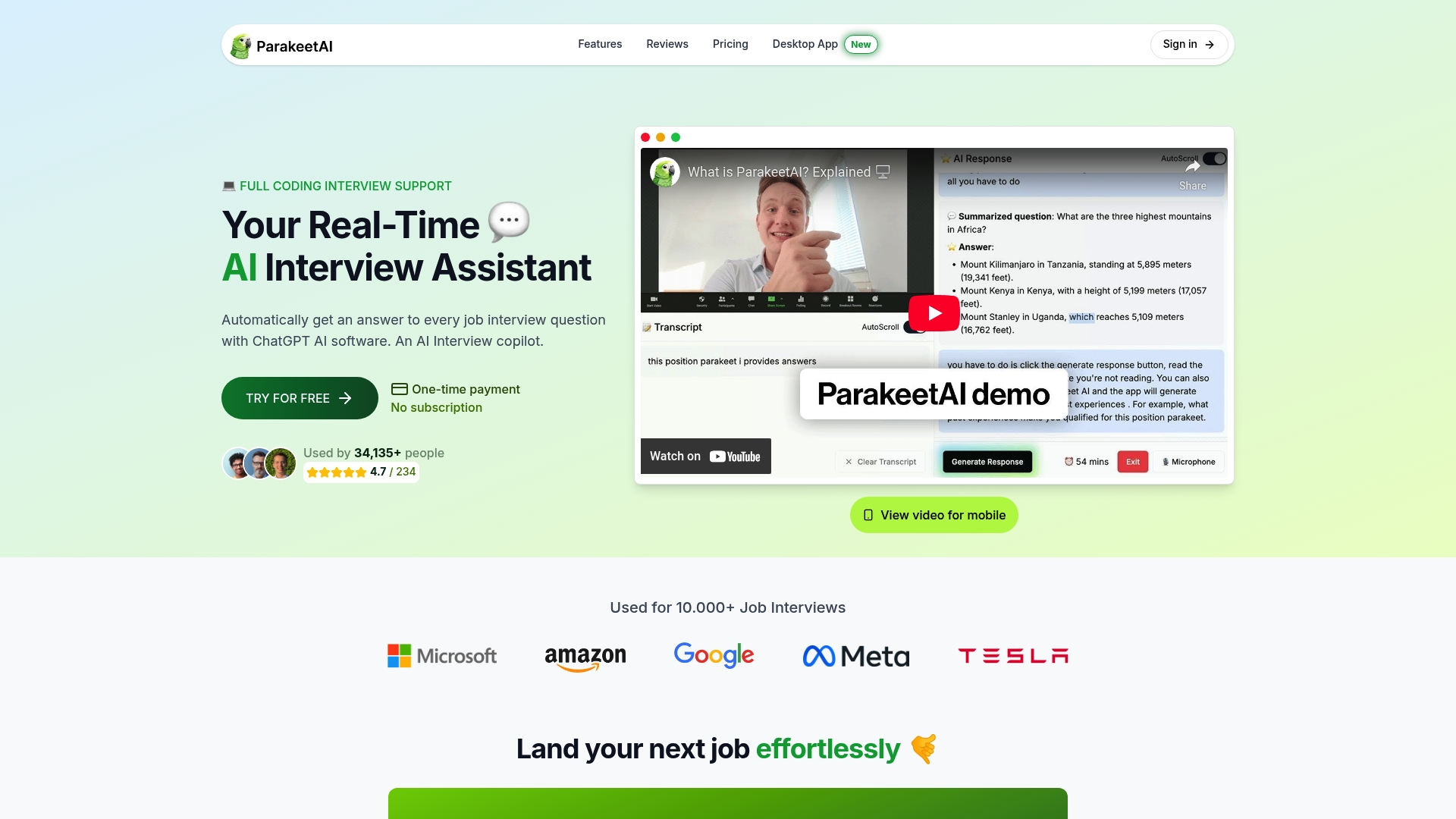
Our AI-powered platform listens during your actual interviews and automatically provides answer frameworks and key points as questions arise. This backup reduces anxiety and ensures you deliver structured, impressive responses even when unexpected questions catch you off guard.
Parakeet AI adapts to your experience level, target role, and interview style. Entry-level candidates get confidence-building prompts. Senior professionals receive strategic framing suggestions. Technical roles get domain-specific support alongside these foundational interpersonal questions.
Job seekers globally use our AI-powered interview tools to practice unlimited times with instant feedback, then carry that preparation into live interviews with real-time assistance. The combination of practice and in-the-moment support dramatically improves performance and offer rates.
Discover why use AI interview assistants and transform your interview anxiety into confident, authentic conversations that land offers.
FAQ
What are the top 10 job interview questions?
The top 10 interview questions list includes “Tell me about yourself,” “Why do you want this job?,” “What are your strengths?,” “What are your weaknesses?,” “Why should we hire you?,” “Where do you see yourself in 5 years?,” “Describe a time you worked in a team,” “Tell me about a challenge you overcame,” “What are your salary expectations?,” and “Do you have any questions for us?” These questions appear in over 68% of interviews globally across industries and experience levels.
How can AI tools improve my interview performance?
AI benefits in interviews include real-time answer guidance during live conversations, instant feedback on practice responses, and personalized improvement plans targeting your weak areas. AI reduces anxiety by 45% by providing reliable backup support when unexpected questions arise. The technology complements your preparation rather than replacing authentic storytelling and genuine motivation.
What is the best way to answer behavioral interview questions?
Use the STAR method explanation: Situation, Task, Action, Result. Set the scene briefly, explain your responsibility, detail specific actions you took, and quantify the outcome. Tailor examples to match the company culture and role requirements. Avoid vague generalities and always include measurable results like percentages, dollar amounts, or timeframes to make your impact concrete and memorable.
Which interview questions should I prioritize for a managerial role?
Focus on behavioral questions showcasing leadership, strategic thinking, and team development. Prepare thoroughly for “Describe a time you worked in a team,” “Tell me about a challenge you overcame,” and “Why should we hire you?” with examples demonstrating management capabilities. Master “Do you have any questions for us?” with thoughtful inquiries about team dynamics, leadership philosophy, and growth opportunities. Check managerial interview question priorities for role-specific strategies.