
Behavioral Mock Interview: Master the STAR Method

TL;DR:A behavioral mock interview helps candidates practice specific stories using the STAR framework to improve clarity and confidence. Building 3 to 5 adaptable stories enables effective answers to most behavioral questions and develops interview flexibility. Practicing aloud with various methods and embracing curveball questions enhances resilience and improves actual interview performance.
A behavioral mock interview is a structured practice session where you simulate real interview questions using the STAR method to sharpen your answers and build confidence before the actual interview. Unlike general interview prep, this format forces you to tell specific stories from your experience, not recite job descriptions. Preparing 3–5 adaptable stories covering core competencies lets you answer 80–90% of behavioral questions effectively. That single insight changes how you prepare. Parakeet-ai is built on this same principle: real-time AI feedback that mirrors what happens in an actual interview room.
What is the STAR method and why does it matter for behavioral interviews?
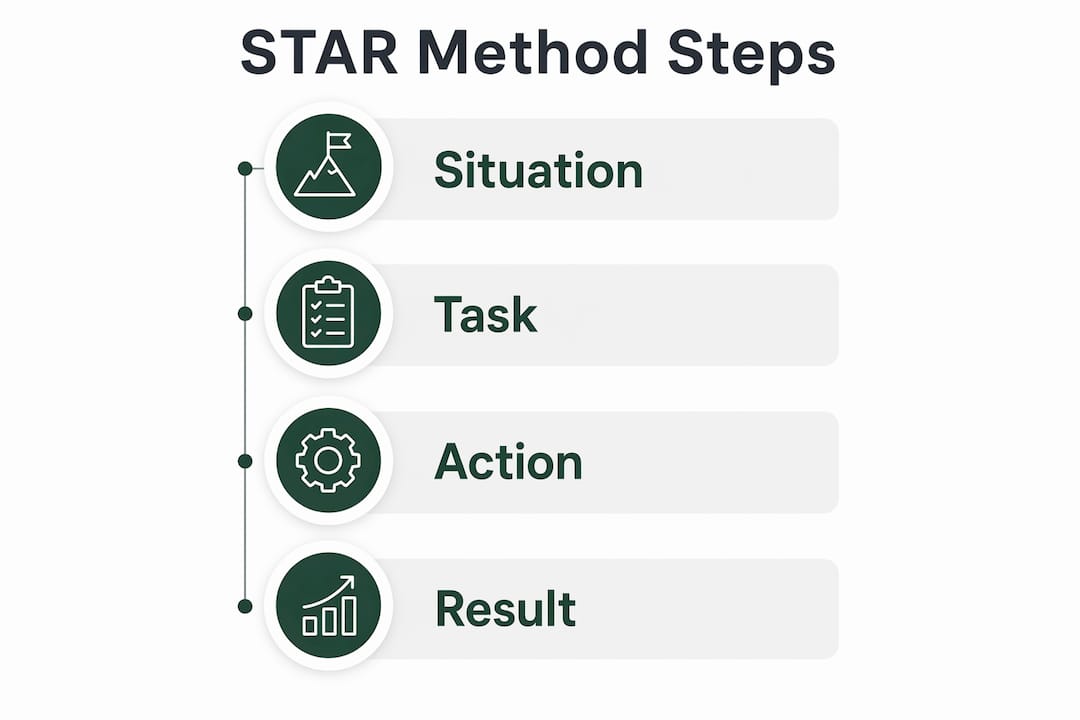
The STAR method is the standard framework for structuring behavioral interview answers. STAR stands for Situation, Task, Action, and Result. Every strong behavioral answer follows this sequence, and interviewers across industries use it to evaluate candidates consistently.
Here is what each element means in practice:
- Situation: Set the scene briefly. One or two sentences describing the context is enough. Avoid over-explaining the background.
- Task: Clarify your specific role or responsibility in that situation. Keep this short too.
- Action: Describe exactly what you did, step by step. This is where most of your answer should live.
- Result: State the outcome. Quantify it whenever possible.
The Action element deserves the most attention. Action accounts for at least 50% of your answer time, because it shows your problem-solving process directly. Most candidates rush through Action to get to the Result, which leaves interviewers with no real picture of how you work.
Quantifying results makes a measurable difference. Quantified results increase perceived credibility far more than vague outcomes like “the project went well.” If you reduced onboarding time by three weeks or increased customer retention by 15%, say that number out loud. Even rough estimates, like “saved roughly 10 hours per week,” carry more weight than purely qualitative claims.

Pro Tip: Record yourself answering one STAR question and play it back. You will immediately hear where you spend too long on Situation and where your Action section collapses into a single vague sentence.
Approximately 90% of candidates without STAR-structured answers struggle in behavioral rounds. That number reflects a real gap between how candidates prepare and what interviewers actually need to hear.
How to select and prepare versatile stories for your mock behavioral interview
Story selection is the most underrated part of behavioral interview prep. Most job seekers try to memorize one answer per question. That approach breaks down the moment an interviewer asks a follow-up or reframes the question slightly.
A better approach: build a small library of strong stories and learn to adapt them.
- Identify your 3–5 strongest experiences. Think about projects where you led something, solved a hard problem, handled conflict, or delivered under pressure. These are your core assets.
- Map each story to common behavioral themes. Common themes include leadership, teamwork, failure and recovery, time management, and communication under pressure. Each story should cover at least two themes.
- Practice reframing the same story. A story about a failed product launch can answer “Tell me about a time you failed” and “Tell me about a time you handled conflict with a stakeholder.” The facts stay the same. The framing shifts.
- Align stories with the job description. Read the job posting carefully. If the role emphasizes cross-functional collaboration, make sure at least two of your stories highlight that skill explicitly.
- Say each story aloud at least five times. Fluency comes from repetition, not reading. You need to know the story well enough to tell it naturally, not recite it word for word.
Preparing 3–5 adaptable stories is not just efficient. It is the method that experienced interview coaches recommend because it builds flexibility into your preparation.
Pro Tip: After you finalize a story, write a one-sentence summary of it. If you cannot summarize it in one sentence, the story is too complicated for a 2–3 minute answer.
The goal is not memorization. Interviewers can tell when you are reciting a script. The goal is knowing your stories well enough to tell them conversationally, with room to pivot when the interviewer probes deeper.
Techniques and tools to practice behavioral interview questions effectively
Practice method matters as much as practice volume. Verbalizing stories is the most effective way to improve your answers before the real interview. Mental rehearsal feels productive but misses the filler words, pacing problems, and unclear transitions that only show up when you speak out loud.
Here are the most effective practice methods:
- Peer practice sessions. Ask a friend or colleague to play interviewer. Give them a list of behavioral questions and ask them to probe with follow-ups. Debrief after each answer.
- Mentor or career coach sessions. A coach who has conducted interviews brings a different lens. They catch patterns you cannot see yourself, like defaulting to team language instead of personal action language.
- AI-powered mock interview platforms. These tools simulate real interview conditions, generate follow-up questions, and provide immediate feedback on answer structure and clarity. They are available on demand, which removes the scheduling friction of peer practice.
- Solo recording sessions. Record video or audio of your answers. Watch or listen back with the STAR framework in mind. Note where you drift off structure.
Curveball questions are a specific skill worth practicing separately. Practicing unexpected follow-ups builds resilience and improves your composure under real interview pressure. A curveball might sound like: “You mentioned your manager disagreed. What did you do to change their mind?” If you have only rehearsed the clean version of your story, that question will throw you.
| Practice method | Best for | Feedback type |
|---|---|---|
| Peer sessions | Conversational flow | Subjective, real-time |
| Career coach | Structural gaps and blind spots | Expert, detailed |
| AI mock interview platform | Volume, follow-up practice | Immediate, structured |
| Solo recording | Self-awareness, pacing | Self-directed |
Job seekers should dedicate 3–4 hours of targeted practice per interview round. That time goes further when split across multiple methods rather than spent on one approach alone.
Common mistakes to avoid during behavioral mock interview practice
The most common mistake is spending too much time on Situation and Task. Candidates treat the setup like a story introduction, adding context the interviewer does not need. By the time they reach Action, they have used up two minutes and have thirty seconds left for the part that actually matters.
Watch for these specific pitfalls:
- Vague or team-focused language. Saying “we decided to” or “the team implemented” hides your individual contribution. Interviewers are evaluating you. Use “I” statements throughout the Action section.
- Answers that run longer than 3 minutes. Effective behavioral answers last 2–3 minutes to maintain impact and avoid losing the interviewer’s attention. Time your answers during practice.
- Skipping the Result. Some candidates end their answer at Action, leaving the story unfinished. Always close with a concrete outcome, even if the result was partial or the project was ongoing.
- Practicing only the easy questions. Job seekers tend to rehearse questions they feel comfortable with. The questions that make you uncomfortable are exactly the ones that need the most practice.
“Interviewers ask behavioral questions to understand how candidates think, not just what they did. The goal is to practice pivoting and providing specific details under pressure when probed.” Source
Handling pressure during practice is a skill in itself. When a mock interviewer pushes back or asks a follow-up you did not expect, resist the urge to abandon your story. Pause, take a breath, and return to the specific facts of what you did. That habit transfers directly to the real interview.
For additional guidance on behavioral interview tips specific to tech roles, the Parakeet-ai blog covers common question patterns and how to structure answers for technical hiring panels.
Key takeaways
Mastering a behavioral mock interview requires the STAR method, a small library of adaptable stories, and consistent verbal practice with real feedback.
| Point | Details |
|---|---|
| STAR method is non-negotiable | Structure every answer as Situation, Task, Action, Result, with Action taking at least 50% of your time. |
| Build 3–5 versatile stories | A small set of strong stories, reframed for different questions, covers 80–90% of behavioral rounds. |
| Practice aloud, not mentally | Verbal rehearsal reveals filler words, pacing issues, and structural gaps that silent review misses. |
| Quantify your results | Even rough numbers, like time saved or percentage improvement, increase your credibility significantly. |
| Dedicate 3–4 hours per round | Targeted practice spread across peer sessions, coaching, and AI tools builds both skill and confidence. |
What I have learned from watching people prepare for behavioral interviews
Most job seekers treat behavioral interview prep as a memorization exercise. They write out answers, read them back, and call it done. That approach produces stiff, scripted responses that fall apart the moment an interviewer asks one follow-up question.
The candidates who perform best treat their stories as raw material, not finished scripts. They know the facts of each story cold, but they hold the framing loosely. When an interviewer pivots the question, they can pivot with it. That flexibility only comes from verbal practice, not from reading notes.
The other shift that makes a real difference is accepting that curveball questions are a feature, not a flaw. Every time a mock interviewer throws you an unexpected follow-up, you are building a specific kind of resilience. You learn that you can recover mid-answer. You learn that silence for two seconds is not a disaster. That confidence is not something you can manufacture. You have to earn it through repetition.
One more thing: stop trying to sound impressive. Interviewers are not looking for the most polished answer. They are trying to understand how you think and whether you take ownership of your work. A genuine, specific story told in plain language beats a rehearsed monologue every time. The STAR method works because it forces specificity, not because it sounds formal.
If you want to go deeper on how to conduct mock interviews with AI tools, the Parakeet-ai blog has practical walkthroughs for different interview formats.
— Jure
How Parakeet-ai supports your interview preparation
Parakeet-ai is a real-time AI interview assistant that listens to your interview and automatically generates answers to every question as it happens.
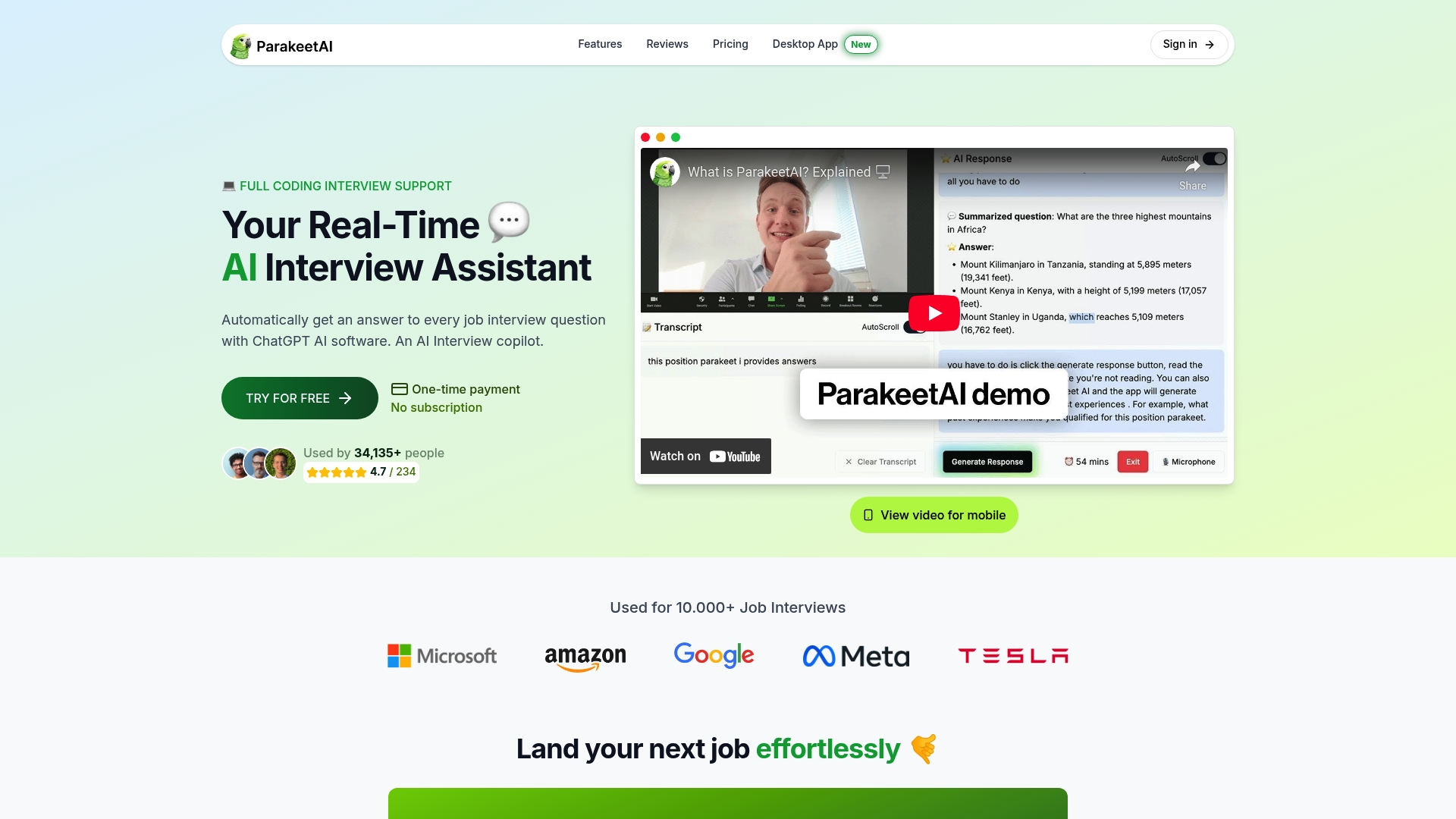
For behavioral interview practice, Parakeet-ai simulates realistic question sequences, including follow-up probes and curveball questions that mirror what actual interviewers ask. You get immediate, structured feedback on your answer clarity and story structure, so each practice session builds on the last. Job seekers who want to practice behavioral interviews with a tool that responds like a real interviewer will find Parakeet-ai worth trying before their next round.
FAQ
What is a behavioral mock interview?
A behavioral mock interview is a practice session that simulates real behavioral interview questions using the STAR method. The goal is to rehearse specific stories from your experience so your answers are clear, structured, and confident in the actual interview.
How long should a behavioral interview answer be?
Target 2–3 minutes per answer. Answers shorter than 2 minutes often lack enough detail, while answers longer than 3 minutes risk losing the interviewer’s attention.
How many stories do I need to prepare?
Prepare 3–5 adaptable stories that cover core competencies like leadership, teamwork, and problem-solving. That set covers 80–90% of behavioral questions by adjusting the framing for each question.
Is practicing aloud really better than thinking through answers?
Yes. Verbalizing stories is the most effective preparation method because it surfaces filler words, pacing issues, and unclear transitions that mental rehearsal never reveals.
How much time should I spend preparing for a behavioral interview?
Dedicate at least 3–4 hours of targeted practice per interview round. Split that time across solo recording, peer sessions, and AI-powered mock interview tools for the best results.