Panel Interview Preparation: Your Complete 2026 Guide

TL;DR:Preparing for a panel interview involves understanding its structure, practicing targeted stories, and engaging all panelists effectively. Success comes from spreading preparation over several days, tailoring answers to each panelist’s role, and maintaining confident eye contact using the Start, Sweep, and Return method. Personalized follow-up notes and realistic practice, such as mock panels, further increase the chances of standing out positively.
Panel interview preparation is the process of equipping yourself with the strategies and skills to confidently navigate a multi-interviewer hiring session, showcase your qualifications, and engage every panelist effectively. Unlike a one-on-one interview, a panel format tests your ability to read a room, manage competing priorities, and deliver structured answers under real pressure. The good news: this format rewards preparation more than personality. Master the STAR method, research your panelists on LinkedIn, and bring extra resume copies for each person in the room. Do those three things, and you walk in with a genuine edge.
What to expect in a panel interview
A panel interview is a structured hiring format where 3 to 5 interviewers evaluate a candidate simultaneously. Those interviewers typically include a hiring manager, an HR representative, and one or two peers or cross-functional colleagues. Each person brings a different lens to the conversation.
The session follows a predictable timeline. A typical 60-minute panel breaks down like this:
| Phase | Time | Purpose |
|---|---|---|
| Introductions | 0–5 min | Panelists introduce themselves and set expectations |
| Competency evaluation | 5–45 min | Structured behavioral and situational questions |
| Candidate Q&A | 45–55 min | You ask prepared questions |
| Closing | 55–60 min | Next steps and timeline |
Knowing this structure removes a major source of anxiety. You stop wondering what comes next and start focusing on what you say.
After the session, each panelist scores you independently before the group discusses. Independent scoring leads to 26% more accurate hiring decisions compared to unscored group conversations. That number matters because it means the panel is not just looking for the most likable candidate. They are scoring you against defined competencies, which is exactly what structured preparation addresses.
A few practical details round out what to expect:
- Bring one resume copy per panelist. Running out signals poor planning.
- Expect questions mapped to specific competencies, not casual conversation.
- Panelists may take notes throughout. Do not interpret silence as disapproval.
- The hiring manager often leads, but HR or a peer may ask the toughest questions.
How to research and prepare your stories
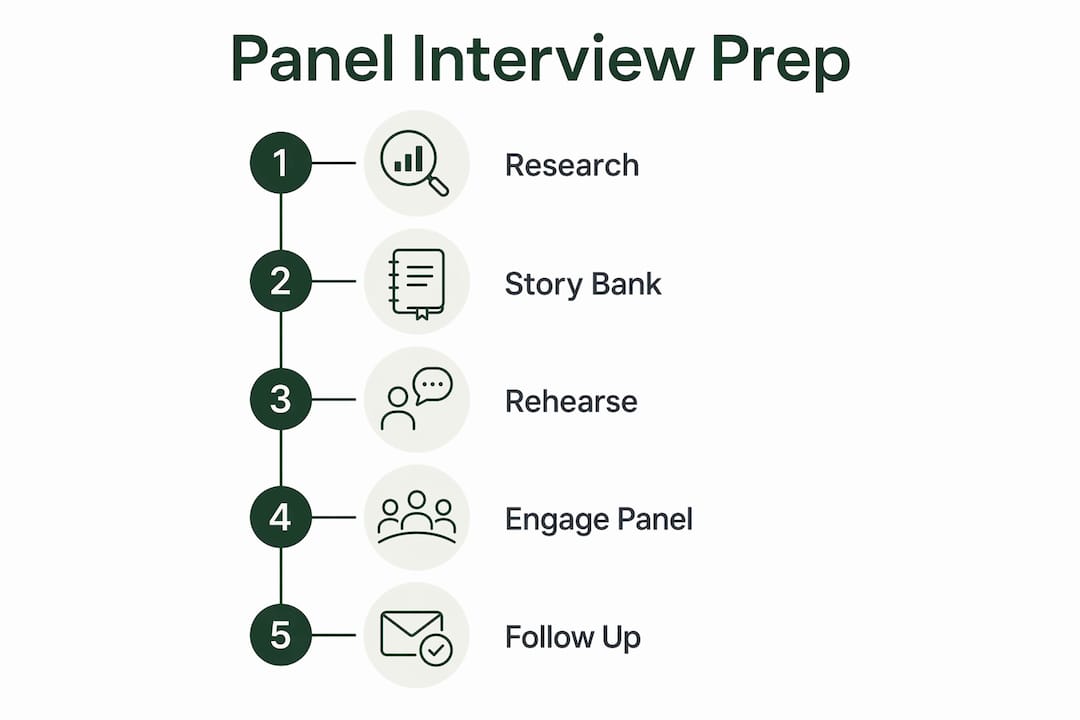
Preparation for a panel interview works best spread across several days, not crammed the night before. Start by identifying who will be in the room. Ask your recruiter for panelist names and titles. Then search each person on LinkedIn to understand their background, their team’s priorities, and any public work they have shared.
Once you know who is interviewing you, build your story bank. Prepare 5 to 7 STAR stories that cover the most common behavioral competencies: leadership, conflict resolution, problem-solving, collaboration, and results under pressure. Each story should be concise enough to deliver in under two minutes. That constraint forces you to cut filler and keep the outcome front and center.
Match each story to the job description. Pull out the key requirements and ask yourself which story best proves you meet each one. A story about reducing customer churn by 18% speaks directly to a retention-focused role. A story about rebuilding a cross-functional process speaks to an operations hire. Generic stories that could apply to any job rarely score well.
Pro Tip: Record yourself delivering two or three STAR stories on your phone. Watch the playback with the sound off first. If your posture looks closed or your pacing looks rushed, fix that before you fix the words. Panelists read body language before they process content.
The “Tell me about yourself” prompt appears in 85% of interviews. Treat it as a 60-second pitch tied directly to the role requirements, not a career autobiography. Write it out, time it, and practice it until it sounds natural.
A numbered preparation schedule keeps you on track:
- Day 1: Research panelists on LinkedIn and note each person’s role and focus area.
- Day 2: Pull key competencies from the job description and map them to your experience.
- Day 3: Write out 5 to 7 STAR stories with specific metrics and outcomes.
- Day 4: Practice delivering each story aloud, ideally with a friend or on camera.
- Day 5: Prepare 3 to 5 questions to ask the panel and review your logistics.
How to answer questions and engage the whole panel
Delivering a strong answer in a panel interview requires more than knowing what to say. You need to say it to the right people at the right moment. The Start, Sweep, and Return eye contact method solves this directly. Start your answer by making eye contact with the person who asked the question. Sweep your gaze across the other panelists as you deliver the body of your answer. Return to the original questioner as you close. This technique signals leadership and inclusion without feeling rehearsed.

Tailor the content of your answer to the different roles in the room. A single STAR story can address finance, HR, and operations simultaneously if you structure it well. Lead with the business problem and the outcome. Then weave in the ROI detail for the finance panelist, the team dynamic for HR, and the process change for operations. You are not giving three separate answers. You are layering one answer with enough depth that each panelist finds what they need.
Pro Tip: If a question catches you off guard, pause for two to three seconds before answering. Say “That’s a good angle to consider” and then begin. Panelists score thoughtful answers higher than fast ones. Rushing signals nerves, not competence.
A few techniques separate good panel answers from great ones:
- Use specific numbers whenever possible. “Reduced onboarding time by 30%” scores better than “improved the process.”
- Keep answers under two minutes. Longer answers lose panelists who are already evaluating the next question.
- Engage quiet panelists directly. Quiet panelists are often key decision makers. A direct glance or a question directed at them builds broader support.
- Avoid jargon that only one department understands. Use plain language that every panelist can score.
Structured interviews have a predictive validity of 0.51 compared to 0.38 for unstructured conversations. That gap exists because structured answers give panelists clear evidence to score. Your job is to make their scoring job easy.
How to manage panel dynamics and follow up
The most effective mindset shift for a panel interview is treating it as a collaborative planning meeting rather than an interrogation. You are not a candidate being tested. You are a professional presenting solutions to a team that has real problems to solve. That reframe changes how you sit, how you speak, and how you respond to pressure.
Watch the room as you answer. If a panelist leans back or stops taking notes, your answer may have lost them. Bring them back by directing a follow-up point in their direction or asking a brief clarifying question at the end of your answer. Skeptical body language is not a verdict. It is feedback you can act on in real time.
Handling a difficult question well often comes down to pacing. Pause before answering. Think aloud briefly if needed. Saying “Let me make sure I address the right part of that” shows self-awareness, not weakness. Panelists who use structured scoring reward candidates who demonstrate clear thinking under pressure.
“Successful candidates treat the panel interview as a collaborative planning meeting with peers, not as an interrogation.” — Askcruit
After the interview, send a thank-you note to each panelist within 24 hours. Reference something specific each person said or asked. A generic thank-you to the group reads as an afterthought. A personalized note to each panelist shows you were paying attention and reinforces your fit for the role. Common mistakes to avoid include:
- Rushing answers to fill silence
- Ignoring quieter panelists and only addressing the hiring manager
- Skipping the follow-up or sending one identical note to everyone
- Failing to ask questions, which signals low interest
For a deeper look at what trips candidates up in multi-interviewer settings, the top interview mistakes resource covers the most common errors and how to correct them before they cost you the offer.
Key takeaways
Successful panel interview preparation combines format knowledge, structured story preparation, and deliberate engagement techniques to give every panelist clear evidence of your competence.
| Point | Details |
|---|---|
| Know the format | A typical panel runs 60 minutes with 3 to 5 interviewers scoring you independently on defined competencies. |
| Build a story bank | Prepare 5 to 7 STAR stories with specific metrics that map directly to the job description requirements. |
| Engage the whole room | Use the Start, Sweep, and Return eye contact method to include every panelist, especially quiet ones. |
| Tailor each answer | Layer one STAR story with ROI details for finance, culture fit for HR, and process details for operations. |
| Follow up personally | Send a personalized thank-you note to each panelist within 24 hours referencing something specific they said. |
What I’ve learned about panel interviews after years of watching candidates fail them
Most candidates prepare for a panel interview the same way they prepare for a one-on-one. They rehearse answers, iron their shirt, and show up hoping the conversation flows naturally. That approach works fine when there is one person across the table. With five, it falls apart fast.
The candidates I have seen succeed consistently do one thing differently. They treat the panel as a room full of stakeholders, not a room full of judges. That shift is not motivational fluff. It changes the actual structure of their answers. They stop trying to impress and start trying to solve. Their stories include outcomes that matter to the business, not just accomplishments that sound good on paper.
The preparation pacing matters more than most guides admit. Cramming the night before a panel interview is almost useless. Your brain cannot absorb five new stories, research five new people, and rehearse confident delivery in one evening. Spread the work across a week and you show up with genuine recall, not anxious recitation.
One more thing: practice with a real person if you can. Recording yourself helps, but a mock panel with two or three friends asking questions simultaneously is a different experience entirely. The divided attention, the competing eye contact, the need to address multiple people at once. You cannot simulate that alone. If you want to build that skill faster, tools like mock interview practice can help you get reps in before the real thing.
The panel interview rewards preparation more than any other format. Show up ready, and the format works in your favor.
— Jure
How Parakeet-ai helps you prepare for panel interviews
Panel interview preparation takes time, structure, and honest feedback on your answers. Parakeet-ai gives you all three in one place.
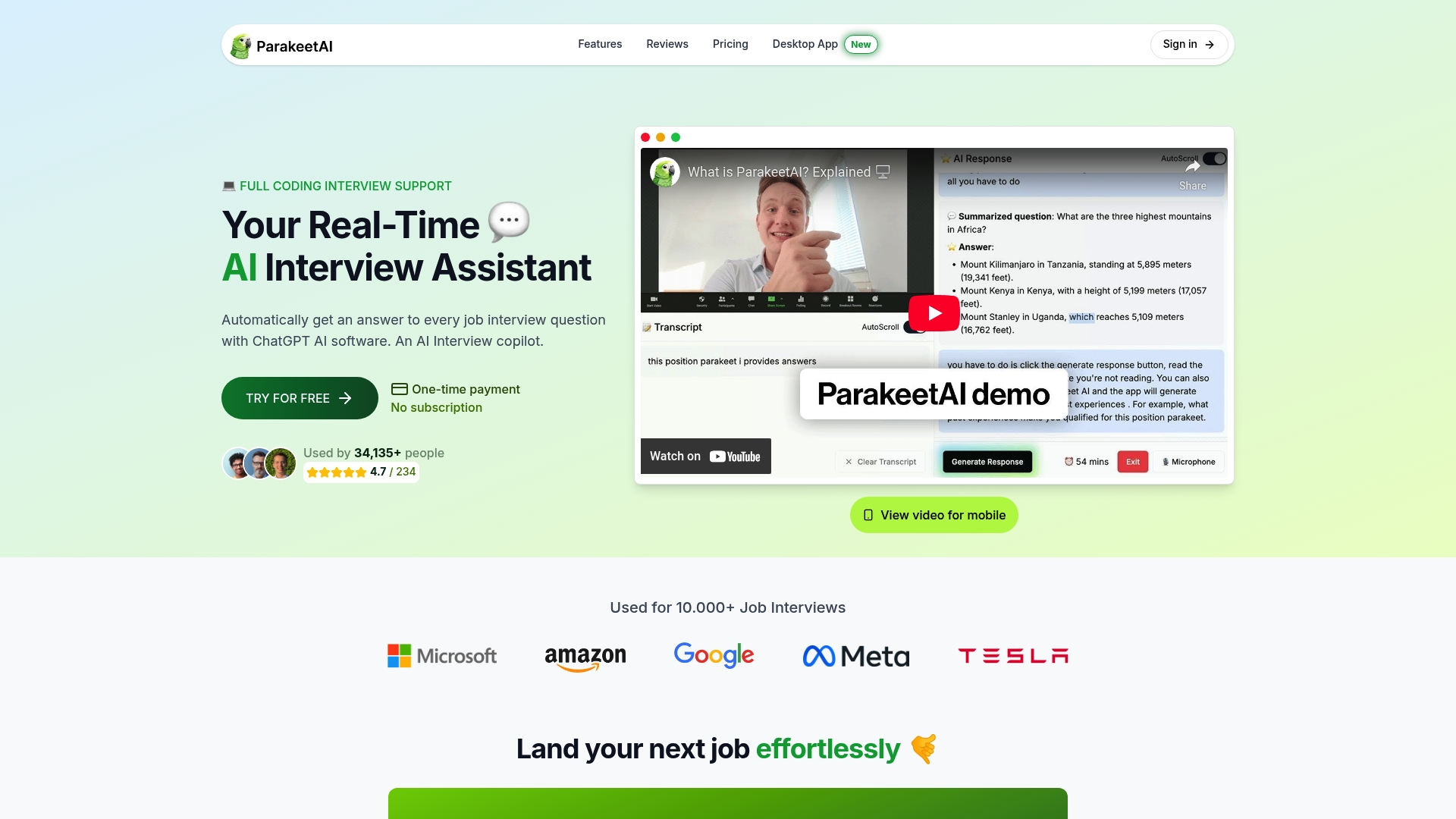
Parakeet-ai is a real-time AI interview assistant that listens to your interview and automatically generates answers to every question as it happens. For preparation, you can use it to build and refine your STAR stories, practice answering behavioral questions, and get instant feedback on clarity and structure. The platform identifies weak spots in your answers before a real panel ever hears them. If you want to walk into your next panel interview with stories that are sharp, specific, and ready for any panelist’s angle, start preparing with Parakeet-ai today.
FAQ
What is a panel interview?
A panel interview is a structured hiring session where 3 to 5 interviewers evaluate a candidate simultaneously, each scoring independently before the group discusses. Panelists typically include a hiring manager, HR representative, and one or more peers.
How many STAR stories should I prepare?
Prepare 5 to 7 STAR stories that cover core competencies like leadership, problem-solving, and collaboration. Each story should be deliverable in under two minutes and include specific metrics.
How do I make eye contact with multiple interviewers?
Use the Start, Sweep, and Return method. Begin eye contact with the person who asked the question, sweep across the other panelists during your answer, and return to the original questioner as you close.
What should I do after a panel interview?
Send a personalized thank-you note to each panelist within 24 hours. Reference something specific each person said or asked to show you were engaged and attentive throughout the session.
What are the most common panel interview mistakes?
The most common mistakes include rushing answers, ignoring quiet panelists, sending a generic group thank-you, and failing to ask questions. Each signals low preparation and low interest to the panel. For a full breakdown, the panel interview process guide covers what to fix before your next session.