
Job Interview Prep Checklist 2026: Boost Offers by 3x

Landing your dream job starts long before you walk into the interview room. Many job seekers struggle with scattered preparation, leading to missed opportunities and lost confidence. The difference between success and failure often comes down to one thing: structured preparation. Candidates are 3x more likely to receive job offers when they follow a comprehensive interview preparation checklist. This guide provides a proven framework to transform your interview performance and secure more offers.
Table of Contents
- Introduction And Why Preparation Matters
- Prerequisites: What You Need Before You Start
- Pre-Interview Preparation: Research And Documentation
- Answer Preparation: Crafting And Practicing Your Stories
- Logistics And Technical Setup For Interview Day
- Mental Preparation And Anxiety Management
- Post-Interview Follow-Up Best Practices
- Common Mistakes And Troubleshooting
- Expected Outcomes And Success Metrics
- Enhance Your Interview Prep With Parakeetai
- Frequently Asked Questions
Key Takeaways
| Point | Details |
|---|---|
| Preparation Impact | Thorough interview preparation triples your chances of receiving a job offer. |
| Research Requirements | Research the company mission, culture, recent news, and role requirements at least one week before your interview. |
| STAR Method Stories | Prepare 3 to 5 behavioral stories using the STAR framework covering leadership, problem solving, and teamwork competencies. |
| Technical Readiness | Test all technology and confirm logistics at least two days before the interview to avoid last minute issues. |
| Follow-up Timeline | Send personalized thank you emails within 24 hours to increase positive hiring manager impression by 80%. |
Introduction and Why Preparation Matters
Interview preparation is not optional in 2026. Research shows candidates are 3x more likely to get offers with thorough preparation compared to those who wing it. Proper preparation transforms your mindset, sharpens your communication, and positions you as the ideal candidate.
You walk into the room confident instead of anxious. You answer questions with clarity instead of fumbling. The global job market grows more competitive each year, making structured preparation essential rather than helpful. Many candidates mistakenly believe knowing the right answers is enough, but delivery, timing, and presentation matter just as much.
“Structured interview preparation doesn’t just improve your answers. It fundamentally changes how hiring managers perceive your professionalism, confidence, and cultural fit.”
Effective preparation covers multiple components working together:
- Deep company and role research to demonstrate genuine interest
- Behavioral story preparation using proven frameworks
- Technical and logistical readiness to eliminate distractions
- Mental preparation strategies to manage anxiety and perform under pressure
- Follow-up protocols to reinforce your candidacy
Each element builds on the others. Skip one piece and you risk losing opportunities to more prepared candidates. The best part? You can boost confidence with AI tools that streamline the entire process, giving you an edge in today’s competitive landscape. The 2026 interview preparation guide provides additional research-backed strategies for success.
Prerequisites: What You Need Before You Start
Before diving into preparation, gather the right tools and resources. You need reliable internet and a functioning device for both virtual interviews and online research. Video calls require stable bandwidth to avoid embarrassing technical failures during critical moments.
Access company information through platforms like LinkedIn, Glassdoor, and the organization’s website. These sources reveal culture, values, employee experiences, and recent company developments. You should also have a basic understanding of the job role and industry context before starting your preparation journey.
Time commitment matters more than most candidates realize. Allocate at least one to two weeks for thorough preparation. Rushing through prep the night before produces mediocre results. Your mindset and dedication to practice separate good candidates from great ones.
Pro Tip: Create a dedicated folder on your computer organizing all interview resources including company research notes, your tailored resume, STAR stories, and technical setup checklists. This eliminates last minute scrambling and keeps you focused.
Essential prerequisites checklist:
- Stable internet connection with backup hotspot option
- Working computer or device with camera and microphone
- Updated resume and professional references ready
- Access to best interview preparation software for practice sessions
- Quiet, professional space for virtual interviews
- Notebook for tracking insights and questions
Gathering these fundamentals early creates a solid foundation. The company and role research guide offers detailed steps for leveraging these tools effectively. Without proper prerequisites, even the best preparation strategy falls short.
Pre-Interview Preparation: Research and Documentation
Research separates informed candidates from forgettable ones. Start by thoroughly investigating the company’s mission, core values, workplace culture, and recent news. Researching company recent news, products, and competitors at least one week prior dramatically improves first impressions and demonstrates genuine interest.
Follow this numbered research process:
- Review the company website focusing on mission statements, leadership team bios, and product offerings
- Read recent press releases and news articles about company achievements or challenges
- Explore employee reviews on Glassdoor to understand culture and management style
- Analyze competitor landscape to position your unique value proposition
- Connect with current employees on LinkedIn to gain insider perspectives
Next, dissect the job description line by line. Identify required skills, preferred qualifications, and core responsibilities. Highlight keywords and phrases that appear multiple times. These reveal what the hiring manager values most.
Tailor your resume and cover letter to emphasize relevant experience matching the role. Use specific keywords from the job posting to pass Applicant Tracking Systems. Quantify achievements with numbers and percentages whenever possible.
| Resume Tailoring Strategy | Purpose | Example |
|---|---|---|
| Keyword Integration | Pass ATS screening | Use exact phrases like “project management” from job description |
| Quantified Achievements | Demonstrate impact | “Increased sales by 34% in Q2 2026” instead of “Improved sales” |
| Relevant Skills Emphasis | Match requirements | Highlight Python if job requires Python expertise |
| Custom Summary Statement | Align with role | Tailor opening paragraph to mirror job description priorities |
Pro Tip: Create a master document listing every skill and achievement from your career, then cherry pick the most relevant items for each application. This approach ensures you never miss highlighting valuable experience.
Prepare supporting documentation proving your qualifications. Gather performance reviews, certifications, portfolio samples, or reference letters demonstrating both technical competence and cultural fit. Learning to structure your interview responses around this research creates compelling narratives. The detailed company research guide expands on these foundational strategies.
Answer Preparation: Crafting and Practicing Your Stories
Behavioral interviews dominate modern hiring processes. The STAR method provides a proven framework for structuring compelling responses. STAR stands for Situation, Task, Action, and Result. This formula transforms rambling stories into concise, impactful narratives showcasing your skills.

Preparing 3 to 5 STAR stories on leadership, problem solving, and teamwork is key to interview success. These stories should draw from recent professional experiences highlighting your most relevant competencies.
Each STAR story component serves a specific purpose:
- Situation: Set context in one to two sentences describing the challenge or scenario
- Task: Explain your specific responsibility or goal within that situation
- Action: Detail the concrete steps you took to address the challenge
- Result: Quantify outcomes with metrics, percentages, or tangible improvements
Prepare stories covering these common competency areas:
- Leadership and team management experiences
- Complex problem solving under pressure
- Conflict resolution and difficult conversations
- Innovation and process improvement initiatives
- Adapting to change and learning new skills quickly
Your personal pitch matters just as much as behavioral stories. Practice a compelling 60 to 90 second “Tell me about yourself” response. Structure it chronologically, connecting past experiences to present qualifications and future aspirations with this specific company.
Rehearse answers to standard questions like “What are your greatest strengths?” and “Why do you want this role?” Clarity and conciseness beat verbose rambling every time.
Pro Tip: Record yourself practicing answers using your phone or computer. Watch the playback noting filler words, body language, and pacing issues. This uncomfortable exercise rapidly improves delivery quality.
Leverage interview answer practice tools providing AI-powered feedback on your responses. The STAR behavioral story method transforms generic answers into memorable narratives that win offers.
Logistics and Technical Setup for Interview Day
Logistics failures sabotage even the most prepared candidates. Confirm all interview details at least three days before your scheduled time. Verify the date, exact time including time zone, interview format (phone, video, in person), interviewer names, and any special instructions or materials needed.
Test technical equipment thoroughly at least two days in advance. For virtual interviews, check your camera angle, lighting, microphone quality, and background appearance. Run a practice call with a friend identifying potential issues before they become problems.
For in person interviews, plan your travel route accounting for traffic, parking, and unexpected delays. Arrive 10 to 15 minutes early, never late. Scout the location beforehand if possible, especially for unfamiliar areas.
Select appropriate attire matching the company culture. When uncertain, err on the side of professional. Clean, pressed clothing in neutral colors projects competence and respect.
Pro Tip: Keep backup devices fully charged and ready for virtual interviews. Have your phone available as a hotspot if your primary internet connection fails. These contingencies prevent panic when technology inevitably acts up.
Logistics checklist for interview day:
- Interview details confirmed in writing
- Technology tested 48 hours prior
- Travel route planned with 30 minute buffer
- Professional outfit selected and ready
- Copies of resume, references, and work samples printed
- Water bottle and breath mints available
- Questions for interviewer prepared and written down
Follow AI interview best practices to optimize your technical setup. Eliminating logistical concerns frees mental energy for showcasing your qualifications.
Mental Preparation and Anxiety Management
Interview anxiety affects even experienced professionals. The physical symptoms like rapid heartbeat, sweaty palms, and mental fog interfere with your ability to communicate effectively. Fortunately, proven techniques reduce these symptoms dramatically.
Deep breathing exercises calm your nervous system quickly. Practice the 4-7-8 technique: inhale for 4 counts, hold for 7 counts, exhale for 8 counts. Repeat this cycle five times before entering the interview space. Breathing exercises improve interview answer clarity by over 40% according to recent studies.
Visualization transforms anxiety into confidence. Spend 10 minutes daily imagining yourself succeeding in the interview. Picture confidently answering questions, connecting with interviewers, and receiving a job offer. Your brain treats vivid mental rehearsal similarly to actual experience.
“Mental preparation through breathing exercises and visualization can improve interview performance clarity by over 40%, turning nervous candidates into confident communicators.”
Conduct mock interviews with friends, mentors, or career coaches. Repeated exposure to interview scenarios builds familiarity reducing anxiety triggers. Each practice session strengthens your muscle memory for articulating responses smoothly.
Manage physiological symptoms proactively:
- Get adequate sleep the night before (7 to 8 hours minimum)
- Eat a balanced meal 2 hours before the interview
- Avoid excessive caffeine which amplifies anxiety
- Exercise the morning of to release nervous energy
- Practice power poses for 2 minutes before entering
Pro Tip: Create a personalized pre-interview ritual that centers your focus. This might include listening to energizing music, reviewing your STAR stories one final time, or repeating positive affirmations. Consistency builds psychological anchors signaling your brain it’s time to perform.
Discover more strategies to overcome interview anxiety using modern techniques. The comprehensive anxiety management techniques guide provides additional research-backed methods.
Post-Interview Follow-up Best Practices
Your interview doesn’t end when you walk out the door. Follow-up communication significantly influences hiring decisions. Sending personalized thank you emails within 24 hours increases hiring manager positive impression by 80%, making this step non-negotiable.
Craft individualized messages for each interviewer when possible. Generic templates feel impersonal and lazy. Reference specific discussion points from your conversation demonstrating active listening and genuine engagement.
Your follow-up email should include these essential elements:
- Personalized greeting using the interviewer’s name
- Expression of gratitude for their time and insights
- Reference to a specific topic or moment from the interview
- Reiteration of your enthusiasm for the role and company
- Brief reinforcement of how your skills match their needs
- Polite inquiry about next steps and timeline
- Professional closing with contact information
Send your email within 24 hours while the conversation remains fresh. Timing matters because hiring managers often compare candidates immediately after interviews conclude. Your prompt follow-up keeps you top of mind during critical decision making moments.
Express genuine enthusiasm without desperation. Share authentic reasons why this specific role and company excite you based on what you learned during the interview. Specificity separates memorable candidates from forgettable ones.
If you don’t hear back within the stated timeline, send a polite check-in email. Reiterate your interest and inquire about the status of the hiring process. Persistence shows commitment without crossing into annoying territory.
Implement interview follow-up best practices to maximize your candidacy strength. The detailed follow-up email timing and tips resource provides templates and examples for various scenarios.
Common Mistakes and Troubleshooting
Even well-prepared candidates make preventable mistakes that cost them opportunities. Understanding common pitfalls helps you avoid them. Misreading job descriptions leads 34% of candidates to poor answers, while technical failures affect 23% of virtual interviews.
| Common Mistake | Why It Happens | How to Fix It |
|---|---|---|
| Ignoring job description details | Rushing through research phase | Read job posting 3 times, highlight key requirements, tailor responses |
| Technical equipment failures | Not testing setup in advance | Test all technology 48 hours prior, have backup devices ready |
| Skipping follow-up emails | Forgetting or assuming it’s optional | Set calendar reminder to send within 24 hours |
| Poor STAR story preparation | Underestimating behavioral question frequency | Prepare 5 stories covering diverse competencies |
| Generic, unresearched answers | Insufficient company investigation | Spend minimum 3 hours researching company and industry |
Troubleshooting tips for handling unexpected issues:
- If technology fails during a virtual interview, immediately call the interviewer using a phone as backup
- When you don’t know an answer, admit it honestly then explain your problem solving approach
- If you blank on a prepared story, ask for a moment to collect your thoughts rather than rambling
- For running late, call ahead explaining the situation and your estimated arrival time
- When an interviewer asks an illegal question, politely redirect to your relevant qualifications
Anticipate problems before they occur. Create contingency plans for common failure points like transportation delays, internet outages, or unexpected questions. Mental preparation for adversity prevents panic when issues arise.
Learn to boost your interview prep with AI tools that identify weak spots in your preparation. The comprehensive guide on common interview mistakes and fixes expands on these prevention strategies.
Expected Outcomes and Success Metrics
Following this comprehensive checklist produces measurable results. Understanding the quantifiable benefits motivates you to invest time in thorough preparation rather than cutting corners.
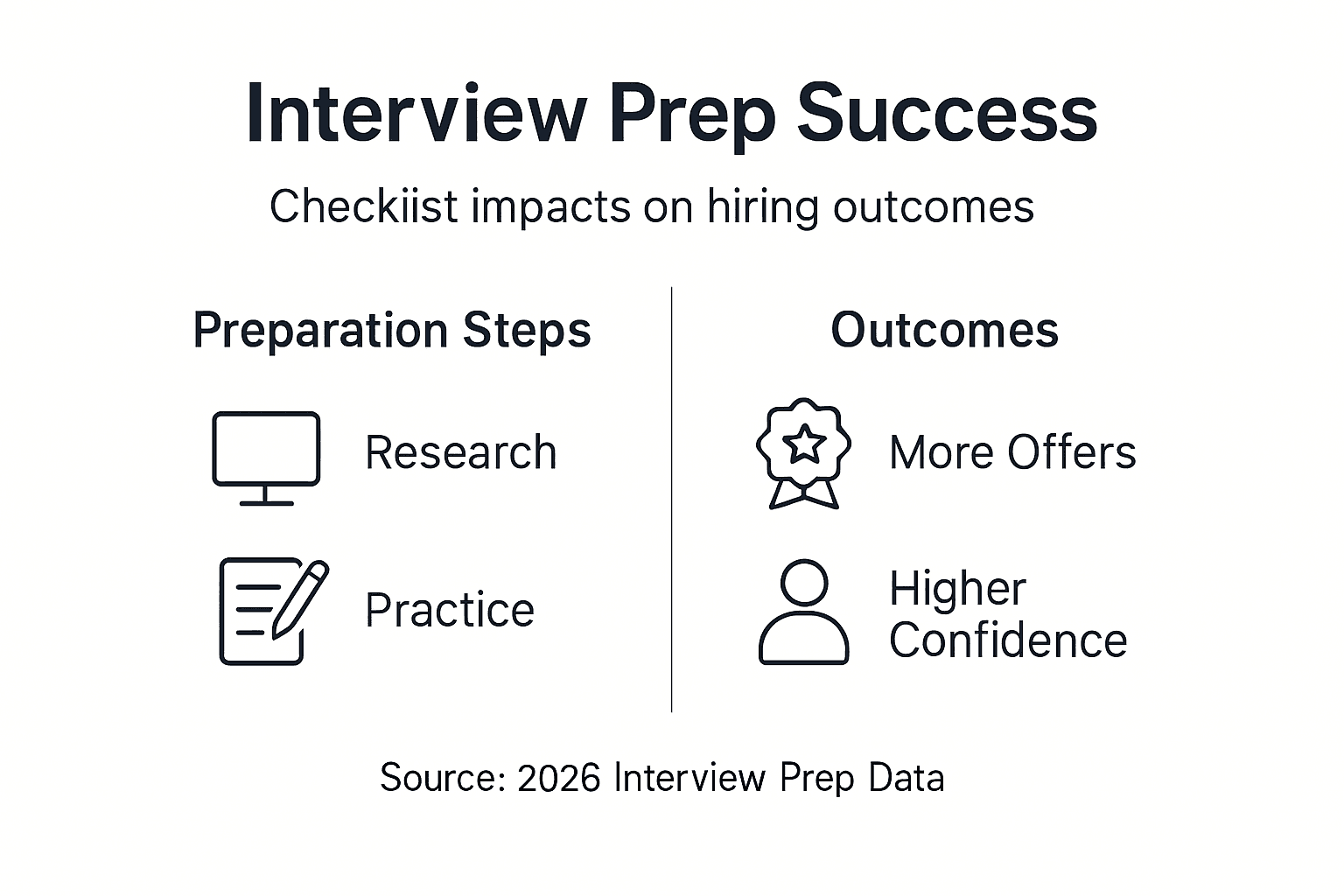
Structured interview preparation delivers these proven outcomes:
| Success Metric | Expected Result | Supporting Data |
|---|---|---|
| Job Offer Rate | 3x increase | Prepared candidates receive offers at triple the rate |
| Answer Clarity | 40% improvement | Anxiety management and practice enhance articulation |
| Follow-up Impact | 80% positive response | Timely thank you emails significantly boost impressions |
| Salary Negotiation | 78% success rate | Prepared candidates negotiate better compensation |
Research confirms 3x increased job offer probability, 40% improved clarity, 80% better follow-up response, and 78% salary negotiation success for candidates using comprehensive preparation methods.
Key benefits you’ll experience:
- Dramatically reduced interview anxiety and increased confidence
- Clearer, more compelling responses to behavioral questions
- Stronger connections with interviewers through research-based insights
- Higher likelihood of advancing to next interview rounds
- Better salary negotiation leverage with thorough preparation
- Faster job search timeline with improved offer conversion rates
These outcomes compound over your career. Each successful interview builds skills, confidence, and professional networks opening doors to future opportunities. The initial time investment in mastering interview preparation pays dividends for years.
Explore the advantages of AI interview tools that accelerate your preparation timeline while maintaining quality. The detailed interview success metrics analysis provides additional data validating these preparation methods.
Enhance Your Interview Prep with ParakeetAI
Modern interview preparation demands modern solutions. ParakeetAI offers AI-powered interview practice with real-time feedback tailored to your specific role and industry. The platform analyzes your responses, identifies improvement areas, and provides actionable coaching on both behavioral answers and technical readiness.
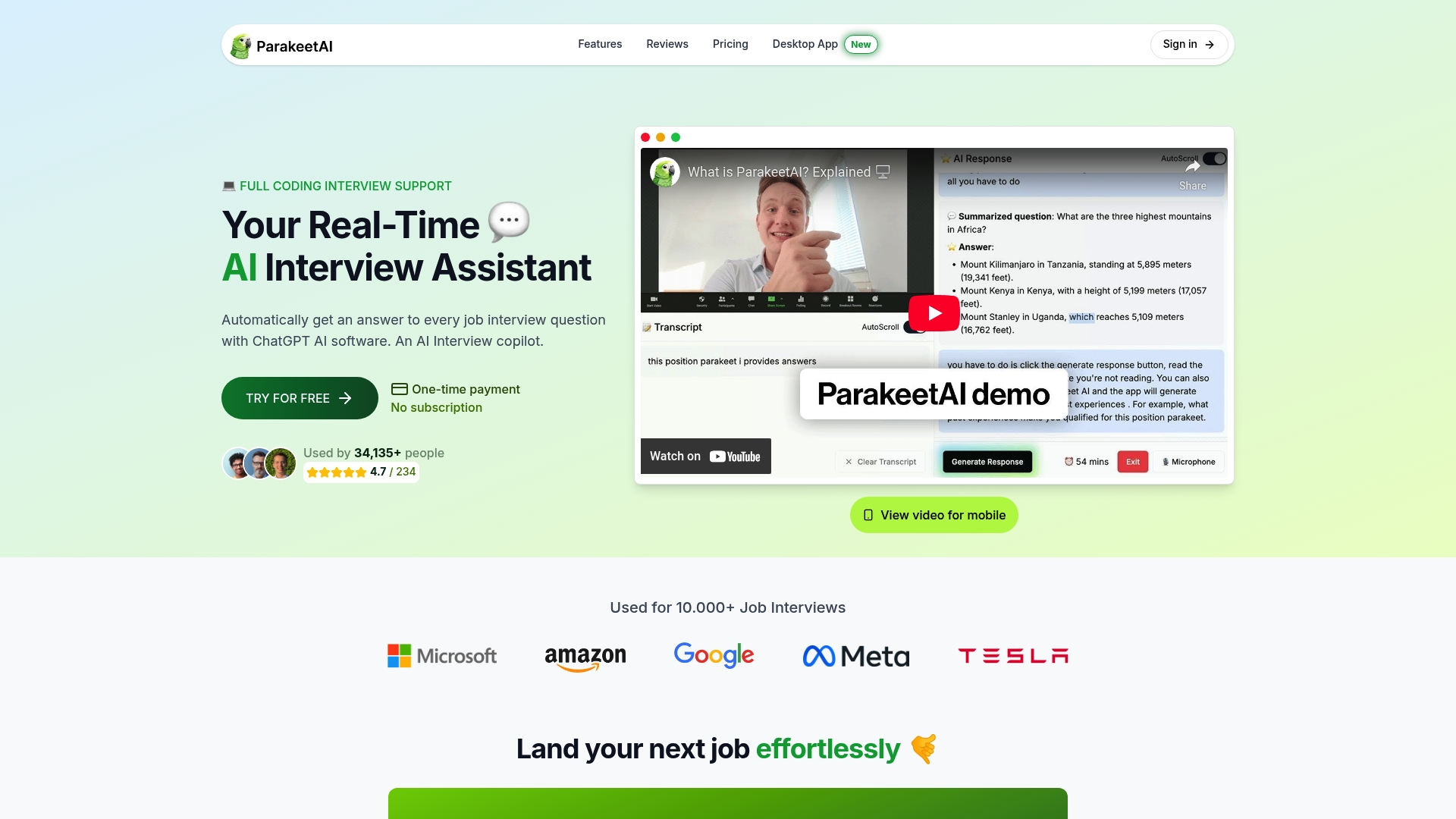
Using an AI job interview assistant saves countless hours while delivering superior results compared to traditional preparation methods. You get personalized insights highlighting exactly where to focus your energy for maximum impact.
ParakeetAI’s smart coaching adapts to your experience level and target roles. Whether you’re a recent graduate or seasoned executive, the platform customizes practice sessions matching real interview scenarios you’ll encounter. This targeted approach builds confidence faster than generic preparation strategies.
The comprehensive resources available through interview prep with AI tools help you get interview ready faster while maintaining the thoroughness that triples your offer rates. Combining the structured checklist approach outlined in this guide with AI-powered practice creates an unbeatable preparation strategy for 2026’s competitive job market.
Frequently Asked Questions
How long before my interview should I start preparing?
Start preparing at least one to two weeks before your scheduled interview. This timeframe allows thorough company research, STAR story development, mock interview practice, and technical setup testing. Earlier preparation significantly reduces anxiety while giving you time to address any gaps in your qualifications or knowledge.
What is the STAR method and why is it important?
STAR stands for Situation, Task, Action, and Result. This framework helps you structure behavioral interview answers into clear, concise stories demonstrating specific skills and achievements. Hiring managers prefer STAR responses because they provide concrete evidence of your capabilities rather than vague claims.
How can I manage interview anxiety effectively?
Use deep breathing exercises like the 4-7-8 technique to calm your nervous system before and during interviews. Visualization of successful outcomes trains your brain to associate interviews with positive experiences. Practice mock interviews with friends or mentors to build familiarity and confidence. Learn more strategies to overcome interview anxiety through proven techniques.
Why is sending a follow-up email important?
Follow-up emails increase hiring manager positive impressions by 80% according to recent research. They demonstrate professionalism, genuine enthusiasm, and attention to detail. Timely thank you messages keep you top of mind during the decision making process, often tipping close hiring decisions in your favor over equally qualified candidates who skip this critical step.