
Master STAR interview questions for managers in 2026

Managers shape teams, drive performance, and influence culture, yet many struggle with a critical skill: conducting effective interviews. While managers account for 70% of the difference in employee engagement, countless hiring decisions rely on gut feelings rather than proven frameworks. The STAR method offers a structured approach to behavioral interviewing, helping you assess candidates through concrete examples of past performance. Combined with AI assistance, this methodology transforms hiring accuracy and efficiency. This guide shows you how to master STAR interview questions, probe for meaningful insights, and leverage technology to build stronger teams in 2026.
Table of Contents
- Why Managers Struggle With Effective Interviews And How STAR Solves It
- Crafting Effective STAR Interview Questions For Managers
- Leveraging AI To Enhance STAR Interviews And Hiring Decisions
- Best Practices For Managers To Implement STAR Interviews In 2026
- Explore AI-Powered Interview Solutions To Boost Your Hiring Success
- Frequently Asked Questions
Key takeaways
| Point | Details |
|---|---|
| Structured STAR interviewing | STAR framework (Situation, Task, Action, Result) provides consistent evaluation criteria across all candidates. |
| Probing reveals depth | Follow-up questions on each STAR element uncover specific details that predict job success. |
| Bias reduction through structure | Focusing on real examples rather than impressions minimizes subjective hiring decisions. |
| AI enhances accuracy | AI-powered tools improve interview quality by 20% while reducing recruiter workload by 44%. |
| Soft skills assessment | STAR questions effectively evaluate adaptability, leadership, and problem-solving beyond résumé claims. |
Why managers struggle with effective interviews and how STAR solves it
Most managers conduct interviews without formal training, relying on conversational approaches that feel natural but produce inconsistent results. Unstructured interviews have limited predictive power for future job performance compared to structured alternatives. You might ask different questions to each candidate, making fair comparisons impossible. Worse, you often accept vague answers that sound impressive but reveal little about actual capabilities.
Consider a candidate who says they “led a successful project.” Without probing, you miss essential details: What obstacles did they face? How did they measure success? What specific actions did they take? Managers often accept vague answers, leading to subjective interpretations that favor charismatic candidates over qualified ones.
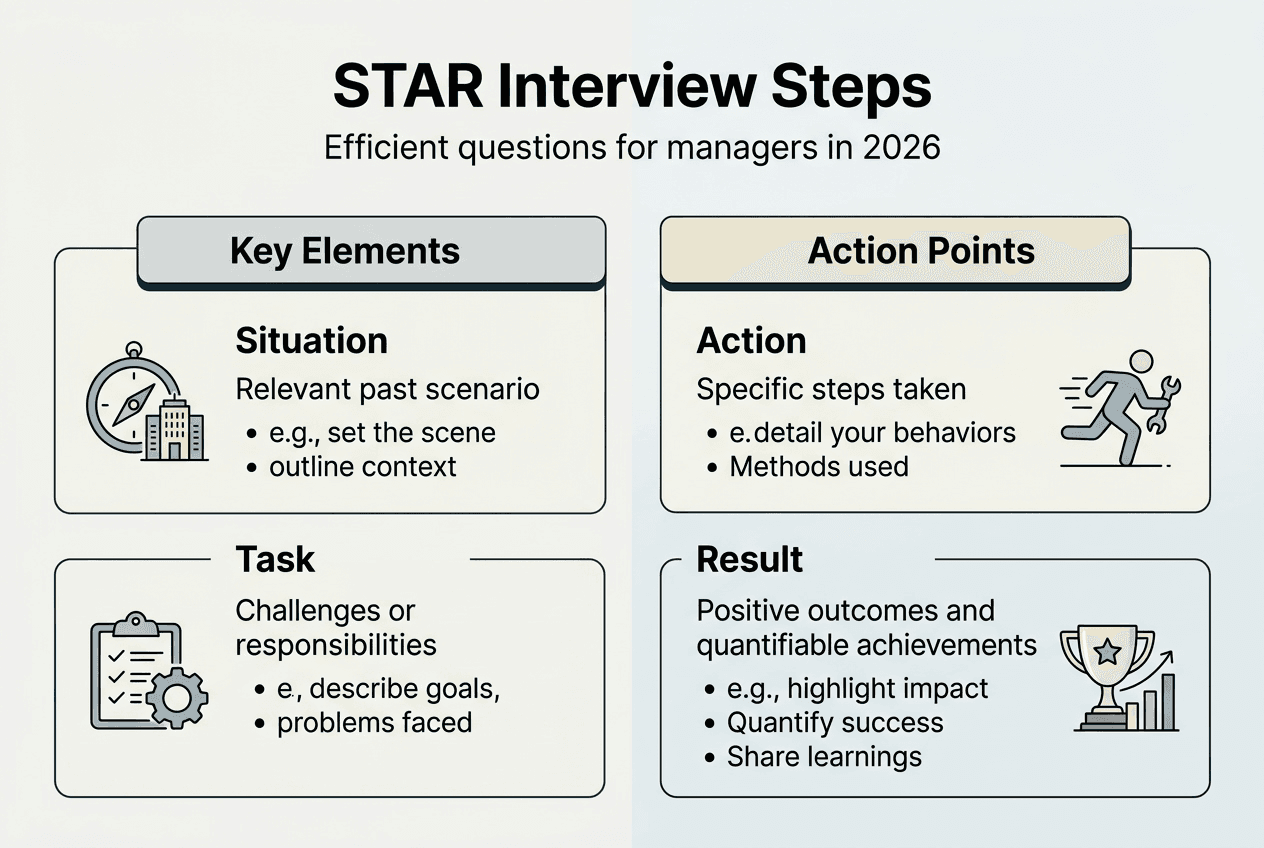
The STAR method solves these problems by breaking each answer into four components:
- Situation: The context and background of the example
- Task: The specific challenge or responsibility they faced
- Action: The concrete steps they took to address it
- Result: The measurable outcome of their efforts
This framework forces candidates to provide complete narratives rather than surface-level claims. You can probe each element systematically, ensuring every candidate receives the same depth of evaluation. STAR minimizes subjective biases by anchoring discussions in verifiable past behaviors rather than hypothetical scenarios or gut reactions.
“When you ask STAR questions consistently, you create an objective standard that reveals who can demonstrate real competence versus who simply interviews well.”
Structured behavioral interviewing methods also help you identify patterns across multiple examples. A candidate might excel in one situation but struggle with different challenges. By collecting several STAR responses, you build a comprehensive picture of their capabilities, work style, and potential fit within your team.
Crafting effective STAR interview questions for managers
Great STAR questions target specific competencies critical to managerial success. Start by identifying the soft skills your role demands. 69% of hiring managers see adaptability as the most crucial soft skill in candidates, but your priorities might include conflict resolution, strategic thinking, or team development depending on your organizational needs.

Frame questions to elicit complete STAR narratives. Instead of “Are you good at handling conflict?”, ask “Describe a time when you resolved a significant disagreement between team members. What was the situation, and what specific steps did you take?” This phrasing naturally guides candidates toward the STAR structure.
Here are effective STAR interview questions organized by competency:
| Competency | Sample STAR Question |
|---|---|
| Adaptability | Tell me about a time when you had to pivot strategy mid-project due to unexpected changes. |
| Problem-solving | Describe a complex operational challenge you faced and how you approached finding a solution. |
| Leadership | Share an example of when you motivated an underperforming team member to improve their results. |
| Communication | Give me an example of when you had to explain a technical concept to non-technical stakeholders. |
| Decision-making | Walk me through a difficult decision where you had limited information and tight deadlines. |
Notice how each question asks for a specific scenario rather than general philosophies. STAR helps reveal communication, leadership, problem-solving and adaptability skills that résumés cannot capture. You gain insight into how candidates actually behave under pressure, not just how they think they would behave.
Pro Tip: Always probe for quantifiable results in the final STAR element. Ask “What metrics did you use to measure success?” or “How did you know your approach worked?” Candidates who can cite specific numbers (revenue increased 15%, turnover decreased by half, project delivered two weeks early) demonstrate genuine impact versus those offering only qualitative claims.
Tailor your questions to the seniority level and role requirements. Entry-level managers need strong examples of individual contribution and emerging leadership. Senior leaders should demonstrate strategic vision, organizational influence, and complex stakeholder management. Adjust the scope and complexity of scenarios you ask about accordingly.
Leveraging AI to enhance STAR interviews and hiring decisions
Artificial intelligence transforms how managers conduct and evaluate STAR interviews. Traditional interviews depend entirely on your ability to listen actively, take notes, probe effectively, and assess responses simultaneously. This cognitive load often means you miss important details or fail to ask critical follow-up questions.
AI-assisted interviews improve hiring accuracy by nearly 20% while maintaining consistency across all candidates. AI platforms can listen to interviews in real time, identify gaps in STAR responses, and suggest probing questions you might have overlooked. This support ensures every candidate receives thorough evaluation regardless of interview fatigue or scheduling constraints.
The efficiency gains prove equally compelling. AI reduces recruiter workload by 44%, freeing managers to focus on relationship building and cultural assessment rather than administrative tasks. You spend less time scheduling, note-taking, and transcribing, allowing deeper engagement with candidates during conversations.
AI also addresses a persistent hiring challenge: résumé inflation. Candidates often exaggerate accomplishments or claim skills they barely possess. AI uncovers résumé inflation by analyzing response patterns, probing for specifics, and identifying inconsistencies between claimed expertise and demonstrated knowledge. This verification happens naturally through conversation rather than adversarial questioning.
| Aspect | Traditional STAR Interviews | AI-Enhanced STAR Interviews |
|---|---|---|
| Consistency | Varies by interviewer energy and experience | Maintains uniform quality across all sessions |
| Probing depth | Limited by interviewer’s real-time capacity | AI suggests follow-ups based on response analysis |
| Bias mitigation | Relies on individual awareness and discipline | Flags potential bias indicators for review |
| Documentation | Manual notes, often incomplete | Automatic transcription with key moments highlighted |
| Time investment | High, especially for multiple interview rounds | Reduced by 44% through automation |
“AI doesn’t replace human judgment in hiring. It amplifies your ability to gather complete information and make evidence-based decisions.”
Pro Tip: Use AI insights to tailor your follow-up STAR probes and avoid cognitive bias. If AI flags that a candidate provided strong Situation and Task elements but weak Action details, you know exactly where to dig deeper. This targeted approach prevents you from being swayed by confident delivery or likability while missing substantive gaps.
Integrating AI in STAR interviews also creates valuable data over time. You can analyze which STAR questions best predict success in your organization, which competencies matter most for different roles, and where your hiring process needs refinement. This continuous improvement cycle strengthens your talent acquisition strategy beyond any single hiring decision.
Best practices for managers to implement STAR interviews in 2026
Successful STAR interviewing requires preparation, disciplined execution, and commitment to objective evaluation. Follow these steps to maximize effectiveness:
- Prepare role-specific STAR questions before interviews. Identify the three to five competencies most critical for success in the position. Develop two questions per competency to gather multiple examples. This preparation prevents generic questioning and ensures you assess what actually matters.
- Share the STAR framework with candidates beforehand. Some managers worry this gives candidates unfair advantage, but transparency improves response quality. When candidates understand the expected format, they provide more detailed, organized answers that reveal true capabilities rather than interview skills.
- Listen completely before probing. Let candidates finish their initial STAR response without interruption. Take brief notes on which elements need clarification. Then systematically probe each component: “Tell me more about the specific situation,” “What was your exact role versus others on the team?”, “Walk me through your decision-making process,” “What metrics showed your approach worked?”
- Maintain neutrality throughout the conversation. Structured behavioral interviews make raters more confident and accurate in appraisals when they avoid leading questions or premature judgments. Don’t signal approval or disapproval through facial expressions or comments. Save evaluation for after the interview when you can review all responses objectively.
- Document responses immediately using a standardized rubric. Rate each STAR answer on completeness, relevance, and impact while details remain fresh. This discipline prevents recency bias where you overweight the last candidate interviewed or halo effects where one strong answer colors your perception of all responses.
- Compare candidates against criteria, not each other. Your goal is finding someone who meets the role requirements, not simply selecting the best of a weak candidate pool. If no one demonstrates the necessary competencies through their STAR examples, continue searching rather than settling.
- Integrate AI tools within your interview workflow for continuous improvement. Use platforms that provide real-time assistance during interviews, then review AI-generated insights afterward to identify your own patterns and blind spots.
Pro Tip: Practice STAR interviewing with colleagues before using it with candidates. Role-play scenarios where you ask questions and probe responses. This rehearsal builds comfort with the framework and reveals which questions generate the most useful information for your specific context.
Remember that STAR interview best practices evolve as you gain experience. Track which questions consistently predict success, which probing techniques uncover the most insight, and where candidates struggle to provide complete answers. Use this feedback to refine your approach over time.
Explore AI-powered interview solutions to boost your hiring success
Mastering STAR interview questions transforms your ability to identify top talent, but implementation challenges remain. Balancing thorough evaluation with efficient processes, maintaining consistency across multiple interviewers, and avoiding unconscious bias all require ongoing attention and support.
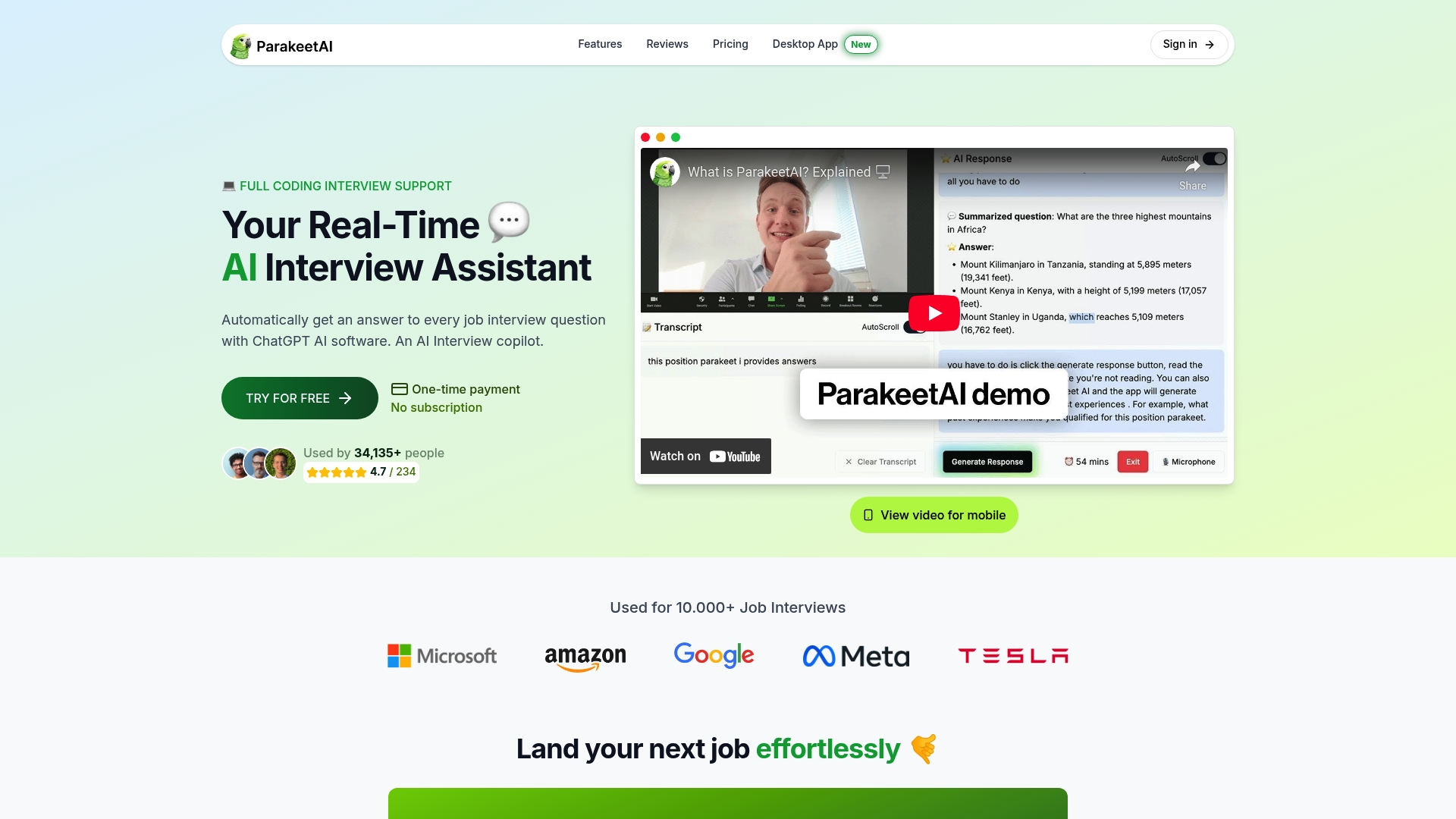
AI interview solutions address these challenges by providing real-time assistance during your STAR interviews. The platform listens to conversations, suggests relevant follow-up questions, and helps you maintain structured evaluation without sacrificing natural dialogue. You gain the benefits of expert interview coaching combined with comprehensive documentation for every hiring decision.
Explore additional resources on behavioral interview tips and review our effective interview questions guide to deepen your interviewing expertise. These tools help you build a systematic approach to talent assessment that improves with every conversation.
Frequently asked questions
What is the STAR method and why is it important for managers?
The STAR method is a structured framework for evaluating candidates through four elements: Situation (context), Task (challenge), Action (steps taken), and Result (measurable outcome). It helps managers objectively assess past behaviors that predict future job performance. By focusing on concrete examples rather than hypothetical scenarios, STAR reveals how candidates actually handle real workplace challenges. This approach uncovers soft skills like adaptability, problem-solving, and leadership that résumés cannot capture.
How can managers effectively probe STAR interview answers?
Use open-ended follow-up questions to clarify each STAR element. Ask “What was your specific role versus your teammates?” for Task, “Walk me through your decision-making process” for Action, and “What metrics demonstrated success?” for Result. Request quantifiable outcomes rather than accepting vague claims like “the project went well.” Interviewers who probe for specifics achieve 20% higher accuracy predicting job success. Avoid leading questions that suggest desired answers, maintaining neutrality throughout the probing process.
What advantages does AI bring to STAR interviews?
AI raises interview quality and consistency by providing real-time suggestions for probing questions you might miss during conversations. It uncovers résumé inflation by analyzing response patterns and identifying inconsistencies between claimed skills and demonstrated knowledge. AI-assisted interviews improve accuracy by nearly 20% and reduce recruiter workload by 44%, freeing managers to focus on relationship building rather than administrative tasks. AI also creates valuable data over time, helping you identify which questions best predict success in your organization.
How do STAR interviews help reduce hiring bias?
STAR interviews focus on actual behaviors and measurable outcomes rather than gut feelings or first impressions. The structured format ensures you ask every candidate the same core questions, enabling fair comparisons based on demonstrated competence. STAR interviews minimize subjective biases by anchoring evaluation in real examples rather than personal impressions. This approach reduces the influence of irrelevant factors like appearance, communication style, or shared backgrounds that often skew unstructured interviews. Documenting responses with standardized rubrics further prevents recency bias and halo effects.