Nursing interview tips to stand out and get hired
TL;DR:Successful nursing interviews emphasize clear communication, confidence, and genuine understanding of the organization.Preparation includes thorough employer research, mastering behavioral questions with the STAR method, and professional presentation.Leveraging clinical experience, adaptability, and curiosity about healthcare technology sets top candidates apart.
Most nursing graduates assume that acing a nursing interview is just about knowing clinical protocols and rattling off medication names. That assumption costs candidates jobs every single day. Hiring managers at top healthcare systems consistently report that the strongest candidates are those who communicate clearly, present themselves with confidence, and show they genuinely understand the organization they are interviewing with. This guide breaks down exactly how to prepare for your nursing interview in a way that is practical, modern, and built around what actually works, from researching your employer and mastering behavioral questions to using technology for smarter practice.
Table of Contents
- Know the employer: Research and tailor your approach
- Master behavioral questions with the STAR method
- Professionalism: Dress, documents, and first impressions
- Success as a new graduate: Leverage what you have
- Practice techniques: Mock interviews and real-time feedback
- A new era: Technology, adaptability, and what interviewers really want
- Supercharge your interview prep with ParakeetAI
- Frequently asked questions
Key Takeaways
| Point | Details |
|---|---|
| Tailor to the employer | Researching the facility helps you deliver targeted, impressive answers. |
| Use the STAR method | Structure your behavioral answers with Situation, Task, Action, Result for clarity. |
| Professional presentation | Arriving prepared and well-dressed ensures a strong first impression. |
| Leverage all experience | Highlight clinical rotations and eagerness to learn, even as a new graduate. |
| Practice with feedback | Mock interviews and real-time feedback are crucial for maximizing your performance. |
Know the employer: Research and tailor your approach
Before you walk into any interview room, or log onto any video call, you need to know who you are talking to. This is the step that separates forgettable candidates from memorable ones. Research the organization thoroughly before the interview to demonstrate initiative and enthusiasm. Hiring managers notice immediately when a candidate has done their homework, and it signals exactly the kind of proactive attitude healthcare teams want.
So, what should you actually look for? Start with the basics: the hospital or clinic’s mission statement, core values, and any recent news. Did the organization receive a Magnet designation? Did they open a new cardiac unit? Are they expanding their telehealth services? These details tell you what the employer is proud of and what they are working toward. You can then weave those facts into your responses in a natural, authentic way.
Here is a practical list of what to research before your interview:
- The patient population served (pediatric, geriatric, underserved communities, etc.)
- Clinical specialties and flagship programs
- Recent awards, accreditations, or press coverage
- The organization’s approach to nursing education and mentorship
- Their Glassdoor or Indeed reviews to understand workplace culture
Once you have this information, you can customize your answers to align with interview best practices that show cultural fit. For example, if the hospital emphasizes patient-centered care, bring up a clinical rotation moment where you went beyond the clinical task to connect with a patient’s emotional needs.
Pro Tip: Prepare one or two specific phrases that reference the employer’s mission or a recent achievement. Drop them naturally into your answer to “Why do you want to work here?” It shows you are not just applying everywhere.
Master behavioral questions with the STAR method
Behavioral interview questions are the most common type in nursing interviews. These are questions like “Tell me about a time you handled a difficult patient” or “Describe a situation where you had to work with a challenging coworker.” They are designed to predict how you will behave in the future based on what you have done in the past.
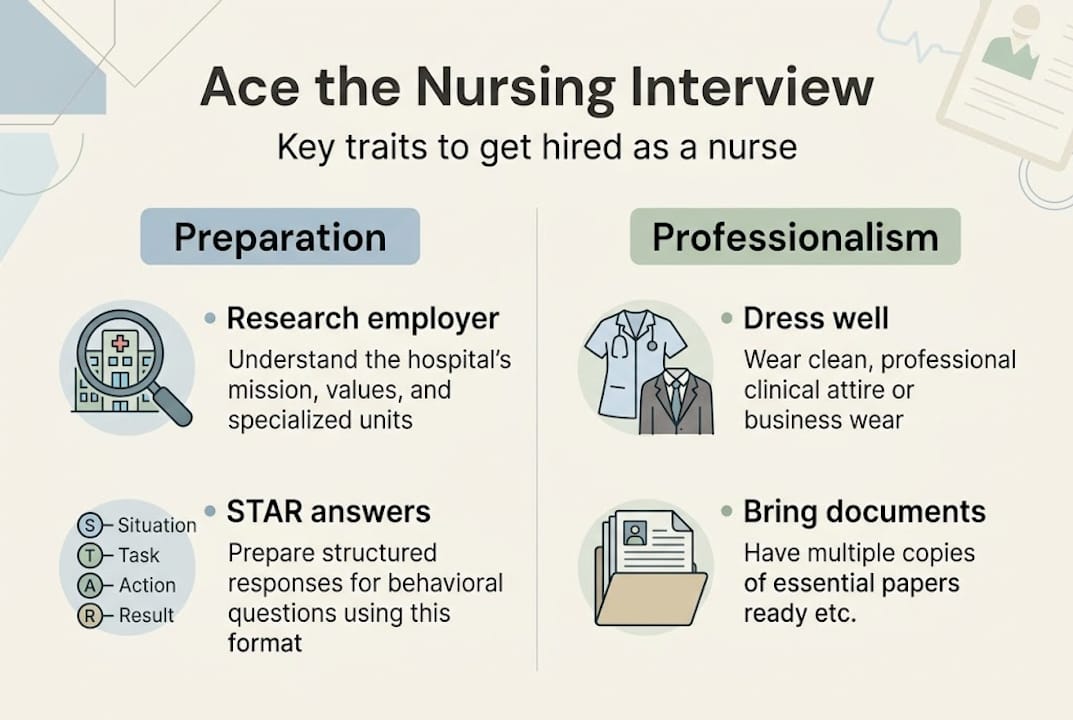
The most effective way to answer them is the STAR method: Situation, Task, Action, and Result. This structure keeps your answer focused, relevant, and compelling.
Here is how to apply each element:
- Situation: Set the scene briefly. Give the interviewer just enough context to understand what was happening. “During my med-surg rotation, we had a night shift that was severely understaffed.”
- Task: Explain what your role was in that situation. “I was responsible for eight patients while also supporting a newer nursing student.”
- Action: This is the most important part. Describe specifically what YOU did. Not what the team did. Not what the charge nurse decided. What you did. “I reprioritized my patient assessments, communicated the staffing concern to the charge nurse, and created a quick visual board to track critical tasks.”
- Result: End with an outcome. Quantify it when you can. “All patients received their assessments on time, and the charge nurse later told me my communication that night helped prevent two medication errors.”
Here is a comparison that shows the difference between a vague answer and a STAR-based one:
| Question | Vague answer | STAR-based answer |
|---|---|---|
| “Tell me about a time you managed a conflict.” | “I just try to stay calm and work it out.” | Specific rotation scenario with actions taken and outcome described. |
| “Describe handling a difficult patient.” | “I’ve dealt with a lot of difficult patients in clinicals.” | Named situation, explained approach, shared measurable or observable result. |
| “How do you handle stress?” | “I take deep breaths and stay focused.” | Real story from clinicals demonstrating a stress management strategy in action. |
Understanding why this matters is important. The nursing job market is strong, with 96% of new BSN graduates employed within four to six months of graduation. That sounds reassuring, but it also means you are competing with a large pool of qualified candidates. Strong behavioral interview success is what moves you from the “qualified” pile to the “top candidate” pile.
Pro Tip: Practice your STAR answers out loud, not just in your head. Speaking them aloud helps you identify where you ramble, where you forget the result, and where your language gets too vague. Record yourself once and watch it back. You will find things to fix immediately.
Professionalism: Dress, documents, and first impressions
You can have the best STAR answers in the room and still lose the job if your first impression misses the mark. Professionalism in a nursing interview is about sending a clear, nonverbal message: “I take this seriously, and I respect your time.”
Dress professionally in neutral colors, arrive 10 to 15 minutes early, and maintain positive body language with eye contact and a firm handshake. Business attire is the default unless you are explicitly told otherwise. Think navy, gray, black, or white. Avoid busy patterns or anything too casual. For virtual interviews, check your lighting, use a neutral background, and dress the same way you would in person from the waist up (and honestly, from the waist down too, just in case).
“First impressions are formed within the first seven seconds of meeting someone. In a competitive interview, those seconds carry enormous weight. Candidates who walk in prepared, polished, and positive have already won a portion of the evaluation before saying a word.” — Career counseling research on interview readiness
What you bring to the interview matters just as much as how you look. Bring copies of your resume, your nursing license, certifications, references, and a portfolio or brag book. A brag book is a small, organized collection of your academic achievements, clinical evaluations, thank-you notes from patients or instructors, and any relevant certificates. Not every nurse brings one. The ones who do are remembered.
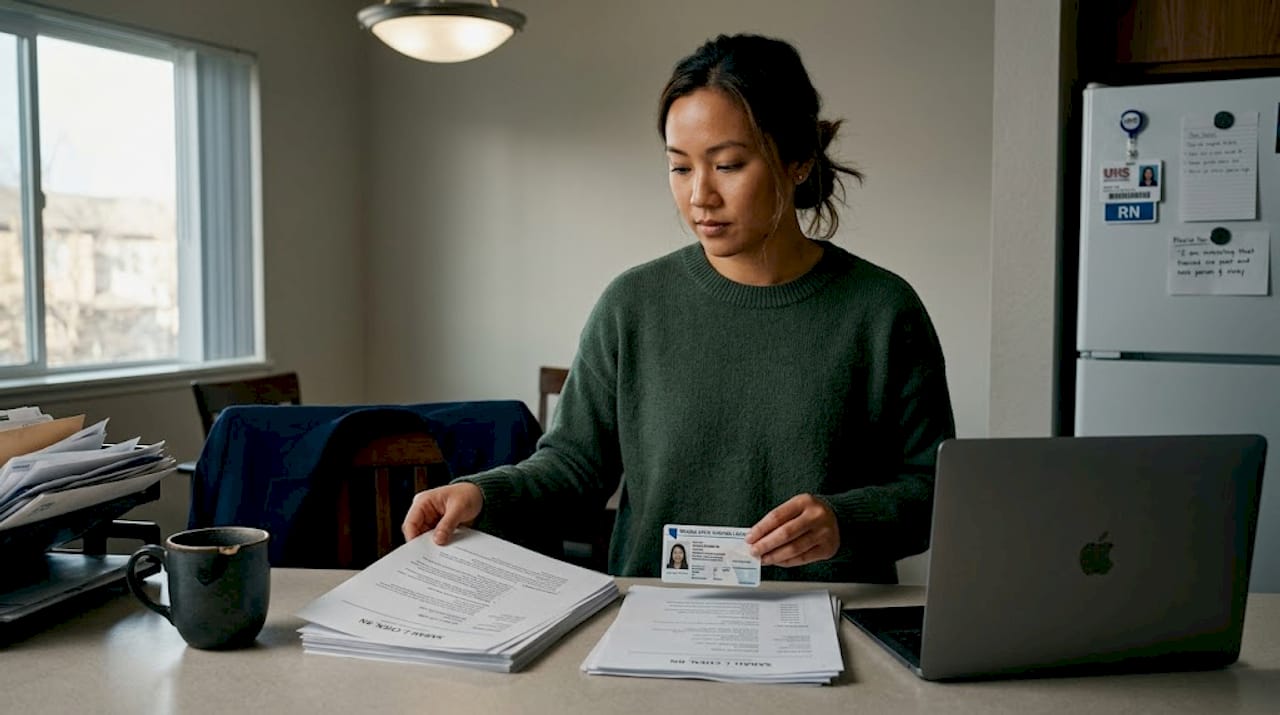
Here is a quick reference table for interview documents:
| Document | Purpose |
|---|---|
| Resume (3-5 copies) | For interviewers who may not have printed one |
| Nursing license | Confirms your credentialing status |
| Certifications (BLS, ACLS, etc.) | Shows clinical readiness |
| Reference list | Speeds up the hiring process if they ask |
| Portfolio or brag book | Demonstrates achievement and initiative |
Nonverbal cues matter throughout the entire conversation. Sit upright, make comfortable eye contact, and avoid crossing your arms. For virtual interview tips, remember to look into the camera when speaking rather than at the interviewer’s face on screen. It feels unnatural at first, but it reads as direct and engaged to the person on the other end.
Success as a new graduate: Leverage what you have
Here is where many new nursing graduates make a costly mistake. They apologize for their lack of experience. They say things like “I know I don’t have much experience yet” or “I’m just a new grad.” Stop doing that. Your clinical rotations, your school projects, your volunteer work, and your ability to learn fast are real and valuable. Frame them that way.
For new graduates, leveraging clinical rotations, highlighting transferable skills, and expressing willingness to learn and enthusiasm for mentorship is exactly what experienced hiring managers want to see. They are not expecting you to have five years of ICU experience. They are evaluating your potential, your attitude, and your self-awareness.
Here are transferable skills from clinical rotations that you should highlight:
- Patient communication: De-escalating anxious patients, explaining procedures clearly, building rapport quickly
- Time management: Juggling multiple patients with competing needs during busy floor rotations
- Critical thinking: Recognizing subtle changes in a patient’s condition and knowing when to escalate
- Teamwork: Collaborating with physicians, respiratory therapists, case managers, and other nurses
- Adaptability: Rotating through different units with entirely different patient populations and workflows
- Documentation: Using EHR systems accurately under time pressure
The employment statistic bears repeating: 96% of BSN graduates find jobs within four to six months. The job market is not the problem. Getting through a competitive interview is. That is where you need to leverage AI for interviews and modern preparation tools to sharpen your edge.
Pro Tip: Prepare a short story, under two minutes, that shows you quickly adapting to an unfamiliar clinical setting. Something like “In my first day in the NICU, I had never worked with that population before, and here is how I oriented myself fast and earned the trust of my preceptor.” That kind of story is memorable and shows the growth mindset every healthcare manager wants to hire.
Practice techniques: Mock interviews and real-time feedback
Knowing what to say is very different from being able to say it well under pressure. That gap closes only through practice. Structured rehearsal is what turns anxiety into confidence and vague intentions into sharp, clear answers.
Here is a step-by-step approach to setting up an effective mock interview practice routine:
- Write out 10 to 15 likely questions based on the job description and common nursing interview formats. Include behavioral, situational, and role-specific questions.
- Set a timer and answer each question out loud as if you are in the actual interview. Do not read from notes.
- Record yourself on your phone or laptop. Watch it back with fresh eyes, paying attention to filler words, eye contact, and answer length.
- Invite a peer or mentor to run a full mock session. Ask them to give blunt, specific feedback rather than encouragement. You want critique, not comfort.
- Use AI-based platforms that simulate real interview conditions and provide structured feedback on pacing, content, and delivery.
“Don’t try to memorize scripts. Know the gist of your stories. When you memorize, you freeze if you lose your place. When you know your story, you can adapt on the fly and still land the key points.” — Nursing interview coaching principle
One of the most underrated interview practice strategies is the pause. Interviewers are not bothered by a two or three second pause before you answer. What bothers them is a rambling, off-topic response that starts immediately and never reaches a clear conclusion. Train yourself to take a breath, identify the core of what they are asking, and then begin your STAR framework. It sounds simple. It takes deliberate practice to do it under pressure.
A new era: Technology, adaptability, and what interviewers really want
Here is what most nursing interview guides will not tell you: over-preparation can hurt you. Candidates who rehearse scripted answers to the point of mechanical delivery come across as robotic and unconvincing. Interviewers report that the candidates they remember most are those who adjusted mid-answer, acknowledged a curve-ball question with grace, and asked genuinely curious questions about the team or the challenges the unit faces.
The conventional wisdom says: prepare every answer, dress the part, know your STAR stories. That is all correct. But it misses something critical about today’s healthcare landscape. Hospitals are moving fast. Technology is reshaping every aspect of patient care. The nurses who are most valuable in 2026 and beyond are not just clinically competent. They are adaptively prepared for change, openly curious about new tools, and honest about what they do not yet know.
Interviewers increasingly ask about technology comfort: Are you familiar with specific EHR platforms? How have you used data in clinical decision making? Are you open to learning telehealth workflows? Candidates who answer with curiosity and enthusiasm rather than defensiveness stand out sharply. Being a new graduate is actually an advantage here. You came of age in a tech-forward clinical environment. Own that.
The deeper shift is this: credentials and GPA get you in the door. Your story, your adaptability, and your authentic communication keep you in the room. Interviewers off the record will tell you that they have passed on highly credentialed candidates who seemed rigid or disinterested, and hired newer graduates who radiated genuine curiosity and emotional maturity. That is the real differentiator no rubric captures.
Supercharge your interview prep with ParakeetAI
You have the strategy. Now you need the reps. Real confidence in an interview comes from realistic, repeated practice with feedback that actually improves your performance.
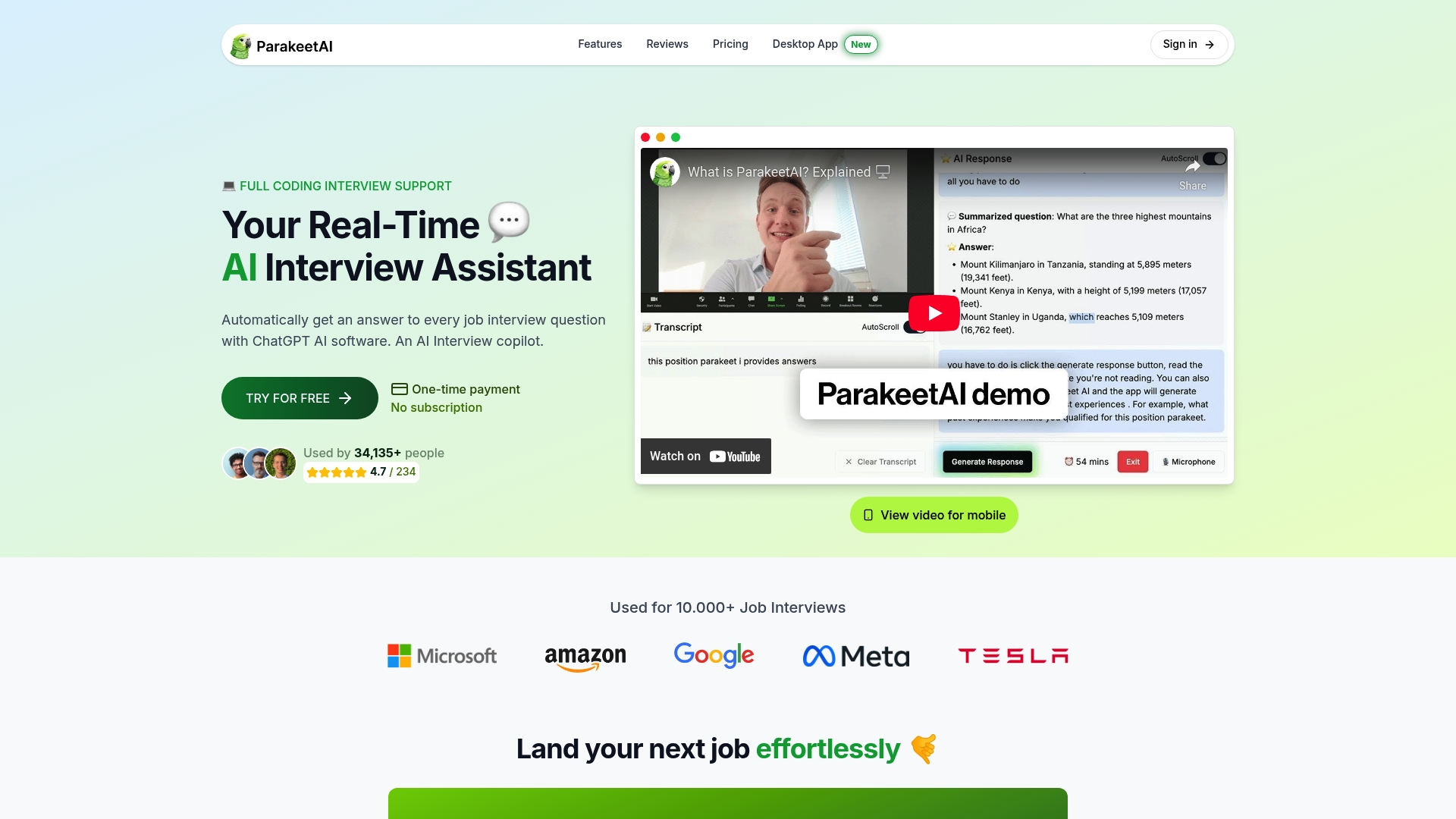
ParakeetAI is a real-time AI interview assistant that listens to your interview questions and automatically provides targeted, intelligent answers using AI. For nursing graduates, this means you can simulate real interview conditions, get instant structured guidance, and practice adapting your responses on the fly rather than reading from a script. Whether you are preparing for your first hospital interview or refining answers for a specialty unit role, ParakeetAI helps you walk into the room sharper, faster, and far more confident than traditional prep alone can deliver. Explore what it can do for your next nursing interview at parakeet-ai.com.
Frequently asked questions
What are the most common nursing interview questions?
Common questions include scenarios about teamwork, conflict resolution, patient safety, and adapting under pressure. Expect behavioral questions like “Tell me about a time you made a mistake and how you handled it.”
How should I answer “Tell me about yourself” in a nursing interview?
Share your journey into nursing, mention one or two key achievements from your clinical rotations, and end with a clear statement about why you want this specific role at this specific organization.
Is it better to overdress or wear scrubs to a nursing interview?
Business attire in neutral colors is safest unless you are specifically instructed to wear scrubs. Overdressing slightly is always safer than underdressing in a professional healthcare setting.
What documents should I bring to my nursing interview?
Bring extra copies of your resume, your nursing license, relevant certifications, a reference list, and a small portfolio or brag book if you have one prepared.
How can I best prepare for a virtual nursing interview?
Test your technology at least a day before, choose a quiet space with good lighting, dress professionally as you would in person, and have your documents ready nearby in case they are requested.