Interview follow-up tips that get results: proven strategies
TL;DR:Following up quickly and personally after an interview helps candidates stand out and demonstrate professionalism. Sending thoughtful, tailored messages within 24 hours, and spacing subsequent follow-ups appropriately, enhances response chances. Overdoing follow-ups can appear desperate, so quality and sincerity are more important than quantity.
You just walked out of an interview feeling cautiously optimistic, and now the waiting game begins. That silence can be deafening. What most candidates don’t realize is that the interview isn’t truly over when you leave the room. The follow-up phase is where you can quietly outshine everyone else who interviewed for the same role. Research shows that timely and personalized follow-ups make a strong impression on employers and can set candidates apart. This guide walks you through exactly what to send, when to send it, and how to make every message count.
Table of Contents
- Why following up matters: Setting yourself apart
- Timing your follow-up: What to send and when
- Personalizing your message: Dos and don’ts
- Comparison: Email templates and their effectiveness
- Our perspective: What most candidates overlook in follow-ups
- Ready to impress? Take your interview prep further
- Frequently asked questions
Key Takeaways
| Point | Details |
|---|---|
| Timely follow-up matters | A well-timed thank-you note increases your chances of getting hired. |
| Personalization wins | Customize each message by referencing specifics from your interview. |
| Know when to move on | If you don’t get a reply after two or three emails, it’s time to focus on other opportunities. |
| Quality beats quantity | Thoughtful and concise follow-ups leave a strong impression, avoiding desperation. |
Why following up matters: Setting yourself apart
The job market is competitive. Hundreds of qualified candidates may apply for a single opening, and many of them will interview well. So what separates the person who gets the offer from the person who gets the polite rejection email? Often, it comes down to the small things that signal genuine interest and professionalism.
Following up after an interview does several things at once. It reminds the hiring manager that you exist. It shows you care about the role. And it demonstrates the kind of initiative that most employers actively look for in new hires. The reality is that a surprising number of candidates skip this step entirely, which means a well-crafted follow-up immediately puts you ahead of the pack.
Consider what a hiring manager sees after a busy week of interviews. Dozens of candidates blur together. A thoughtful, specific follow-up email cuts through that blur and anchors your name in their memory. It’s not about being pushy. It’s about being memorable in the right way.
Here’s what effective follow-up communicates to employers:
- Genuine enthusiasm for the role and the organization
- Attention to detail, since you took the time to craft a real message
- Professionalism, because you followed through on a social norm most people ignore
- Strong communication skills, which are valued in virtually every industry
Think of your follow-up as an extension of the interview itself. You’re still making an impression. Candidates who understand closing interviews confidently know that the conversation doesn’t end when you shake hands and walk out the door.
“Timely and personalized follow-ups make a strong impression on employers and can set candidates apart.” — University of Kentucky Pigman Career Center
This is especially true in remote hiring environments. If you’ve been through a video interview, where personal connection can feel harder to establish, a warm and specific follow-up email does even more heavy lifting. It bridges the digital gap and reinforces the human connection you worked to build during the call.
Timing your follow-up: What to send and when
With the value of following up established, the next question is: how do you time it for maximum effect? Timing is everything here. Send your message too early and it looks impulsive. Wait too long and the hiring manager has already moved on mentally.
Here’s a simple three-step timeline that works:
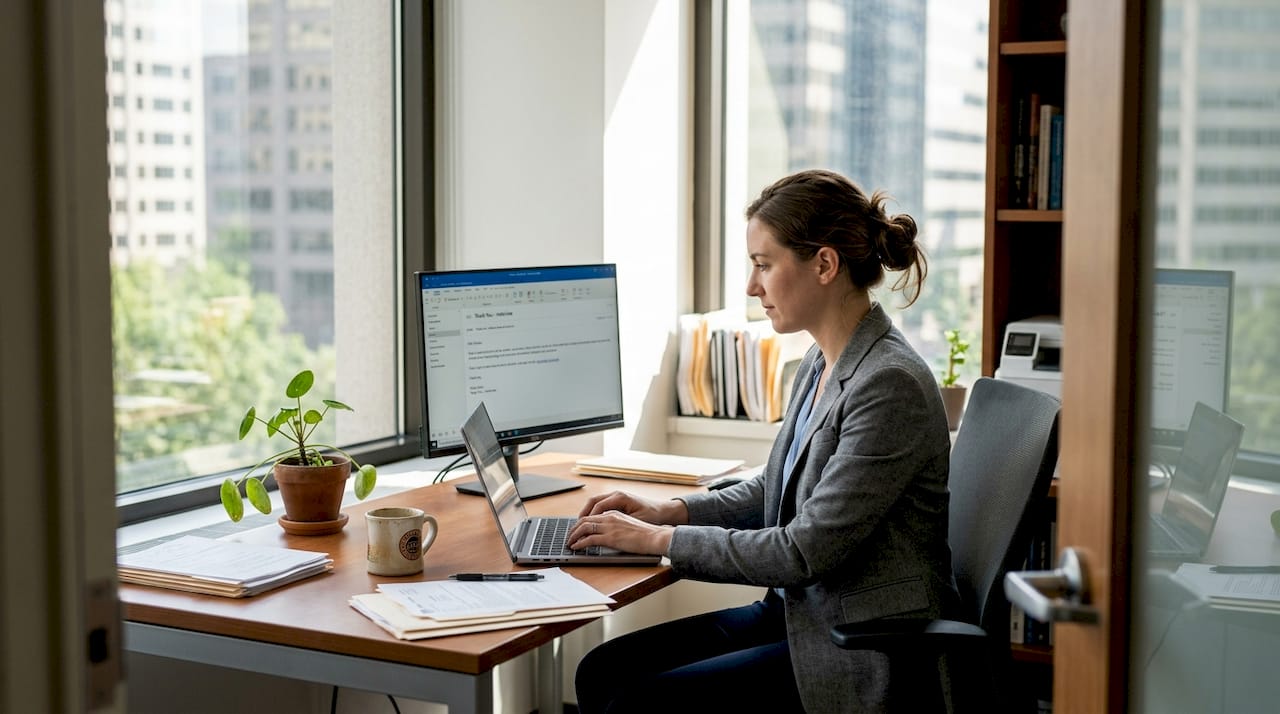
- Within 24 hours: Send a thank-you email. This is your most important touchpoint. Reference something specific from the conversation, express your enthusiasm for the role, and keep it under 200 words. The best practice is to follow up within 24 hours for maximum impact.
- After one week with no response: Send a polite check-in. Keep this short. You’re simply acknowledging that you’re still interested and asking if there’s any update on the timeline.
- After two to three total follow-ups: If you still haven’t heard back, send a final professional note. Thank them again for their time, wish them well, and close the loop gracefully.
Pro Tip: Write your thank-you email draft immediately after the interview while details are fresh. Even if you wait a few hours before sending, having it ready means you won’t forget key conversation points.
One thing candidates often wonder about is when to stop. Sending four, five, or six follow-up emails signals desperation, not enthusiasm. The right approach is to move on after two to three attempts with no response. This protects your professional reputation and your own mental energy.
“Persistence is admirable, but there’s a fine line between following up and following someone around.”
If you’re preparing for technical roles, knowing best answers for tech interviews helps you have more specific material to reference in your follow-up. Similarly, if you asked thoughtful questions at the end of the interview, those can become natural anchors in your thank-you message.
Personalizing your message: Dos and don’ts
Knowing when to follow up is only half the battle. How you compose your messages can make all the difference. Generic thank-you emails are easy to spot and easy to ignore. A message that references your actual conversation, uses the interviewer’s name, and reflects your unique personality is far harder to dismiss.
Here’s what to do:
- Use the interviewer’s name in the greeting, every single time
- Reference a specific moment from your conversation, such as a challenge they mentioned or a project you discussed
- Restate your fit briefly, connecting one of your strengths to something they said they need
- Keep it concise, ideally under 150 to 200 words for a thank-you, slightly longer for a check-in
For panel interviews, the rule is to send individual personalized emails to each interviewer rather than one group message. Each note should reflect something specific to your exchange with that person. For technical roles, reference specifics from the interview, like a coding problem you worked through together or a system design question you discussed.
Pro Tip: If you interviewed with three people and can’t remember who said what, check LinkedIn afterward. Reviewing each person’s background can help you craft a message that resonates with their specific role and perspective.
Here’s what to avoid:
- Spelling or grammar mistakes, which undermine your credibility instantly
- Overly formal language that sounds stiff and impersonal
- Excessive flattery, like telling someone they’re the best interviewer you’ve ever met
- Off-topic remarks that have nothing to do with the role or conversation
- Copying and pasting the same message to everyone on the panel
If you’re applying for roles where culture fit matters, reviewing common cultural interview questions can help you identify values-based moments from your interview worth referencing in your follow-up. And if you’re targeting technical interview tips, those same conversations give you rich, specific material to draw from.
Comparison: Email templates and their effectiveness
At this point, you understand personalization is key. Let’s review exactly how different message types stack up against each other.
| Template type | Personalization level | Response likelihood | Best used when |
|---|---|---|---|
| Generic thank-you | Low | Low | Never, if avoidable |
| Personalized thank-you | High | High | All interviews |
| Technical-customized | Very high | Very high | Technical or specialized roles |
| Check-in follow-up | Medium | Medium | One week after no response |
| Closure email | Low to medium | Low | Final touchpoint after silence |
The data is clear: personalized and specific follow-ups see better response rates than generic templates. A generic message says “I want a job.” A personalized message says “I want this job, and here’s why I’m the right fit.”
Let’s break down the pros and cons of each approach:
Generic template
- Pro: Quick to write
- Con: Forgettable, signals low effort, easy to delete
Personalized thank-you
- Pro: Shows genuine interest and strong communication
- Con: Takes more time, requires good notes from the interview
Technical-customized message
- Pro: Extremely memorable for hiring managers in specialized fields
- Con: Requires deep recall of interview specifics
If you’ve gone through a panel interview process, the technical-customized approach is especially powerful because each interviewer likely covered different ground. Referencing those specifics shows you were fully engaged. When you combine strong best answers to interview questions with a sharp follow-up, you create a consistent, professional impression from start to finish. And if you asked strong closing questions, referencing those in your follow-up ties the whole experience together beautifully.
Our perspective: What most candidates overlook in follow-ups
Templates and timing matter, but they’re not the whole picture. After working with thousands of job seekers, we’ve noticed something consistent: the candidates who get the most callbacks from follow-ups aren’t the ones who send the fastest email. They’re the ones who send the most thoughtful one.
Hiring managers are perceptive. They can tell the difference between a candidate who is following a script and one who genuinely reflected on the conversation. A follow-up that includes a small insight, like “Your comment about scaling the team made me think about a challenge I solved at my last company,” signals intellectual engagement that a generic thank-you simply cannot replicate.
There’s also a caution worth naming. Repeated follow-ups, especially ones that escalate in urgency, read as desperation rather than enthusiasm. One hiring manager told us she removed a candidate from consideration after the fourth email in two weeks. The candidate was qualified. The behavior was the problem.
Quality beats quantity every time. One well-crafted message that shows you were listening and thinking will do more for your chances than three polite but forgettable check-ins. Focus on impressing interview panels with substance, not frequency.
Ready to impress? Take your interview prep further
A strong follow-up starts with a strong interview. The more confidently you perform in the room, the more specific and compelling your follow-up message can be.
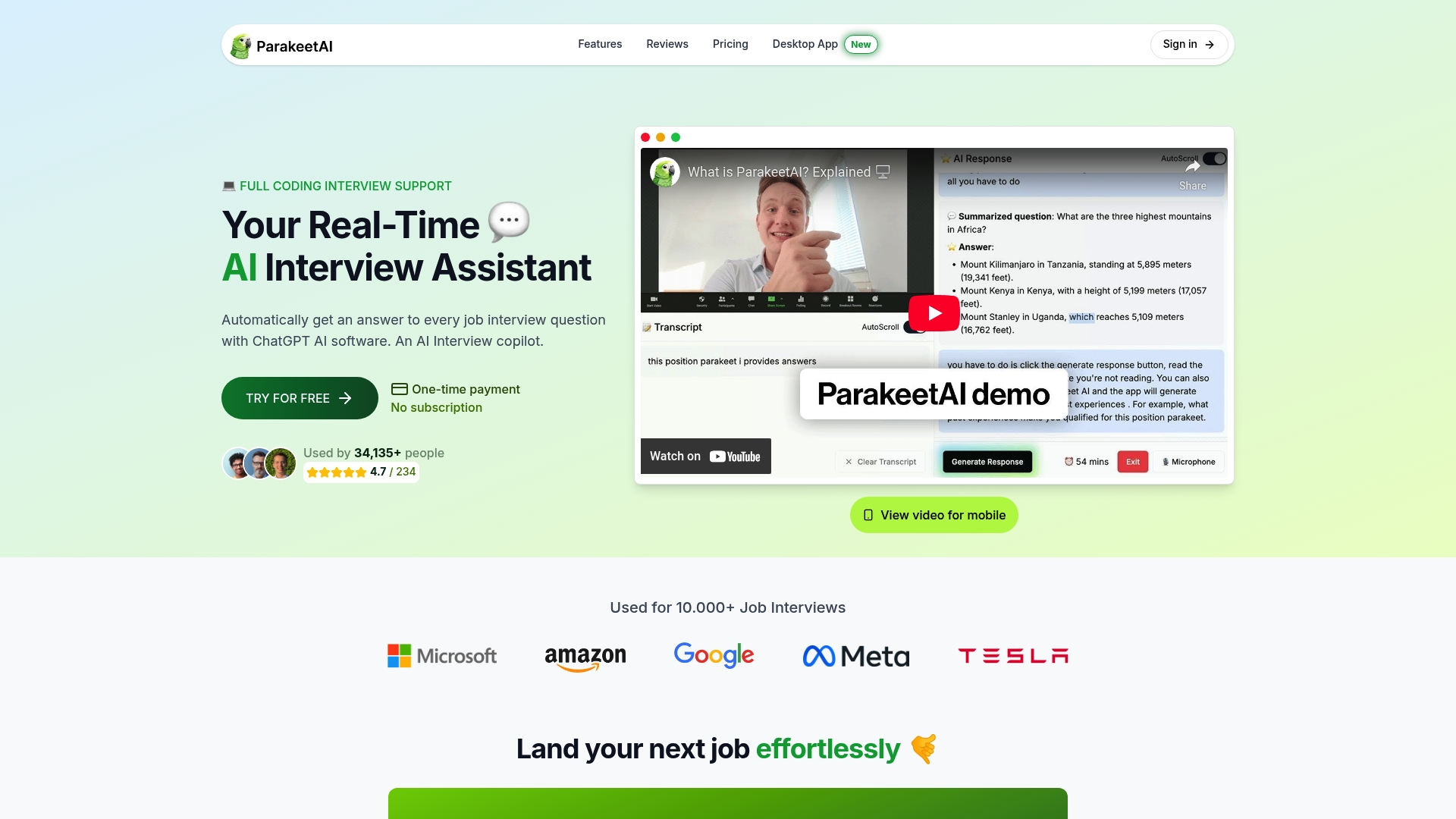
That’s where ParakeetAI comes in. ParakeetAI is a real-time AI interview assistant that listens to your interview and automatically provides smart, relevant answers to every question as it happens. It helps you stay sharp, articulate, and prepared so you walk out with exactly the kind of memorable moments worth referencing in your follow-up. Pair that with our guidance on video interview best practices and you’ll be building a competitive edge from the very first question to the final thank-you email.
Frequently asked questions
How soon should I follow up after an interview?
Send a thank-you email within 24 hours of your interview for the strongest impact. Waiting longer risks losing the momentum and specificity of the conversation.
What should I do if I don’t get a response to my follow-up?
Send up to two follow-ups spaced about a week apart. If there is still no reply after the third email, it’s appropriate to move on and redirect your energy toward other opportunities.
Should I follow up differently for a panel interview?
Yes. Send individual personalized emails to each interviewer, tailored to your specific conversation with that person rather than sending one group message.
Can following up hurt my chances?
Respectful, timely follow-up almost always helps. However, sending too many messages or using a demanding tone can signal poor judgment and hurt the impression you worked hard to build during the interview itself.