Before Interview Preparation: Your Step-by-Step Guide

TL;DR:Thorough interview preparation involves early research, crafting adaptable STAR stories, and finalizing logistics to reduce anxiety. Candidates who ask insightful questions and send personalized follow-up emails stand out, increasing their chances of success. Effective preparation is a strategic investment that focuses on company-specific insights and flexible storytelling rather than memorized responses.
Most candidates spend the night before an interview frantically Googling the company name and hoping for the best. That’s not preparation. That’s gambling. Solid before interview preparation separates candidates who sound rehearsed and genuine from those who stumble through answers they clearly made up on the spot. This guide gives you a structured, timeline-driven approach covering research, story crafting, logistics, and follow-up so you walk into every interview already ahead of the competition.
Table of Contents
- Key takeaways
- Before interview preparation: what to research first
- Crafting your STAR stories and preparing materials
- Logistics: removing day-of distractions
- Asking the right questions to assess the employer
- Follow-up strategies that keep you top of mind
- My honest take on what actually works
- How Parakeet-ai supports your interview preparation
- FAQ
Key takeaways
| Point | Details |
|---|---|
| Start preparing 3 to 5 days out | Spread your prep across multiple days with research first, practice second, logistics last. |
| Build 5 to 7 STAR stories | Pre-built behavioral stories reduce mental load and let you respond naturally under pressure. |
| Logistics drive confidence | Finalizing tech, outfit, and route 24 hours before removes the anxiety that derails performance. |
| Ask high-value questions | Thoughtful questions at interview close signal strategic thinking and genuine interest in the role. |
| Follow up within 24 hours | A personalized thank-you email reinforces your fit and can be the tiebreaker in close decisions. |
Before interview preparation: what to research first
Walking in without deep company knowledge is the fastest way to seem disinterested. Interviewers know immediately when a candidate has done surface-level homework, and it colors every answer they give. You need to go well beyond the homepage.
Start with the company’s mission, values, and any recent news. Look at their press releases, LinkedIn company page, and any industry coverage from the past six months. If they have a public earnings report or investor page, skim it. Competitors matter too. Knowing who the company competes with and how they differentiate themselves gives you material to weave into your answers naturally.
For company research methods, go beyond what’s obvious. Check Glassdoor reviews not to complain about the company but to understand its culture and common interview themes. Look at the LinkedIn profiles of current employees in similar roles. If the company has a podcast, YouTube channel, or blog, it reveals how they talk about their own work.
LinkedIn research on your interviewers is equally critical. Look at their career trajectory, what they post about, and any shared connections. You do not need to memorize their history. You need to notice things you can authentically reference, such as a project they championed or a topic they wrote about.
Prepare at least three to five specific company facts you can weave into your answers. Not generic praise like “I love your mission.” Specific observations like “I noticed you expanded into the European market last quarter, and that aligns directly with the cross-functional work I did at my last role.”
Reliable research sources to use:
- LinkedIn company and interviewer profiles
- Company newsroom or press release section
- Industry news sites relevant to their sector
- Glassdoor and Blind for culture and interview process intel
- The company’s own blog, podcast, or YouTube content
- Recent analyst or investor reports if publicly available
Pro Tip: Set a Google Alert for the company name three to five days before your interview. You may catch a recent announcement that most candidates miss entirely.
Crafting your STAR stories and preparing materials
Here is where most job seekers underinvest their time. They assume they will “just remember” what they did at previous jobs under pressure. That assumption fails in real time. The brain under stress does not retrieve open-ended memories cleanly. It retrieves structured ones.
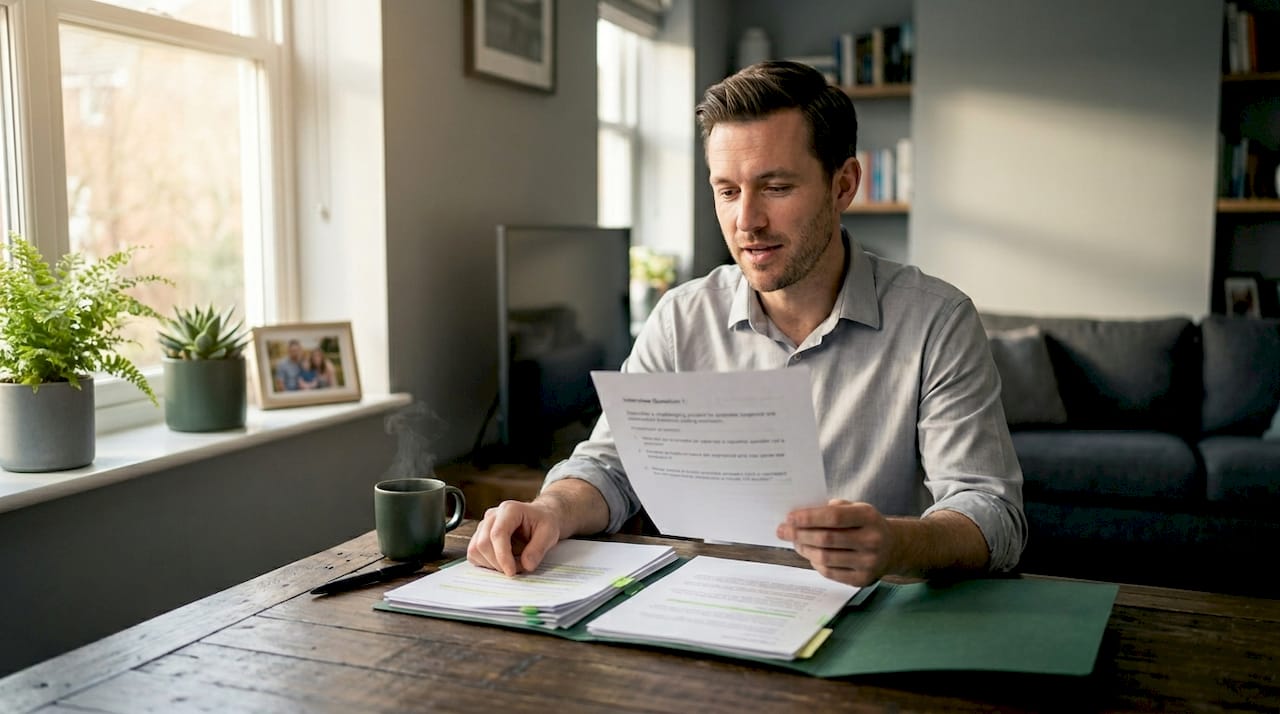
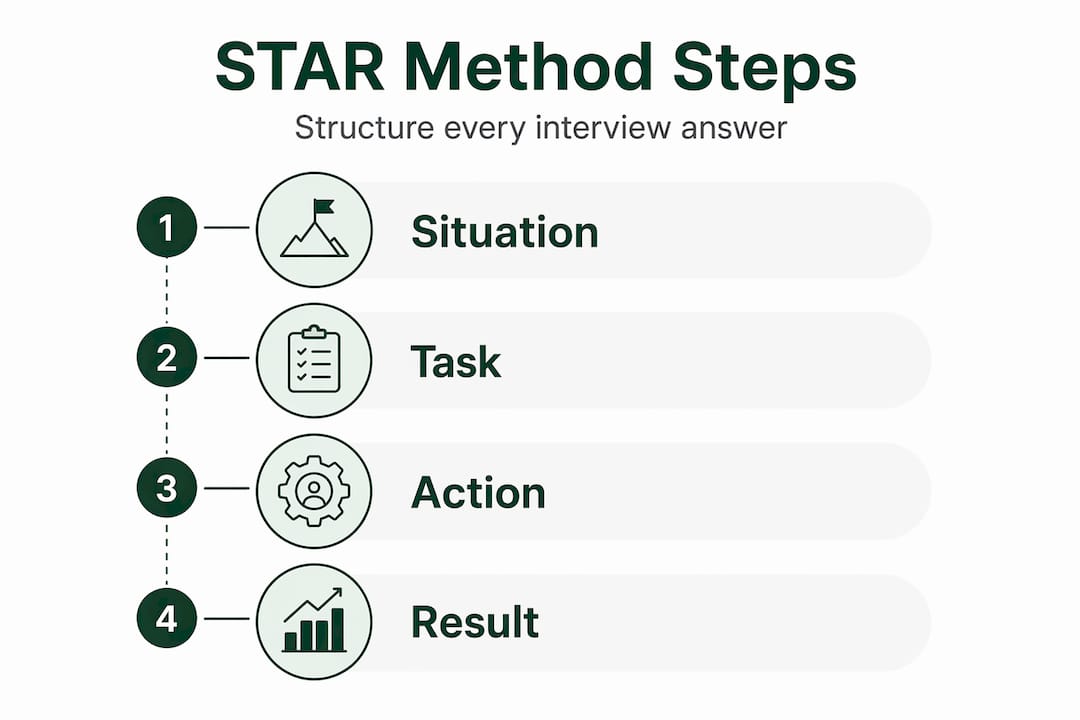
The STAR method gives every behavioral answer a clean structure. Situation sets the context. Task explains your specific responsibility. Action describes exactly what you did, not what “we” did. Result closes with a measurable outcome whenever possible. A well-built STAR story sounds natural and takes about ninety seconds to deliver.
According to preparation research, candidates should build five to seven stories practiced five to ten times each, with one to two hours dedicated solely to this work within a three to five hour total prep window. That may sound like a lot until you realize each story can answer multiple question types. A story about managing a difficult stakeholder can answer questions about conflict, communication, leadership, and adaptability.
How to build your story bank:
- List the five to seven most significant projects or achievements from your last two roles.
- For each, identify the business problem, your specific contribution, and the outcome with numbers where possible.
- Map each story to common behavioral themes: leadership, conflict, failure, pressure, collaboration, and initiative.
- Write a one-paragraph version of each story, then practice saying it out loud until it flows.
- Time yourself. Aim for sixty to ninety seconds per answer.
Pro Tip: Spaced preparation beats cramming every time. Practicing your stories on day three, reviewing them on day two, and doing a light run-through on day one builds far stronger recall than repeating them twenty times the night before.
Materials to have ready before interview day:
- Multiple printed copies of your resume tailored to this specific role
- A printed or digital copy of the job description with key terms highlighted
- A notepad for writing down interviewer names and questions as they arise
- A portfolio or work samples if relevant to the role
- Login credentials for video platforms pre-tested and saved
Customizing your answers to the actual job description is not optional. Read the job posting and underline the specific skills and outcomes they emphasize. Then make sure each story you plan to tell maps to at least one of those requirements.
Logistics: removing day-of distractions
Interview anxiety is often not about the interview itself. It comes from unresolved logistics. Not knowing where you are going, whether your tech will work, or what to wear burns mental energy you need for your actual answers.
Finalize every logistical detail 24 hours in advance. This means confirming the exact meeting location or virtual link, having the interviewer’s contact information saved, and knowing who to call if something goes wrong.
For in-person interviews, drive or transit the route at least once beforehand if possible. Plan to arrive fifteen minutes early. That buffer is not about impressing anyone. It gives you time to breathe, review your notes, and shift mentally into interview mode before you walk in.
For virtual interviews, test your tech setup the day before. That means camera, microphone, lighting, and internet stability. Log in to the actual platform being used, not just your computer in general. Confirm your background is clean or use a professional virtual background. Have a backup plan, such as a phone number you can call if your internet drops.
Pre-interview logistics checklist:
- Confirm date, time zone, format, and location of the interview
- Save the interviewer’s name, title, and contact information
- Lay out your outfit the night before, dress one level above the company’s typical dress code
- Test all virtual meeting technology including audio and video
- Charge all devices and prepare a backup internet option
- Prepare a glass of water and have it nearby for both in-person and virtual settings
Do not skip the mental preparation component. Five minutes of slow breathing or a short walk before you start reduces cortisol levels measurably. Reviewing your strongest STAR story right before you begin reactivates the confident, competent version of yourself you want to present.
Asking the right questions to assess the employer
Most candidates treat the “do you have any questions?” moment as a formality. It is not. As Google’s career research points out, treating an interview as a two-way conversation signals foresight and genuine engagement. The questions you ask reveal how you think and whether you have done your homework.
Prepare eight to ten questions organized by interviewer type. The questions you ask a recruiter differ from what you ask a hiring manager or a potential peer. Recruiters handle process and logistics. Hiring managers care about fit, performance, and team dynamics. Peers reveal the day-to-day reality of the role.
High-value questions worth preparing:
- “What does success look like in the first 90 days for this role?”
- “What are the biggest challenges the team is working through right now?”
- “How would you describe the decision-making process on this team?”
- “What made the last person who held this role successful, or what caused them to struggle?”
- “How does this team typically handle disagreement or differing priorities?”
For more ideas on what to ask, explore high-impact interview questions curated specifically for closing strong.
Salary and benefits questions are legitimate but should wait until you have an offer or the employer raises them first. Bringing them up too early shifts the dynamic before they have fully decided they want you.
Follow-up strategies that keep you top of mind
The interview ended. Most candidates assume the work is done. The ones who get offers often do one more thing well.
Send a personalized thank-you email within 24 hours of every interview. Under 150 words is ideal. Reference something specific from the conversation, restate your interest in the role, and thank the interviewer for their time. Generic “thanks for the opportunity” emails are forgotten immediately. A note that references a specific point from your conversation reads as attentive and professional.
What to include in your follow-up:
- A direct line of thanks referencing the interviewer by name
- One specific reference to a topic discussed, such as a challenge they mentioned
- A brief reaffirmation of why the role fits your experience and goals
- A professional close with your contact information
If a week passes with no response, one polite follow-up is appropriate. Anything beyond two follow-ups starts to work against you. Keep each follow-up short, friendly, and forward-looking.
Pro Tip: If you interviewed with multiple people, send each person a distinct message. Even minor differences in what you reference will demonstrate that you were fully present in each conversation.
How much does follow-up actually matter? Career coaches consistently cite it as a tiebreaker when two candidates are equally qualified. The candidate who followed up professionally and specifically is perceived as more committed, more organized, and easier to communicate with.
My honest take on what actually works
I’ve seen hundreds of candidates overprepare the wrong things and underprepare the ones that matter. Memorizing perfect answers is the most common mistake. It creates a robotic delivery that interviewers can spot immediately, and it collapses the moment the question is slightly different than expected.
What I’ve found actually works is building a flexible story bank rather than scripted lines. When you know your material at the story level, you can adapt to any variation of a behavioral question without losing your footing. That adaptability is what reads as natural confidence rather than rehearsed performance.
The other thing I’ve learned is that logistics are massively underestimated as a preparation category. Candidates who show up flustered because they couldn’t find parking or had a tech failure during a video interview never fully recover their composure. Resolving every logistical variable the day before is not obsessive. It is just smart.
Last thing. The best candidates I have worked with treat interview prep as an investment in a specific conversation, not a generic exercise. They research the actual company, the actual interviewers, and the actual job requirements. Generic preparation produces generic performance. Specific preparation produces memorable interviews.
— Jure
How Parakeet-ai supports your interview preparation
Preparing for a job interview takes real time and a clear system. Parakeet-ai is built to support exactly that process. It listens to your interview in real time and automatically provides answers to every question using AI, so even when nerves kick in mid-conversation you have solid, relevant support behind you.
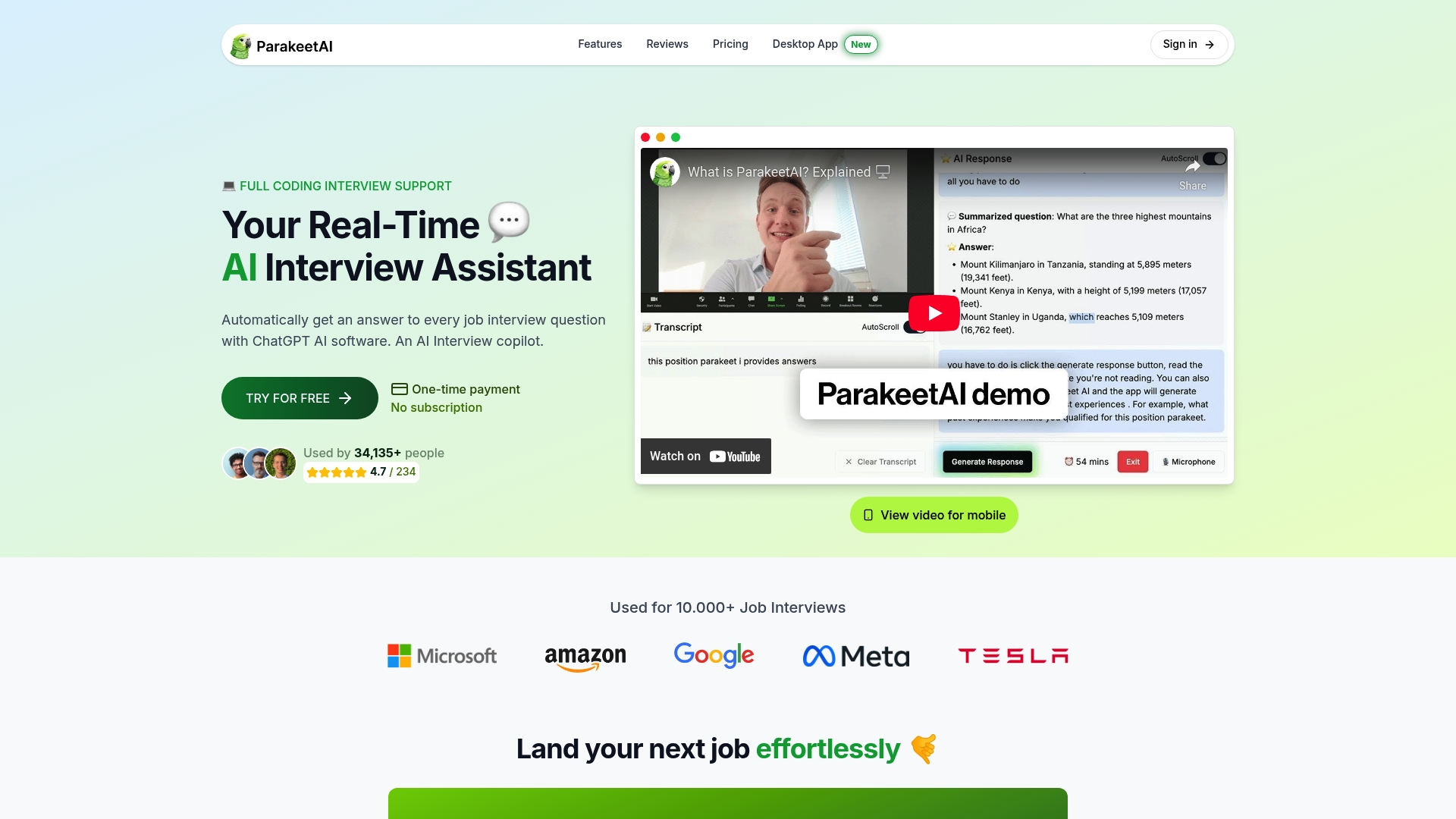
Whether you are working on STAR story structure, researching company-specific talking points, or rehearsing how you’d respond under pressure, the Parakeet-ai platform is designed to make preparing for a job interview more efficient and far less stressful. It’s the kind of preparation advantage that shows in the actual interview, not just in your notes the night before.
FAQ
How long before an interview should you start preparing?
Start preparing three to five days before your interview. Spread the work across multiple sessions: deep research on day three, story practice on day two, and logistics and light review on day one.
What is the best way to prepare STAR stories?
Build five to seven stories from your most significant work experiences and practice each one five to ten times aloud. Map each story to multiple behavioral themes so you can adapt it to different question types.
What questions should you ask at the end of an interview?
Ask questions about 90-day success criteria, team challenges, and decision-making processes. Avoid salary questions until you receive an offer or the interviewer raises the topic first.
How do you reduce anxiety before a job interview?
Finalize all logistics including tech, outfit, and route at least 24 hours before the interview. Most pre-interview anxiety comes from unresolved practical details rather than a lack of knowledge.
Should you send a thank-you email after every interview?
Yes. Send a personalized note within 24 hours referencing something specific from your conversation. Keep it under 150 words and follow up once if you do not hear back within a week.