Top Interview Nerves Strategies for Better Confidence
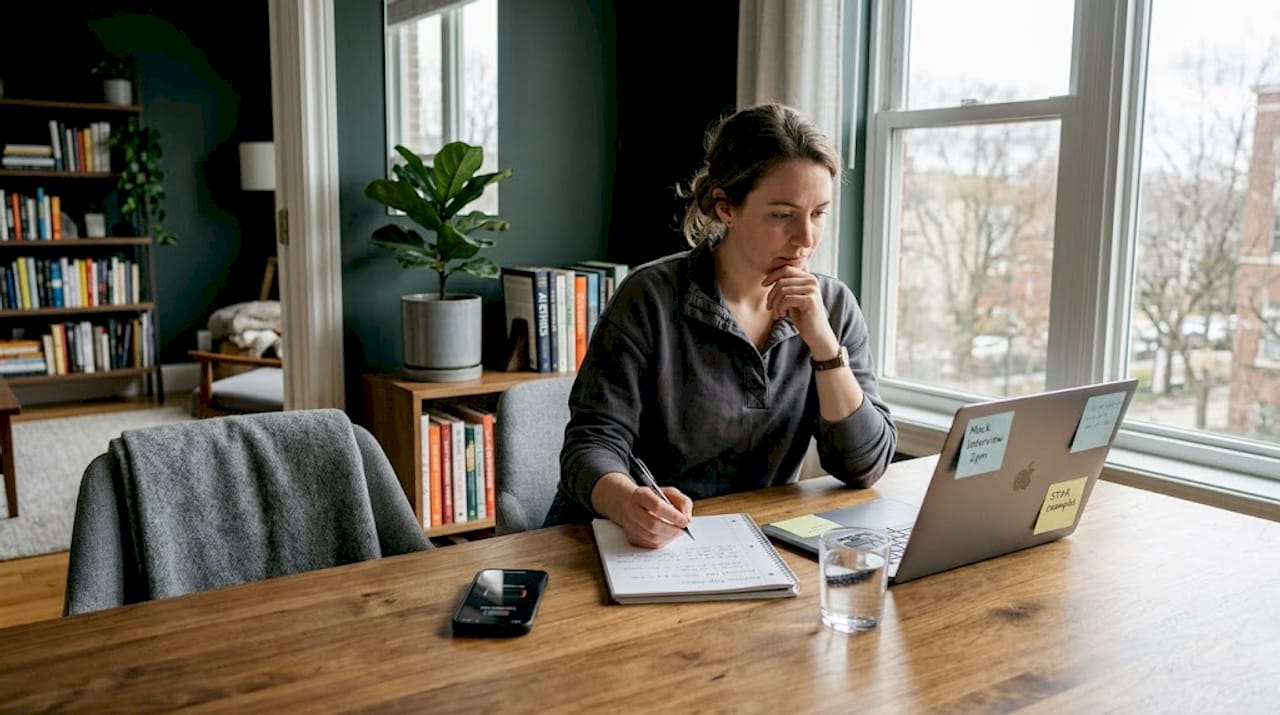
TL;DR:Reframing nerves as excitement leverages high-arousal states for better performance.Power posing enhances confidence by physically signaling dominance and capability.Using recovery phrases normalizes nerves and maintains composure during unexpected moments.
Almost everyone walks into an interview with a racing heart and sweaty palms. That familiar tightness in your chest is not a flaw or a weakness. It is your body doing exactly what it was designed to do when the stakes feel high. The real question is not how to eliminate those feelings but how to redirect them into sharp, compelling answers that make hiring managers remember you. This article gives you three science-backed strategies you can use right now to turn nervous energy into confident, memorable interview performance.
Table of Contents
- Criteria for choosing nerves strategies
- Strategy 1: Reframe nerves as excitement
- Strategy 2: Power posing for confidence boost
- Strategy 3: Normalize nerves and use recovery phrases
- Why most interview nerves advice misses the mark
- Next steps for your confident interviews
- Frequently asked questions
Key Takeaways
| Point | Details |
|---|---|
| Reframe for results | Turning nerves into excitement leads to better interview performance. |
| Try power posing | Power poses boost psychological confidence before interviews. |
| Normalize anxiety | Recognizing nerves as normal and using pauses helps you regain composure. |
| Strategic preparation | Match strategies to your personality and interview format for maximum impact. |
Criteria for choosing nerves strategies
Not every strategy works for every person or every interview format. Before you try anything, it helps to understand what is actually driving your nerves and which approach fits your natural tendencies.
Start by considering your personality style. If you tend toward introversion, you likely find small talk draining and may feel extra pressure during panel interviews where multiple people fire questions at you. If you lean extroverted, your nerves may spike when you feel underprepared or when a technical question stumps you mid-answer. These are different triggers, and they respond to different tools.
Next, think about the interview format you are facing:
- In-person interviews: You have physical space to use body language and movement before you walk in.
- Remote video calls: Your environment is within your control, which opens up options like brief breathing routines or desk-level power posing before the call starts.
- Panel interviews: Multiple evaluators create more social pressure, so recovery phrase readiness becomes especially critical.
- Technical interviews: The fear of a blank-mind moment is common, making strategic pauses and reframing essential tools.
One of the most important insights from modern psychology is that trying to suppress anxiety almost never works. Research consistently shows you should reframe anxiety as excitement rather than suppress it, because both are high-arousal states. Suppression fights your body’s natural physiological response while reframing works with it. Think of suppression as trying to hold a beach ball underwater. It takes enormous energy, it rarely stays down, and eventually it pops up at the worst moment.
When you browse stress reduction practices, you will notice that the most effective ones share a common thread: they redirect energy rather than eliminate it.
Here is a quick checklist to help you choose the right strategy for your situation:
- Fear of blanking mid-answer? Recovery phrases and strategic pauses (Strategy 3) are your priority.
- Feeling physically jittery? Power posing before the call or walk-in (Strategy 2) channels that physical energy productively.
- Mind racing with worst-case scenarios? Reframing nerves as excitement (Strategy 1) targets this directly.
- Facing a panel of evaluators? Combine all three for layered support.
Choosing the right fit is not about ranking these strategies from best to worst. It is about pairing the right tool with the right trigger at the right moment.
Strategy 1: Reframe nerves as excitement
With selection criteria clear, let’s explore the first evidence-backed approach: reframing nerves as excitement.
Here is something that may surprise you. When you are nervous before an interview, you feel your heart beating faster, your breathing quickens, and your mind sharpens. Now picture how you feel when you are genuinely excited about something. The physical sensations are nearly identical. The only real difference is the story you tell yourself about what those sensations mean.
Stat callout: In controlled research, participants saying “I am excited” gave longer, more persuasive speeches and scored 8% higher on math tasks than those who tried to say “I am calm.” That is a measurable performance gap from a single sentence.
This is not positive thinking fluff. It is grounded in how your brain processes threat versus opportunity. Telling yourself to calm down requires your nervous system to shift from a high-arousal state to a low-arousal state, which is physiologically difficult on demand. But telling yourself you are excited keeps you in a high-arousal state while changing the emotional label from negative to positive. Your brain can make that switch much more easily.
Here is how to actively apply this before and during your interview:
- Say it out loud (or silently) three times: Literally tell yourself, “I am excited about this interview.” It sounds almost too simple, but the research is clear that the self-statement itself triggers a cognitive shift.
- Name the specific things you are excited about: “I’m excited to talk about the project I led last quarter” or “I’m excited because this role is a real step forward.” Specificity makes the reframe more believable to your own brain.
- Pair it with a physical cue: Take one slow, deliberate breath as you say the statement. This anchors the mental shift to a physical action, making it easier to repeat in the moment.
- Reframe the stakes: Instead of “I must not mess this up,” try “This is my chance to show them what I can actually do.” One framing puts you in a defensive crouch. The other puts you on offense.
People who overcome interview anxiety using this technique often report feeling a genuine shift in their internal state within seconds. The words are the trigger, not just decoration.
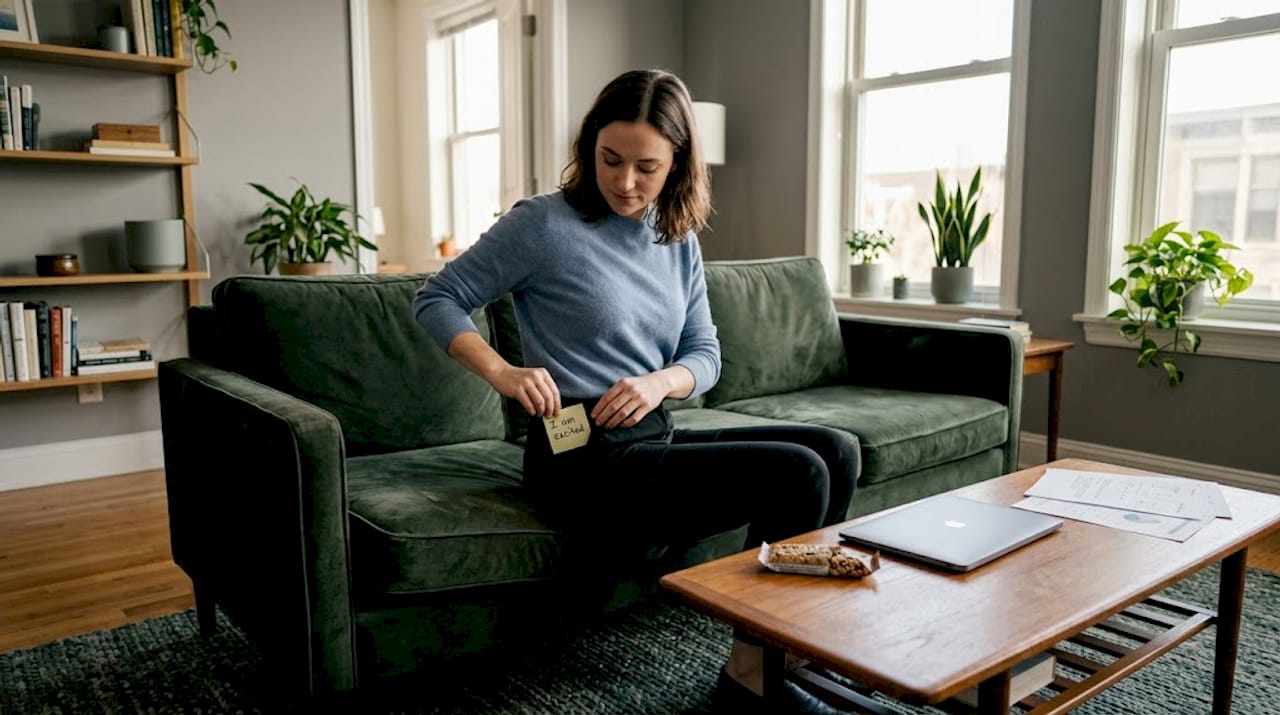
Pro Tip: Write “I am excited” on a small piece of paper and put it in your pocket or on your desk before the interview. Touching it or glancing at it before you walk in or start the video call serves as a quick, grounding reset.
The reframing strategy works especially well when combined with preparation. The more concrete examples and stories you have ready, the easier it is to genuinely feel excited because you actually have something valuable to say.
Strategy 2: Power posing for confidence boost
Shifting mindsets is one approach. Next, let’s equip you with a quick physical confidence hack.
You may have heard of power posing. For a while, it was famous for claims that standing in a wide, expansive posture for two minutes would raise testosterone and lower cortisol. Those hormonal claims did not hold up under scientific replication. However, here is what did survive scrutiny: power posing’s psychological benefits on felt confidence are consistent. People who power pose before high-pressure situations report feeling more powerful, more capable, and more prepared, and that subjective experience changes how they carry themselves in the room.
For interviews, felt confidence is the outcome you actually need. You do not need a hormonal shift. You need to walk into that room (or appear on that screen) with your shoulders back and your voice steady. Power posing helps you get there.
“The physical act of taking up space signals to your own mind that you belong in that space. It is a feedback loop your body sends to your brain.”
Here is how to do a power pose correctly before your interview:
- Find a private space: A bathroom stall, an empty stairwell, your car, or your home office before a video call. You do not want an audience for this.
- Stand with your feet shoulder-width apart: Plant your feet firmly and evenly. Do not cross your ankles or shift your weight to one side.
- Place your hands on your hips or raise them overhead: The classic Wonder Woman stance (hands on hips) or a victory pose (arms raised in a V) both work. The key is that you take up more space than you normally would.
- Hold it for two minutes: Set a quiet timer. Breathe naturally. Let yourself feel the physical space you are occupying.
- Transition directly into your interview mindset: After two minutes, take one slow breath, tell yourself something affirming, and walk in.
You can find more interview confidence tips that pair physical and mental preparation to create a layered approach.
Pro Tip: If you are interviewing remotely and need a quick reset between questions, straighten your posture, roll your shoulders back, and plant both feet flat on the floor. This mini power pose is invisible to the interviewer but resets your physical confidence signal in real time.
The reason power posing works psychologically is that your body language feeds back into your emotional state. When you deliberately take up space, you interrupt the physical pattern of anxiety (shoulders hunched, arms crossed, making yourself small) and replace it with the physical pattern of confidence. Your brain picks up that signal and adjusts.
Strategy 3: Normalize nerves and use recovery phrases
Alongside boosting excitement and external confidence, handling moments of uncertainty is equally vital.
Even the most polished candidates have moments in interviews where a question catches them off guard. A panel member asks something unexpected. A technical question goes in a direction you did not prepare for. Your mind goes temporarily blank. These moments feel catastrophic in the moment, but they almost never look as bad from the outside as they feel from the inside.
Research on introvert-specific interview strategies confirms that normalizing nerves as universal is one of the most effective ways to reduce their grip. When you internalize the fact that every candidate sitting in that chair feels some version of what you feel, the shame and self-consciousness shrink. You stop performing calm and start simply responding.
One of the most practical tools here is the strategic pause. Three seconds of silence feels much longer to you than it does to the interviewer. In fact, a brief pause signals that you are thoughtful, not lost. The instinct to fill every millisecond of silence with words often leads to rambling, which actually does hurt your impression.
Here is a quick guide to recovery phrases that help you buy yourself time and maintain composure:
- “Let me take a moment to think about that.” (Signals thoughtfulness)
- “That’s a great question. I want to give you a thorough answer.” (Buys 3 to 5 seconds naturally)
- “Can you clarify what aspect you’re most interested in?” (Redirects and gives you more information)
- “I haven’t faced that exact situation, but here’s how I’d approach it.” (Honest and forward-looking)
For technical interview tips, recovery phrases are especially valuable because the blank-mind moment happens most often under technical pressure.
Here is a quick reference table for matching recovery phrases to common interview situations:
| Situation | Recovery phrase to use |
|---|---|
| Unfamiliar question | “Let me think about that for a moment.” |
| Blank-mind moment | “I want to make sure I give you the best answer.” |
| Unclear question | “Could you tell me a bit more about what you’re looking for?” |
| Missing experience | “I haven’t done that directly, but here’s how I’d approach it.” |
| Emotional question | “That’s something I feel strongly about. Let me frame my thoughts.” |
You can also review how to avoid interview pitfalls by combining recovery phrases with the other strategies in this article.
The key insight here is that recovery phrases are not admissions of weakness. They are signals of self-awareness, communication skill, and professionalism. Interviewers do not expect perfection. They expect composure under pressure, which is exactly what these phrases demonstrate.
Why most interview nerves advice misses the mark
Here is the uncomfortable truth most interview coaching glosses over: the vast majority of “calm down” advice is physiologically backwards. Telling someone to relax before a high-stakes interview is like telling someone to stop sweating in a sauna. The body does not work that way.
The conventional wisdom says: breathe deeply, think positive thoughts, tell yourself it’s just a conversation. And while those things are not harmful, they target the wrong lever. They try to lower your arousal when the evidence points clearly in the other direction. The most effective approach is to keep arousal high but change the label from threat to opportunity.
We have seen this play out consistently. Candidates who go in trying to suppress nervousness often come across as flat, stiff, or overly rehearsed. Candidates who channel nervousness as energy tend to be more animated, more present, and more engaging. The nervous energy becomes performance fuel rather than static interference.
The interview best practices that actually move the needle are the ones that work with human physiology rather than against it. Reframing, posing, and recovery phrases all do exactly that.
Next steps for your confident interviews
You now have three concrete, research-backed strategies to take into your next interview. The real edge comes from practicing them before you need them, not figuring them out in the moment. That is where ongoing tools and resources make a real difference.
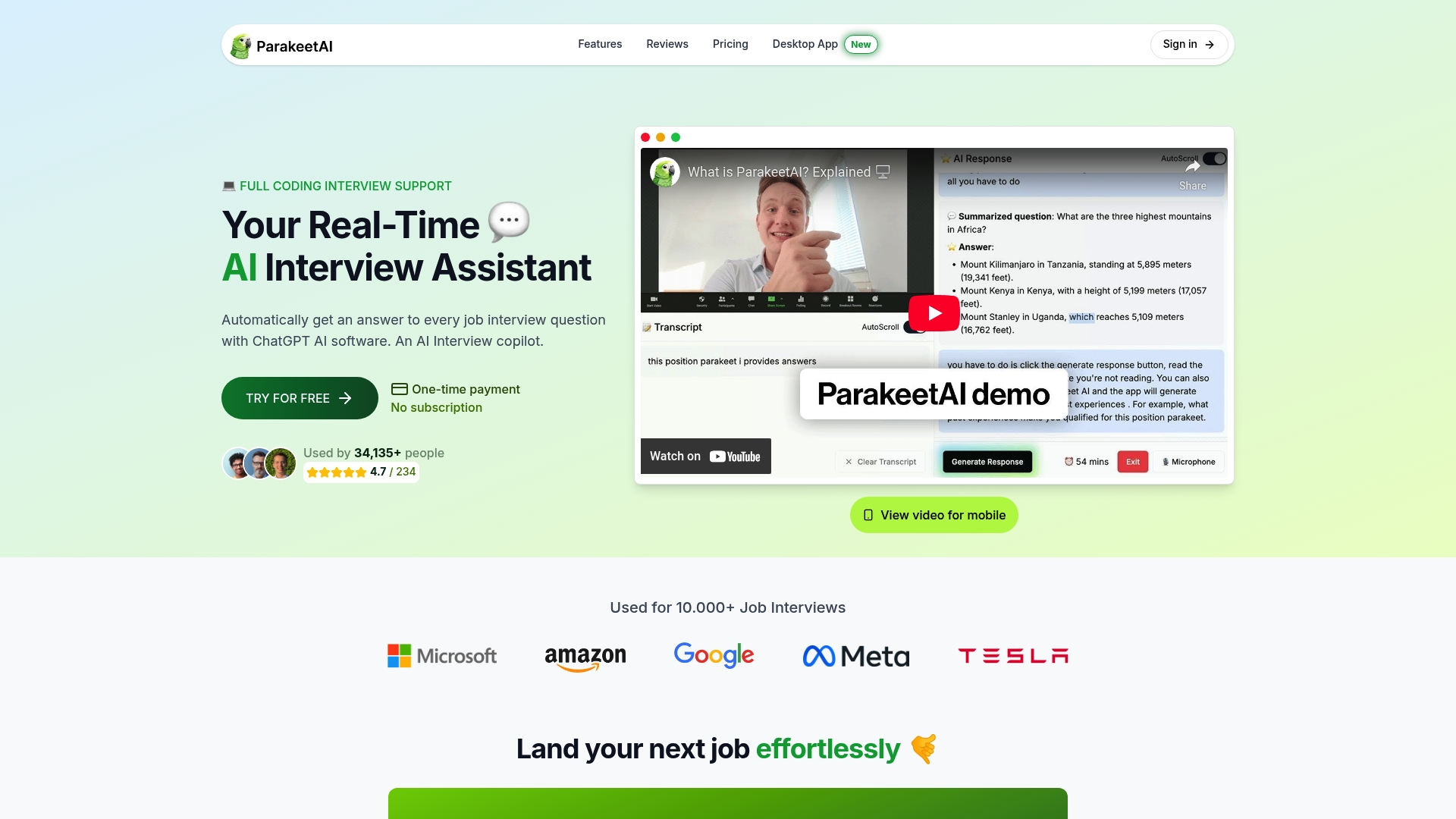
ParakeetAI is built specifically to support job seekers like you in real time. The platform listens to your interview as it happens and automatically surfaces relevant answers and prompts so you are never left scrambling. If you want to build your foundation further before the big day, explore more strategies for interview anxiety on the blog, or visit ParakeetAI to see how real-time AI support can turn preparation into a genuine competitive advantage.
Frequently asked questions
Why do nerves spike most right before interviews?
Nerves spike due to a surge of adrenaline and anticipation as your brain registers a high-stakes social situation. Recognizing that anxiety and excitement share the same physiology can help you redirect that energy rather than fight it.
Is it better to try to calm down or get excited during interviews?
Getting excited consistently outperforms trying to calm down. Research shows participants saying “I am excited” delivered better speeches and scored higher on tasks than those attempting to reach a calm state.
Can introverts use these strategies effectively?
Absolutely. Recovery phrases and strategic pauses are especially well suited to introverts because they create space for deliberate thinking. Normalizing nerves as universal also helps introverts stop judging themselves for feeling what every candidate feels.
Does power posing actually work for job interviews?
Yes, though not for the reasons originally claimed. While hormonal claims failed replication, the psychological benefit of feeling more powerful and confident is well supported and practically useful before any high-stakes interview.