
Why use AI listening tools to boost your interview success
TL;DR:AI listening tools analyze speech to provide instant, structured interview feedback and improvement tracking.They help candidates build confidence, refine responses, and practice more effectively without social pressure.Over-reliance and authenticity concerns are potential drawbacks, so ethical and balanced use is essential.
Every week, thousands of job seekers walk into interviews feeling underprepared while a quieter group uses AI listening tools to practice smarter, get faster feedback, and walk in with real confidence. These tools have moved from novelty to necessity for serious candidates, yet most people have never heard of them or assume they are only for tech insiders. This article breaks down what AI listening tools are, how they work, the real benefits and honest drawbacks, and the practical steps you can take to use them ethically and effectively. By the end, you will understand exactly why these tools are reshaping how competitive candidates prepare.
Table of Contents
- What are AI listening tools and how do they work?
- Key benefits of AI listening tools in interview preparation
- Potential drawbacks and ethical considerations
- How to use AI listening tools effectively for interview success
- A fresh perspective: What most job seekers and experts miss about AI listening tools
- Take the next step with AI-powered interview preparation
- Frequently asked questions
Key Takeaways
| Point | Details |
|---|---|
| Builds interview confidence | AI listening tools give actionable feedback so you enter interviews better prepared. |
| Balance tech with authenticity | Rely on AI for practice but develop your own authentic style for real interviews. |
| Use ethically and wisely | Understand privacy, fairness, and use AI tools as support—not a crutch. |
| Step-by-step improvement | Regular use with feedback helps you spot and correct weaknesses efficiently. |
What are AI listening tools and how do they work?
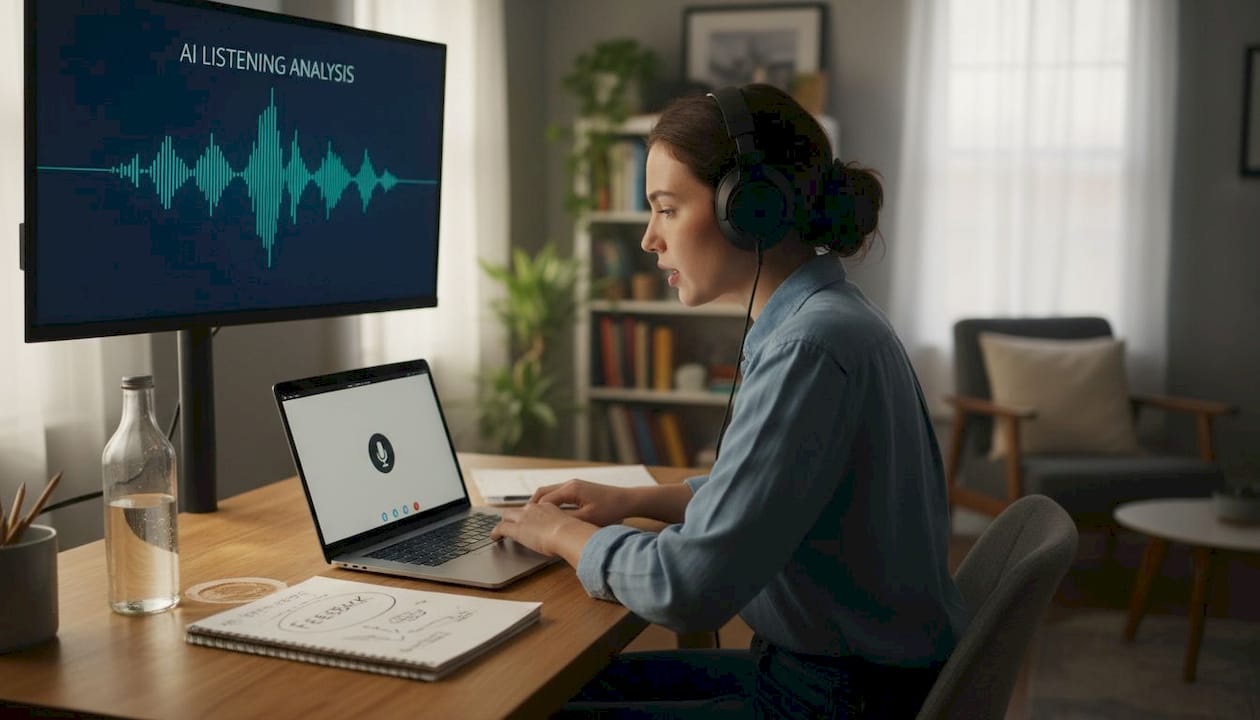
AI listening tools are software applications that process spoken audio in real time, analyze the content, and return structured feedback to the user. Think of them as a coach who never sleeps, never judges, and gives you a detailed report every single time you open your mouth. During a mock interview, the tool listens to your responses, converts speech into text through voice recognition, and then applies natural language processing (NLP) to evaluate elements like clarity, pacing, keyword usage, and relevance.
AI-powered interview tools take this a step further by matching your answers to common interview question patterns and suggesting stronger responses on the spot. The core technology stack usually includes automatic speech recognition (ASR), NLP models trained on interview data, and a scoring or feedback engine that flags weak areas.
Here is a typical workflow:
- Step 1: You launch the tool and start a mock interview session.
- Step 2: The AI listens as you answer practice questions out loud.
- Step 3: Your speech is transcribed and analyzed within seconds.
- Step 4: The tool returns feedback on filler words, answer structure, and topic coverage.
- Step 5: You review the notes, adjust, and repeat until your responses tighten up.
What sets these tools apart from simply recording yourself and replaying the video is the structured, instant analysis. A recording tells you what happened. An AI listening tool tells you what to fix and why.
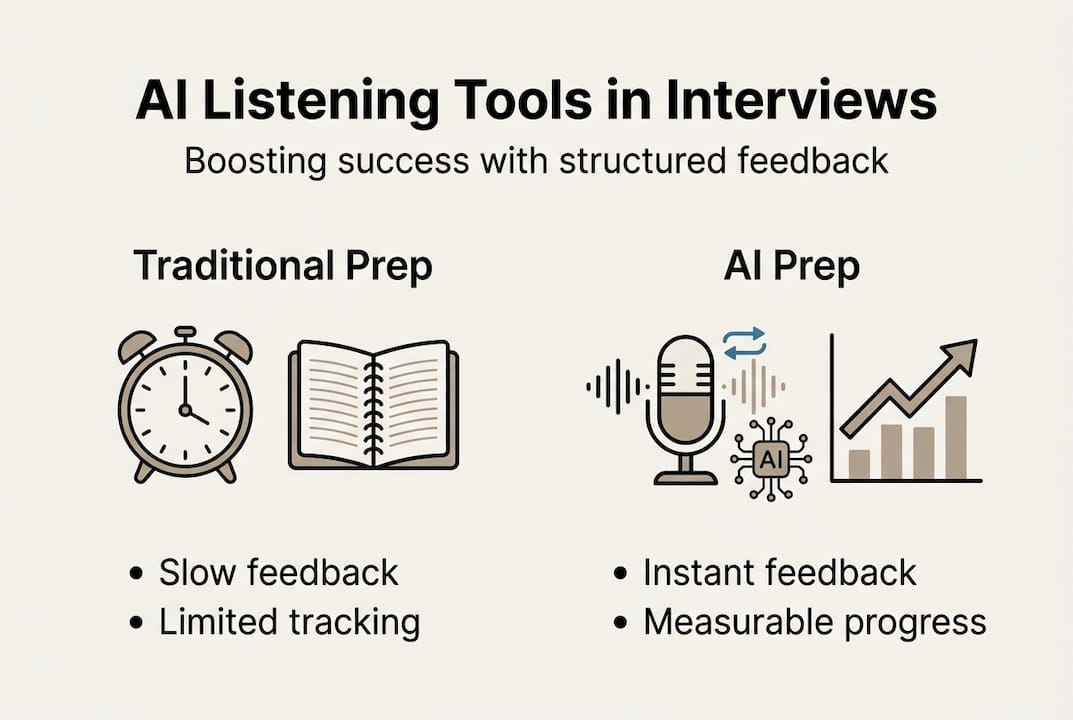
| Feature | Traditional recording | AI listening tool |
|---|---|---|
| Instant feedback | No | Yes |
| Filler word detection | Manual | Automatic |
| Answer structure scoring | No | Yes |
| Improvement tracking | No | Yes |
| Personalized suggestions | No | Yes |
AI listening tools provide structure and a measurable boost to interview confidence, which is something a passive recording simply cannot replicate. As AI in recruitment continues expanding across hiring pipelines, candidates who understand these tools early hold a real edge.
Key benefits of AI listening tools in interview preparation
The gap between AI-assisted prep and traditional prep is growing wider. Candidates who use AI listening tools report faster improvement cycles, sharper answers, and noticeably higher confidence walking into real interviews. Here is why.

1. Instant, specific feedback. Instead of waiting for a friend to review your answers or guessing what went wrong, you get precise data immediately. The tool flags the exact moment you said “um” twelve times or gave a vague answer to a behavioral question.
2. Error correction in real time. Some tools highlight when your answer drifts off topic, allowing you to course-correct before the habit is baked in.
3. Measurable improvement tracking. You can see your filler word count drop from session to session, your average response length tighten, and your confidence score climb. Numbers make progress tangible.
4. Low-pressure repetition. Practicing with an AI has no social stakes. You can stumble, restart, and try again without embarrassment, which means you actually practice more often.
5. Structured preparation. AI interview confidence is built through consistency, and these tools create a repeatable system where each session builds on the last.
Community feedback supports this picture. Research shows that AI listening tools can enhance candidate confidence and offer structure, though recruiter views on live use remain divided. Used for preparation, the consensus is strongly positive.
Pro Tip: Do not just run a session and close the app. Spend at least five minutes reviewing the transcript and feedback before your next attempt. That review phase is where the real learning happens.
| Preparation method | Feedback speed | Personalization | Cost | Availability |
|---|---|---|---|---|
| Self-recording | Slow (manual review) | None | Free | Always |
| Coaching sessions | Delayed | High | Expensive | Scheduled |
| Peer mock interviews | Delayed | Moderate | Free | Limited |
| AI listening tools | Instant | High | Low to moderate | Always |
For job seekers exploring AI job search benefits more broadly, the data consistently points to efficiency and confidence as the two biggest wins.
Potential drawbacks and ethical considerations
No tool is perfect, and AI listening tools come with real limitations worth knowing before you commit to them fully.
Over-reliance is the biggest risk. When candidates practice exclusively with AI feedback, they can start optimizing for what the algorithm rewards rather than what a real human interviewer values. You may nail every metric and still come across as robotic in person.
Authenticity concerns are legitimate. If your AI-coached answers are perfectly structured but do not sound like you, experienced interviewers notice. A polished but hollow response can actually hurt more than a slightly rough but genuine one.
Recruiters are also weighing in on this debate. Recruiters are divided on AI listening tools, with real concerns emerging around authenticity and fairness in the hiring process, especially when candidates use AI live rather than for preparation only.
Ethical best practices to follow:
- Use AI tools for practice and preparation only, not during live interviews unless explicitly permitted.
- Never feed confidential job descriptions or proprietary company data into third-party tools.
- Disclose AI-assisted preparation if directly asked by a recruiter.
- Balance your AI sessions with real human mock interviews to keep your responses natural.
- Review the tool’s data privacy policy before sharing audio or personal information.
“The question is not whether AI is useful in interview prep. The question is whether the candidate behind the polished answer is still in the room.”
Understanding recording technology pros and cons helps you make smarter choices about where AI fits in your overall preparation strategy without letting it replace genuine self-expression.
How to use AI listening tools effectively for interview success
Knowing both the perks and pitfalls, here are the concrete steps that will get you real results without crossing ethical lines.
1. Start with a baseline session. Record yourself answering five common interview questions cold, before any coaching. This gives you a genuine starting point to measure improvement against.
2. Choose one focus area per session. Do not try to fix everything at once. Spend one session on filler words, the next on answer structure using the STAR method (Situation, Task, Action, Result), and the next on conciseness.
3. Review every transcript carefully. Proper use of AI listening tools can significantly improve performance, but only when candidates engage with the feedback rather than skimming past it.
4. Record a human mock interview weekly. Alternate AI sessions with a friend, mentor, or career coach. This keeps your natural communication style sharp and stops you from optimizing purely for the algorithm.
5. Track your metrics over time. Keep a simple log of your filler word count, average response length, and confidence score per session. Watching that data improve is genuinely motivating.
6. Test your answers in the real world. Use improved responses in networking conversations or informational interviews. This stress-tests your new habits outside the artificial environment of the app.
Pro Tip: Before each AI session, state your target out loud: “Today I am working on reducing filler words.” This simple habit keeps your practice intentional rather than mechanical.
Staying current on HR tech and recruitment trends also helps you understand which skills interviewers are prioritizing, so you can direct your AI practice toward what actually matters in 2026 hiring environments. You can also explore strategies for leveraging AI for interviews to build a fuller preparation plan beyond listening tools alone.
A fresh perspective: What most job seekers and experts miss about AI listening tools
Most conversations about AI listening tools focus on features: does it detect filler words, does it score your answers, how fast is the feedback? Those are valid questions, but they miss the deeper opportunity entirely.
The candidates who benefit most from these tools are not the ones chasing a perfect score. They are the ones using the feedback as a mirror for self-discovery. When you hear yourself ramble for ninety seconds on a simple question, that is not just a data point. It is information about how you think under pressure, what you actually know versus what you assumed you knew, and where your communication habits break down.
Data on AI’s role in hiring consistently shows that candidates who treat AI feedback as a growth signal outperform those who treat it as a checklist to game. The difference is mindset, not the tool itself.
The uncomfortable truth is that AI listening tools will not make a weak candidate suddenly brilliant. They will, however, make a prepared candidate significantly more polished. Use them to identify real gaps, build real habits, and develop real self-awareness. Progress compounds. Perfection is a distraction.
Take the next step with AI-powered interview preparation
If this article has clarified how AI listening tools can sharpen your interview performance, the next move is putting that knowledge to work in an actual session.
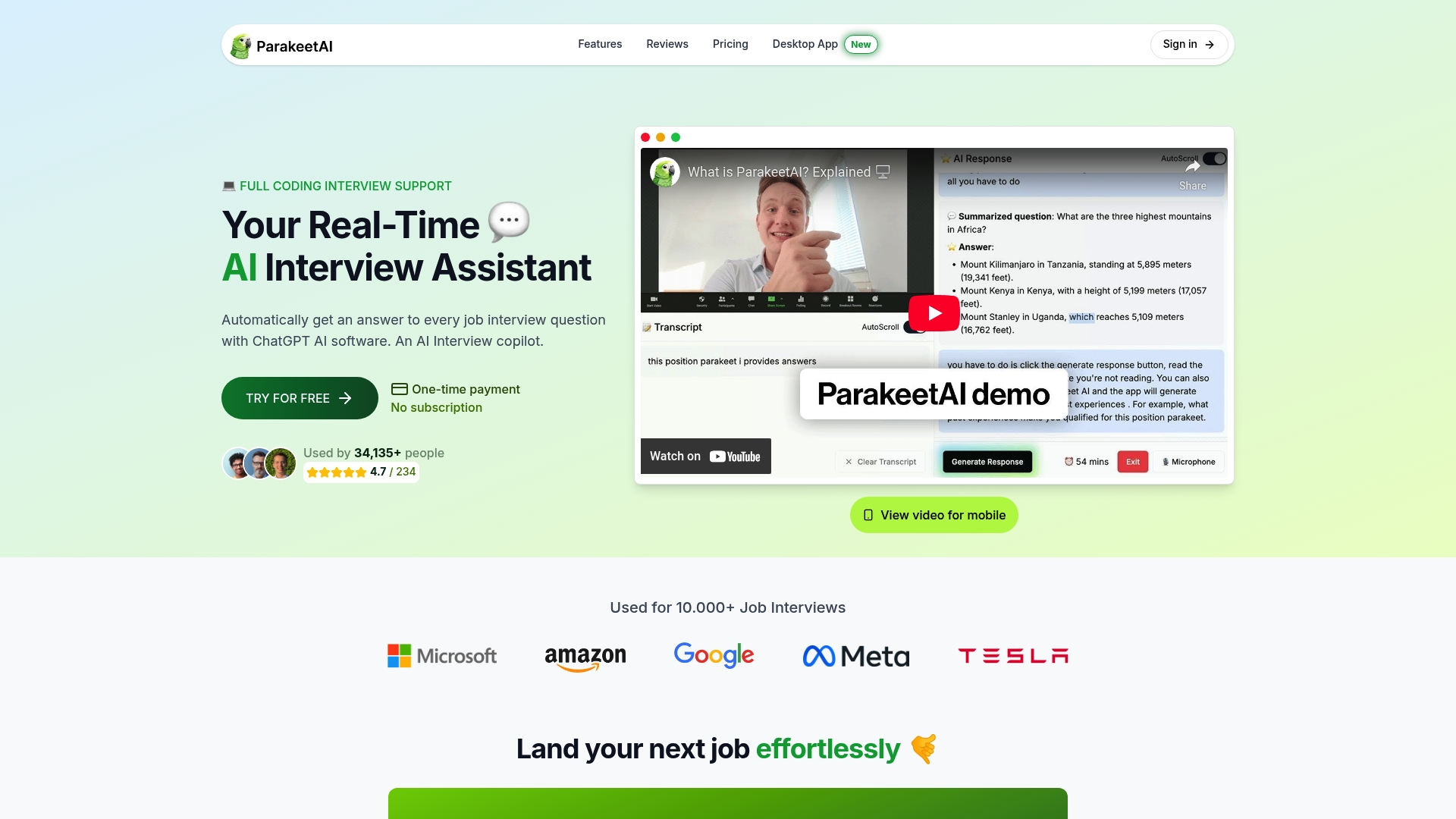
ParakeetAI’s interview tools give you a real-time AI assistant that listens to your interview and provides instant, structured answers to every question as it happens. Whether you are prepping for a technical role, a senior leadership position, or your first job out of college, ParakeetAI is built to help you walk in confident and walk out with an offer. Explore the platform today and experience what truly smart interview preparation feels like.
Frequently asked questions
Are AI listening tools allowed during real job interviews?
Most companies prohibit live AI assistance during interviews, but using these tools for preparation is widely accepted by recruiters and hiring managers across industries.
How do AI listening tools boost candidate confidence?
AI listening tools support candidates by providing structured, repeatable feedback that highlights improvement areas and makes thorough preparation feel achievable before the real interview.
What ethical risks do AI listening tools introduce?
Key risks include producing inauthentic or overly coached responses, potential privacy concerns around audio data, and uneven access to technology that may disadvantage some candidates on fairness grounds.
Can overusing AI listening tools hurt your performance?
Yes. Relying too heavily on AI feedback can cause you to optimize for algorithmic metrics rather than genuine human connection, which may reduce authenticity in a live interview setting.