
Engineering Manager Interview Questions and Answers: 2026 Guide

TL;DR:Engineering manager interview success hinges on demonstrating leadership, technical judgment, and influence through structured storytelling. Candidates must prepare detailed STAR-L stories, tailor responses to each interview stage, and showcase real management practices to stand out. Authenticity, clarity, and thoroughness in behavioral and technical answers significantly increase the chances of securing senior tech leadership roles.
Engineering manager interview questions and answers are the deciding factor between candidates who land senior tech leadership roles and those who don’t. The interview process tests four distinct competencies: technical credibility, people leadership judgment, cross-functional influence, and delivery accountability. Vague answers like “I made sure the team was aligned” cost candidates offers because they signal reactive management rather than deliberate leadership. The STAR-L framework (Situation, Task, Action, Result, Learnings) is the single most effective structure for answering behavioral rounds, and preparing a library of 12 to 15 tagged stories is the preparation method that separates finalists from rejections.
What are the common engineering manager interview stages?
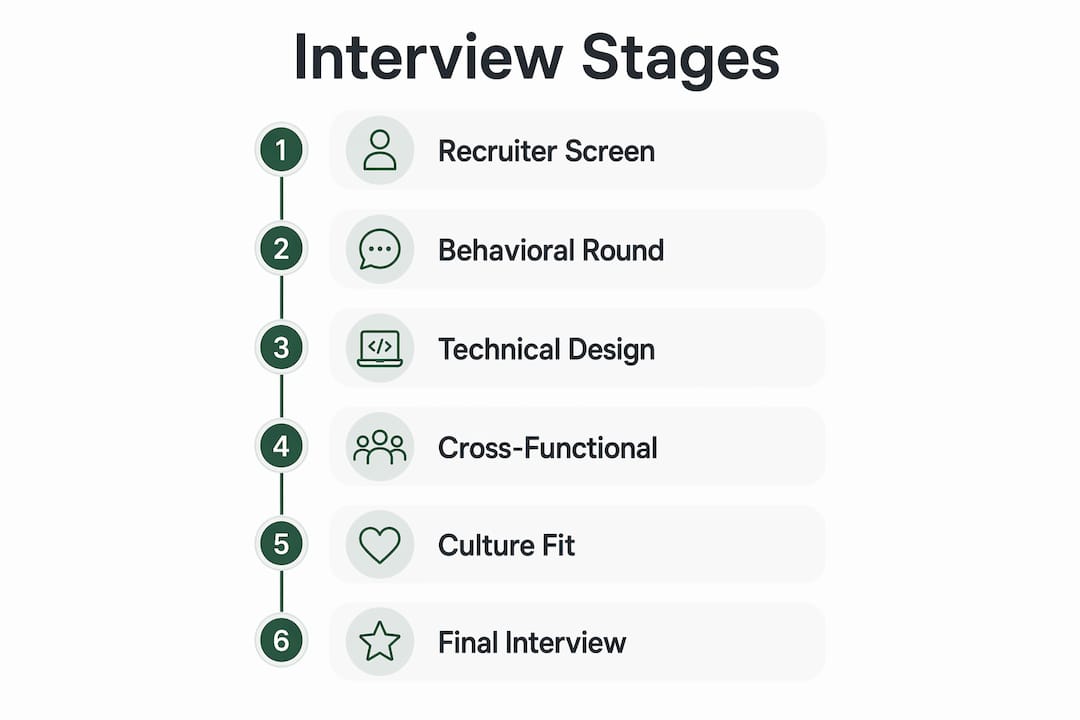
A typical engineering manager interview consists of 4 to 6 stages spread over 2 to 4 weeks. Each stage targets a specific competency, and walking in without knowing what each round assesses is the fastest way to under-prepare.

Here is what each stage evaluates and what you should prioritize:
| Stage | Focus Area | What Interviewers Assess |
|---|---|---|
| Recruiter screen | Fit and logistics | Compensation alignment, role clarity, communication style |
| Hiring manager behavioral | Leadership and management | Specific stories on conflict, hiring, performance management |
| Technical system design | Technical judgment | Architectural trade-offs, prioritization, risk management |
| Cross-functional panel | Influence and collaboration | Stakeholder management, product partnership, communication |
| Executive conversation | Delivery and culture | Accountability, vision alignment, organizational maturity |
The recruiter screen is not a formality. Recruiters flag candidates who cannot articulate their management scope clearly, so prepare a 60-second summary of your team size, delivery outcomes, and the types of decisions you own. The hiring manager behavioral round carries the most weight in most organizations. This is where your STAR-L stories need to be sharp, specific, and outcome-driven.
The technical system design round surprises many candidates because it does not involve writing code. Interviewers want to see how you challenge engineering estimates and influence architectural decisions, not whether you can implement a binary search tree. The cross-functional panel typically includes a product manager, a design lead, or a senior business stakeholder. Your job is to demonstrate that you can influence without authority. The executive conversation is the final filter, focused on whether your delivery philosophy matches the organization’s operating model.
How do you answer behavioral questions using the STAR-L framework?
Effective behavioral answers follow the STAR-L structure and run 2 to 3 minutes, with at least 50% of the narrative focused on the Action you took. Most candidates invert this ratio and spend too much time on context and too little on what they actually did.
Here is how to apply each element of STAR-L:
- Situation: Set the scene in two to three sentences. Include team size, timeline, and the specific pressure or constraint at play.
- Task: State your specific responsibility. Not the team’s goal. Your goal.
- Action: Describe the concrete steps you took. Name the conversations you had, the frameworks you applied, and the decisions you made. This section should take up more than half your answer.
- Result: Quantify the outcome wherever possible. Cycle time reduced by 30%, attrition dropped from 40% to 10%, or the feature shipped two weeks ahead of schedule.
- Learnings: This is the element that separates strong candidates from great ones. State what you would do differently and how that experience changed your management approach.
The Learnings element demonstrates maturity and growth capacity, which is exactly what senior hiring committees want to see. Candidates who only describe successes without reflection read as brittle or unaware.
Successful candidates prepare 12 to 15 STAR-tagged stories across categories including hiring decisions, performance management, conflict resolution, technical direction, scaling a team, and recovering from a missed deadline. Treat this library as a database, not a script. Each story should be adaptable to multiple question types.
Pro Tip: Record yourself answering three behavioral questions out loud. Most candidates discover they spend 90 seconds on context and only 20 seconds on what they actually did. Flip that ratio before your first real round.
Interviewers consistently prefer authentic, detailed accounts of real decisions over polished theoretical success stories. If you made a mistake, say so. Describe the conversation you had with the engineer you had to let go. Explain the sprint you committed to and missed. Specificity signals credibility.
What technical questions do engineering managers face?
Technical rounds for engineering managers assess judgment and leadership impact, not coding ability. The ideal answer structure balances 30% technical detail with 70% leadership and business impact. This ratio matters because interviewers are not evaluating whether you can architect a distributed system. They are evaluating whether you can make sound trade-off decisions and bring your team along with you.
Common technical question categories include:
- Technical debt vs. feature delivery: How do you decide when to pay down debt and when to ship? Interviewers want a concrete framework, not a platitude about balance.
- System migrations: How have you managed a major infrastructure change without disrupting delivery? Describe the sequencing, the stakeholder communication, and the risk mitigation.
- Scalability and observability: What signals do you use to know a system is healthy? Reference specific practices like SLO tracking, DORA metrics, or on-call rotation design.
- Influencing technical direction: How do you shape architectural decisions when the senior engineers disagree with you? Describe the process, not just the outcome.
Here is how the technical interview differs between an engineering manager and an individual contributor:
| Dimension | Engineering manager | Individual contributor |
|---|---|---|
| Primary focus | Trade-offs and team dynamics | Implementation and correctness |
| Answer structure | 30% technical, 70% leadership | 70% technical, 30% context |
| Success signal | Decision-making process | Technical depth and accuracy |
| Common mistake | Over-explaining code | Under-explaining business impact |
The most common mistake candidates make in technical rounds is reverting to IC mode and going deep on implementation details. Your job is to show that you can read a system design, identify the risks, and make a call your team can execute on.
How do you handle people management questions in interviews?
People leadership questions carry the most weight in engineering manager interviews, and candidates most often lose offers by failing to show concrete processes for managing performance or conflict. Interviewers are not looking for empathy as a concept. They want to hear what you actually said, when you said it, and what happened next.
Here is a framework for the three most common people management scenarios:
- Managing underperformers: Describe the specific conversation where you named the performance gap, the improvement plan you co-created, and the outcome. If the outcome was a termination, say so. Candidates who soften this story by saying “we parted ways” without context signal avoidance.
- Managing high performers at risk of leaving: Explain how you identified the risk, what career conversation you initiated, and what structural change you made. Promoting an engineer, expanding their scope, or connecting them to a new project are all concrete actions.
- Resolving team conflict: Name the parties involved (by role, not name), describe the root cause you diagnosed, and walk through the specific steps you took to resolve it. Conflict that resolves itself is not a story. Conflict you actively mediated is.
Practices like structured 1:1s, written performance reviews, and explicit psychological safety norms are worth naming because they signal that your management approach is systematic rather than reactive. Candidates who describe ad-hoc management styles rarely advance past the hiring manager round.
Pro Tip: Before your interview, write out the hardest conversation you have ever had as a manager. Practice saying it out loud without softening the details. The discomfort you feel is exactly what makes the story credible.
Candidates fail by giving vague or hypothetical answers without specific timelines, dialogue, or outcomes. “I gave clear feedback” is not an answer. “I told her in our 1:1 on March 3rd that her last two PRs had missed the acceptance criteria, and I asked her to walk me through her review process” is an answer.
Key takeaways
Mastering engineering manager interviews requires a library of specific STAR-L stories, a clear management philosophy, and the discipline to lead with actions and outcomes rather than context.
| Point | Details |
|---|---|
| Know the 4 to 6 stages | Each interview stage tests a distinct competency; prepare differently for each one. |
| Use STAR-L, not STAR | Adding Learnings to every behavioral answer signals maturity and growth capacity. |
| Build a story library | Prepare 12 to 15 tagged stories across hiring, conflict, performance, and scaling themes. |
| Technical rounds test judgment | Balance 30% technical detail with 70% leadership impact in every technical answer. |
| People questions decide offers | Concrete processes for managing underperformers and conflict separate finalists from rejections. |
What most candidates get wrong about engineering manager prep
Most candidates I have seen prepare for engineering manager interviews the same way they prepared for IC interviews: they grind technical design problems and assume behavioral rounds will take care of themselves. That is the wrong order of priority.
The behavioral and people management rounds are where offers are won or lost. A clear management philosophy delivered in under 90 seconds with concrete examples changes how interviewers perceive everything else you say. Without it, even strong technical answers feel unanchored.
The candidates who consistently advance are the ones who treat their story library as a living document. They tag each story by leadership theme, practice adapting it to different question angles, and update it with new outcomes as their career progresses. They also practice 1:1 simulations and role plays with a peer or coach, not just solo rehearsal in front of a mirror.
One more thing: authentic vulnerability outperforms polished confidence in these interviews. The candidate who says “I made the wrong call on that migration and here is what I learned” lands better than the candidate who describes an unbroken streak of successful decisions. Hiring managers have been in the seat. They know what real management looks like.
— Jure
Prepare smarter with Parakeet-ai
Knowing the framework is one thing. Executing it under pressure in a live interview is another. Parakeet-ai is a real-time AI interview assistant that listens to your interview and automatically surfaces answers to every question as it happens. For engineering manager candidates, that means STAR-L structured responses, technical judgment prompts, and people management talking points delivered in the moment, not recalled from memory under stress.
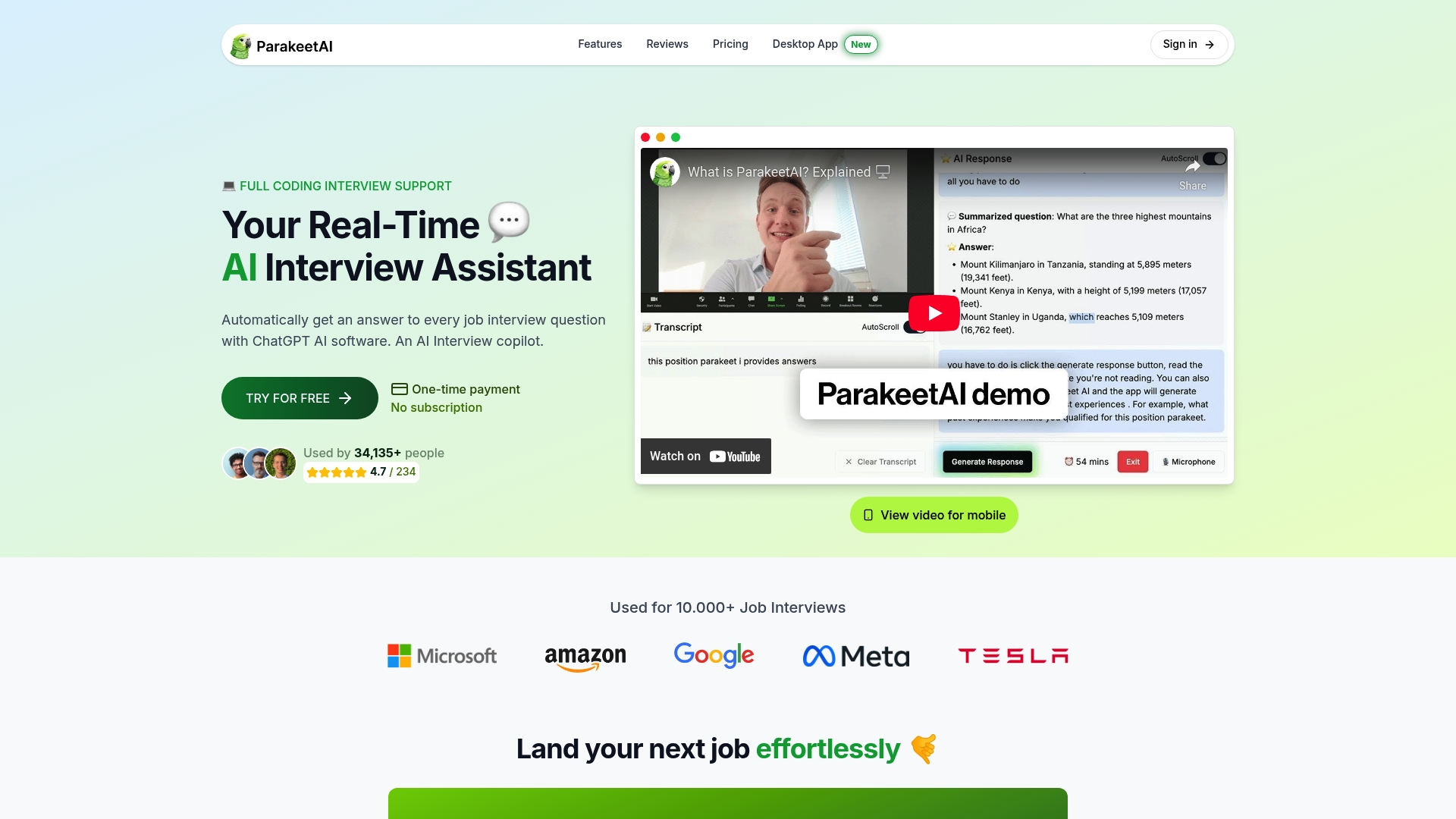
Parakeet-ai also gives you access to a curated library of software engineering manager questions with model answers, so you can build and refine your story library before your first round. If you want to go deeper on behavioral prep, the engineering manager behavioral question guides on the Parakeet-ai blog cover every major leadership theme with worked examples. Start your preparation at parakeet-ai.com.
FAQ
How many stages does an engineering manager interview have?
A typical process runs 4 to 6 stages over 2 to 4 weeks, covering recruiter screen, behavioral, technical, cross-functional, and executive rounds. Each stage tests a distinct competency, so preparation must be tailored to each one.
What is the STAR-L method for engineering manager interviews?
STAR-L stands for Situation, Task, Action, Result, and Learnings. The Learnings element is the critical addition over standard STAR, demonstrating growth and maturity that hiring committees specifically look for at the management level.
Do engineering managers get asked coding questions in interviews?
Technical rounds for engineering managers assess architectural judgment and trade-off decisions, not coding ability. Expect questions on system design, technical debt prioritization, and how you influence engineering direction rather than implementation exercises.
How many stories should I prepare for behavioral rounds?
Prepare 12 to 15 STAR-L tagged stories covering hiring, conflict, performance management, scaling, and delivery recovery. Treat them as adaptable templates, not fixed scripts, so you can respond to any behavioral question with a specific, relevant example.
Why do candidates fail engineering manager interviews?
Most candidates fail by giving vague or hypothetical answers without specific timelines, outcomes, or dialogue. Saying “I gave clear feedback” without naming the conversation, the date, and the result signals that the candidate lacks real management experience or is unwilling to be specific about it.