How AI personalizes job interviews for job seekers

Most candidates walk into interviews with the same recycled prep: generic questions from a Google search, rehearsed answers that could apply to anyone, and a vague hope it all lands. That approach is becoming obsolete. AI personalizes job interviews using your actual resume and the specific job description to generate tailored questions and feedback that match what employers are actually looking for. The result is a fundamentally different kind of preparation, one that trains you for the real conversation ahead, not a hypothetical one.
Table of Contents
- Why interview personalization matters
- The mechanics: How AI personalizes your interview prep
- Evidence: Does AI personalization actually improve interviews?
- What are the risks and limitations of AI personalization?
- How to maximize AI interview personalization: Actionable steps
- Explore ParakeetAI for your personalized interview prep
- Frequently asked questions
Key Takeaways
| Point | Details |
|---|---|
| Personalized AI prep | AI interview tools generate tailored practice scenarios using your resume and the job description. |
| Performance boost | Candidates who use AI prep report higher pass rates and reduced anxiety versus traditional methods. |
| Balance authenticity | To avoid robotic answers, combine AI feedback with real stories and personal judgment. |
| Equity and fairness | AI can improve interview accessibility and fairness but needs psychometric validation and human oversight. |
| Practical application | Leverage adaptive AI tools for targeted preparation and actionable feedback on your interview performance. |
Why interview personalization matters
Generic interview prep is a bit like studying the wrong textbook. You might feel ready, but the moment a question veers into territory specific to your target role or industry, the cracks show. That mismatch creates anxiety, and anxiety tanks performance.
Personalized prep changes the equation entirely. When AI analyzes your resume, your work history, and the job description you are targeting, it builds a practice environment that mirrors what you will actually face. The questions feel familiar because they are relevant, not random.
The impact is measurable. Candidates who use AI prep tools report:
- Higher performance ratings from interviewers
- 70.5% reduced anxiety going into live interviews
- 60% less stress throughout the preparation process
Those are not small margins. That is the difference between freezing up and flowing through a tough behavioral question. AI prep tools demonstrably boost performance and reduce anxiety across candidate groups. And when you factor in how much a single interview outcome can shape your career trajectory, the stakes make personalization worth every effort. Understanding AI interview fairness also helps you know what to expect from both sides of the table.
The mechanics: How AI personalizes your interview prep
So what is actually happening under the hood? The process is more sophisticated than most candidates realize, and understanding it helps you use these tools more effectively.
At the core, NLP and ML tools like Huru.ai, InterviewBoss.ai, and Yorby.ai scan your resume and the job description to extract key skills, responsibilities, and industry signals. Natural Language Processing reads the text. Machine Learning matches patterns to generate questions that reflect your specific background and the role’s demands.
The mechanics of AI personalization typically follow this sequence:
- Profile enrichment: The tool ingests your resume, LinkedIn data, or manually entered experience to build a candidate profile.
- Job description parsing: It extracts required skills, seniority level, and role-specific language from the posting.
- Question generation: Using chain-of-thought prompting, the AI creates questions that bridge your background with the role’s expectations.
- Adaptive simulation: As you practice, the system adjusts difficulty and focus based on your responses.
- Real-time feedback: Delivery, tone, and content are analyzed, and the tool flags areas to improve.
Here is how personalized AI prep compares to generic mock interviews:
| Feature | Personalized AI prep | Generic mock interview |
|---|---|---|
| Question relevance | Role and resume specific | One-size-fits-all |
| Feedback quality | Tailored to your delivery | General tips |
| Anxiety reduction | Significant, measurable | Minimal |
| Adaptability | Adjusts in real time | Static format |
| Industry alignment | High | Low |
“The best AI prep tools do not just quiz you. They simulate the actual conversation you are about to have, based on who you are and where you are applying.”
Pro Tip: Before your first AI practice session, upload both your resume and the full job description. The more context the tool has, the sharper and more relevant your practice questions will be.
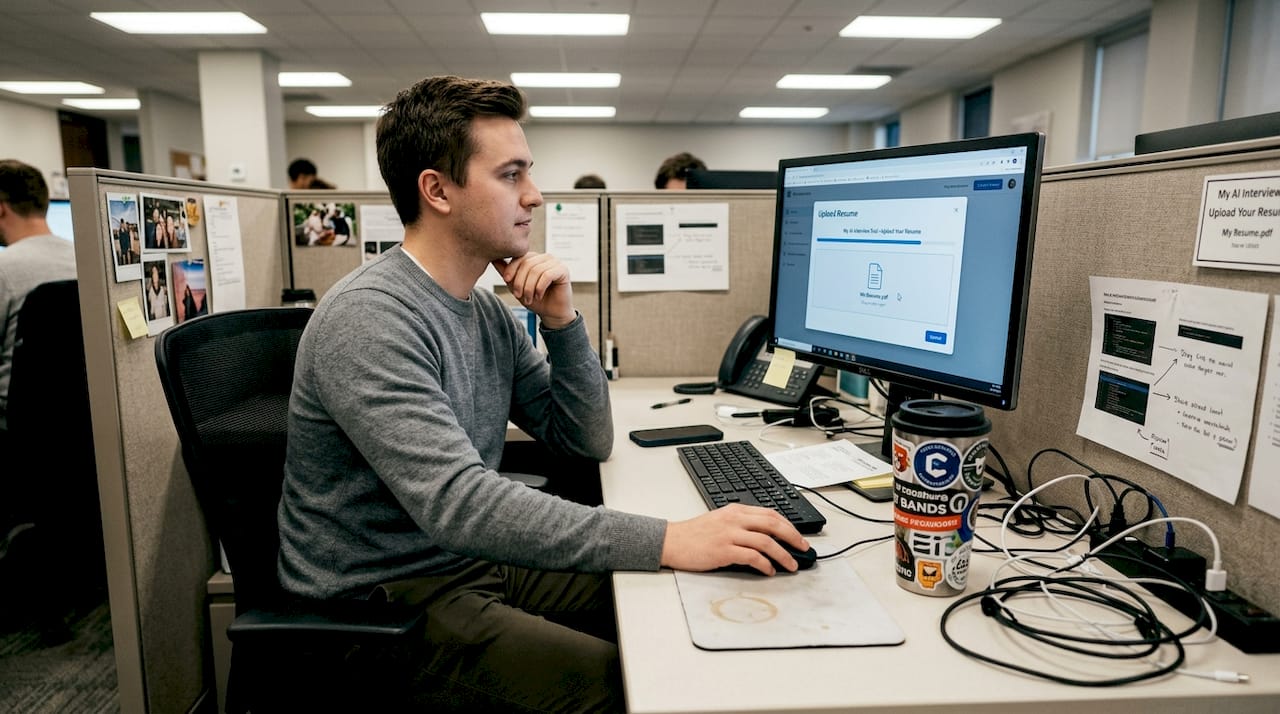
Exploring AI-powered interview tools and understanding real-time interview insights can help you choose the right platform for your goals. Tools like Microsoft Copilot also offer structured interview prep features worth exploring.
Evidence: Does AI personalization actually improve interviews?
The data is hard to argue with. AI-prepped candidates pass human interviews at a rate of 54% compared to just 34% for those who did not use AI tools. That is a 20-percentage-point gap that translates directly into more job offers.
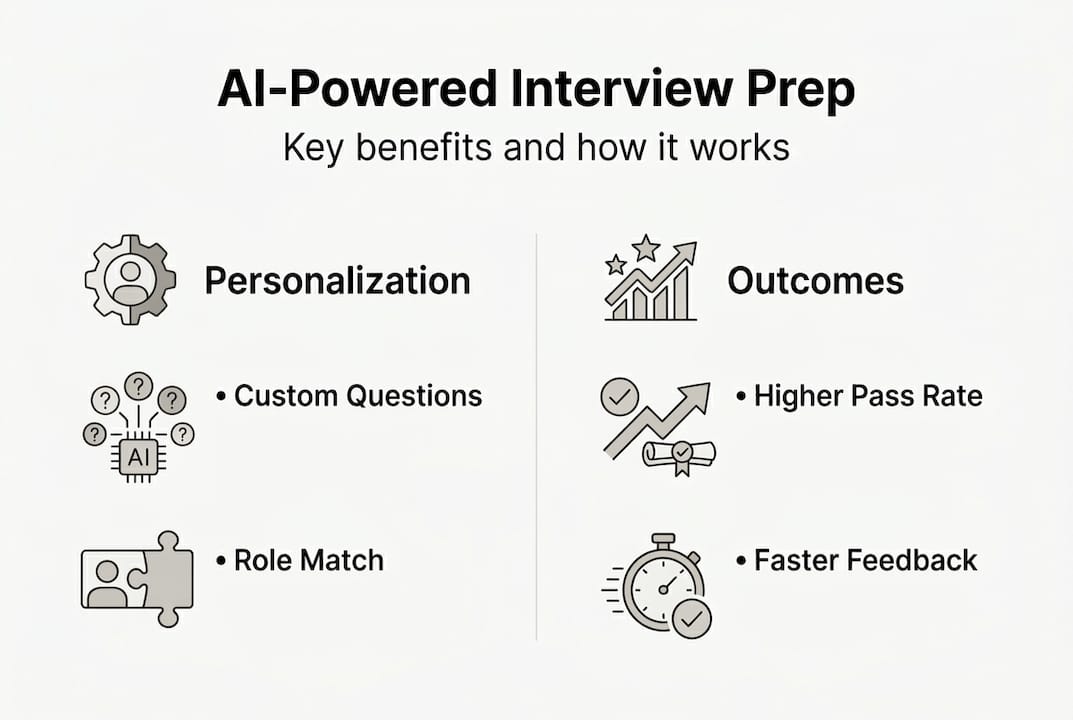
Beyond pass rates, the benefits extend to equity. AI closes the gender gap in interview outcomes by 36% and boosts disability accessibility equity to 98%. That means more candidates from historically underrepresented groups are getting fair shots when AI is part of the process.
Key outcomes from the evidence base include:
- Confidence gains: Candidates report feeling more prepared and less reactive during live interviews
- Engagement improvement: AI feedback loops keep practice sessions focused and productive
- Equity advances: Structured AI prep reduces the advantage that comes from having access to expensive coaching
Research published in Nature on AI applicants further supports the idea that AI-assisted preparation reshapes how candidates present themselves and how interviewers perceive them.
That said, there is a real limitation worth naming. Candidates who over-rely on AI prep sometimes sound rehearsed or robotic in live settings. The tool gives you the framework, but you still need to bring the human. Understanding what real-time interview insights actually look like in practice helps you use feedback constructively rather than mechanically. The role of AI in interview fairness is also worth understanding before you commit to any single platform.
What are the risks and limitations of AI personalization?
AI interview prep is powerful, but it is not without traps. Knowing where things can go wrong keeps you from falling into them.
The biggest risk is sounding scripted. When candidates memorize AI-generated answers word for word, interviewers notice. The response feels polished but hollow, and that impression is hard to recover from.
Other risks include:
- Bias in feedback models: If the AI was trained on non-diverse data, its feedback may favor certain communication styles over others
- Lack of nuance: AI tools struggle with highly contextual questions that require emotional intelligence or cultural awareness
- Industry resistance: Employer-side AI interviews can reduce application intent in low-tech industries where candidates expect human interaction
- Validation gaps: 62% of employers reject non-personalized AI resumes, and psychometric validation is essential for fairness
“AI is a mirror, not a script. Use it to see yourself more clearly, not to replace your voice.”
Pro Tip: After every AI practice session, retell your best answer out loud without looking at the AI’s version. If it sounds natural and still hits the key points, you are in good shape. If it sounds robotic, keep practicing until it flows.
Understanding AI job interview ethics and staying current on AI interview compliance helps you navigate these risks with confidence.
How to maximize AI interview personalization: Actionable steps
Knowing the risks, here is how to get the most out of AI prep without losing what makes you compelling as a candidate.
- Choose the right tool. Platforms like Huru.ai, Yorby.ai, and Microsoft Copilot each have different strengths. Pick one that lets you upload your resume and the job description before generating questions.
- Run a full mock session. Do not just read the questions. Answer them out loud, on camera if possible. Treat it like the real thing.
- Review feedback critically. AI feedback on tone and delivery is useful, but filter it through your own judgment. Not every suggestion will fit your natural style.
- Inject your real stories. For every AI-generated answer framework, replace the generic example with a specific story from your own experience. This is what separates memorable candidates from forgettable ones.
- Iterate, do not memorize. Run multiple sessions and focus on improving your thinking process, not locking in exact phrasing. AI-fluency and judgment matter more than memorization as hiring processes evolve.
- Balance AI with human feedback. Share your practice recordings with a trusted friend or mentor. Human observers catch things AI misses, especially around warmth and relatability.
The candidates who win with AI prep are the ones who use it to sharpen their thinking, not replace it. Hyper-personalized practice gives you a competitive edge, but authenticity closes the deal. Exploring adaptive interview preparation and learning how automated interview feedback works will help you build a smarter, more sustainable prep routine.
Pro Tip: Set a cap on AI prep time. Two focused sessions per interview is usually enough. Beyond that, you risk over-rehearsing and losing the spontaneity that makes live interviews feel genuine.
Explore ParakeetAI for your personalized interview prep
Everything covered in this guide points to one core truth: the candidates who prepare smarter, not just harder, are the ones who land the roles they want. AI personalization is the engine behind that shift, and having the right tool makes all the difference.
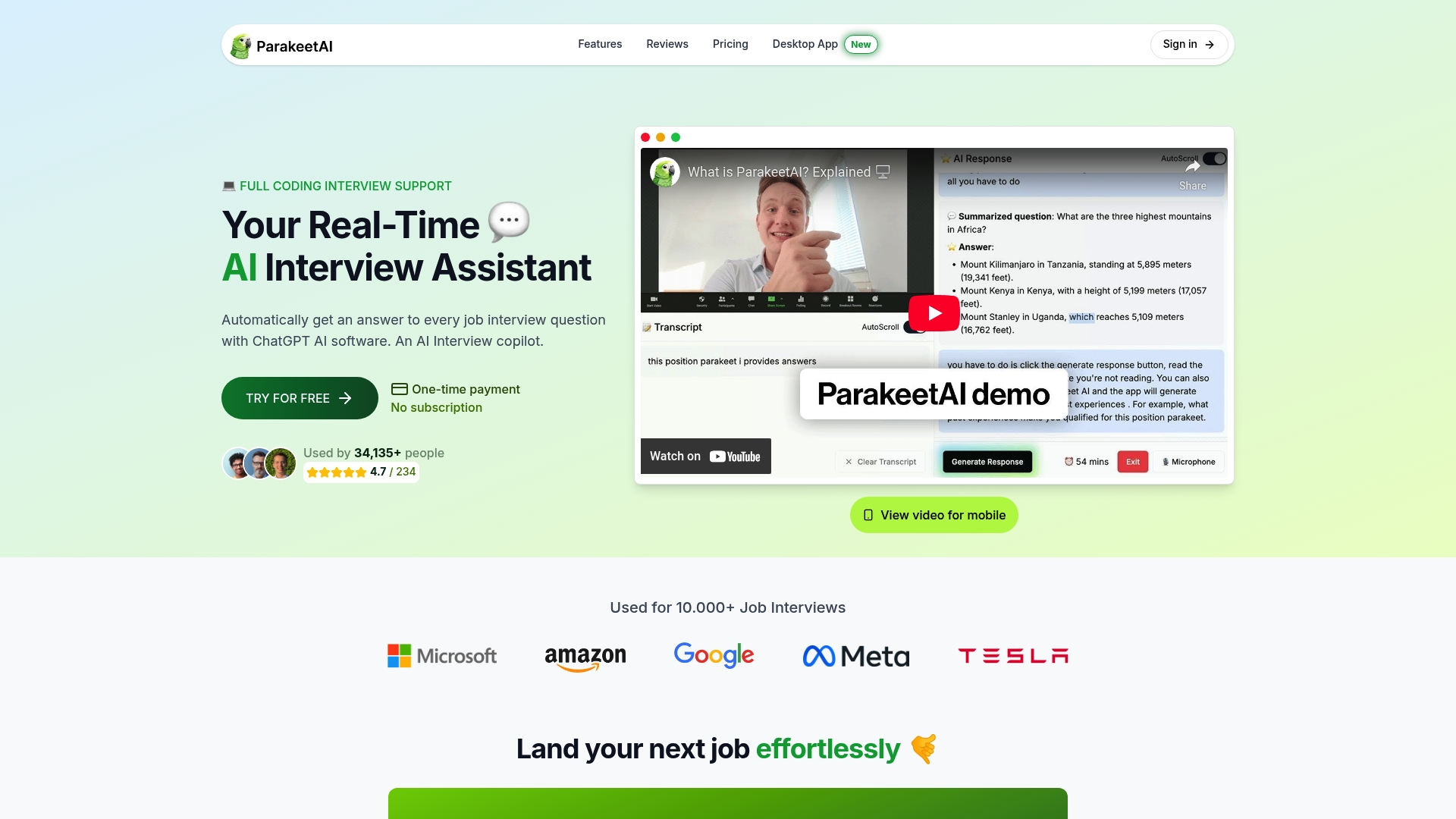
ParakeetAI takes personalized interview prep a step further by listening to your actual interview in real time and automatically surfacing answers to every question as it happens. You are not just practicing before the interview. You have intelligent support during it. With adaptive practice scenarios, instant feedback, and role-specific question generation, ParakeetAI is built for job seekers who want every possible advantage. If you are serious about your next opportunity, this is where your prep starts.
Frequently asked questions
How do AI interview prep tools personalize practice?
AI tools analyze your resume and the job description to generate custom questions and feedback, simulating role-specific scenarios that match your actual background and target role.
Does using AI for interview prep increase my chances of passing?
Yes. Candidates using AI pass human interviews at 54% compared to 34% for those who do not, along with measurable reductions in anxiety and stress.
Can relying on AI make my answers sound robotic?
It can. Over-reliance on AI prep risks sounding rehearsed, which is why blending AI frameworks with your own authentic stories and delivery is essential.
Are AI interviews fair across different industries?
AI improves equity in many fields, but low-tech industry candidates may perceive AI-driven interviews as less fair, making psychometric validation and human judgment important safeguards.
What features should I look for in an AI interview tool?
Prioritize tools that offer tailored question generation, real-time feedback on delivery and tone, and adaptive practice that adjusts based on your responses and target role.