
Interview questionnaire templates boost job success

Many job seekers approach interview preparation with scattered notes and random practice questions, missing the structure needed to truly excel. Customizable interview questionnaire templates transform this chaotic process into an organized, comprehensive system that targets the exact question types you’ll face. When combined with AI-powered tools that personalize practice sessions and provide real-time feedback, these templates become powerful instruments for building confidence and securing offers. The difference between generic preparation and structured, AI-enhanced practice often determines who gets the job and who keeps searching.
Table of Contents
- Key takeaways
- Understanding interview questionnaire templates and their benefits
- How AI tools customize and enhance your interview preparation
- Organizing your interview preparation with notes and tracking templates
- Applying your interview questionnaire templates for maximum success
- Discover Parakeet AI interview preparation tools
- What is an interview questionnaire template?
- How does AI improve interview preparation with questionnaires?
- What types of questions are included in templates?
- How can I track my interview preparation progress effectively?
Key Takeaways
| Point | Details |
|---|---|
| Customizable templates | They organize common behavioral strengths and motivation questions into a structured set for comprehensive prep. |
| Role specific practice | AI creates practice sets tailored to the target job title and industry for realistic rehearsal. |
| Real time feedback | AI guided evaluation helps build confidence and refine responses as you practice. |
| Notes tracking | Templates with tracking notes help manage multiple applications and stay organized. |
| Structured prep efficiency | Using structured AI enhanced practice reduces prep time while boosting performance. |
Understanding interview questionnaire templates and their benefits
Interview questionnaire templates provide job seekers with structured frameworks containing carefully curated questions that mirror real interview scenarios. These customizable questionnaire templates typically include 10-30 common questions spanning behavioral situations, strengths and weaknesses discussions, and motivation inquiries. Rather than scrambling to anticipate what interviewers might ask, you gain a comprehensive roadmap for preparation.
The templates organize questions into distinct categories that address different aspects of your candidacy. Behavioral questions probe how you’ve handled past workplace challenges and conflicts. Strengths and weaknesses questions assess your self-awareness and growth mindset. Motivation questions reveal whether you genuinely align with the company’s mission and culture. This categorization ensures you prepare balanced responses across all areas interviewers evaluate.
Using templates creates a systematic approach that prevents gaps in your preparation. Without structure, candidates often over-prepare for technical questions while neglecting equally important behavioral scenarios. Templates force comprehensive coverage, ensuring you develop compelling stories and examples for every question type. This thoroughness translates directly to interview confidence because you’ve genuinely prepared, not just hoped for the best.
Typical questions you’ll encounter in quality templates include:
- Tell me about a time you faced a significant challenge at work and how you overcame it
- Describe a situation where you had to work with a difficult team member
- What are your greatest professional strengths and how have they contributed to your success
- Where do you see opportunities for your own growth and development
- Why are you interested in this specific role and our organization
- How do you handle competing priorities and tight deadlines
These questions form the foundation of most interviews across industries. Mastering responses to this core set through AI-powered job interview tools prepares you for variations and follow-ups that naturally emerge during conversations. Templates don’t limit your preparation but rather ensure it covers essential ground before expanding to role-specific scenarios.
How AI tools customize and enhance your interview preparation
Artificial intelligence revolutionizes how candidates use questionnaire templates by transforming generic lists into personalized preparation systems. AI tools generate role-specific questions based on your target job title, industry, and experience level, creating practice sets that mirror what you’ll actually face. Instead of practicing with broad questions that may not apply, you rehearse scenarios directly relevant to your interviews.
Behavioral interviews dominate modern hiring processes, with 73% of employers using behavioral questions to evaluate candidates. The STAR method (Situation, Task, Action, Result) provides the framework for answering these questions effectively. AI tools guide you through constructing STAR responses by prompting you to develop each component thoroughly. This structured approach ensures your answers demonstrate impact rather than simply describing activities.
AI-powered mock interview platforms take preparation beyond static templates by simulating realistic conversations. These tools ask questions, evaluate your responses in real time, and provide scorecards highlighting strengths and improvement areas. The feedback identifies specific issues like rambling answers, weak examples, or missed opportunities to showcase relevant skills. This objective assessment proves far more valuable than self-evaluation or feedback from friends unfamiliar with hiring standards.

The efficiency gains from AI assistance are substantial. Traditional preparation requires hours researching common questions, crafting answers, and seeking feedback. AI compresses this timeline dramatically while improving quality. Studies show AI reduces prep time while improving candidate confidence by 94% compared to unstructured preparation methods. You spend less time preparing but enter interviews significantly better equipped.
Pro Tip: Use AI tools to practice adaptability rather than memorizing scripted answers. Run multiple mock sessions where the AI varies follow-up questions based on your initial responses. This trains you to think on your feet and handle unexpected directions, skills that scripted preparation never develops.
The combination of AI-driven mock interviews and structured templates addresses preparation from multiple angles. Templates ensure comprehensive coverage while AI personalizes content and simulates realistic pressure. Together, they create preparation experiences that build genuine competence rather than false confidence. When you conduct mock interviews using these tools, you’re not just rehearsing answers but developing the composure and flexibility that distinguish top candidates.
Organizing your interview preparation with notes and tracking templates
Effective interview preparation extends beyond practicing answers to include systematic organization of your efforts across multiple applications. Interview notes templates help candidates track three distinct phases: pre-interview preparation, live interview observations, and post-interview debriefs. This structure prevents the information overload that derails candidates juggling multiple opportunities simultaneously.
Pre-interview notes capture the stories, examples, and key points you plan to emphasize for each specific role. These notes link your experience to the job requirements, ensuring you highlight relevant accomplishments rather than generic qualifications. Live interview notes document questions asked, your responses, and the interviewer’s reactions or follow-ups. Post-interview debrief notes flag what went well, what needs improvement, and concrete next steps for follow-up.
Tracking multiple interviews systematically transforms preparation from reactive to strategic. When you document patterns across interviews, you identify questions that appear repeatedly and answers that consistently resonate with interviewers. This data-driven approach lets you refine your strongest responses while developing better answers for areas where you struggle. Without tracking, you repeat mistakes across interviews rather than learning from each experience.
The step-by-step process for using notes templates effectively:
- Create a dedicated template for each application including company research, role requirements, and tailored examples
- Document every question asked during the interview along with brief notes on your response quality
- Within 24 hours post-interview, complete a thorough debrief identifying specific improvements for next time
- Review notes from previous interviews before each new one to avoid repeating weaknesses
- Maintain a master document tracking common questions across all interviews to prioritize practice areas
| Note Type | Purpose | Key Elements | Best Practices |
|---|---|---|---|
| Pre-interview | Prepare tailored talking points | Company research, role alignment, relevant stories | Update based on job description details |
| Live interview | Capture real-time observations | Questions asked, your answers, interviewer cues | Keep brief, expand immediately after |
| Post-interview debrief | Analyze performance and plan follow-up | Strengths, weaknesses, next steps, thank you notes | Complete within 24 hours while fresh |
Pro Tip: Review your interview notes for 10 minutes each morning during active job searching. This daily practice helps you recognize patterns in your performance and continuously refine answers. You’ll notice which stories land effectively and which need stronger results or clearer structure. Consistent review transforms notes from passive records into active learning tools that accelerate improvement.
Structured notes prevent the common problem where candidates feel they performed well but can’t articulate specific evidence. When you track concrete details like which questions stumped you or which examples impressed interviewers, you gain actionable insights rather than vague impressions. This precision makes the difference between incremental improvement and breakthrough performance gains. Following interview best practices for tech jobs or any field requires this level of organized, data-informed preparation.
Applying your interview questionnaire templates for maximum success
The STAR method should anchor your preparation for behavioral questions because it provides the structure interviewers expect and evaluate. Prioritize STAR for behavioral questions, allocating roughly 60% of your practice time to developing strong Situation, Task, Action, and Result narratives. This focus reflects the reality that behavioral questions dominate interviews and require the most preparation to answer compellingly. Technical questions often have clear right answers, but behavioral questions demand carefully constructed stories.
Balancing template use with authenticity represents a critical skill. Templates provide starting points and frameworks, not scripts to memorize verbatim. When you over-rehearse specific wording, your answers sound robotic and disconnected from genuine experience. Instead, use templates to identify question types and develop the core stories you’ll adapt based on actual interview flow. This approach maintains natural conversation while ensuring you communicate key points.
AI personalization dramatically improves practice question relevance compared to generic templates. By inputting your specific role, industry, and experience level, AI generates scenarios that match what you’ll encounter. This targeted preparation proves far more efficient than practicing responses to questions unlikely to appear in your interviews. The time saved practicing irrelevant scenarios can instead go toward deeper preparation on high-probability questions.
| Approach | Benefits | Limitations | Best Use Case |
|---|---|---|---|
| Templates as starting points | Ensures comprehensive coverage, identifies question patterns, provides structure | Requires adaptation to specific roles, can feel generic without customization | Initial preparation phase, identifying gaps |
| AI-personalized practice | Role-specific relevance, adaptive difficulty, objective feedback | Requires quality tool selection, initial setup time | Active preparation, mock interviews |
| Scripted memorization | Reduces anxiety for nervous candidates, ensures key points covered | Sounds rehearsed, fails with unexpected questions, limits authentic connection | Not recommended except for opening/closing statements |
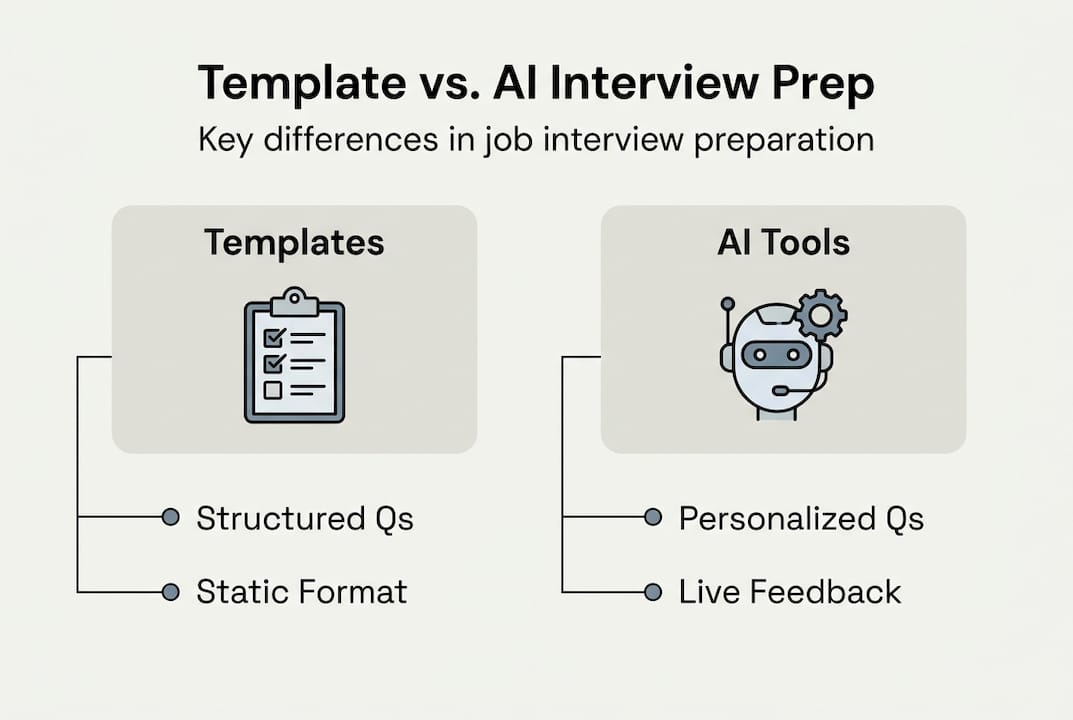
Adapting templates during live interviews requires flexibility and active listening. Pay attention to how interviewers frame questions and what aspects they emphasize in follow-ups. These cues reveal what matters most to them, allowing you to adjust your prepared stories to highlight relevant elements. Your template preparation gives you a library of examples to draw from, but interview success depends on selecting and tailoring the right example for each specific question.
Practical tips for template adaptation during interviews:
- Listen completely before answering, identifying which prepared story best matches the question’s intent
- Start with a direct answer to the specific question before launching into your STAR narrative
- Watch for interviewer engagement cues and adjust detail level accordingly
- Keep a mental inventory of your strongest examples and look for opportunities to showcase them
- Prepare brief and extended versions of key stories to match time constraints
Remember that templates are resources, not scripts. AI tools ensure your practice remains bias-reduced and role-tailored rather than based on outdated or irrelevant question sets. Research consistently shows structured preparation predicts job offers better than unstructured approaches, but the structure must support rather than replace authentic communication. Your goal is to internalize frameworks and key examples so thoroughly that you can access them naturally during conversations.
The best answers to interview questions in tech and other fields share common characteristics: they directly address the question, provide concrete examples with measurable results, and connect your experience to the role’s requirements. Templates and AI tools help you develop these characteristics systematically rather than hoping inspiration strikes during high-pressure interviews. When preparation meets opportunity, structured practice ensures you’re ready to perform.
Discover Parakeet AI interview preparation tools
Transforming your interview preparation from generic practice to personalized, AI-enhanced training starts with the right tools. Parakeet AI offers comprehensive interview preparation resources including customizable questionnaire templates, AI-driven mock interviews, and intelligent feedback systems designed specifically for job seekers. The platform combines the structured approach of traditional templates with cutting-edge AI that adapts to your specific role, experience level, and improvement areas.
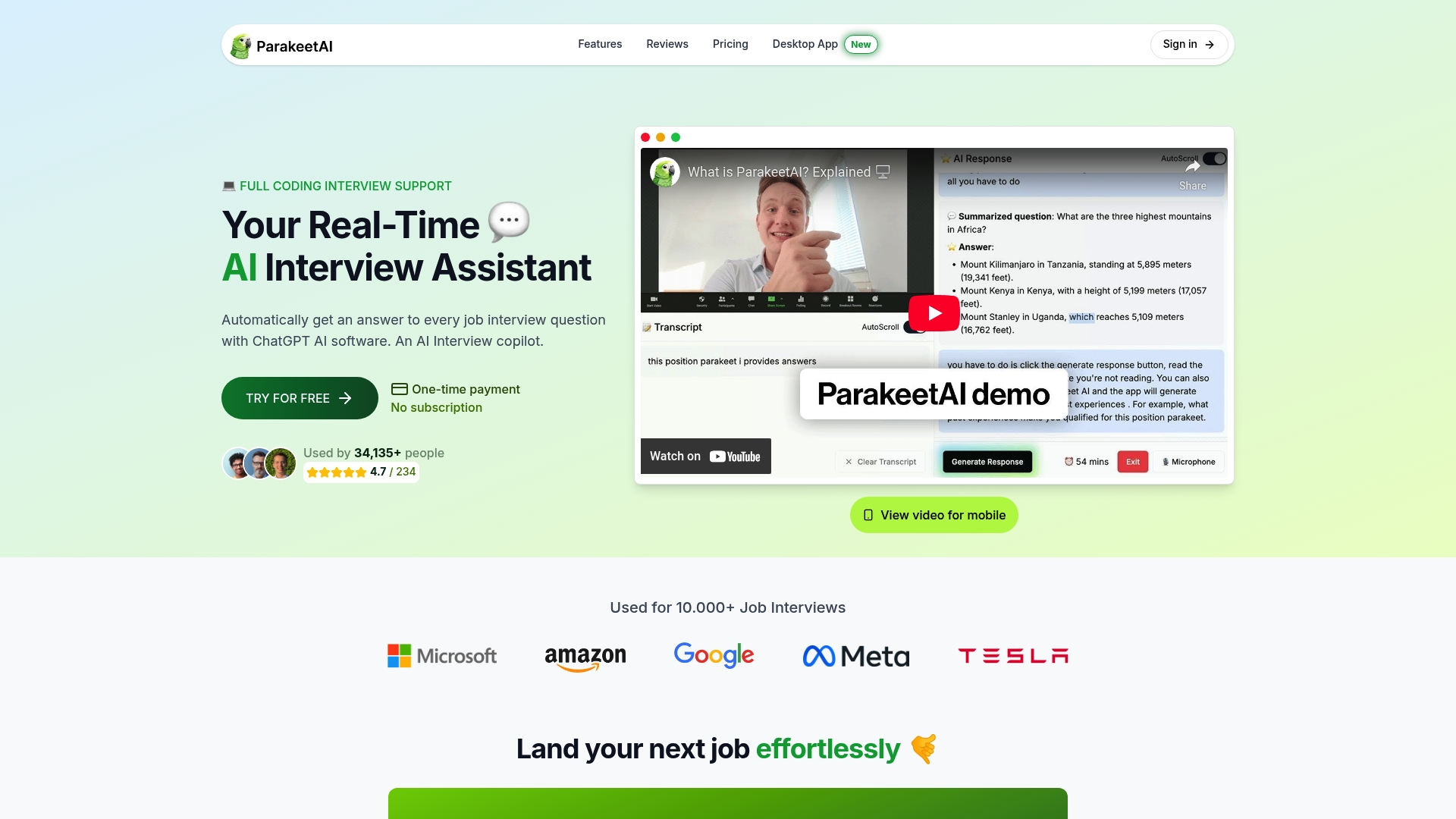
Unlike static templates that provide the same questions to every user, Parakeet AI interview tools analyze your target position and generate practice scenarios that mirror what you’ll actually face. The AI conducts realistic mock interviews, evaluates your responses in real time, and provides detailed feedback on content quality, delivery, and areas for improvement. This personalized approach accelerates your preparation while building the confidence that comes from genuine readiness rather than hopeful guessing.
The strategies and frameworks discussed throughout this article become significantly more powerful when implemented through AI-assisted platforms. You’ll spend less time searching for relevant questions and more time developing compelling answers. The combination of structured templates and intelligent feedback creates a preparation experience that traditional methods simply cannot match, giving you a distinct advantage in competitive job markets.
What is an interview questionnaire template?
What exactly does an interview questionnaire template contain?
An interview questionnaire template is a structured document listing common interview questions organized by category such as behavioral scenarios, strengths and weaknesses, motivation, and role-specific technical questions. Job seekers use these templates to systematically prepare responses across all question types they’re likely to encounter.
How do templates differ from just practicing random questions?
Templates ensure comprehensive coverage of question types rather than leaving gaps in your preparation. They organize questions logically, helping you develop balanced responses across behavioral, technical, and cultural fit areas. This structure prevents over-preparing in comfortable areas while neglecting challenging question categories.
How does AI improve interview preparation with questionnaires?
What specific advantages does AI provide over traditional templates?
AI generates role-specific questions tailored to your target job title, industry, and experience level rather than generic questions that may not apply. It conducts adaptive mock interviews that adjust difficulty based on your responses and provides objective feedback with specific improvement recommendations. This personalization dramatically improves preparation efficiency and effectiveness.
Can AI really reduce preparation time while improving results?
Research shows AI-enhanced preparation reduces total prep time while increasing candidate confidence by 94% compared to unstructured methods. The efficiency comes from focusing practice on high-probability, relevant questions rather than broad, unfocused preparation. AI feedback also accelerates improvement by identifying specific weaknesses immediately rather than through trial and error.
What types of questions are included in templates?
What are the main question categories in comprehensive templates?
Quality templates include behavioral questions about past challenges and accomplishments, strengths and weaknesses questions assessing self-awareness, motivation questions exploring cultural fit, and role-specific technical or situational questions. Behavioral questions typically represent the largest category since most employers prioritize them in hiring decisions.
Why do behavioral questions dominate modern interview templates?
Behavioral questions are used by 73% of employers because past behavior predicts future performance more reliably than hypothetical scenarios. The STAR method provides the framework for answering these questions effectively by structuring responses around Situation, Task, Action, and Result. Templates emphasize behavioral questions because they require the most preparation to answer compellingly.
How can I track my interview preparation progress effectively?
What system works best for organizing multiple interview preparations?
Use dedicated notes templates with three sections: pre-interview preparation capturing tailored talking points, live interview notes documenting questions and responses, and post-interview debriefs analyzing performance and next steps. This structure prevents information overload when juggling multiple applications while creating data to identify patterns and improvement areas.
How often should I review my interview tracking notes?
Review notes daily during active job searching, spending 10 minutes each morning analyzing patterns in your performance. This consistent review helps you recognize which stories resonate with interviewers and which answers need refinement. Within 24 hours of each interview, complete a thorough debrief while details remain fresh to maximize learning from every experience.