
Best TechInterviewHandbook.org Alternatives for Engineers

The strongest alternatives to techinterviewhandbook.org fall into four categories: mock-interview platforms for real-time feedback, open-source repos and curated guides for structured roadmaps, problem-practice platforms for algorithm drilling, and company-specific guides for targeted final-stage prep. No single resource covers all four equally well.
Quick picks by goal:
- Mock practice with real feedback: interviewing.io (anonymous sessions with Senior/Staff engineers from Meta, Google, OpenAI, and Amazon) or Pramp for free peer mocks
- Structured roadmaps and system design: Developer Roadmap, System Design Primer, and Coding Interview University on GitHub (System Design Primer has earned over 280,000 GitHub stars, making it one of the most-starred engineering repos on the platform)
- Algorithm drilling: LeetCode, HackerRank, or CodeSignal for volume and company-tagged problem sets
- Company-specific and system design depth: TechInterview.org, which lists over 2,351 guides including 1,715+ system design guides and 367+ company guides
Parakeet-ai adds a fifth layer: a real-time AI assistant that listens during your interview and surfaces answers on the fly, useful for candidates who want to rehearse answer framing under pressure.
Table of Contents
- How do the top alternatives compare at a glance?
- Mock interview platforms: when live practice beats self-study
- Curated guides and open-source repos you should know
- Problem-practice platforms: where to drill algorithms and timed coding
- Company- and role-specific prep: when to prioritize targeted guides
- How to pick the right alternative for your timeline and target role
- AI-assisted interview tools: what they add and where they fall short
- Community engagement and support quality across these resources
- Technical topics and difficulty ranges covered by each resource type
- Device and platform usability: mobile, desktop, and app availability
- Key Takeaways
- The habit most candidates skip until it is too late
- Parakeet-ai gives you a real-time edge during interview rehearsal
- Useful sources and links to explore
How do the top alternatives compare at a glance?
| Category | Best for | Format | Pricing | Feedback model | Company filtering |
|---|---|---|---|---|---|
| Mock-interview platforms | Real-time pressure, realistic feedback | Live or scheduled mock (human or AI) | Free tier / pay-per-session / subscription | Live verbal + written debrief | Some (company-style rounds) |
| Curated guides and repos | Structured multi-week roadmap, system design | Long-form notes, roadmaps, checklists | Free (open-source) | Self-graded / community | Varies (some company playbooks) |
| Problem-practice platforms | Pattern recognition, speed, volume | Interactive coding problems | Freemium / subscription | Automated + editorial explanations | Yes (company and role tags) |
| Company-specific guides | Final-stage, on-site, senior roles | Written guides, question collections | Free to paid | Self-graded / community notes | Strong (company and role tags) |
| AI-assisted practice | Rapid iteration, answer framing, rehearsal | Real-time AI coaching | Freemium / subscription | Instant AI feedback | Limited |
The table maps cleanly to prep stages. Early on, a curated guide or roadmap gives you structure. Once you have the fundamentals, a problem-practice platform builds speed. In the final two to three weeks before an on-site, mock interviews and company-specific guides are the highest-leverage investment. AI-assisted tools like Parakeet-ai work well throughout, especially for refining how you frame answers.
Mock interview platforms: when live practice beats self-study
Self-study builds knowledge. Mock interviews build performance. The gap between knowing an answer and delivering it clearly under a 45-minute clock is where most candidates lose offers, and that gap only closes with practice under realistic conditions.
The main platform formats you will encounter:
- Anonymous live mocks with FAANG engineers (e.g., interviewing.io): highest realism, strongest feedback, best for final-stage prep. Interviewing.io pairs you with Senior, Staff, or Principal engineers who give detailed, actionable feedback at the end of each session. Sessions are anonymous by default, which removes the social pressure of being judged by someone in your network.
- Peer mocks (e.g., Pramp, Meetapro): free or low-cost, good for repetition and communication practice, but feedback quality depends on your partner’s experience.
- Pay-per-session coaching (e.g., Hello Interview): structured coaching with a defined rubric, useful when you want targeted feedback on a specific round type (system design, behavioral, or coding).
- Multi-session coaching packages: higher cost but useful for candidates targeting a specific company or leveling up from mid to senior.
Pricing shapes what you get. Free peer platforms give you volume cheaply. Pay-per-session platforms typically run $100–$300 per session and deliver interviewer-grade feedback. Subscription models sit in between.
Pro Tip: Before every mock, write down one specific thing you want feedback on (e.g., “Did I communicate my approach before coding?” or “Was my system design scoped correctly?”). Interviewers give sharper feedback when you ask a precise question. Record the session if the platform allows it, and review the first five minutes — that is usually where candidates lose the interviewer.
The benefits of mock interviews extend beyond technical accuracy: timing, communication under pressure, and the habit of thinking aloud all improve with repetition.
Curated guides and open-source repos you should know
When you need a multi-week plan rather than a single session, curated guides and open-source repos are the right starting point. They give you structure, cover system design in depth, and are usually free.
The most useful repo types and what each yields:
- Long-form written guides (interviewhandbook.io): free, structured content covering common interview topics with clear explanations.
- Company and system design guide collections — (TechInterview.org): over 2,351 guides covering algorithms, system design, and company-specific formats. The depth here is unusual for a free resource.
When evaluating any open-source repo, check three things: the date of the last commit, the number of open issues being actively closed, and whether the community is still posting in discussions. A repo with 50,000 stars but no commits in two years is a liability, not an asset.
A practical weekly rhythm: use a roadmap to plan your topics, spend 60–90 minutes daily on problem-practice, and schedule one mock every week or two to stress-test what you have learned.
Problem-practice platforms: where to drill algorithms and timed coding
Pattern recognition is a skill, and it is built through volume. Problem-practice platforms are where you build it.
- High-volume DSA platforms (LeetCode): the largest library of interview-style problems, company tags, and a discussion forum where candidates share recent interview experiences. The premium tier unlocks company-specific problem sets and an interview simulation mode.
- Contest-style platforms (HackerRank, CodeSignal): useful for candidates who want timed, competitive practice. CodeSignal’s General Coding Framework is used by some companies as a pre-screening tool, so practicing on it has direct transfer value.
- Structured curriculum platforms (Educative, NeetCode): Educative offers text-based, interactive courses on patterns like sliding window and two pointers. NeetCode (also available as a YouTube channel and website) organizes LeetCode problems by pattern, which is a faster way to build recognition than grinding problems in random order.
- Peer-reviewed problem sets (Codemia): focuses on curated problem sets with community-written explanations.
Free tiers on most platforms give you access to a large subset of problems. Premium subscriptions typically add company filters, interview mode with a timer, and curated lists. For most candidates, a free tier plus a single premium subscription to one platform is enough.
The real risk with problem-practice platforms is using them in isolation. Combining LeetCode-style drilling with human mocks and specialized system-design resources produces better outcomes than any single resource alone. Volume practice builds speed; mocks reveal whether you can actually communicate what you know.
Company- and role-specific prep: when to prioritize targeted guides
If you have an on-site scheduled at a specific company, generic volume practice is the lowest-leverage thing you can do with your remaining time. Company-specific guides tell you the format, the question types, and the hiring signals that matter for that loop.
What company-specific resources provide:
- Format expectations (number of rounds, round types, time per round)
- Common question categories and difficulty distribution
- Behavioral and leadership principles the company evaluates against
- Recent candidate reports that reflect current hiring patterns
TechInterview.org covers this ground with over 367 company guides alongside its system design library. Interview Pilot goes further by including coding, system design, debugging, and behavioral strategies in a single guide format.
Verification matters. Cross-check any company guide against recent posts on Blind, Glassdoor, or relevant subreddits. Hiring loops change, and a guide from two years ago may describe a process that no longer exists. Prefer resources that show an explicit update date or reference recent candidate reports.
For system design specifically, the topics that appear most often are: scalability and load balancing, data modeling and storage choices, caching strategies, API design, and tradeoffs between consistency and availability. Practice these with a whiteboard or a shared doc, not just reading. Sketching a design and then defending it to a peer or AI assistant is closer to the actual interview than reading about it.
Pairing company guides with technical interview prep resources that cover role-specific question patterns gives you the clearest picture of what to expect.
How to pick the right alternative for your timeline and target role
Pick by goal first, then by time available.
Decision checklist:
- Stage: Are you getting first interviews, converting phone screens to on-sites, or leveling up for senior/staff roles? Each stage has a different highest-leverage resource.
- Target company or role: Does the company use a known format (e.g., LeetCode-heavy, system design-heavy, behavioral-heavy)? If yes, prioritize company guides and matching practice.
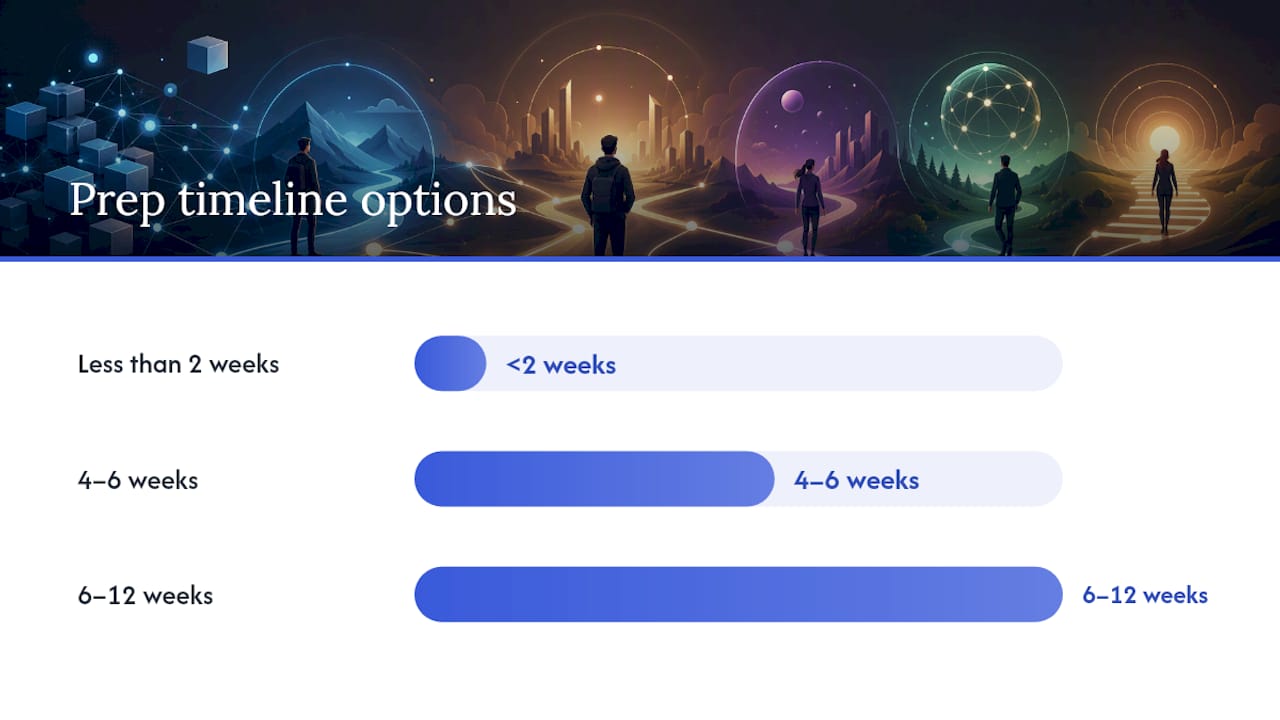
- Time budget: Less than two weeks means mocks and company guides. Six to twelve weeks means a full roadmap plus daily problem practice plus periodic mocks.
- Feedback needs: If you do not know why you are failing, you need human feedback. If you know the gaps, self-directed practice is fine.
- Budget: Free resources (repos, free tiers, peer mocks) cover 80% of what most candidates need. Paid mocks and coaching are worth it in the final two to three weeks.
- Learning format: Do you learn better from video (NeetCode, Striver’s YouTube series), text (curated repos, written guides), or interactive problems?
Sample workflows:
- 4–6 weeks: Pick one roadmap repo to set your topic list. Solve 3–5 problems daily by pattern. Schedule two mock interviews in week four.
- 8–12 weeks: Add a system design deep dive in weeks three through six. Rotate through company guides for your target companies in weeks seven through ten. Increase mock frequency to weekly in the final two weeks.
- Final 7–10 day blitz: Stop adding new topics. Review your weakest patterns, run two to three mocks, and read the company guide for each company on your schedule.
Red flags that signal a resource will waste your time: no update date or last commit older than 18 months, no feedback mechanism beyond self-grading, question collections with no source attribution, and guides that describe interview formats without citing candidate reports.
A solid coding interview preparation guide can help you map these workflows to your specific timeline.
AI-assisted interview tools: what they add and where they fall short
AI-assisted practice tools have gotten genuinely useful in the past two years. They accelerate feedback loops, give you on-demand coaching at any hour, and help you iterate on answer framing faster than waiting for a scheduled mock.
A realistic scenario: you draft a system design answer, paste it into an AI tool, and get back a structured critique in 30 seconds. You revise, run it again, and by the third iteration your answer is tighter and better scoped. That cycle would take days with a human reviewer and costs nothing with an AI tool.
The limitations are real. AI tools can hallucinate edge cases, miss company-specific context, and cannot tell you whether your communication style reads as senior-level to a hiring committee. Using AI during a live interview also raises ethical questions that vary by company policy, so check before you rely on it.
Pro Tip: Use AI tools for answer framing and iteration during prep, then validate with at least one human mock before your actual interview. The combination catches both structural gaps (AI finds these well) and communication gaps (only a human can flag these reliably).
Parakeet-ai sits in this category: a real-time AI assistant that listens to your interview and provides answers, useful for rehearsal and for candidates who want a safety net during high-stakes sessions.
Community engagement and support quality across these resources
Community quality varies more than feature lists suggest.
LeetCode has the largest discussion forum of any problem-practice platform. The “Discuss” tab on each problem often contains multiple accepted solutions with complexity analysis, plus recent comments from candidates who saw the problem in an actual interview. That real-time signal is hard to find elsewhere.
GitHub repos (System Design Primer, Coding Interview University, Developer Roadmap) have active issue trackers and discussion threads. The quality of community responses in these threads is generally high because contributors self-select for depth. Striver’s community on YouTube and Discord is particularly active for DSA pattern discussions.
Interviewing.io offers a blog and a Slack community where candidates share interview experiences and prep strategies. The anonymity of the platform extends to community discussions, which makes people more candid.
Pramp and Meetapro rely on peer networks, so community quality depends on who you are matched with. Both platforms have grown their user bases, but the experience is less consistent than a curated community.
HackerRank and CodeSignal have forums but they are less active than LeetCode’s. For contest-style practice, the competitive leaderboards serve as a proxy for community engagement.
For mentorship specifically, Hello Interview and interviewing.io’s coaching tier are the clearest options. Peer mentorship through LinkedIn or company-specific Discord servers (many FAANG-adjacent companies have unofficial prep channels) fills the gap for candidates who cannot afford paid coaching.
Technical topics and difficulty ranges covered by each resource type
Different resources cover different ground, and knowing the map saves you from gaps.
Mock-interview platforms (interviewing.io, Pramp, Hello Interview): primarily coding (easy to hard DSA), system design (for senior roles), and behavioral. Difficulty is calibrated to the level you select. Interviewing.io’s hardest sessions match on-site difficulty at top-tier companies.
Open-source repos: System Design Primer covers distributed systems, databases, caching, and networking at medium to advanced depth. Coding Interview University covers data structures, algorithms, and CS fundamentals from beginner to intermediate. Developer Roadmap covers breadth across roles (frontend, backend, DevOps) rather than interview-specific depth.
Problem-practice platforms: LeetCode spans easy, medium, and hard across arrays, strings, trees, graphs, dynamic programming, and more. CodeSignal’s General Coding Framework focuses on medium-difficulty problems. HackerRank covers algorithms, SQL, and domain-specific tracks (ML, security). NeetCode’s curated 150-problem list targets the patterns most likely to appear in FAANG-style interviews.
Company-specific guides (TechInterview.org, Interview Pilot): system design and behavioral at medium to senior difficulty, with company-specific context. The system design guides on TechInterview.org cover a wider range of architecture topics than most individual repos.
AI-assisted tools: difficulty is self-directed. You bring the question; the tool responds to your level.
Device and platform usability: mobile, desktop, and app availability
Most of these resources were built for desktop, and it shows.
LeetCode has a mobile app (iOS and Android) but coding in a small editor on a phone is impractical for serious practice. The mobile app is useful for reading problem descriptions and reviewing solutions, not for writing code.
HackerRank and CodeSignal are browser-based and work on mobile, but again, the coding environment is not optimized for small screens. Both are best used on a laptop or desktop.
GitHub repos (System Design Primer, Developer Roadmap, Coding Interview University) render well on mobile for reading. If you use a GitHub client app or a markdown reader, the experience is clean. These are genuinely useful on mobile for review sessions during a commute.
Interviewing.io and Pramp require a desktop or laptop for mock sessions. Video, audio, and a shared coding environment together demand a real keyboard and screen.
NeetCode has a website and a YouTube channel. The YouTube content is fully mobile-friendly, which makes it one of the few resources where mobile use is actually practical for learning.
Parakeet-ai runs as a desktop application, which fits its use case: it listens to your interview audio in real time and surfaces answers, a workflow that requires a laptop or desktop anyway.
For reading and review, mobile works fine across most resources. For active practice, coding, and mocks, plan on a laptop.
Key Takeaways
The most effective software engineer interview prep combines at least two resource types: structured study from a curated guide or repo, volume practice on a problem platform, and at least one realistic mock before your on-site.
| Point | Details |
|---|---|
| Match resource to stage | Use roadmaps and repos early, problem platforms mid-prep, and mocks plus company guides in the final two weeks. |
| Mock interviews close the performance gap | Platforms like interviewing.io pair you with Senior/Staff engineers for feedback that self-study cannot replicate. |
| Company guides change final-stage odds | TechInterview.org’s company guides give you format and question-type signals that generic practice misses. |
| Combine at least two resource types | Pairing DSA drilling with human mocks and company-specific guides produces better outcomes than any single resource. |
| Parakeet-ai accelerates answer iteration | Use Parakeet-ai for real-time AI coaching during rehearsal to tighten answer framing before your actual interview. |
The habit most candidates skip until it is too late
Most candidates spend 90% of their prep time on algorithms and almost none on behavioral answers. That ratio is backwards for anyone targeting a mid-level or senior role, where behavioral rounds carry as much weight as the coding screen.
The highest-leverage habit is building a story bank before you start mock interviews, not after. A story bank is a short list of five to eight specific situations from your work history, each mapped to a behavioral prompt category: conflict, failure, leadership, ambiguity, and impact. When you have these written down and practiced, you stop improvising under pressure and start delivering structured answers that hold up to follow-up questions.
The reason this matters: failing to align resume examples to behavioral prompts before interviews reduces your ability to defend your contributions under pressure. Interviewers notice when an answer drifts from the resume. A story bank closes that gap.
One concrete step you can take today: open a doc, pick one project from your resume, and write a two-paragraph version of it using the STAR format (Situation, Task, Action, Result). That is your first story bank entry. Add one per day for a week and you will have more material than most candidates bring to their final-stage interviews.
Parakeet-ai gives you a real-time edge during interview rehearsal
Every resource in this article builds your knowledge. Parakeet-ai changes what happens when you actually sit in the interview chair.
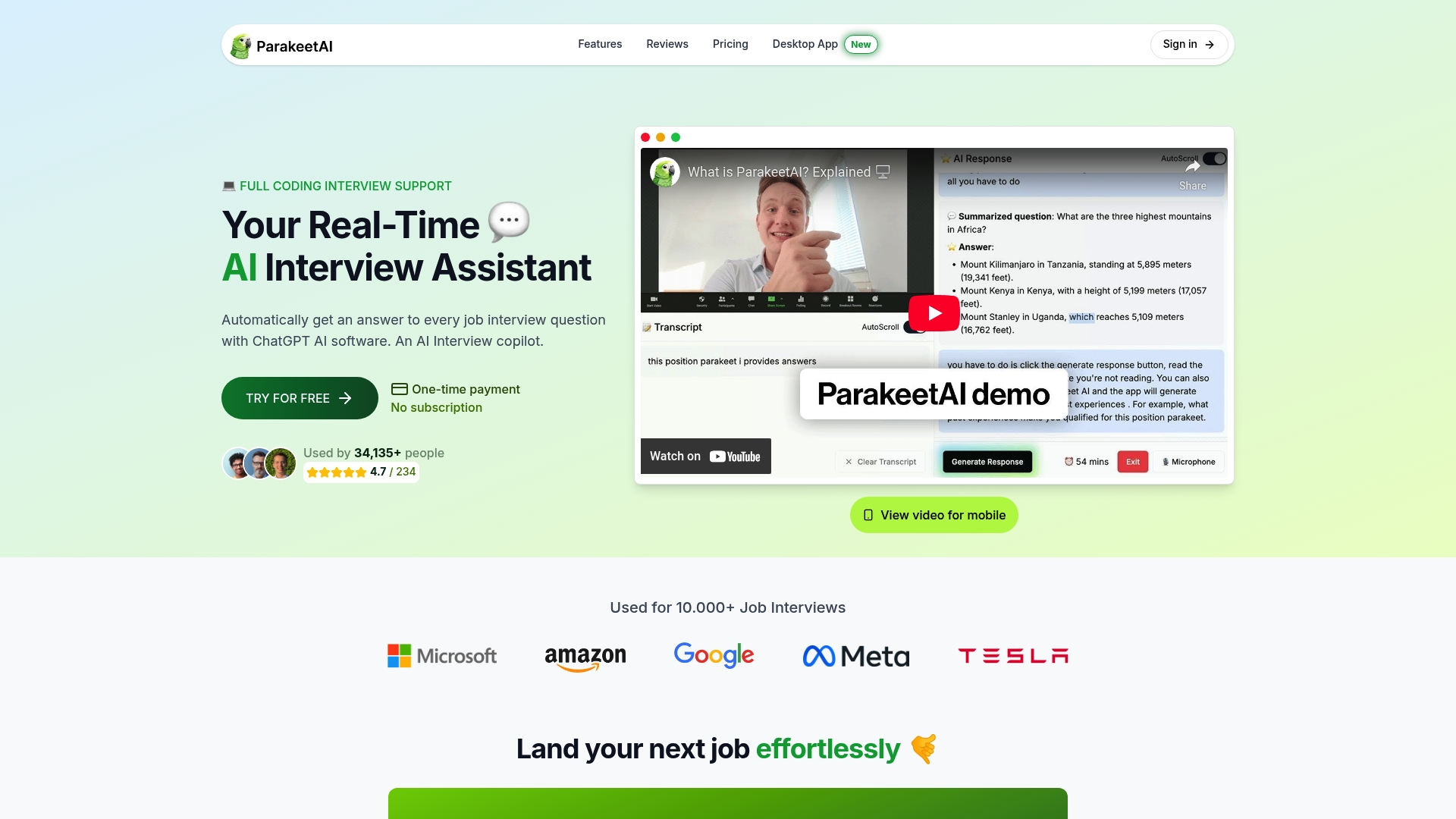
It listens to your interview in real time and surfaces AI-generated answers to each question as it is asked. For rehearsal, that means you can run a solo practice session and see how an AI would frame each answer, then compare it to your own response and iterate. For high-stakes live interviews, it acts as a safety net when a question catches you off guard.
Where it fits best:
- Rapid answer-framing iteration during solo prep sessions
- Practicing under timed conditions with immediate AI feedback
- Final-stage rehearsal when you want to stress-test your answers before the real thing
Try Parakeet-ai to add real-time AI coaching to your prep stack. Disclosure: Parakeet-ai is the publisher of this article.
Useful sources and links to explore
A short annotated list of the primary sources behind this article, plus notes on how to evaluate each one:
- Tech Interview Handbook — the reference point this article builds from; covers the full interview process with structured guidance on each round type.
- TechInterview.org — 2,351 guides across system design and company-specific prep. Evaluate currency by checking the guide’s last-updated date.
- PracHub: Is Tech Interview Handbook Enough? — editorial review that benchmarks the handbook against alternatives and recommends a multi-resource strategy.
- TailorCV: Software Engineer Interview Preparation Guide — covers system design timelines, behavioral prep frameworks, and story bank methodology.
- Interview Handbook — free structured content across common interview topics; useful as a lightweight supplement.
- The Executive Search Tech Stack Leading Teams Use in 2026 — recruiter-side perspective on how hiring teams evaluate technical candidates; useful context for understanding what interviewers are actually looking for.
- Parakeet-ai blog: software engineer interview prep — tag archive with multi-week study plans and role-specific prep strategies.
When evaluating any source, check three things: the publication or last-updated date, whether the author has verifiable credentials or candidate experience, and whether the content references recent interview reports rather than generic advice. A guide with no date is a guide you cannot trust.