
Best Job Interview Questions to Ask Candidates in 2026

TL;DR:Effective interview questions reveal how candidates think, work, and handle pressure, rather than impress. Focusing on 5 to 8 targeted, behavior-based questions allows for richer insights and fairer comparisons across applicants. Prioritize questions that require evidence, are role-relevant, and cover multiple categories to build a comprehensive evaluation.
Most hiring managers walk into an interview with a list of questions they’ve used for years, and most of those lists are mediocre. The best job interview questions to ask candidates aren’t the ones that sound impressive — they’re the ones that reveal how a person actually thinks, works, and handles pressure. This article gives you a curated set of questions that hiring professionals can use immediately, along with the criteria to evaluate them, a comparison of question categories, and practical guidance on building a focused interview that surfaces real information.
Table of Contents
- Key takeaways
- Best job interview questions to ask candidates: key selection criteria
- 1. “Tell me about a time you disagreed with your manager.”
- 2. “What does success look like in your first 90 days here?”
- 3. “Describe a project you’re proud of. What was your specific contribution?”
- 4. “How do you prioritize when you have competing deadlines?”
- 5. “Tell me about a time you had to learn something quickly under pressure.”
- 6. “What’s a decision you made with incomplete information? How did it turn out?”
- 7. “Why are you leaving your current role?”
- 8. “What kind of feedback has been hardest for you to receive?”
- 9. “Tell me about a time you failed. What happened?”
- 10. “What do you need from a manager to do your best work?”
- Question category comparison
- How to apply these questions in real hiring scenarios
- Common mistakes to avoid when interviewing candidates
- My take on what actually separates good interviews from great ones
- How Parakeet-ai can support your interview strategy
- FAQ
Key takeaways
| Point | Details |
|---|---|
| Quality over quantity | Asking 5 to 8 focused questions with follow-ups produces richer insights than rushing through a long list. |
| Behavioral beats hypothetical | Past behavior questions predict future performance more reliably than “what would you do” scenarios. |
| Standardize across candidates | Using the same core questions for every candidate in a role reduces bias and improves fair comparison. |
| Mix question categories | Combining behavioral, role-specific, and culture questions gives you a fuller picture of each candidate. |
| Tailor to candidate level | Entry-level and senior candidates require different question depth and framing to yield useful answers. |
Best job interview questions to ask candidates: key selection criteria
Before you can pick the right questions, you need a filter. Not every question that sounds good in theory will actually help you make a better hire.
The most effective professional interview questions share a few qualities. They connect directly to the core competencies of the role. They require the candidate to draw on real experience rather than construct an ideal answer from scratch. And they leave room for follow-up so you can probe beneath the surface of a polished response.
Here’s what to check before adding any question to your list:
- Does it require evidence? Questions grounded in past behavior are more reliable than hypothetical ones. Past behavior predicts performance better than asking what someone “would” do in a made-up scenario.
- Is it role-relevant? Generic questions produce generic answers. Tie each question to a specific skill or competency you need on day one.
- Can’t it be answered from your website? Questions easily answered by reading your About page waste everyone’s time. Avoid questions candidates can answer from basic research, and instead show you want genuine dialogue.
- Does it belong to the right category? A good interview mixes behavioral, role-specific, and culture questions to assess candidates from multiple angles.
- Is it one of too many? Experts recommend selecting 5 to 8 targeted questions from two or three categories per interview. More than that and you’re collecting data, not having a conversation.
Pro Tip: Build your question list around the top three to five competencies required for the role, then choose one to two questions per competency. This forces prioritization before you ever sit down with a candidate.
Good interview best practices for hiring managers always start with this kind of upfront discipline. The questions you don’t ask are just as important as the ones you do.
1. “Tell me about a time you disagreed with your manager.”
This is one of the great interview questions to ask candidates because it does several things at once. It tests self-awareness, professional maturity, and communication skills without giving the candidate an easy out.

What you’re listening for: does the candidate take accountability for how they handled the situation, or do they frame it as the manager being simply wrong? Candidates who focus only on trivial disputes or who portray themselves as entirely correct signal weak conflict resolution skills. Strong answers show they chose their moment, made their case with data or reasoning, and respected the final decision even when they disagreed.
Adapt it for senior roles by asking about a time they disagreed with an executive or a board-level decision.
2. “What does success look like in your first 90 days here?”
This question flips the dynamic in a useful way. Instead of asking what the candidate brings to the role, you’re asking how they think about contributing to your specific context. It reveals whether they’ve researched the company, whether they think realistically about ramp-up time, and how they define success.
Weak answers will be generic (“I’d learn the processes and meet the team”). Strong answers will reference specific challenges the company or team faces and describe concrete deliverables or milestones. This is one of the most underused great interview questions to ask candidates, especially at the senior level.
3. “Describe a project you’re proud of. What was your specific contribution?”
The second sentence is the one that matters. Many candidates speak in team language, which can obscure individual ownership. Forcing specificity about their personal contribution reveals what they actually did versus what happened around them.
Pro Tip: Follow up with “What would you do differently?” to see how candidates reflect on and learn from their work. Self-correction is a strong predictor of growth.
4. “How do you prioritize when you have competing deadlines?”
This is a practical, role-specific behavioral question that surfaces how candidates actually work. Every job has tradeoffs, and the best employees know how to make them consciously. Listen for a repeatable method. Does the candidate have a framework, or do they simply “figure it out”?
You’re also listening for how they communicate when they’re overloaded. Do they flag it to their manager early, or do they quietly struggle and miss deadlines?
5. “Tell me about a time you had to learn something quickly under pressure.”
In 2026, AI-assisted hiring increasingly prioritizes learning velocity and adaptability over rote knowledge. This question gets at exactly that. Whether you’re hiring a software engineer, a sales rep, or an operations lead, the ability to absorb new information under real constraints is non-negotiable.
Strong candidates will describe a specific situation, explain what they did to close the gap quickly, and reflect on the result. Weak answers tend to be vague or don’t demonstrate a clear outcome.
6. “What’s a decision you made with incomplete information? How did it turn out?”
This is a high-signal question for roles involving judgment, leadership, or ambiguity. It tests comfort with uncertainty and the ability to act decisively without waiting for perfect data. Almost every meaningful business decision is made under incomplete information, and most candidates have never been asked to reflect on it this directly.
7. “Why are you leaving your current role?”
Simple. Often undervalued. The answer tells you what the candidate is running from versus running toward, how they talk about previous employers, and whether their motivations align with what you’re offering. Red flags include excessive negativity about former managers, vague answers that don’t match their resume timeline, and responses that reveal misaligned expectations about the new role.
8. “What kind of feedback has been hardest for you to receive?”
This question does more than a generic “What’s your biggest weakness?” It requires the candidate to reflect on their emotional response to criticism, not just admit to a flaw. The best answers show a candidate who received difficult feedback, sat with it honestly, and changed their behavior as a result. Ideal answers use the STAR methodology and demonstrate self-awareness without being rehearsed or performative.
9. “Tell me about a time you failed. What happened?”
Everyone has a failure story. The question is whether the candidate can tell it with honesty and without shifting blame. This is one of the best interview questions and answers to evaluate because the way someone describes failure tells you more about their character than a success story ever will.
You’re not looking for a dramatic disaster. You’re looking for genuine reflection, ownership, and evidence they grew from the experience.
10. “What do you need from a manager to do your best work?”
This is both a culture-fit question and a practical onboarding tool. It tells you whether the candidate’s working style fits how your team operates. If they need daily check-ins and your team runs independently, that’s information you need before you extend an offer, not after.
Strong answers are specific and self-aware. Weak answers are either vague (“just support”) or try to mirror what they think you want to hear.
Question category comparison
Different question types serve different purposes. Here’s a quick reference for balancing your interview:
| Category | Strength | Limitation | Best use case |
|---|---|---|---|
| Behavioral | High predictive validity; grounded in real experience | Candidates can prepare polished stories | Core competency assessment for all levels |
| Role-specific | Tests actual skill and knowledge directly | Can favor experienced candidates over high-potential ones | Technical or specialized positions |
| Situational | Good for hypothetical problem-solving | Less reliable than behavioral for predicting performance | Early-stage screening or creative roles |
| Culture/Values | Reveals alignment with team norms | Hard to score objectively | Final-round interviews and team fit assessment |
| Motivational | Surfaces long-term fit and retention risk | Candidates often give strategic answers | Any stage, especially senior or leadership roles |
Mixing two or three categories per interview produces a more complete picture without turning the conversation into an interrogation.
How to apply these questions in real hiring scenarios
Picking the right questions is only half the job. How you use them in the room determines whether you get real information.
Here’s a practical framework for your next interview:
- Choose 5 to 8 questions per 30-minute session. Structured multi-stage hiring processes last two to six weeks with four to six stages. Each stage should focus on a distinct category rather than repeating the same questions.
- Map every question to a competency. Before the interview, write down what you’re evaluating with each question. This keeps you from defaulting to gut feeling when scoring candidates later.
- Adapt depth by candidate level. For entry-level candidates, accept examples from school, internships, or side projects. For senior candidates, hold the bar higher. Their answers should reflect scale, influence, and complexity.
- Use follow-up questions actively. “Tell me more about that” and “What was your specific role in that decision?” are the two most powerful follow-ups in any interview.
- Standardize core questions across candidates. Using the same core questions for every candidate in a role reduces interviewer bias and makes comparison more reliable.
- Leave time for the candidate to ask questions. Their questions reveal how they think, what they prioritize, and whether they’ve done serious research.
Pro Tip: Review AI-assisted interview insights before finalizing your question set. AI tools can help you identify gaps in your question coverage and flag patterns across previous interviews for the same role.
Common mistakes to avoid when interviewing candidates
Even experienced interviewers fall into patterns that produce bad data.
- Asking questions the candidate can answer from your website. If a question can be answered by reading your “About Us” page, it’s not adding information to your decision.
- Overusing hypothetical questions. “What would you do if…” sounds like a fair test, but it produces imagined behavior, not real behavior. Behavioral questions are more reliable predictors of future performance.
- Skipping standardization. Asking different questions to different candidates for the same role makes comparison nearly impossible and opens you to legal risk.
- Not deciding in advance what a good answer looks like. If you don’t know what you’re evaluating, you’ll default to likeability. That’s how bias enters the process.
- Talking more than listening. Some interviewers spend 40% of the interview time pitching the role. A candidate talking freely gives you information. You talking gives them none.
My take on what actually separates good interviews from great ones
I’ve sat in on hundreds of interviews over the years, and the pattern I keep seeing is this: most interviewers ask the same ten questions on autopilot and then wonder why they can’t tell candidates apart.
The shift I’ve seen work consistently is moving from questions designed to impress the candidate toward questions designed to genuinely inform the decision. There’s a difference between asking “Where do you see yourself in five years?” and asking “What does your career look like when you feel like you’ve made it?” The first produces a rehearsed answer. The second occasionally produces an honest one.
I’ve also watched AI change the texture of interviews in real time. Candidates are arriving better prepared than ever, which means your questions need to probe deeper than the surface. A polished STAR answer is easy to train for. What’s harder to fake is honest self-reflection, specific ownership, and the kind of nuanced judgment that only comes from real experience.
My strongest advice: resist the urge to fill silence. When a candidate pauses after a difficult question, wait. That pause is often where the real answer lives.
— Jure
How Parakeet-ai can support your interview strategy
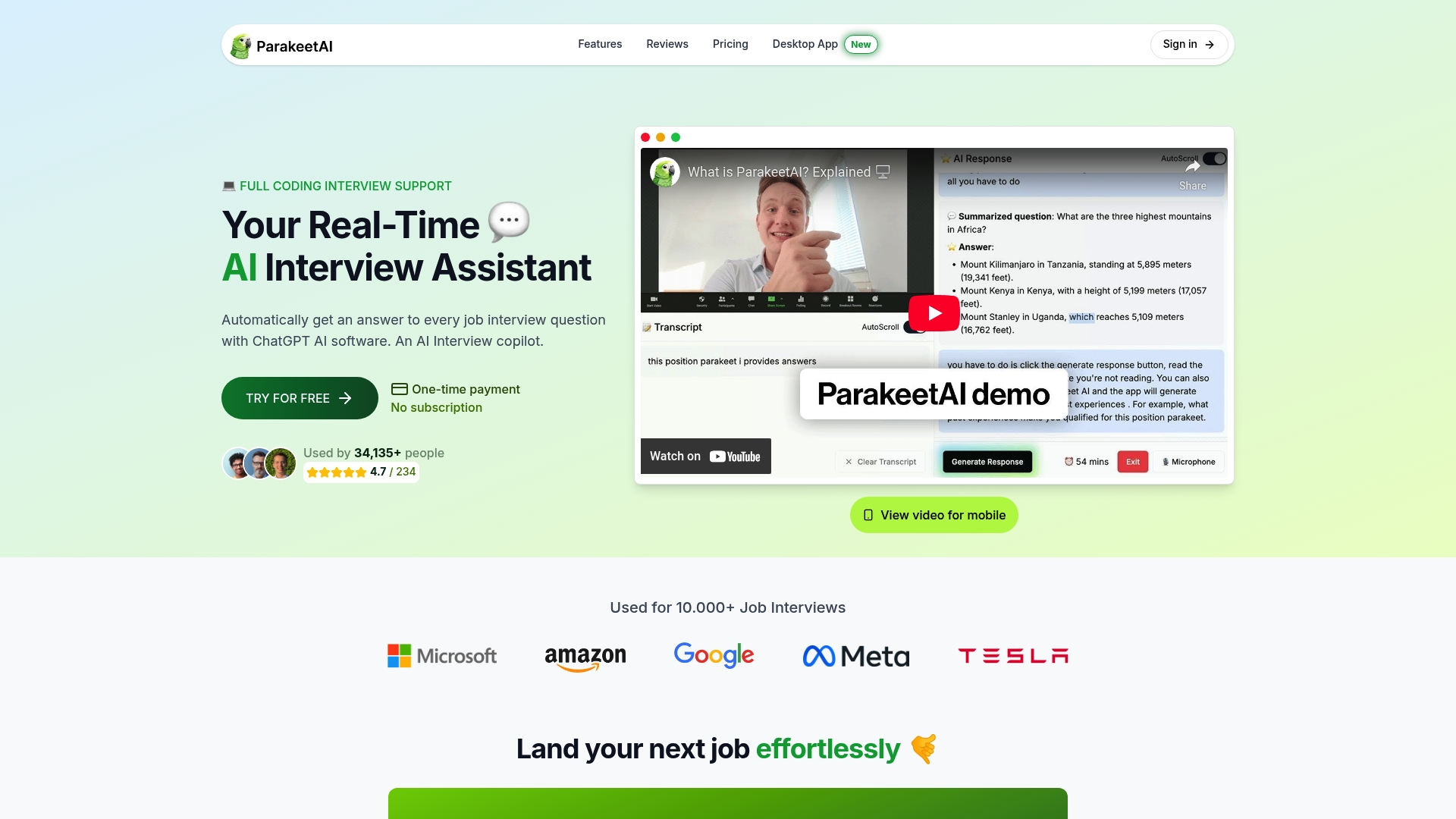
If you’re spending time preparing questions but still feel uncertain about how candidates are actually performing during the interview, Parakeet-ai was built to help close that gap. Parakeet-ai is a real-time AI interview assistant that listens to the conversation and surfaces insights in the moment so you can focus on the candidate, not on remembering your scoring rubric. Whether you’re structuring a first-round screen or a final-stage culture conversation, Parakeet-ai helps you ask better questions and evaluate answers more consistently. Explore how AI-powered interview tools can sharpen your hiring process, or dig deeper into interview process best practices on the Parakeet-ai blog.
FAQ
What are the best behavioral interview questions to ask candidates?
The strongest behavioral interview questions ask candidates to describe specific past experiences using concrete examples. Questions like “Tell me about a time you disagreed with your manager” or “Describe a time you failed” reveal self-awareness and real work patterns.
How many questions should you ask in a job interview?
Experts recommend 5 to 8 focused questions per interview session. Fewer targeted questions with thoughtful follow-ups produce better candidate insights than rushing through a long list.
Why are behavioral questions better than hypothetical ones?
Behavioral questions predict performance more reliably than hypothetical scenarios because they require candidates to draw on actual experience rather than imagining an ideal response.
How do you standardize interview questions across candidates?
Use the same core set of questions for every candidate applying to the same role. Standardizing core questions reduces interviewer bias and makes it easier to compare candidates fairly after the process.
What should hiring managers listen for in candidate answers?
Look for specificity, personal ownership, and evidence of reflection. Answers that use the STAR method, include at least one concrete metric or example, and show self-awareness are consistently stronger indicators of future performance.