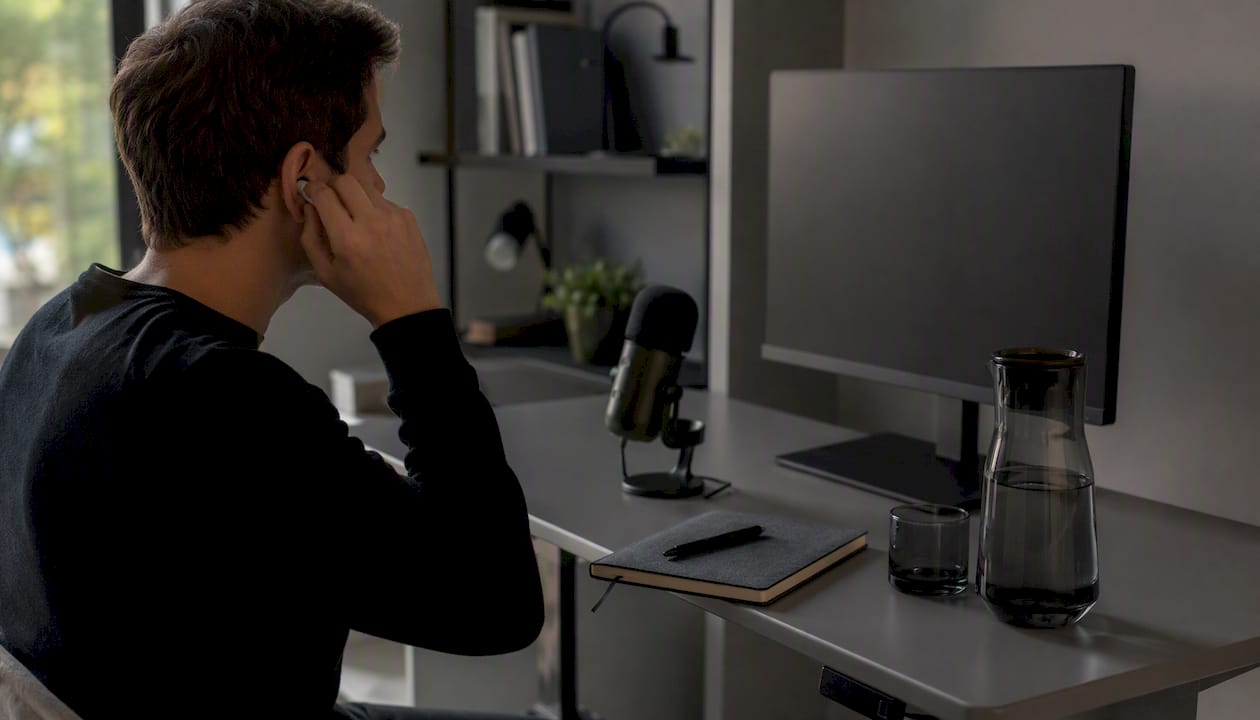
Video interview analysis: how AI scores your interview

TL;DR:AI video interview analysis evaluates verbal and nonverbal cues like speech, facial expressions, and body language.Candidates should focus on clarity and consistency, using AI feedback to improve their performance.AI tools supplement human judgment but can have biases; balancing both enhances interview success.
Most job seekers spend hours rehearsing answers, but the AI reviewing your video interview is also watching your eye contact, measuring your speaking pace, and analyzing the tone of your voice. That’s a fundamentally different game. Video interview analysis uses artificial intelligence to evaluate far more than what you say, and millions of candidates are being screened this way without fully understanding the criteria. This article breaks down exactly how the technology works, what it measures, where it falls short, and how you can use it to your advantage rather than be surprised by it.
Table of Contents
- What is video interview analysis?
- How does AI analyze your interview performance?
- Pros and cons of video interview analysis
- How to use video interview analysis for better results
- A new era for interview prep: What most job seekers overlook
- Get started with smarter interview practice, powered by AI
- Frequently asked questions
Key Takeaways
| Point | Details |
|---|---|
| AI analyzes more than words | Video interview tools evaluate everything from your tone and expressions to your body language. |
| Feedback is fast but not flawless | Automated results help you improve quickly, but may be biased or miss context like accents or culture. |
| Balance AI with human input | Combine AI insights and personal judgment for the best interview prep results. |
| Use analysis for steady improvement | Practicing with feedback can boost your confidence and skills over repeated sessions. |
What is video interview analysis?
With video interview analysis on the rise, let’s start with what it actually means and what makes it different from a traditional interview.
Video interview analysis is the AI-driven assessment of recorded or live video interviews. Instead of relying solely on a human recruiter’s judgment, software evaluates both verbal and nonverbal cues to generate scores and feedback. Think of it as a second reviewer that never gets tired, never has a bad day, and processes every candidate through the same checklist.
In a traditional interview, a human evaluates your answers based on experience, intuition, and context. AI-powered analysis works differently. It breaks your performance into measurable signals and scores each one. As one research team noted, video interview analysis evaluates behavior, expressions, and language using AI tools, raising important questions about accuracy and fairness.
Here’s what AI typically examines during a video interview:
- Speech content: Word choice, relevance, use of filler words like “um” and “uh”
- Tone and sentiment: Whether your voice sounds confident, anxious, or flat
- Facial expressions: Smiling, eye contact, and micro-expressions
- Speaking pace: Too fast signals nerves; too slow can read as uncertainty
- Body language: Posture, head movement, and hand gestures
Employers use these tools for efficiency. Screening hundreds of applicants manually takes weeks. AI can process the same volume in hours and generate standardized scores that make comparison easier. For large companies with high application volumes, this is a practical solution.
“AI-powered video screening lets employers evaluate thousands of candidates with consistent criteria, reducing time-to-hire and removing some forms of subjective bias from early-stage screening.”
For job seekers, this means the rules have changed. Understanding AI interview technology explained is no longer optional. You’re not just being judged on your answers. You’re being scored on how you deliver them, how you look while doing it, and whether your nonverbal signals align with your words.
How does AI analyze your interview performance?
Now that you know what it is, here’s how the technology actually examines and evaluates your interview.
Most AI video interview tools follow a similar process:
- You record a response or join a live session through the platform.
- The AI captures your audio and video simultaneously.
- Algorithms process your speech, tone, facial data, and body language.
- A score or feedback report is generated, often within minutes.
The metrics vary by platform, but here’s a general look at what’s typically measured:
| Metric | What it measures | Why it matters |
|---|---|---|
| Speech clarity | Pronunciation, filler words | Signals communication skill |
| Sentiment/tone | Positive vs. negative language | Reflects attitude and energy |
| Eye contact | Gaze toward camera | Suggests confidence and engagement |
| Speaking pace | Words per minute | Affects perceived composure |
| Facial positivity | Smile frequency, expression | Linked to perceived warmth |
| Vocabulary range | Word variety and relevance | Indicates preparation and depth |
The feedback can feel impersonal because it is. There’s no human reading your story or weighing your context. The algorithm follows programmed criteria, and that creates real limitations. Research confirms that AI analysis may have high error rates for some demographics and can’t judge subtle qualities like resilience or creativity.
Accents, cultural communication styles, and neurodivergent speech patterns can all produce lower scores even when the candidate is highly qualified. The role of AI in video interviews is still evolving, and the video interview AI guide landscape is catching up with these concerns slowly.

Pro Tip: Focus on clarity and consistency rather than trying to “game” the AI. Speak at a measured pace, look directly at your camera, and use complete sentences. These habits score well across most platforms and also make you a stronger communicator in human-led interviews.
Pros and cons of video interview analysis
Understanding the mechanics, it’s important to see how video interview analysis compares and what benefits or pitfalls you might experience.
Let’s look at both sides honestly.
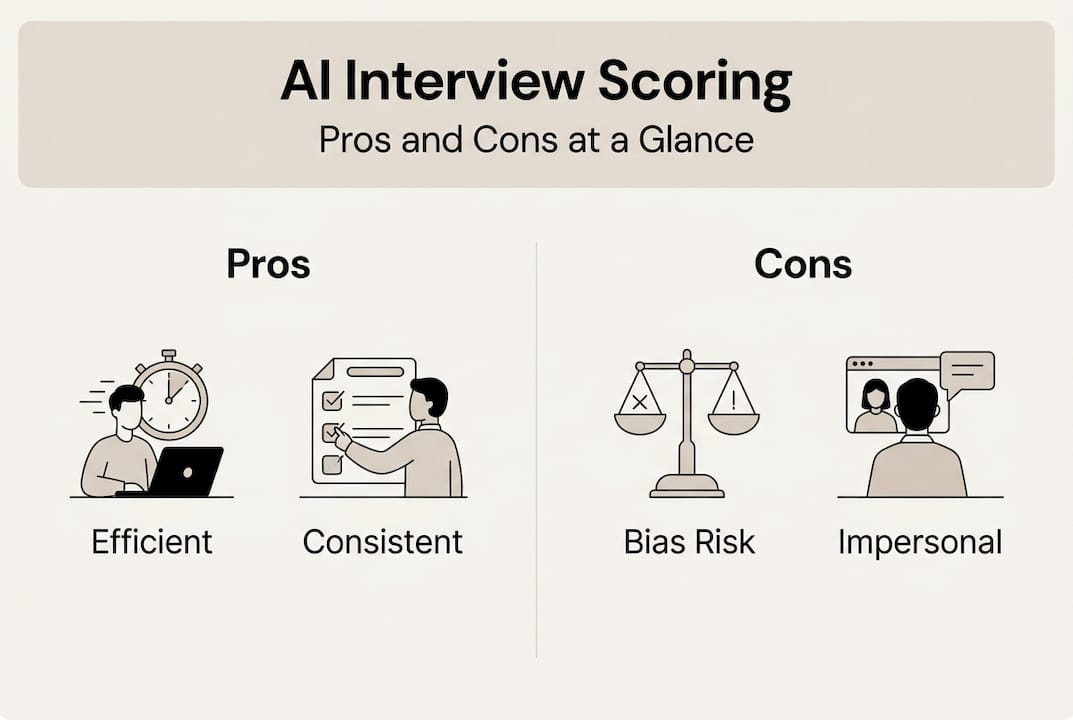
Advantages for job seekers:
- Practice privately without the pressure of a live audience
- Get structured feedback you can act on immediately
- Track your improvement over multiple sessions
- Standardized scoring means your performance is measured the same way as every other candidate
Disadvantages to watch for:
- Bias in the algorithm can disadvantage certain accents, ethnicities, or communication styles
- No empathy or context, so personal circumstances are invisible to the system
- Privacy concerns around how your video data is stored and used
- Scores can feel arbitrary when you don’t know exactly what triggered a lower rating
Here’s a side-by-side comparison:
| Factor | Human interviewer | AI video analysis |
|---|---|---|
| Speed | Slow, scheduled | Fast, automated |
| Objectivity | Variable | Consistent but programmed |
| Empathy | High | None |
| Bias risk | Subjective bias | Algorithmic bias |
| Legal risk | Moderate | Higher in some jurisdictions |
| Context sensitivity | Strong | Weak |
“Video interview AI boosts prep efficiency for 94% of users, but can enable cheating and amplify bias.”
That 94% figure is encouraging for preparation purposes, but the same research flags real risks. Tools that score facial expressions may encode cultural assumptions about what “confidence” looks like. This matters for AI for interview fairness conversations happening right now across the hiring industry.
The interview fairness guide perspective is clear: AI is a powerful tool, but it’s not a neutral one. Knowing this helps you prepare smarter rather than feeling blindsided by a score that doesn’t reflect your actual ability.
How to use video interview analysis for better results
With the pros and cons laid out, here’s how to actually make the most of video interview analysis in your preparation.
Follow these steps to turn AI feedback into real improvement:
- Choose a reliable tool. Look for platforms with transparent scoring criteria and clear privacy policies. Free trials are widely available.
- Record a practice interview. Use realistic questions from your target industry. Treat it like the real thing, same environment, same energy.
- Review the feedback carefully. Don’t just look at the score. Read the specific notes on tone, pace, and word choice. These details tell you where to focus.
- Address your top two or three improvement areas. Trying to fix everything at once leads to stilted, unnatural delivery. Prioritize.
- Repeat regularly. One session won’t move the needle. Build a weekly practice habit and track changes over time.
Keep your personal context in mind throughout this process. AI cannot assess all job-relevant qualities, so combine its feedback with human advice from mentors, career coaches, or trusted peers. A friend who watches your practice video might catch something the algorithm completely missed.
Pro Tip: Use both AI and human feedback together. AI catches patterns you repeat without noticing. Humans catch the things that feel “off” in ways that are hard to quantify. Both perspectives make you a stronger candidate.
Also, protect your privacy. Before uploading any video to a platform, read the data policy. Know whether your recordings are stored, shared, or used to train the AI model. This is especially important if you’re applying to sensitive industries. Exploring how to leverage AI for interviews and following video interview best practices will help you stay in control of your data and your preparation.
A new era for interview prep: What most job seekers overlook
Practical tips aside, it’s time to address what most articles and even candidates tend to miss.
Too many job seekers treat AI feedback as a verdict. They get a low score on “facial positivity” and spend the next week forcing a smile. That’s preparing for the machine, not the manager. The real interview still involves a human being who wants to understand your thinking, your values, and your fit for the team.
Video interview analysis is a tool, not a judge. Use it to identify patterns in your delivery that you’d otherwise never notice. But don’t let it override your self-awareness. If real-time interview analysis tells you to slow down and you know your natural pace works well in conversation, trust that instinct in the live interview.
The candidates who perform best are the ones who stay adaptable. They use AI feedback to sharpen their delivery, human feedback to refine their story, and their own judgment to decide what fits. That combination is what no algorithm can replicate.
Get started with smarter interview practice, powered by AI
Ready to put these strategies into action? Here’s how to start upgrading your interview skills today.
ParakeetAI is built specifically for job seekers who want to practice smarter, not just harder. It listens to your interview in real time and automatically provides answers to every question using AI, so you always have a confident, well-structured response ready. It’s one of the most practical ways to apply everything covered in this article.
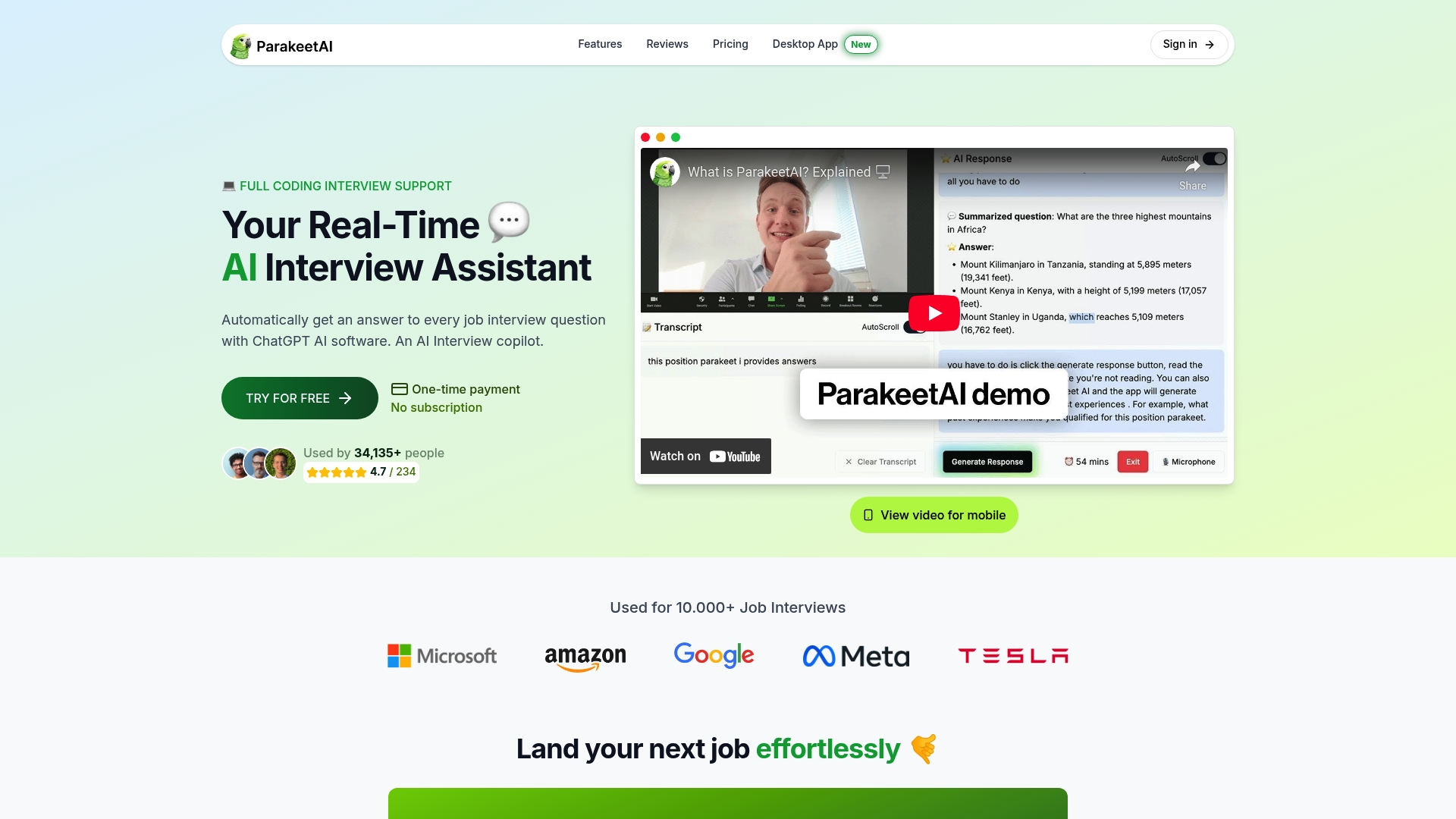
Whether you’re preparing for your first video interview or refining your performance after a tough round, ParakeetAI interview tools give you the edge you need. And if you care about how AI shapes the hiring process, the conversation around role of AI for fairness is one worth following. Try ParakeetAI free and see what better preparation actually feels like.
Frequently asked questions
Can video interview analysis detect if I’m nervous or lying?
AI tools can spot nervous cues like hesitations or fidgeting, but AI analysis cannot reliably gauge intent or whether someone is being truthful. A human interviewer is still far better at reading those signals in context.
Will having an accent hurt my results in AI video interviews?
Yes, it can. AI video interview tools work poorly for accents and non-native speakers, so always check whether a platform explicitly supports your language variety before relying on its scores.
Is video interview analysis replacing human interviewers?
No. Most companies use AI as a supplement for initial screening rather than a full replacement. AI standardizes screening but cannot replace human judgment when it comes to context, ethics, and culture fit.
How can I protect my privacy with video interview analysis tools?
Always read the platform’s privacy policy before uploading any video. Only use tools that clearly explain how your data is stored, who can access it, and whether it’s used to train AI models.