
Interviewee Behavioral Analysis: A Candidate's Guide

TL;DR:Interviewee behavioral analysis evaluates a candidate’s past verbal and nonverbal behaviors to predict future performance. Modern methods rely on structured frameworks like STAR and AI platforms, shifting focus from deception detection to competency assessment. Preparation involves developing specific stories, practicing aloud, and understanding how AI evaluates responses to succeed.
Interviewee behavioral analysis is the systematic evaluation of a candidate’s verbal and nonverbal behaviors during an interview to assess competencies, motivations, and cultural fit. This process differs sharply from outdated deception-focused methods like the traditional Behavioral Analysis Interview (BAI), which relied on stress cues and gaze aversion with no scientific reliability. Modern behavioral analysis uses structured frameworks like the STAR method, standardized scoring tools like Behaviorally Anchored Rating Scales (BARS), and AI-powered platforms that transcribe and analyze speech in real time. Understanding how this process works gives you a concrete advantage before you walk into any interview room.
What is interviewee behavioral analysis?
Interviewee behavioral analysis is a competency-based assessment method. Interviewers use it to predict future job performance by examining how you have behaved in real past situations. The core assumption is simple: past behavior is the strongest predictor of future behavior.
This approach contrasts directly with hypothetical questioning, where an interviewer asks what you would do. Behavioral analysis asks what you did do. Google re:Work recommends behavioral questions specifically because they validate resume claims and reveal nuanced skills that hypothetical answers cannot expose.
The modern version of this process is evidence-based. It focuses on competency markers such as self-awareness, adaptability, and emotional regulation. It does not attempt to detect lies. That distinction matters for you as a candidate because it means your job is to tell clear, honest stories, not to manage a polygraph.
What are the common behavioral analysis techniques?
Several structured techniques form the backbone of how interviewers assess your behavior. Knowing them lets you prepare responses that score well on every dimension being measured.
Behavioral vs. hypothetical questions. Behavioral questions begin with phrases like “Tell me about a time when…” or “Describe a situation where you…” Hypothetical questions ask “What would you do if…” Behavioral analysis relies on the first type because past actions predict performance more accurately than imagined scenarios.
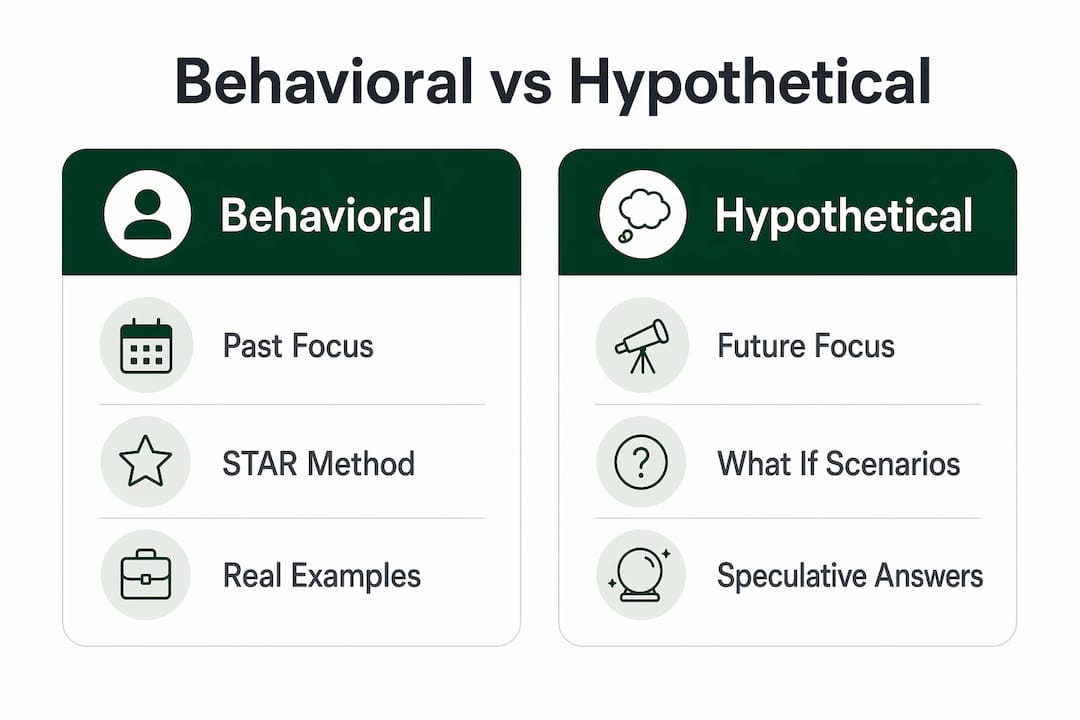
The STAR method. STAR stands for Situation, Task, Action, Result. It is the most widely recognized framework for structuring behavioral answers. You describe the context, your specific responsibility, the steps you took, and the measurable outcome. Interviewers score your answer on each element, so a weak “Result” can cost you points even if your “Action” was strong.
Behaviorally Anchored Rating Scales (BARS). Many structured interviews use BARS scoring to rate candidates on a standardized 1–5 scale. Each score level is anchored to a specific behavioral description, which removes vague impressions from the equation. Interviewers score independently before comparing notes, which reduces groupthink.
- Behavioral questions require real examples, not generalizations
- STAR answers should include a specific, quantifiable result whenever possible
- BARS scoring means your answer is compared to a rubric, not to other candidates
- Structured scoring increases fairness and predictive validity in hiring decisions
Pro Tip: Prepare six to eight STAR stories before any interview. Cover themes like conflict resolution, failure and recovery, leadership, and cross-functional collaboration. One strong story can answer multiple behavioral prompts.
How do interviewers analyze behavioral cues?
Interviewers trained in behavioral analysis look at two categories of signals: verbal and nonverbal. Understanding both helps you present yourself with confidence rather than anxiety.

Verbal cues include the consistency of your answers, the specificity of your examples, your speech pacing, and your tone. A candidate who gives vague, generalized answers scores lower than one who names specific dates, people, and outcomes. Inconsistency between your resume and your spoken story is a red flag that trained interviewers catch quickly.
Nonverbal cues include eye contact, posture, and how you manage visible stress. Here is where many candidates misunderstand the process. The traditional BAI treated stress behaviors like fidgeting or gaze aversion as deception indicators. Research shows that stress behaviors are not reliable signs of deception. Innocent and guilty people both react with anxiety in high-stakes situations. Modern interviewers know this.
What interviewers actually look for in nonverbal behavior is emotional regulation and engagement. Do you maintain composure when asked about a difficult failure? Do you listen actively before answering? Candidates who reflect on past experiences and demonstrate self-awareness consistently score higher because those behaviors reveal motivation and potential.
- Eye contact signals engagement, not honesty
- Pausing before answering shows thoughtfulness, not evasion
- Posture and energy level communicate enthusiasm for the role
- Emotional regulation under pressure is a direct competency signal
Pro Tip: If you feel nervous, slow your speech by 10–15%. Faster speech under stress is one of the most common verbal cues that undermines an otherwise strong answer.
What role does AI play in behavioral analysis?
AI has changed the interview analysis process in ways that benefit both interviewers and candidates. Modern interview intelligence platforms operate across four functional layers: transcription, content analysis, behavioral signal analytics, and outcome correlation. Some platforms achieve up to 94% accuracy capturing and structuring interview data. That level of precision means interviewers receive a detailed behavioral record, not just notes scribbled on a notepad.
The transcription layer converts your speech to text in real time. The content analysis layer identifies which competencies your answers address. The behavioral signal layer flags patterns in pacing, vocabulary, and response structure. The outcome layer correlates those signals with historical hiring data to surface predictive insights.
For candidates, this shift has a meaningful upside. AI-powered tools analyze speech patterns to generate objective behavioral insights, which reduces the influence of interviewer bias. A structured AI-scored interview is fairer than one where a tired interviewer relies on gut feeling at the end of a long day.
| AI Layer | Function | Candidate Impact |
|---|---|---|
| Transcription | Converts speech to text in real time | Creates a complete, reviewable record of your answers |
| Content Analysis | Maps answers to competency frameworks | Scores you on specific skills, not general impression |
| Behavioral Signal Analytics | Analyzes pacing, vocabulary, and structure | Surfaces patterns you may not notice in yourself |
| Outcome Correlation | Compares signals to historical hiring data | Reduces individual interviewer bias in final decisions |
The role of AI in pre-employment testing is expanding fast. Candidates who understand how these systems work can prepare more precisely, because they know their answers are being evaluated on structure and content, not just personality.
How can candidates prepare for behavioral analysis?
Preparation for behavioral analysis is not about memorizing scripts. It is about building a library of real stories and learning to tell them clearly. Here is a practical process you can follow before any structured interview.
- Identify the competencies the role requires. Read the job description carefully and extract the core skills. Common ones include leadership, problem-solving, communication, and adaptability. Every behavioral question maps to one of these.
- Build your STAR story library. Write out six to eight stories from your work history. Each story should cover a different competency. Include specific numbers, timelines, and outcomes wherever possible.
- Practice out loud, not just in your head. Saying a story aloud reveals where it is vague or too long. Record yourself and listen back. You will catch pacing issues and filler words you did not know you were using.
- Manage your nonverbal behavior through preparation, not performance. Confidence in your stories reduces visible anxiety. You do not need to fake composure. You need to know your material well enough that composure comes naturally.
- Stay authentic. Effective behavioral analysis centers on open-ended questions designed to gather accurate information. Canned or rehearsed-sounding answers score lower because they lack the specific detail that trained interviewers look for.
Pro Tip: After each interview, write down every behavioral question you were asked. Over time, you will build a personal database of prompts that helps you prepare faster for the next one.
Understanding the types of interview assessments used across industries also helps you calibrate your preparation. A technical role may weight problem-solving stories heavily, while a client-facing role may prioritize communication and conflict resolution examples.
Key takeaways
Interviewee behavioral analysis is a competency-based process that rewards specific, structured storytelling over polished performance or deception management.
| Point | Details |
|---|---|
| Behavioral analysis targets competencies | Interviewers assess past behavior to predict future performance, not to detect lies. |
| STAR method structures your answers | Use Situation, Task, Action, Result to give interviewers the detail they score on. |
| Nonverbal cues signal engagement | Emotional regulation and active listening matter more than avoiding nervous habits. |
| AI scoring increases objectivity | Platforms analyzing speech patterns reduce interviewer bias and create fairer evaluations. |
| Preparation beats performance | A library of real, specific stories outperforms any rehearsed script in a structured interview. |
Why candidates who understand this process win more offers
I have reviewed hundreds of interview transcripts and coached candidates across industries, and the single biggest mistake I see is candidates treating behavioral interviews like personality tests. They try to seem likable instead of demonstrating competence through evidence.
The research on traditional BAI methods is damning. Stress cues and gaze aversion, which interviewers once used as deception signals, are statistically unreliable. Knowing this should free you. Your nervous energy is not a red flag to a well-trained interviewer. Your vague answer is.
What I find most candidates get wrong about STAR is the Result. They describe the Situation in detail, walk through the Action carefully, and then say something like “it worked out well.” That is where points are lost. A result without a number, a timeline, or a measurable outcome is not a result. It is a story without an ending.
On the AI side, I think most candidates underestimate how much this technology levels the playing field. When an AI platform scores your answer against a competency rubric, the interviewer’s mood that day matters less. That is genuinely good news for candidates who prepare well but do not interview with natural charisma.
My honest advice: stop trying to manage how you appear and start managing what you say. Build real stories. Practice them out loud. Know the competencies the role demands. That is the entire game.
— Jure
How Parakeet-ai helps you prepare for behavioral interviews
Parakeet-ai is a real-time AI interview assistant that listens to your interview and automatically provides answers to every question using AI. For candidates navigating structured behavioral interviews, that means you get support in the moment, not just in preparation.
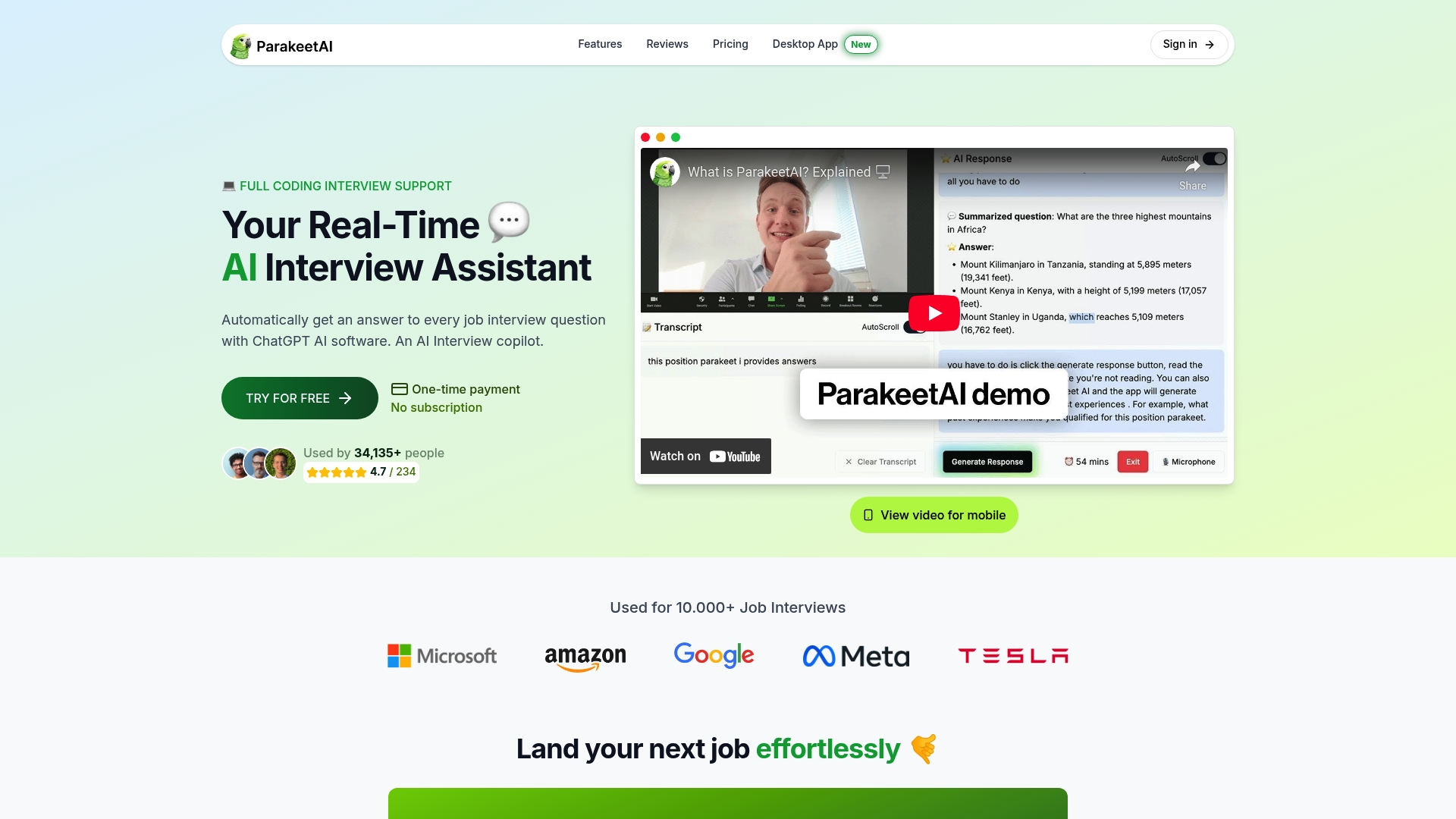
The platform draws on the same speech-to-text and behavioral signal technology that enterprise hiring teams use, giving you a view into how your answers are being evaluated. You can use Parakeet-ai to practice behavioral prompts, review your response structure, and identify gaps in your STAR stories before they cost you an offer. Visit Parakeet-ai to see how real-time AI assistance changes the way you prepare and perform in your next interview.
FAQ
What is interviewee behavioral analysis?
Interviewee behavioral analysis is the structured evaluation of a candidate’s verbal and nonverbal behaviors during an interview to assess competencies, motivations, and cultural fit. It uses frameworks like STAR and scoring tools like BARS to predict future job performance based on past behavior.
How is behavioral analysis different from lie detection?
Modern behavioral analysis focuses on competency-based evaluation, not deception detection. Research shows stress behaviors are not reliable deception indicators, so trained interviewers assess self-awareness, adaptability, and emotional regulation instead.
What does the STAR method stand for?
STAR stands for Situation, Task, Action, Result. It is the standard framework candidates use to structure behavioral answers so interviewers can score each competency element clearly and consistently.
How does AI change the interview analysis process?
AI-powered platforms transcribe interviews in real time and analyze speech patterns to generate objective behavioral insights. Some platforms reach up to 94% accuracy in capturing and structuring interview data, which reduces interviewer bias and improves scoring consistency.
How should candidates prepare for behavioral interviews?
Candidates should build a library of six to eight STAR stories covering core competencies like leadership, problem-solving, and adaptability. Practicing out loud and including specific, measurable results in every story are the two highest-impact preparation steps.