
Virtual Talent Assessment for HR Professionals: 2026 Guide

TL;DR:Virtual talent assessment enables remote candidate evaluation using digital tools, AI scoring, and structured exercises. It offers cost savings, fairness, and scalability, making it a strategic standard for effective hiring. Proper design, assessor training, and AI integration enhance reliability and candidate experience.
Virtual talent assessment is the process of evaluating job candidates remotely using digital platforms, online tests, video interviews, and AI-driven scoring to measure skills and competencies without in-person interaction. The industry term for this practice is “virtual assessment center,” and it has become the standard method for high-volume, structured hiring. HR professionals and hiring managers who understand what is virtual talent assessment gain a direct advantage: they can screen more candidates, reduce bias, and cut costs, all without sacrificing evaluation quality.
What is virtual talent assessment and how does it work?
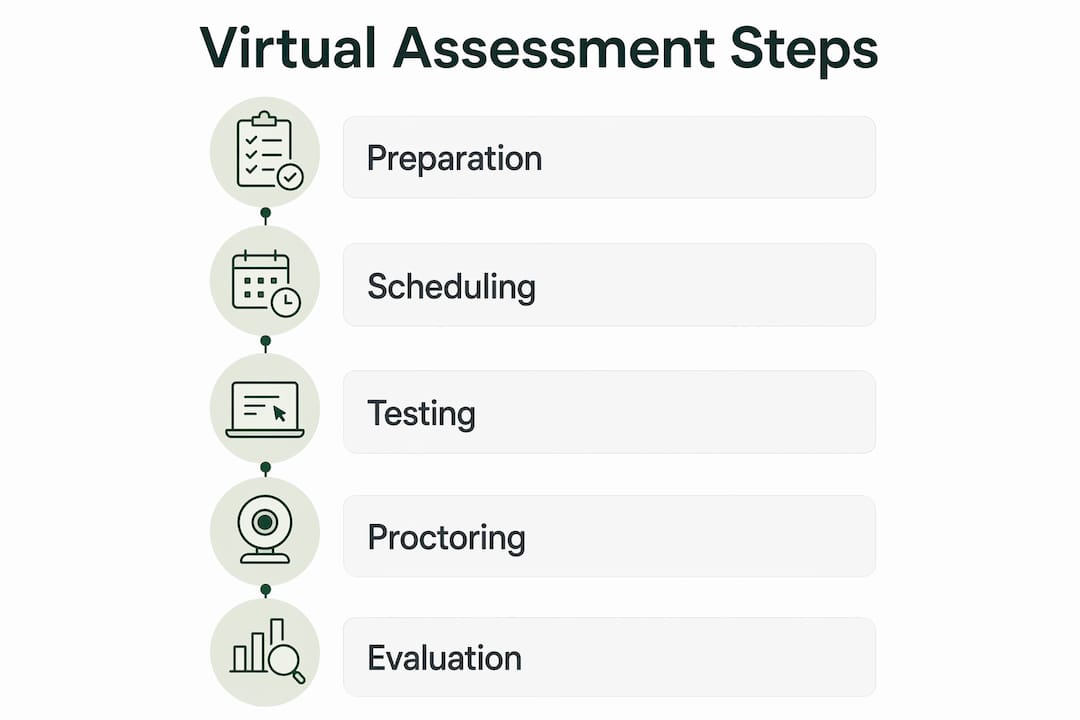
Virtual talent assessment uses a combination of online tools to evaluate candidates across multiple competencies in a single, structured process. The core components include psychometric tests, skills-based exercises, asynchronous video interviews, live panel sessions, and digital simulations. Each component targets a specific dimension of candidate suitability, from cognitive ability to communication style.

The process runs on digital platforms that coordinate scheduling, deliver assessments, and collect results in one place. Virtual assessment centers replicate the rigor of in-person evaluations through structured exercises, interactive group tasks, and real-time collaboration tools. That means candidates experience the same depth of evaluation they would in a physical assessment center, just without the commute.
AI plays a central role in scoring. Automated systems analyze response patterns, flag inconsistencies, and generate standardized scores that reduce the influence of individual assessor bias. Virtual presence analytics tools go further, measuring over 25 behavioral metrics during assessments to evaluate soft skills like communication, authority, and trust.
What methods and tools are used in virtual skills evaluation?
The most common online talent assessment methods fall into four categories:
- Psychometric tests: Measure cognitive ability, personality traits, and reasoning patterns. These are typically the first filter in a virtual hiring process.
- Skills tests: Evaluate job-specific technical competencies, from coding challenges to writing samples. Standard screening tests typically last 30–40 minutes and combine multiple modules for a comprehensive candidate view.
- Video interviews: Candidates record responses to structured questions asynchronously, or join live panel sessions. Tools for virtual interviewing methods have matured significantly, with AI now capable of analyzing tone, pacing, and word choice.
- Simulations and case studies: Candidates work through realistic job scenarios, either individually or in digital group exercises. These exercises test judgment, problem-solving, and collaboration under conditions that mirror actual work.
Proctoring tools run in the background during tests, using webcam monitoring, browser lockdown, and keystroke analysis to maintain integrity. AI scoring systems then process results against standardized rubrics, producing data-rich reports that hiring managers can act on immediately.
Pro Tip: Build your virtual assessment stack in layers. Start with an automated skills screen, follow with a structured video interview, and reserve live panel sessions for final-stage candidates only. This keeps costs low and assessor time focused where it matters most.
What are the benefits of virtual talent assessment in recruitment?
The benefits of virtual talent assessment extend well beyond convenience. The most significant gains come in three areas: cost, fairness, and scale.
Organizations that switch to virtual assessment centers reduce hiring costs by up to 40% by eliminating venue, travel, and catering expenses. That figure is not marginal. For a company running 20 assessment days per year, it represents a budget shift that can be redirected toward better assessor training or improved candidate experience.
Fairness is equally compelling. Research on virtual assessment validity confirms no adverse impact based on gender or age, with strong validity scores across a study of 120 managers. Standardized rubrics and AI-driven scoring reduce the influence of subjective judgment, which is the single biggest source of bias in traditional hiring.
The scale advantage is harder to quantify but just as real. Virtual platforms allow organizations to run simultaneous assessment sessions across time zones, something physically impossible with in-person centers. Candidates also report stronger engagement with virtual formats, citing flexibility and interactive tasks as key reasons for their preference.
Additional benefits include:
- Data richness: Every interaction generates structured data, giving hiring managers a fuller picture of each candidate than a single interview ever could.
- Consistency: All candidates complete the same exercises under the same conditions, making comparisons more reliable.
- Accessibility: Candidates in remote locations or with mobility limitations can participate fully without logistical barriers.
- Speed: Automated scoring and reporting compress the time between assessment and hiring decision from weeks to days.
Soft skills assessment has also improved. Platforms that evaluate communication and trust signals through behavioral analytics give hiring managers data points that a resume or single interview cannot provide.
How to design and conduct effective virtual assessments
Effective virtual assessment design starts with one principle: do not simply digitize your existing in-person schedule. A full-day in-person assessment center does not translate well to a screen. Candidates experience fatigue faster in virtual environments, and engagement drops sharply after extended sessions.
Limiting continuous virtual assessment to 3–4 hours is the recommended ceiling. Beyond that, performance data becomes less reliable because candidates are tired, not less capable. The solution is modular design.
- Break assessments into focused blocks. Each module should target one competency and last no longer than 45–60 minutes. Schedule breaks between blocks and communicate the structure clearly to candidates in advance.
- Train your assessors for digital observation. Assessors in virtual environments need different skills than in-person evaluators. Reading body language through a camera, managing group dynamics in a video call, and maintaining objectivity without physical presence all require specific training.
- Add human touchpoints throughout. Live welcome sessions and chat support during virtual assessments reduce candidate dropouts and preserve the relationship dynamic that matters most in leadership hiring.
- Use non-googleable tasks. Design exercises around unique scenarios, synthetic data, or company-specific contexts that candidates cannot research in advance. This is more effective than relying on webcam monitoring alone.
- Pilot before you scale. Run the full assessment with internal employees first. Identify technical friction points, unclear instructions, and timing issues before real candidates experience them.
Pro Tip: Send candidates a short technical checklist 48 hours before their assessment. Confirm their internet speed, camera quality, and platform access in advance. Technical failures during an assessment damage your employer brand more than any other single factor.
What challenges exist in virtual assessments and how can they be mitigated?
Virtual assessments introduce specific challenges that in-person formats do not face. Recognizing them early prevents costly mistakes.
- Candidate disengagement: Without physical presence, candidates can feel disconnected from the process. Human touchpoints, clear communication, and interactive tasks counter this. Passive, read-and-respond formats are the fastest way to lose candidate attention.
- Technological barriers: Not every candidate has a reliable internet connection or a quiet workspace. Offering asynchronous options and clear technical support channels levels the playing field and reduces dropout rates caused by circumstances outside the candidate’s control.
- Cheating risks: Standard webcam proctoring is no longer sufficient on its own. Advanced proctoring integrates AI monitoring with test design using synthetic thinking questions and unique contextual scenarios that make copying or searching for answers impractical.
- Assessor bias in digital formats: Bias does not disappear in virtual settings. It shifts. Assessors may unconsciously favor candidates with better home office setups or stronger camera presence. Structured scoring rubrics and calibration sessions between assessors correct for this.
- Validity concerns: Some hiring managers worry that virtual assessments measure “test-taking ability” rather than real job performance. Choosing exercises that mirror actual work tasks, rather than abstract puzzles, addresses this directly.
The role of AI in scoring multiple data points simultaneously improves reliability and reduces subjective judgment, which is the most practical answer to validity concerns in online talent assessment.
Key Takeaways
Virtual talent assessment is the most cost-effective, fair, and scalable method available for structured candidate evaluation in 2026, provided it is designed with modular sessions, trained assessors, and human touchpoints built in.
| Point | Details |
|---|---|
| Cost reduction | Switching to virtual assessment centers cuts hiring costs by up to 40% by removing venue and travel expenses. |
| Fairness and validity | Research confirms no adverse impact by gender or age, making virtual formats more equitable than traditional hiring. |
| Modular design | Cap continuous assessment at 3–4 hours and break sessions into focused blocks to maintain reliable candidate performance. |
| Assessor training | Digital observation requires different skills than in-person evaluation; train assessors specifically for virtual formats. |
| Cheating prevention | Combine AI proctoring with non-googleable, scenario-based tasks to protect test integrity more effectively than webcam monitoring alone. |
The case for treating virtual assessment as a permanent hiring standard
I have watched organizations treat virtual assessment as a temporary workaround, something to use until they can get back to a conference room. That thinking costs them real money and real talent.
The data is clear. Virtual formats produce valid, fair results. Candidates prefer them. Costs drop significantly. The only thing holding most HR teams back is the discomfort of changing a process that feels familiar, even when the familiar process is slower and more expensive.
What I have found actually works is a phased approach. Start with one role type, build a modular assessment program for it, and measure the outcomes against your previous in-person process. The comparison almost always favors the virtual format, not because it is easier, but because it forces you to be deliberate about what you are actually measuring.
The skills-first hiring trend is accelerating this shift. When you design assessments around demonstrated competencies rather than credentials, virtual tools give you more data per candidate than any interview ever could. The organizations that treat virtual assessment as a permanent, strategic part of their hiring process will consistently outperform those that still view it as a backup plan.
— Jure
How Parakeet-ai supports your virtual hiring process
HR professionals who want to move faster in virtual hiring without sacrificing quality have a practical option in Parakeet-ai.
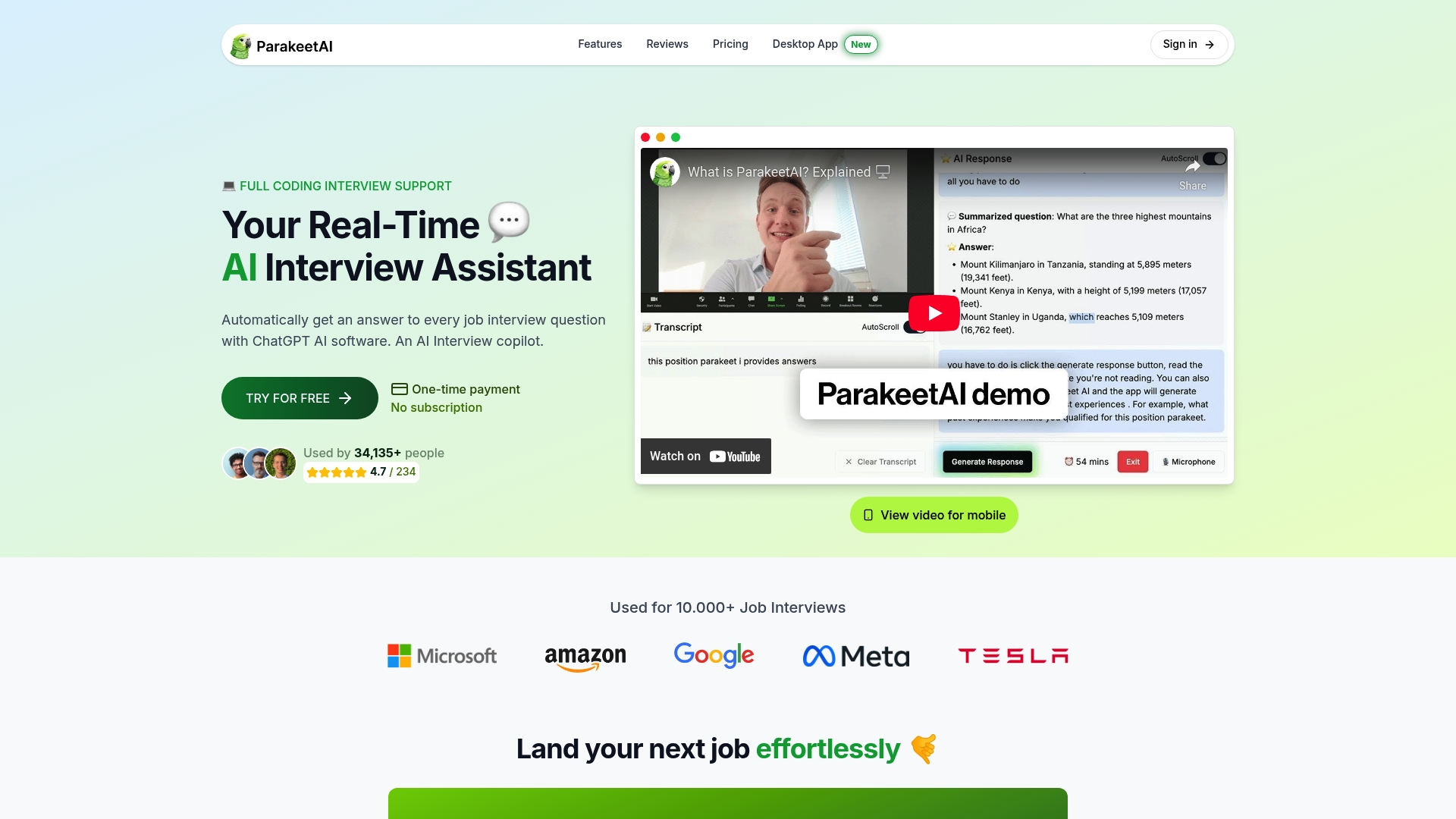
Parakeet-ai is a real-time AI interview assistant that listens to live interviews and automatically generates answers to every question as it happens. For hiring teams, that means candidates get a consistent, supported experience during live virtual interview stages, while assessors focus on evaluating responses rather than managing logistics. The platform reduces the cognitive load on both sides of the screen. Visit Parakeet-ai to see how AI-powered interview support fits into your existing virtual assessment workflow and helps your team make faster, more consistent hiring decisions.
FAQ
What is virtual talent assessment?
Virtual talent assessment is the process of evaluating job candidates remotely using digital platforms, online tests, video interviews, and AI-driven scoring. It replicates the structure of in-person assessment centers without requiring physical presence.
How long does a virtual talent assessment typically take?
Standard virtual screening tests last 30–40 minutes, while full virtual assessment centers are recommended to run no longer than 3–4 hours total to prevent candidate fatigue and maintain data reliability.
Are virtual assessments as accurate as in-person evaluations?
Research on 120 managers confirms that virtual assessment centers show strong validity and no adverse impact based on gender or age, making them as reliable as traditional in-person formats when properly designed.
How do you prevent cheating in virtual assessments?
Effective cheating prevention combines AI-based proctoring with test design that uses unique scenarios, synthetic data, and questions that require original thinking rather than searchable answers.
What skills can virtual assessments measure?
Virtual assessments measure cognitive ability, technical skills, personality traits, and soft skills including communication, authority, and trust, with some platforms tracking over 25 behavioral metrics during live sessions.