
Best interview closing statements to stand out and get hired
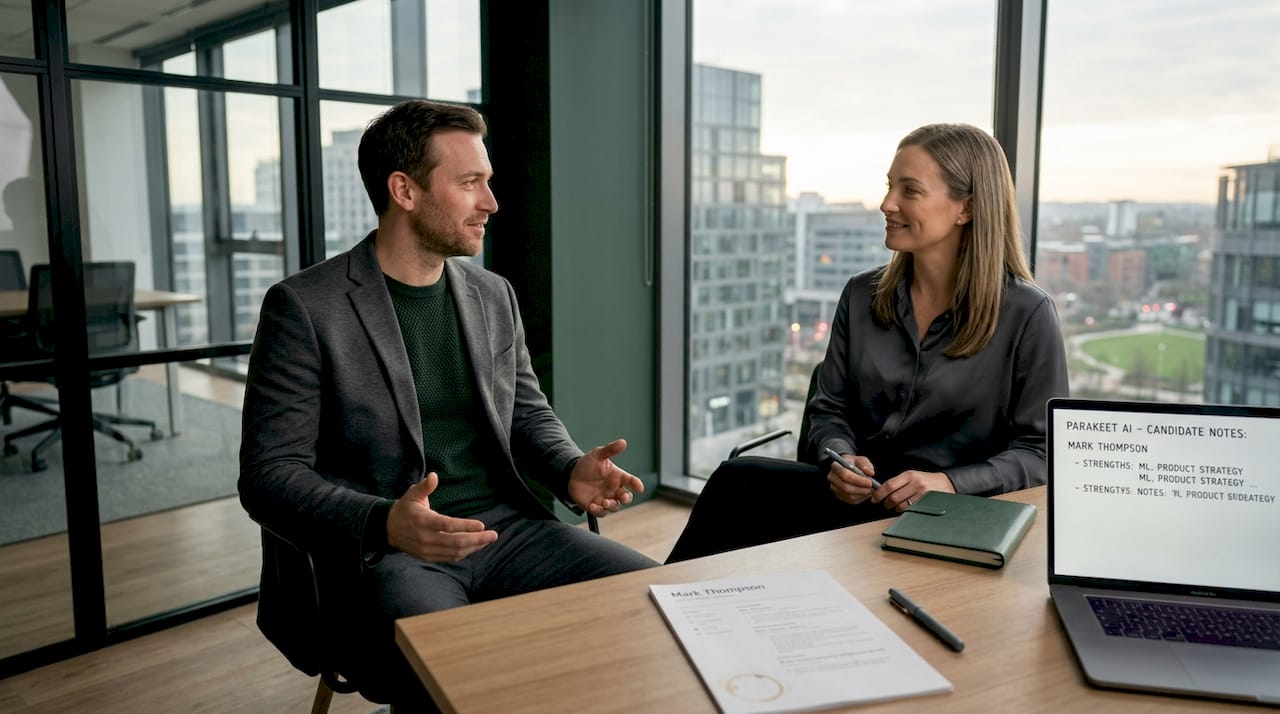
TL;DR:The final minute of an interview significantly influences the interviewer’s lasting impression.A strong closing references specifics, shows enthusiasm, and moves the conversation forward confidently.Authentic energy and tailored questions enhance the effectiveness of your closing statement.
The final minute of your interview carries more weight than most people realize. You might have nailed every question, told compelling stories, and built genuine rapport, yet a weak or generic closing can quietly undermine all of it. Hiring managers form lasting impressions quickly, and how you exit the conversation shapes what they remember when they’re comparing candidates later. This article breaks down exactly what makes a closing statement powerful, gives you seven proven examples you can adapt, and shows you how to tailor your approach to any situation.
Table of Contents
- What makes an interview closing statement effective?
- 7 best interview closing statement examples (and why they work)
- Comparison: Strong vs. weak interview closing statements
- Tailoring your closing statement to the situation
- What most guides miss: The subtle art of interview closings
- Take your interview skills to the next level
- Frequently asked questions
Key Takeaways
| Point | Details |
|---|---|
| Last impression matters | Interview closing statements can be make-or-break moments for your candidacy. |
| Avoid generic phrases | Generic thanks or empty lines weaken your impact and reduce memorability. |
| Customize each close | Tailor your ending to the company, interviewer signals, and the conversation’s flow. |
| Ask engaging questions | Thoughtful, relevant questions show preparation and genuine interest in the role. |
What makes an interview closing statement effective?
With an understanding of how a close can impact your odds, let’s break down what sets strong closings apart.
Most people treat the interview closing like an awkward goodbye. They say “thank you so much for your time,” shuffle their papers, and leave. What they don’t realize is that the last 60 seconds are often when the interviewer forms their final gut feeling about you. That feeling influences whether they advocate for you or stay neutral.
A memorable closing does several things at once. It reminds the interviewer why you’re the right fit, shows genuine enthusiasm for the specific role, and leaves a thread of conversation they might mentally continue after you walk out the door.
Here are the core criteria that separate a strong closing from a forgettable one:
- Specificity: Reference something concrete from the conversation, not a vague compliment about the company.
- Enthusiasm: Let your genuine interest show. Flat affect and politeness don’t inspire anyone to fight for your candidacy.
- Fit reiteration: Briefly link your skills or experience directly to what was discussed.
- A thoughtful question: Ask something that proves you were engaged and thinking critically throughout.
- Clarity on next steps: Express interest in the process without being pushy.
- Concern awareness: If the interviewer flagged any hesitation earlier, a skilled close can address it constructively.
Learning to close with confidence is a skill you can develop and practice before your next interview. According to expert guidance, ending an interview strongly requires both momentum and mindfulness about what the interviewer actually needs to hear.
“Ending with upbeat momentum plus thoughtful questions is recommended — including asking questions that show you were engaged and prepared.” Forbes
The pitfalls to avoid are equally important. Generic thank-yous feel automated. Empty phrases like “I’m really passionate about this space” with no supporting detail read as filler. And asking something that puts the interviewer on the spot, like “Do you have any doubts about me?”, can backfire in ways that hurt more than help.
7 best interview closing statement examples (and why they work)
Now that you know what to aim for, let’s look at real examples you can put to use.
Each of these is written for a different context or personality type so you can find the one that feels most natural, then adjust the specifics to match your situation.
- The confident connector: “Based on what you’ve shared today about the team’s focus on scaling the product in Q3, I think my background leading growth initiatives at a SaaS startup aligns closely with where you’re headed. I’m genuinely excited about this opportunity and would love to know what the next steps in your process look like.” This works because it ties a specific company priority to a specific candidate experience and then moves things forward.
- The enthusiastic learner: “I appreciated you explaining how the team collaborates across time zones. That resonates with me because I’ve built workflows for exactly that kind of setup. Could you tell me what the biggest challenge has been for new hires in their first 90 days?” This works because the question signals that you’re already thinking about how to contribute from day one, not just whether you’ll get an offer.
- The value statement close: “From everything we’ve discussed, I’m confident I can bring real impact to this role. My experience with client onboarding directly addresses the gap you mentioned in retention. I’d love to continue this conversation, and I’m happy to provide references or additional context at any point.” This works because it directly addresses a problem the interviewer raised, which makes you instantly relevant.
- The cultural fit close: “The way your team approaches collaboration, what you described with the weekly retrospectives, genuinely appeals to how I like to work. I feel strongly that I’d be a good fit here. What does success look like for the person you hire in the first six months?” This is strong because it shows you listened to specifics and can articulate cultural alignment without sounding rehearsed.
- The industry insight close: “I’ve been following how your company is positioning against newer competitors in this space, and I think the approach you described today is differentiated and smart. I’d be excited to be part of the team executing that. What’s the timeline you’re working with for filling this role?” This works because it demonstrates that you’ve done research beyond the job description and shows strategic thinking.
- The follow-through close: “Thank you for such a thoughtful conversation. I’ll send a follow-up email with the case study example I mentioned earlier, which I think is directly relevant to what you’re solving. Could I ask who else I might be meeting with as part of the process?” This works because it creates an immediate next action and keeps you in the interviewer’s mind.
- The warm, direct close: “I want to be straightforward: this role is exactly what I’ve been looking for, and I feel genuinely energized by this conversation. I’d love to take the next step. What does your decision timeline typically look like?” This works because directness, when delivered warmly, reads as confidence rather than desperation.
Pro Tip: After any of these closings, pause and listen fully. Don’t rush to fill silence. A brief, comfortable pause after your statement signals self-assurance and gives the interviewer space to respond genuinely.
What NOT to say: Simply saying “thank you” and leaving the room is one of the most common closing mistakes. It communicates nothing about your fit, interest level, or self-awareness. Avoid it.
To find the questions to ask at the end that resonate most with different types of interviewers, it helps to think about what information genuinely matters to you, not just what sounds impressive. The best questions for closing tend to be ones you’d actually want answered.
Comparison: Strong vs. weak interview closing statements
To make this even clearer, compare your current statement to the examples in the table below.
| Situation | Weak closing | Strong closing |
|---|---|---|
| Standard interview | “Thank you so much for your time.” | “I’m excited about this role. Based on what you shared about the roadmap, my experience with product launches fits well. What are the next steps?” |
| Concern was raised | Silent exit, hoping it was forgotten | “I wanted to briefly address the gap in my experience with enterprise sales. I’ve been actively developing that through X, and I see this role as the ideal next step.” |
| Panel interview | “Thanks, everyone. I hope to hear from you soon.” | “I enjoyed this discussion. The challenges you each described reinforce why I’m enthusiastic about joining the team. Is there anything else you’d like me to clarify?” |
| Remote role | “Looking forward to potentially working with you.” | “Remote collaboration is something I’ve built routines around. I appreciated hearing how your team handles async communication. What does onboarding look like for remote hires?” |
| Culture-forward startup | “I think I’d be a good fit here.” | “Your culture around ownership and iteration resonates deeply with how I work. I’d love to be part of building this. How does the team typically measure success in the first quarter?” |
The pattern is clear: strong closings are specific, show awareness, and move the conversation forward. Weak ones are polite but passive.
Experts point out that ending as an afterthought is one of the most damaging things you can do at this stage. The closing is not a formality. It is your final pitch.
Knowing which great end-of-interview questions to ask can also shift the energy of the room, making the interview feel like a two-way conversation rather than an evaluation.
Tailoring your closing statement to the situation
No two interviews are exactly alike. Here’s how to adjust to what’s happening in the room.
The best closings feel responsive, not scripted. If an interviewer spent 20 minutes talking about team friction, your closing should acknowledge that context. If they seemed rushed, a sharper and more concise close shows awareness.

Here’s a table of tricky situations with sample phrases you can use:
| Tricky situation | Sample closing phrase |
|---|---|
| Interviewer seems hesitant | “I noticed we spent time on my background in X. I want to confirm that my hands-on experience there directly addresses what you’re looking for. Happy to provide more examples.” |
| Startup environment | “I thrive in environments where priorities shift fast and ownership is shared. What does your current sprint cycle look like for new team members?” |
| Large enterprise culture | “I’m drawn to the structure and scale here, and I think it’s where I can have the most impact. What internal mobility looks like for top performers would be something I’d love to understand.” |
| Seniority gap concerns | “I understand the role calls for someone senior, and I want to highlight that my work in X involved leading decisions typically made at the director level.” |
| Highly technical role | “I’m looking forward to demonstrating the technical skills we discussed through any assessment you have planned. What’s the typical next step for your technical review process?” |
Some interviewer concerns need to be addressed before you close. Addressing concerns constructively is far more effective than leaving them unspoken, which allows doubt to linger. But there is a right and wrong way to do this.
- Do: “I noticed we discussed X briefly. I want to clarify that my experience in that area includes…”
- Do: “If there’s anything you’d like me to address further, I’m happy to do so.”
- Don’t: “Do you have any reservations about hiring me?” This puts the interviewer in a defensive spot and rarely produces a useful answer.
Knowing which questions to avoid in interviews protects you from accidentally undoing the rapport you’ve built. Similarly, brushing up on cultural fit closing tips helps you read the room better in environments where values alignment is a major hiring factor.
Pro Tip: If you sense the interview went off-track or shorter than expected, you can gently extend it with a well-placed question that invites more conversation. Something like “I’d love to hear more about how the team is structured” can reopen the floor and give you a second chance to connect.
What most guides miss: The subtle art of interview closings
Most interview advice on closings is technically correct but psychologically shallow. It tells you to be positive and ask questions. What it misses is the deeper dynamic at play: an interview closing is, at its core, a moment of social signaling.
When you close, you’re not just wrapping up a conversation. You’re showing the interviewer how you handle the end of a high-stakes interaction. Do you get awkward? Do you rush? Do you try too hard to seem likeable? Or do you exit with quiet confidence and genuine warmth?
The real differentiator isn’t whether your closing statement mentions “next steps.” It’s whether the interviewer walks away feeling like they just had a conversation with someone who genuinely gets what the job demands, and genuinely wants it.
Most candidates focus too much on politeness and not enough on resonance. A closing that is warm but vague feels like a firm handshake with a limp grip. Technically appropriate, but not memorable.
The under-discussed insight here is around question selection. Avoiding defensive questions at the close isn’t just tactical advice. It reflects a deeper truth about interview psychology: interviewers don’t want to be put on the spot any more than you do. Questions that invite them to name doubts or criticize you force them into an uncomfortable role. Questions that invite them to reflect on the company’s exciting future, on challenges they’re proud to tackle, on what makes their best performers succeed, those questions position you as a peer and a collaborator.
The best closings our team has seen in practice share one trait: authentic energy. You can feel the difference between someone who has memorized a closing statement and someone who means it. Interviewers feel it too. When you close with confidence because you’ve genuinely done the work to understand the role and connect it to your experience, that energy is real, and it shows.
Take your interview skills to the next level
You now have a clear framework, seven ready-to-use examples, and a comparison table to sharpen your closing game. But knowing the strategy is only half the work. The real edge comes from practicing until your closing feels natural, not rehearsed.
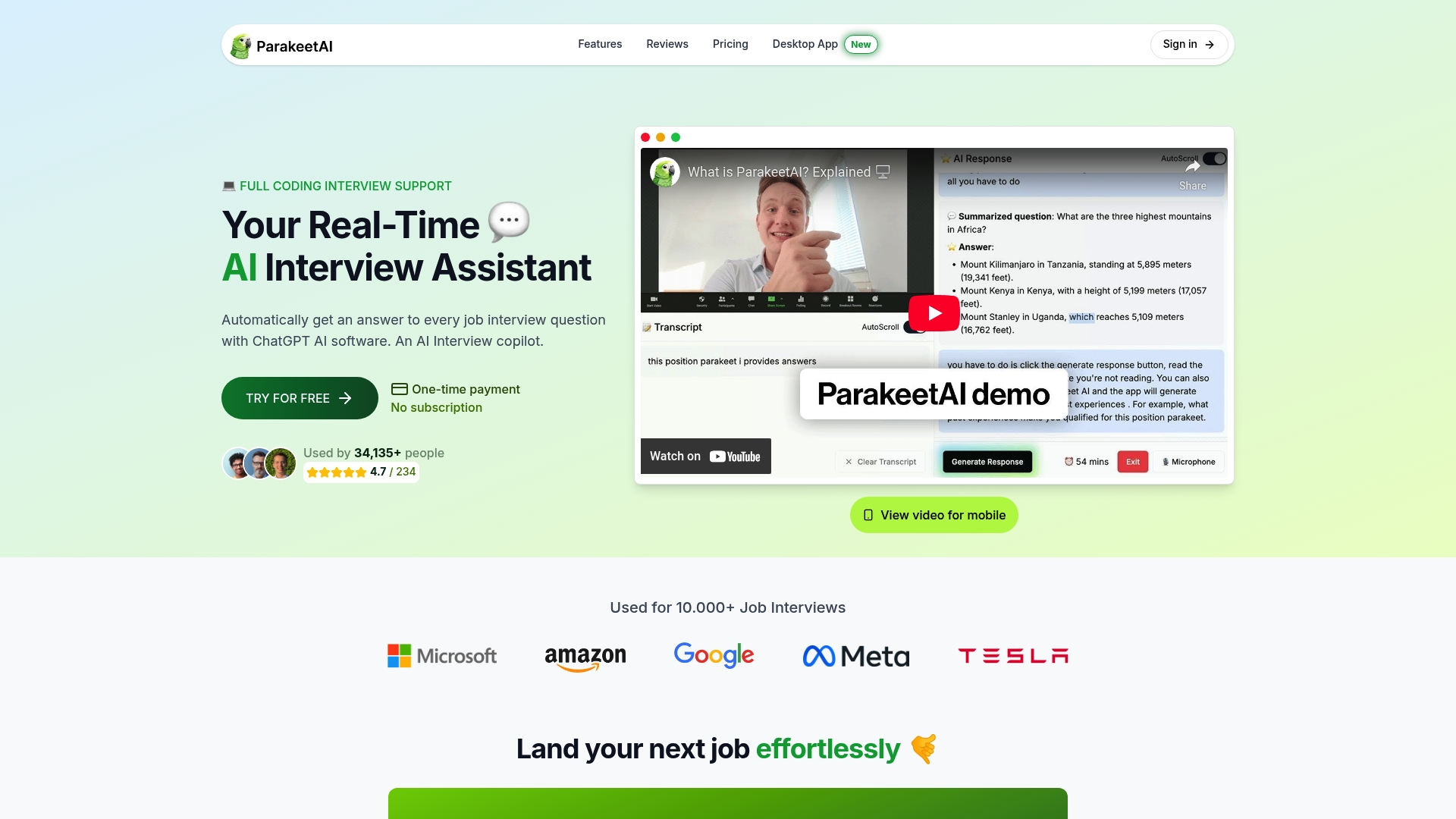
Parakeet AI is a real-time interview assistant that listens to your interview as it happens and automatically surfaces relevant answers, talking points, and suggestions tailored to each question you’re asked. It’s designed for exactly this kind of high-stakes moment, where you want to show up sharp, calm, and prepared for anything. Whether you’re heading into a first-round screen or a final panel interview, Parakeet AI helps you close with the confidence that comes from being ready. Visit the site to see how real-time AI support can change how you prepare and how you perform.
Frequently asked questions
Why is a strong closing statement important in interviews?
A strong closing statement makes you memorable and reinforces your enthusiasm and fit right before the interviewer forms their final impression. Ending with upbeat momentum is one of the most consistent pieces of advice from hiring experts.
What should I avoid saying in my interview closing?
Avoid generic phrases and never ask the interviewer if they have doubts about you. Questions like that put them in an uncomfortable position and rarely help your candidacy.
How can I address an interviewer’s concerns in my closing?
Acknowledge the concern briefly and redirect with a clear, confident statement about your relevant strengths. Constructively addressing interviewer concerns is far more effective than letting doubt sit unanswered.
Can I ask about next steps in my closing?
Yes, and you should. Asking about next steps shows initiative and makes it easier for the interviewer to move forward. Simply saying “thank you” and leaving without asking anything concrete is a missed opportunity that many candidates regret.