
Top interview questions to boost hiring and job search success

TL;DR:Asking sharp, intentional questions can significantly influence interview outcomes for both hiring managers and candidates. Effective questions clarify skills, reveal fit, and foster meaningful conversations, while poorly chosen questions weaken the process, leading to missed insights. Preparation, relevance, and adaptability are key to mastering interview questioning strategies.
The right question at the right moment can change everything in an interview. Ask something sharp and thoughtful, and you reveal exactly what you need to know. Ask something weak or poorly timed, and you leave the room with nothing useful. Whether you’re a hiring manager trying to identify your next great employee or a job seeker trying to land the role you actually want, the questions you choose define your outcomes. This article gives you a practical, categorized breakdown of the best interview questions for both sides of the table, plus the strategies to use them well.
Table of Contents
- How to choose great interview questions (and why it matters)
- Essential questions for interviewers to ask candidates
- Smart questions every interviewee should ask
- Common mistakes and questions to avoid
- When to use unstructured vs. structured questions (and blending both)
- Rethinking interview questions: What really works in practice
- Supercharge your interviews with ParakeetAI
- Frequently asked questions
Key Takeaways
| Point | Details |
|---|---|
| Mix question types | Combining behavioral, fit, and skills questions leads to deeper insights for interviewers and candidates. |
| Use the STAR method | Structuring behavioral questions around real scenarios improves clarity and objectivity. |
| Ask with intent | Thoughtful, well-timed questions signal preparation and spark meaningful conversation. |
| Avoid common traps | Skipping illegal, vague, or superficial questions protects professionalism and fairness. |
| Blend structure with authenticity | Combining structured formats and genuine, conversational tone yields the best interview results. |
How to choose great interview questions (and why it matters)
Not all interview questions are created equal. A question like “What are your strengths?” is so overused that most candidates have a rehearsed answer ready before they sit down. A question like “Tell me about a project that didn’t go as planned and what you learned from it” gets you something real. The difference is intentionality.
Good questions do three things well. They clarify what a candidate knows and can do. They reveal alignment between what the person wants and what the role actually offers. And they surface potential that might not show up on a resume. For hiring managers, effective question types include warm-up questions to ease candidates in, behavioral questions like “Tell me about a time…” to reveal past performance, and questions that assess role fit and specific skills.
For candidates, the end of an interview is not a formality. It’s an opportunity. Strong closing questions include “How would you define success in this role?”, “What are the team’s current priorities?”, and “Do you have any hesitations about my qualifications?” These questions signal preparation, show confidence, and give you information you genuinely need to make a decision.
Here are the core criteria for choosing great questions:
- Specificity: Vague questions get vague answers. The more specific your question, the more actionable the response.
- Openness: Questions that start with “how,” “what,” or “tell me about” generate richer answers than yes/no questions.
- Relevance: Every question should connect directly to the role, the team, or the working relationship.
- Balance: Good interviews feel like a conversation. Both parties should learn something valuable.
When you explore cultural fit questions alongside skill-based ones, you build a much clearer picture of whether someone will thrive in your environment.
Pro Tip: Write your top five questions before every interview, regardless of which side of the table you’re on. Preparation signals respect and professionalism.
“An interview is not an interrogation. It’s a structured conversation where both parties are evaluating whether a partnership makes sense.”
Essential questions for interviewers to ask candidates
Hiring managers often default to the same standard questions because they feel safe. Safe questions produce safe answers, and safe answers rarely tell you what you actually need to know. A strategic mix of question types gives you a far more complete picture of each candidate.
Here’s a practical breakdown of question types and examples to use:
- Warm-up questions get candidates out of their heads and into the conversation. Try “Walk me through what drew you to this role” instead of the robotic “Tell me about yourself.” It’s conversational, it’s open-ended, and it immediately reveals whether the candidate has done their research.
- Behavioral questions are the most reliable predictors of future performance because they’re grounded in real past experience. Behavioral questions like “Describe a time when you had to manage competing priorities under a tight deadline” tell you far more than any hypothetical ever could.
- Skill and competency questions test whether the candidate can actually do the job. For a project manager, ask “What’s your process for keeping stakeholders aligned when a project scope changes?” For an engineer, ask “How do you approach debugging a problem you’ve never seen before?”
- Fit and values questions explore whether this person will work well with your team long-term. Questions like “What kind of environment do you do your best work in?” or “How do you prefer to receive feedback?” reveal expectations that can make or break a working relationship.
- Closing questions let candidates ask their own questions and give you one final impression to evaluate. Pay close attention to what they ask. Smart, specific questions at the end reflect genuine engagement.
| Question type | Example | What it reveals |
|---|---|---|
| Warm-up | “What drew you to apply here?” | Research, motivation |
| Behavioral | “Tell me about a conflict with a coworker you resolved” | Interpersonal skills |
| Skill-based | “How do you prioritize your weekly workload?” | Organization, judgment |
| Fit | “What does a great manager look like to you?” | Compatibility |
| Closing | “What else would you like us to know?” | Self-awareness |
The STAR method (Situation, Task, Action, Result) is the gold standard framework for behavioral questions. When you design questions around this structure, candidates know how to frame their answers and you get clean, comparable data across all your interviews.
For more targeted ideas, especially in technical fields, check out tech interview question ideas that go beyond surface-level screening.
Pro Tip: For behavioral questions, follow up with “What would you do differently now?” This single follow-up often reveals more self-awareness and growth than the original answer.
Smart questions every interviewee should ask
Most candidates spend the entire interview answering questions but never think strategically about what they want to learn. That’s a missed opportunity. The questions you ask as a candidate signal your priorities, your professionalism, and your level of genuine interest.
Asking well-crafted questions serves three purposes. It shows the interviewer you’ve thought carefully about the role. It helps you avoid accepting a job that looks great on paper but turns out to be a poor fit. And it opens up a real conversation rather than keeping the dynamic one-sided.

Candidates should ask questions like “How would you define success in this role?”, “What are the team’s current priorities?”, and the bold but powerful “Do you have any hesitations about my qualifications?” That last one is uncomfortable to ask but enormously useful. It gives you a chance to address concerns directly before they cost you the offer.
Here are high-impact questions to bring to your next interview:
- “What does the onboarding process look like for this role?”
- “How does this team handle disagreements or competing priorities?”
- “What’s the biggest challenge the person in this role will face in the first 90 days?”
- “How has this role evolved over the past couple of years?”
- “What do people who thrive here have in common?”
| Question | What it uncovers |
|---|---|
| “How do you define success in this role?” | Role clarity and expectations |
| “What are the team’s current priorities?” | Workload and strategic direction |
| “What do you enjoy most about working here?” | Culture and manager credibility |
| “Do you have any hesitations about my qualifications?” | Hidden objections |
| “What does growth look like for this position?” | Career development opportunities |
For a deeper set of insightful candidate questions tailored to specific industries, you’ll find it worthwhile to prepare more than you think you’ll need. Interviewers remember candidates who ask sharp, specific questions because it’s genuinely rare.
Pro Tip: Prepare at least seven questions before your interview so you still have good ones left after the conversation naturally answers a few of them.
Common mistakes and questions to avoid
Knowing what to ask matters. But knowing what not to ask matters just as much. Weak questions can undermine an otherwise strong interview from either side of the table.
For interviewers, the most damaging mistakes include:
- Leading questions that telegraph the expected answer, like “You’re comfortable with tight deadlines, right?” These tell you nothing because any candidate will say yes.
- Yes/no questions that close off conversation instead of opening it up.
- Illegal questions about age, religion, marital status, national origin, or pregnancy. Beyond being unethical, these expose your organization to serious legal risk.
- Repetitive questions that were already answered on the resume, which signals poor preparation and wastes everyone’s time.
For job seekers, thoughtful questions signal genuine interest and turn the interview into a two-way evaluation. The flip side is that poor questions signal exactly the opposite. Avoid asking:
- “What does your company do?” (Do your homework before you walk in.)
- “How many vacation days do I get?” (Save compensation and benefits for after an offer is made.)
- “When can I expect a promotion?” (This reads as presumptuous before you’ve even started.)
- Questions that are overly broad or show no specific interest in this role or company.
“Every question you ask, or don’t ask, sends a message about how prepared and interested you are.”
For a full breakdown of the questions to avoid across different interview scenarios, the patterns are consistent: specificity and respect for the other person’s time always win.
The bottom line is that preparation protects you. Interviewers who ask sloppy questions miss great candidates. Candidates who ask uninformed questions lose offers they might have won.
When to use unstructured vs. structured questions (and blending both)
Structured questions follow a defined format, usually behavioral or competency-based, and every candidate gets the same question in the same order. This approach boosts fairness, reduces unconscious bias, and makes it easier to compare candidates objectively after interviews are over.
Unstructured questions are more conversational and flexible. They follow the natural direction of the discussion and allow for deeper exploration of unexpected topics that come up. These are particularly valuable for understanding personality, communication style, and creative thinking.
Here’s when to use each approach:
- Use structured questions when you’re hiring for high-stakes technical roles, filling positions where consistency and measurable competencies matter, or comparing multiple candidates for the same opening. The STAR method for structure keeps your process fair and your notes organized.
- Use unstructured questions in early-stage discovery calls, when exploring fit for creative or leadership roles where personality and style matter more than specific skills, or when trying to understand the candidate’s broader career story.
- Blend both approaches for the most complete picture. Start with a warm, conversational open segment to build rapport. Move into structured behavioral questions for the core of the interview. End with open dialog where the candidate asks their own questions.
For creative roles specifically, a blended interview approach works best: begin with unstructured questions to surface personality and passion, then follow up with structured questions to add objectivity and comparability to the process.
Pro Tip: Use a simple scorecard after every structured question. Rate the response from one to five before moving on. This prevents the “halo effect” where a strong first impression colors how you evaluate everything else.
Rethinking interview questions: What really works in practice
Here’s something most hiring guides won’t tell you: the biggest problem in most interviews isn’t that people ask bad questions. It’s that they treat questioning as a performance rather than a conversation.
Interviewers often have a checklist. Candidates have scripted answers. Both sides go through the motions and walk away without a genuine sense of whether this partnership will actually work. That’s a failure of intention, not technique.
The interviews that produce the best outcomes, for both hires and candidates, are the ones where both parties ask adaptive questions. An adaptive question is one that responds to what was just said rather than jumping to the next item on the list. It sounds like “You mentioned that project got complicated near the end. What specifically changed, and how did you handle it?” That kind of follow-up is where the real signal lives.
The data matters too, but so does instinct informed by preparation. When you spend real time designing your questions ahead of time, and when you use tools that help you think through what you actually need to learn, you walk in with purpose. Visit advanced question tips to see what intentional question design looks like in practice.
Our perspective is this: most interviews are far less informative than they could be. Both sides leave with gaps. The fix is not more questions. It’s better ones, asked with genuine curiosity and followed up with real listening.
Supercharge your interviews with ParakeetAI
Putting these strategies into practice takes preparation, confidence, and timing. That’s exactly where ParakeetAI comes in.
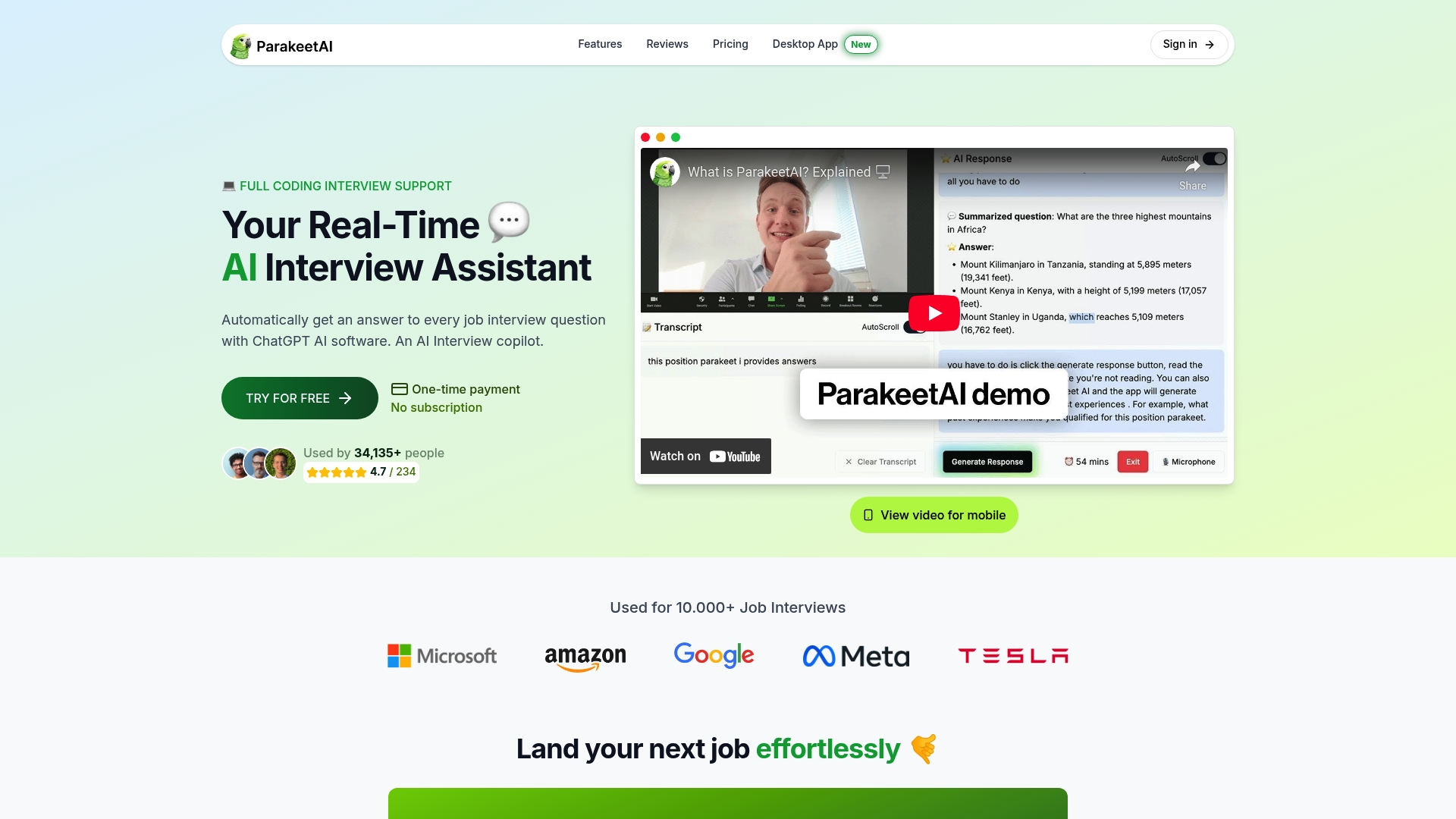
ParakeetAI is a real-time AI interview assistant that listens to your interview as it happens and automatically surfaces answers, frameworks, and talking points for every question you hear. Whether you’re a candidate trying to respond to tough behavioral questions or a hiring manager looking to sharpen your question strategy, ParakeetAI gives you an edge that preparation alone can’t match. Explore how it can transform your next interview from guesswork into a confident, well-structured conversation where you always know your next move.
Frequently asked questions
What is the most important question to ask in an interview?
Questions that reveal motivation, problem-solving ability, and cultural fit tend to be the most valuable. Effective question types include warm-up, behavioral, and fit-based questions that together build a complete picture of a candidate.
How does the STAR method help in interviews?
The STAR method (Situation, Task, Action, Result) gives candidates a clear structure for answering behavioral questions and helps interviewers compare responses across different candidates with more consistency and objectivity.
Can job seekers ask about team priorities in an interview?
Absolutely. Asking about team priorities shows initiative and helps candidates assess whether the role aligns with their strengths and working style before accepting an offer.
What types of questions should be avoided in interviews?
Illegal questions, leading questions, yes/no questions, and questions that show no research into the company should all be avoided. Thoughtful, specific questions from both sides lead to better decisions and more productive conversations.